
Atelier · Gallery · Art Advisory · Restoration
Founded in Miami in 2010, Logistics Fine Arts is a multidisciplinary organization bringing together curators, conservators, researchers, and art acquisition advisors. Our mission is to contribute to the development of the art ecosystem through specialized knowledge and comprehensive professional services.
 Online ExhibitionPoetic: Verso & Reverso − Muu BlancoDATE: October 14, 2026 - Ongoing
VENUE: Digital Gallery
Dimensions Variable (DV) presents a digital project titled Poetic: Verso & Reverso by Muu Blanco. The project launches on screen at DV, streaming on their website, and on Instagram on October 14, 2026. The project remains available on the Digital Gallery Dimensions Variable website.
Read more ↗ SOLO SHOW · ROSA BRUNRosa Brun: Umbrales de color y materiaDATE: UNTIL 6 DECEMBER 2026
VENUE: MUSEO FRANCISCO SOBRINO, GUADALAJARA, SPAIN
Works from four decades of Rosa Brun's career, curated by Isabel Tejeda Martín, in dialogue with the geometry and colour of Francisco Sobrino. Free admission.
Read more on guadalajara.es ↗ COLLECTION · VICTOR VASARELYThe Vasarely Museum in Budapest reopensFROM 16 SEPTEMBER 2026
VENUE: VASARELY MÚZEUM, ZICHY MANSION, ÓBUDA, BUDAPEST
The Vasarely Museum has reopened with a renewed presentation of the Victor Vasarely collection, together with new temporary exhibitions.
Read more on vasarely.hu ↗ GROUP SHOW · JESÚS RAFAEL SOTOPanorama — Jesús Rafael Soto at PerrotinDATE: 20 OCTOBER – 20 DECEMBER 2026
VENUE: PERROTIN MATIGNON, PARIS
Soto's work is part of Panorama, a group exhibition at Perrotin's Matignon space in Paris.
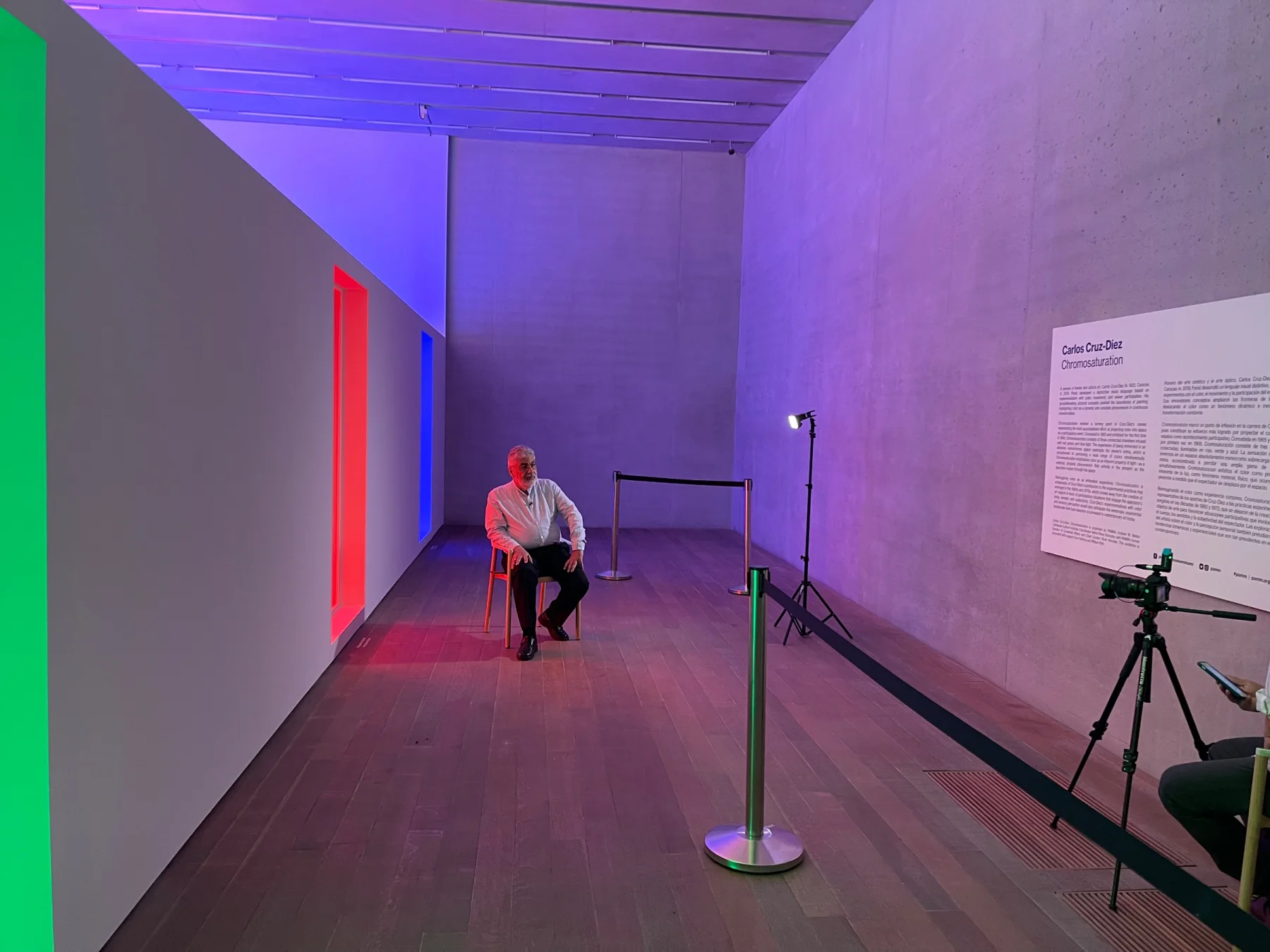
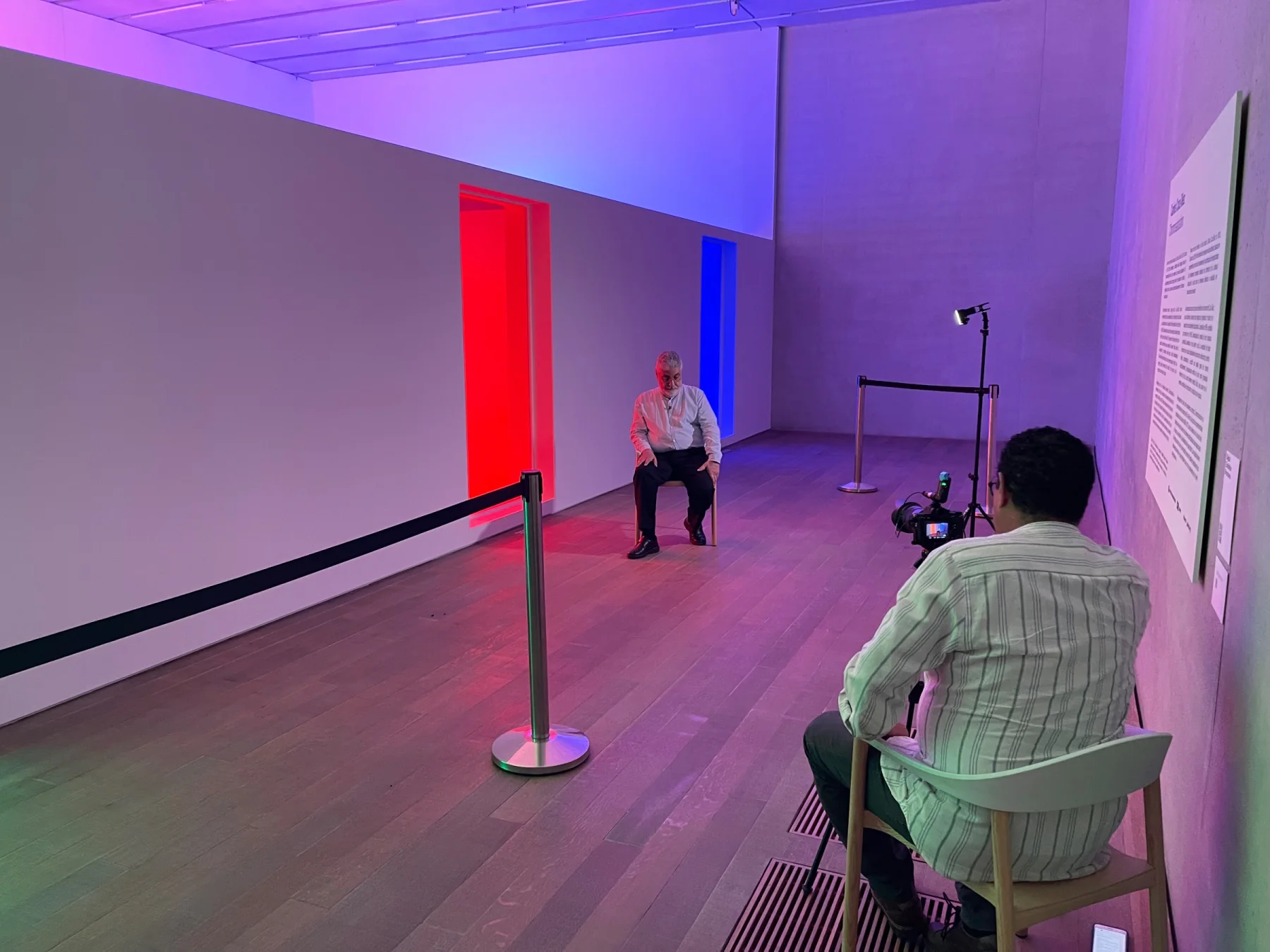
Read more on jesus-soto.com ↗ ONGOINGCarlos Cruz-Diez: Chromosaturation, 1965/2007DATE: 2025 – 2027
VENUE: PÉREZ ART MUSEUM MIAMI
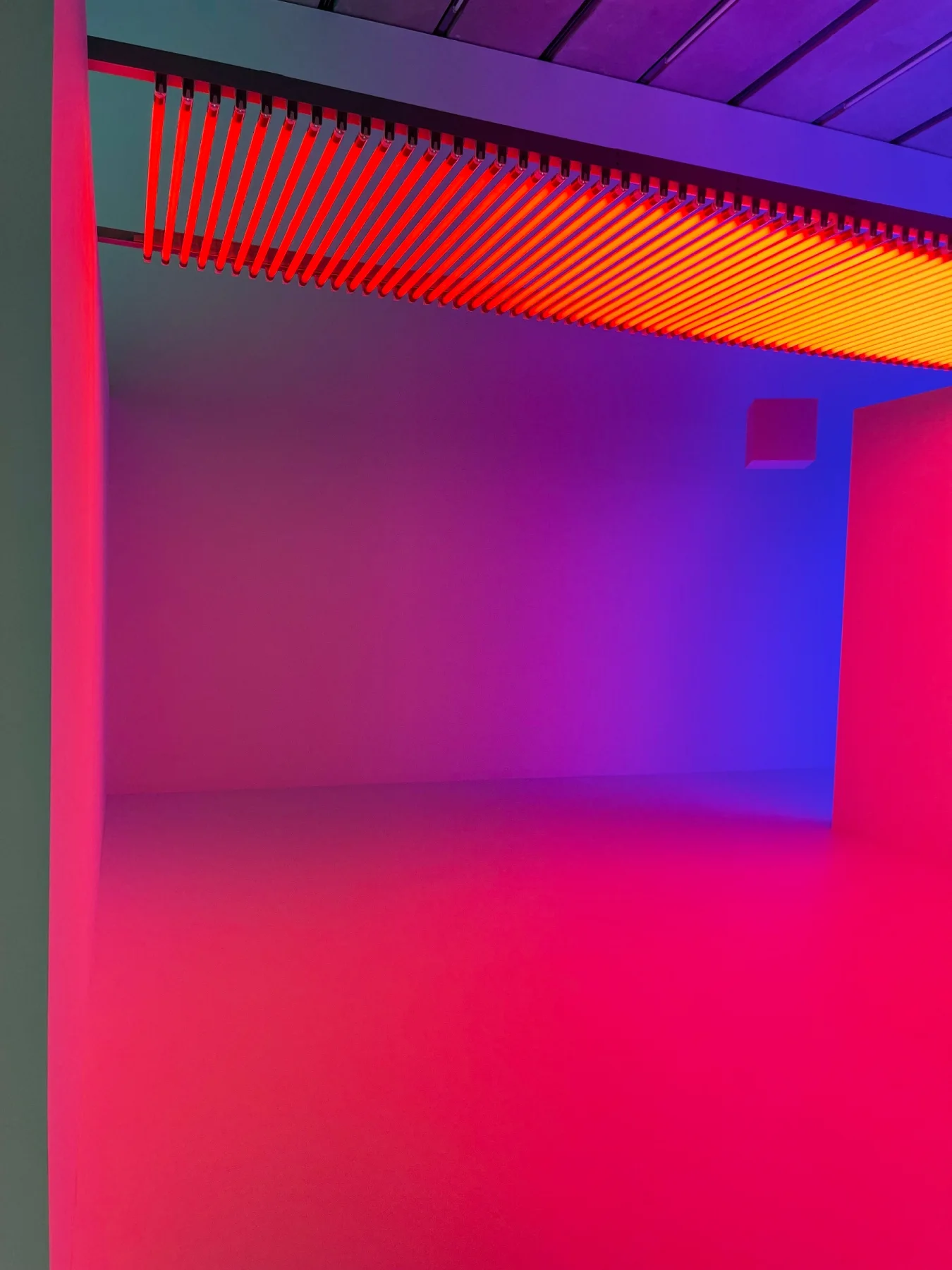
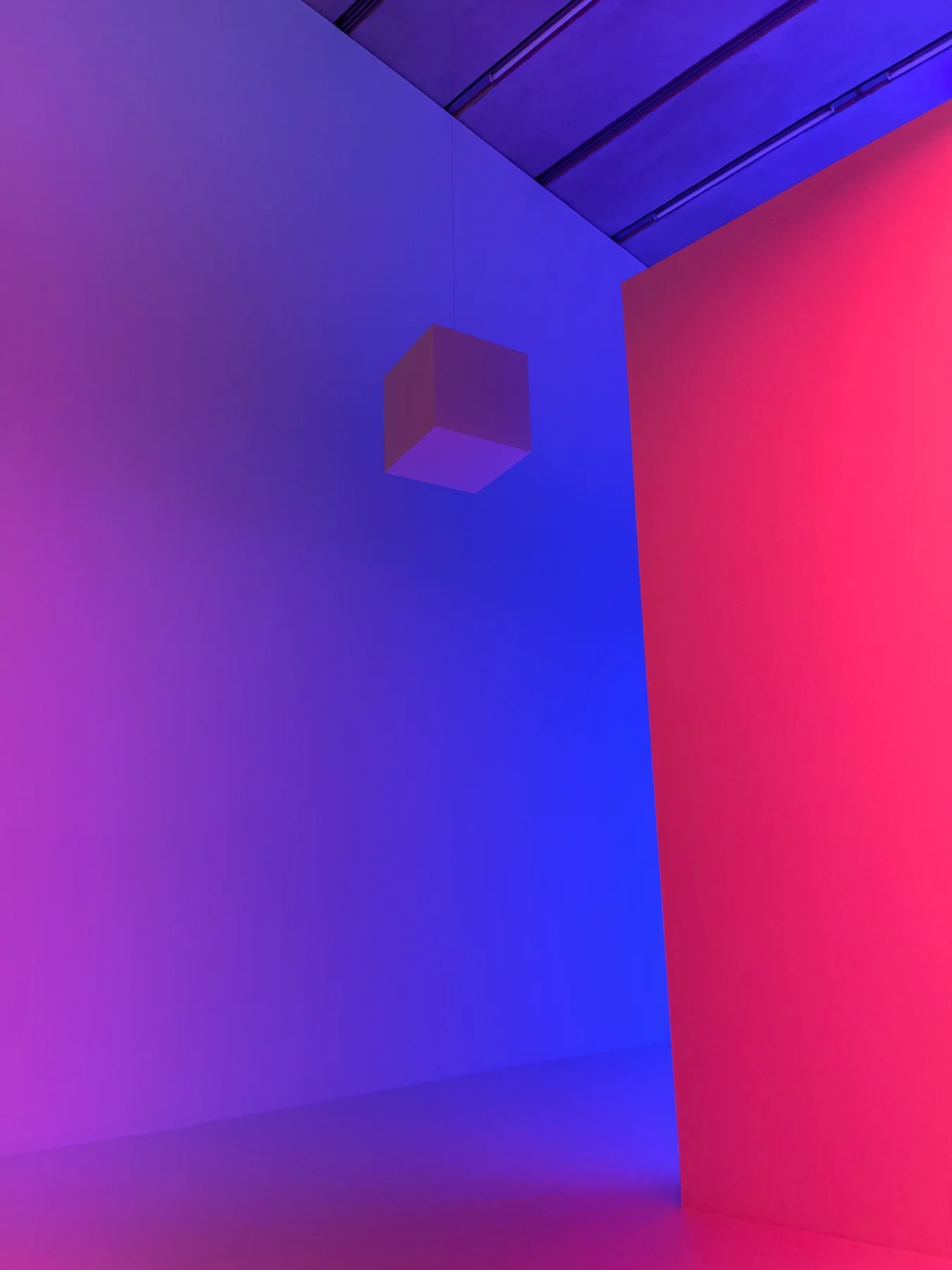
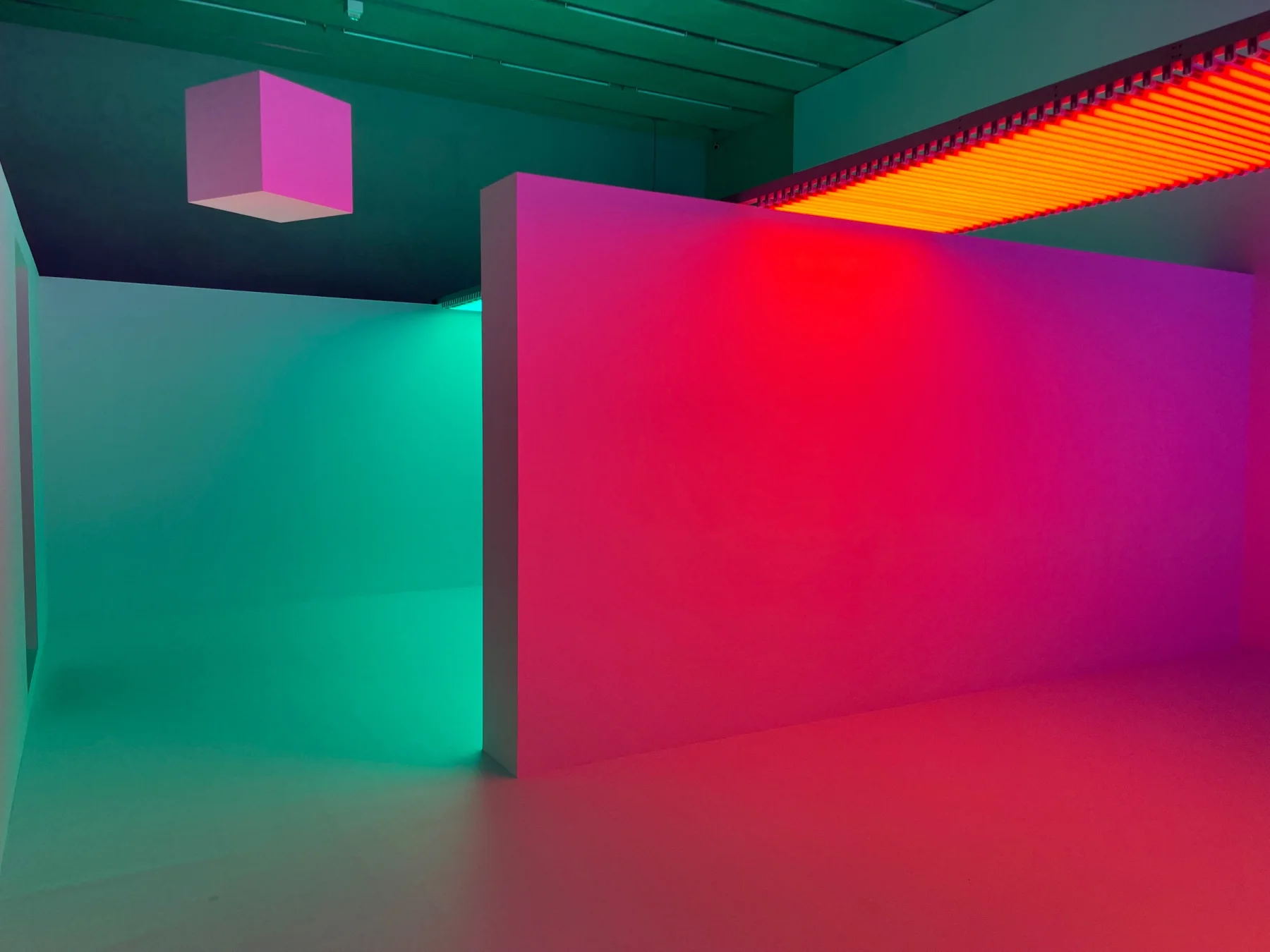
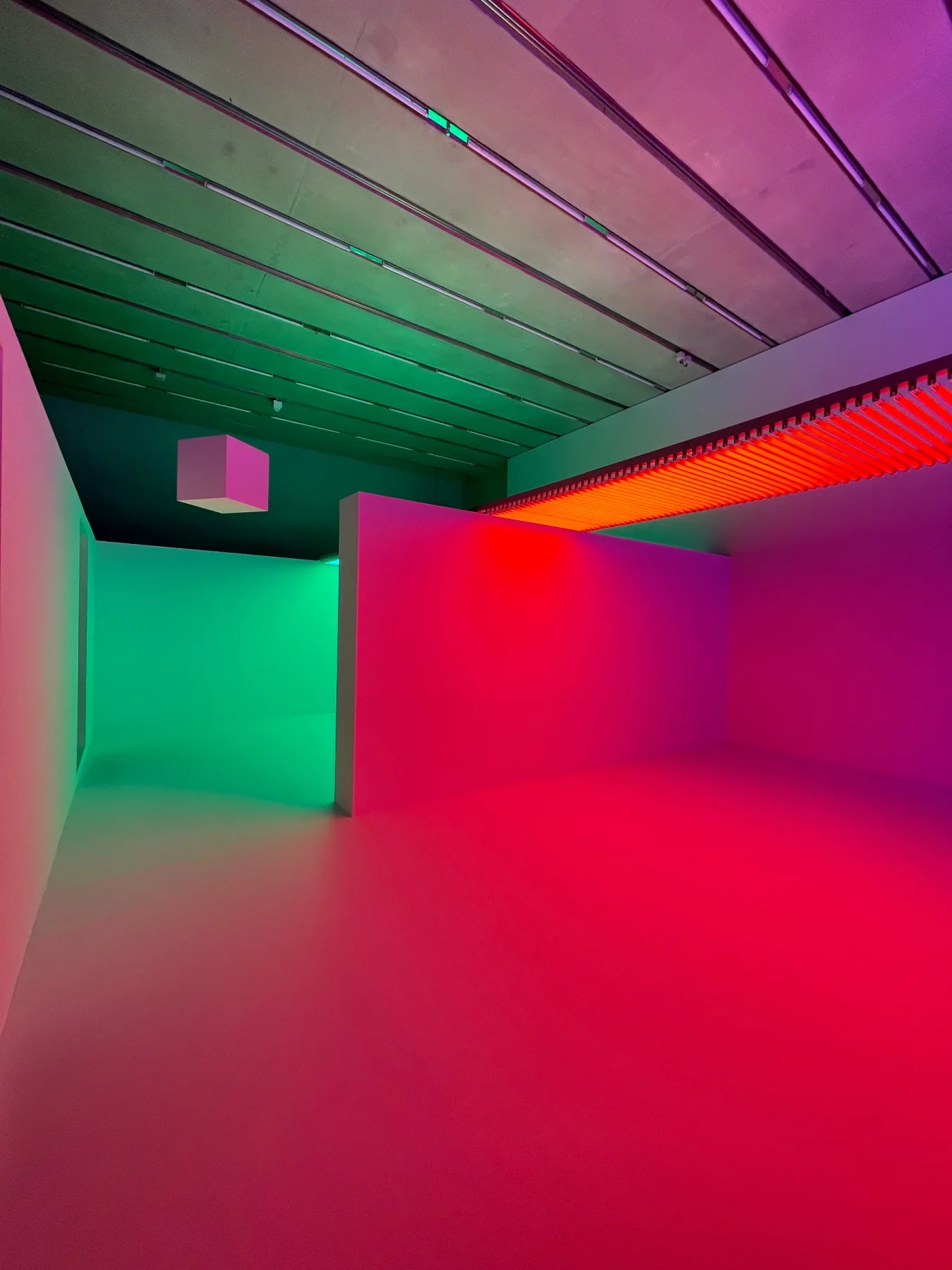
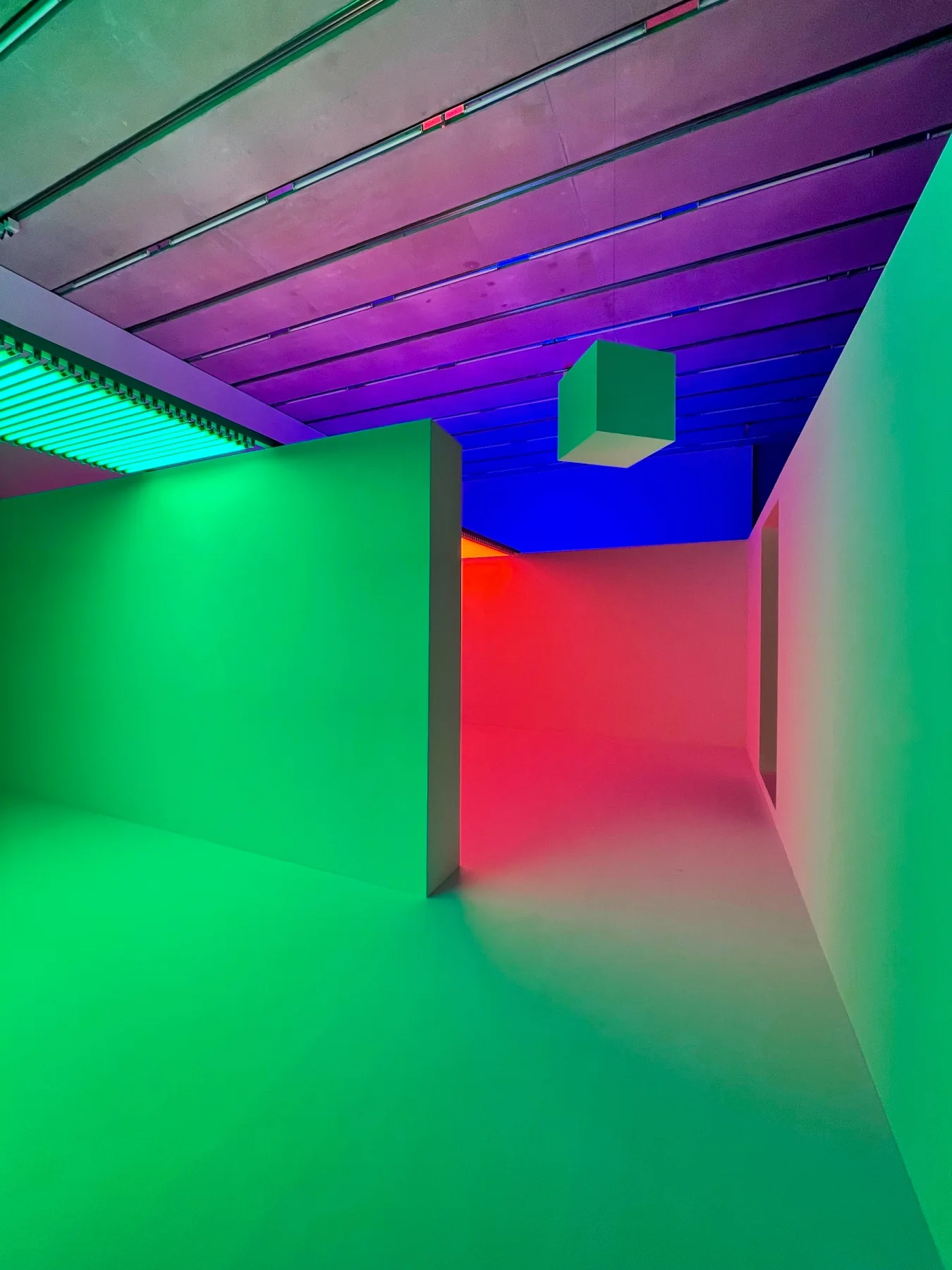
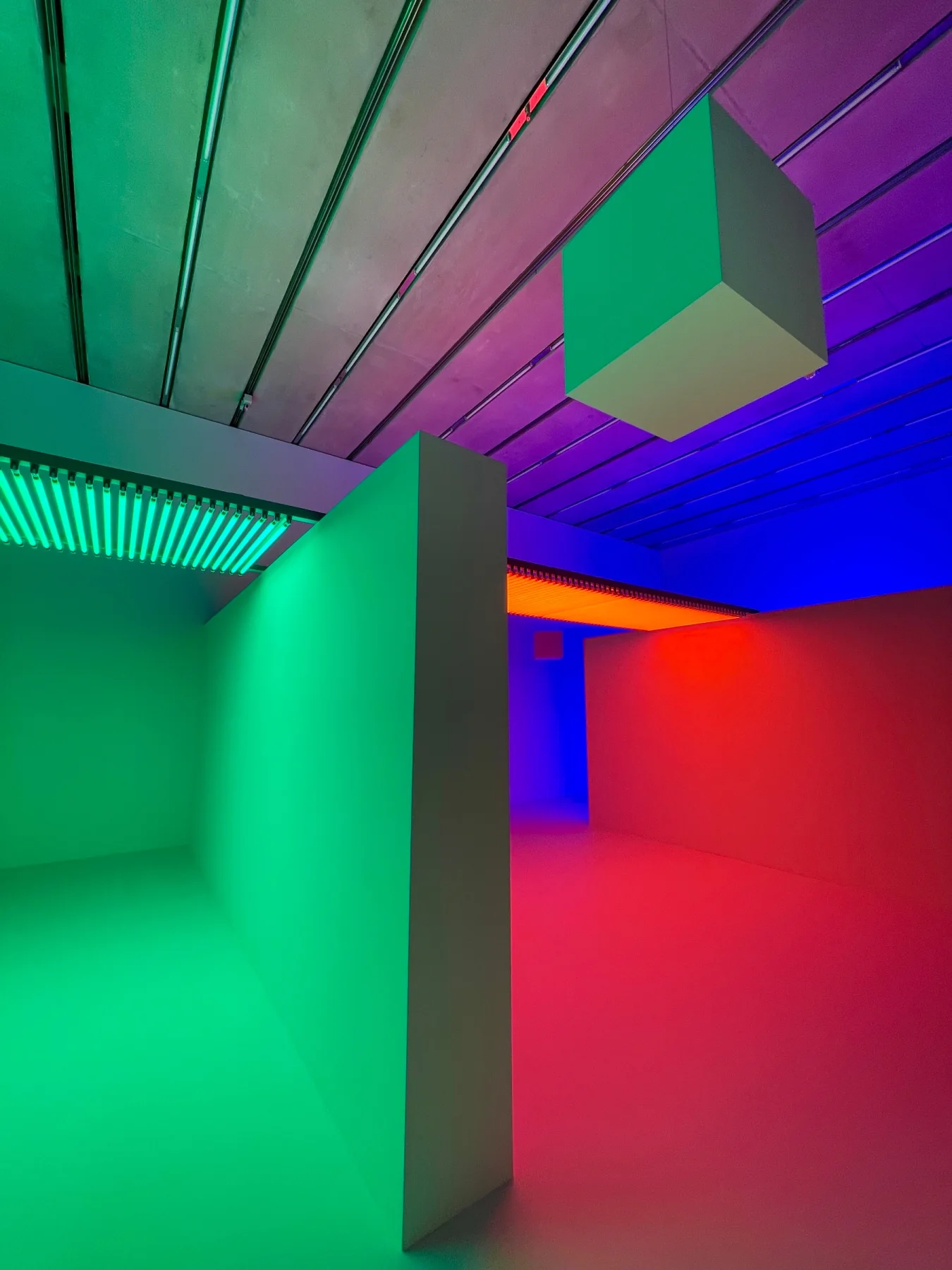
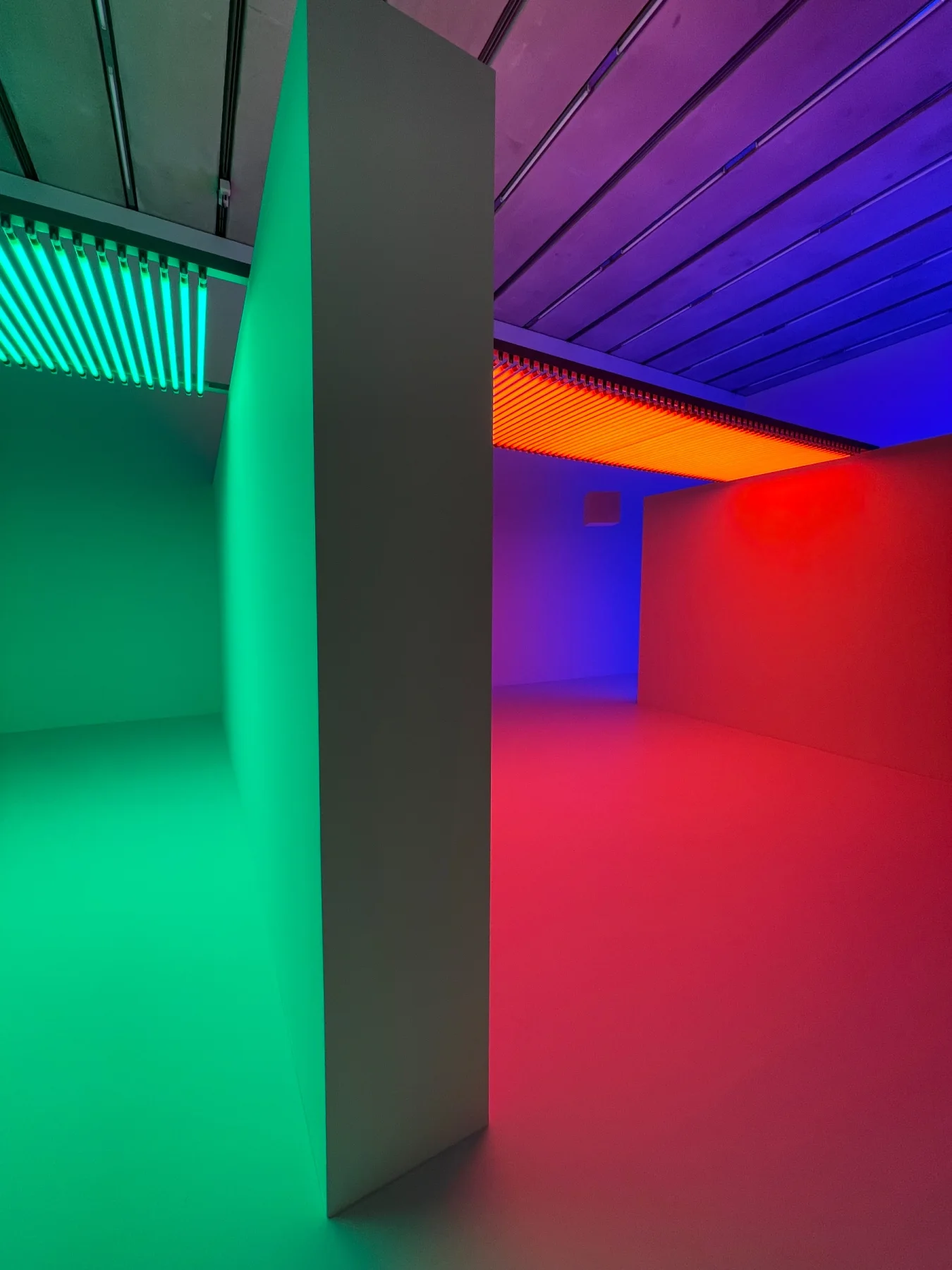
Ongoing. Carlos Cruz-Diez: Chromosaturation, 1965/2007, Pérez Art Museum Miami, 2025–2027.
Read more on pamm.org ↗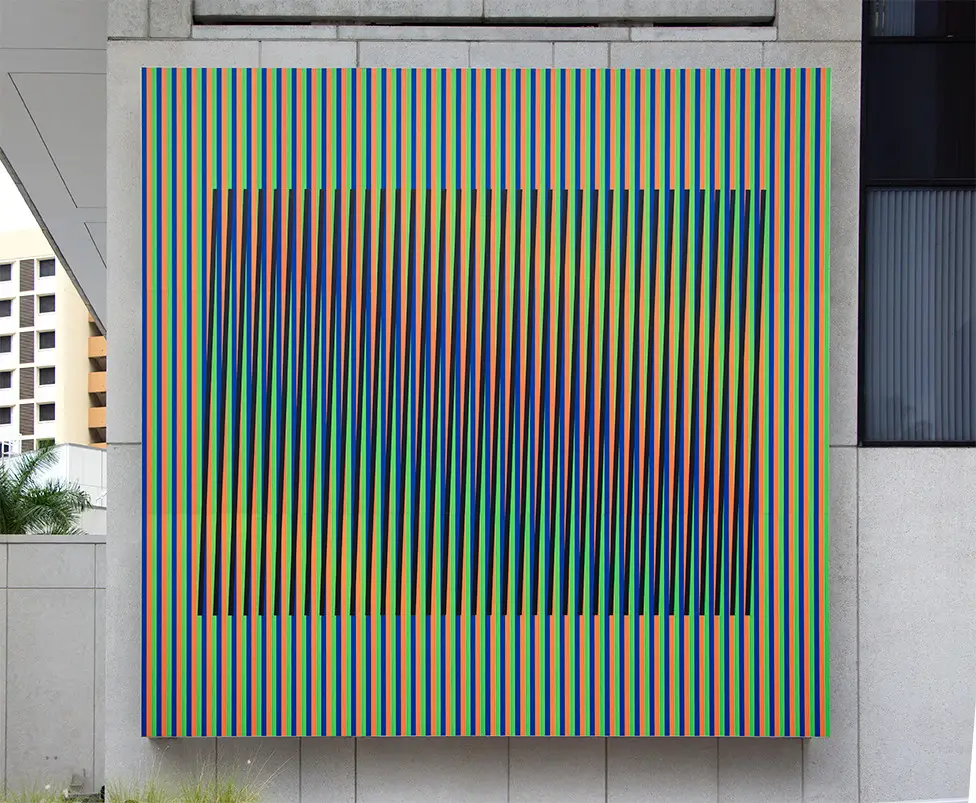
Founded in Miami in 2010, Logistics Fine Arts (LFA) is a multidisciplinary organization bringing together curators, conservators, researchers, and art acquisition advisors.
Our mission is to contribute to the development of the art ecosystem through specialized knowledge and comprehensive professional services.
For more than fifteen years, we have worked directly with artworks in the studio, within private and institutional collections, and in public spaces, developing particular expertise in constructivist, geometric, kinetic, and optical art.
Fundada en Miami en 2010, Logistics Fine Arts (LFA) es una organización multidisciplinaria que reúne a curadores, conservadores, investigadores y asesores en adquisición de arte.
Nuestra misión es contribuir al desarrollo del ecosistema artístico mediante conocimiento especializado y servicios profesionales integrales.
Durante más de quince años hemos trabajado directamente con las obras en el taller, en colecciones privadas e institucionales y en el espacio público, desarrollando una experiencia particular en el arte constructivista, geométrico, cinético y óptico.
In 2013, Maestro Carlos Cruz-Diez authorized us to produce his monumental works and to restore his entire body of work, and we remain the only workshop officially authorized to restore his works in the United States. To that end, we hold the tools and materials certified by the artist’s atelier. We also maintain a close collaborative relationship with the Comité Soto in the conservation of the work of Jesús Rafael Soto. Our conservation department produces condition reports based on the physical assessment of each work, develops and performs conservation and restoration treatments, and oversees the technical management of each artwork. Our reference interventions include works by Carlos Cruz-Diez (Physichromies, Transchromies and Cromovelas), Jesús Rafael Soto, Alejandro Otero and other great masters. Each intervention adheres to the original materials, specifications and chromatic criteria of its author.
En 2013, el Maestro Carlos Cruz-Diez nos autorizó para producir sus obras monumentales y restaurar la totalidad de su obra, y seguimos siendo el único taller autorizado oficialmente para restaurar sus obras en Estados Unidos. Para ello, disponemos de las herramientas y los materiales certificados por el atelier del artista. Mantenemos además una estrecha relación de colaboración con el Comité Soto en la conservación de la obra de Jesús Rafael Soto. Nuestra área de conservación realiza informes de condición basados en la evaluación física de la obra, desarrolla y realiza tratamientos de conservación y restauración, y supervisa la gestión técnica de cada obra. Entre nuestras intervenciones de referencia se encuentran obras de Carlos Cruz-Diez (Physichromies, Transcromías y Cromovelas), Jesús Rafael Soto, Alejandro Otero y otros grandes maestros. Cada intervención se ajusta a los materiales, especificaciones y criterios cromáticos originales de su autor.
We bring our technical rigor to the monumental scale. We assess and plan the recovery of works integrated into architecture and the urban landscape. Our authorization to produce Cruz-Diez’s monumental works also allows us to carry out large-format installations and immersive environments to the artist’s technical standards. Today we place at the service of other artists and new generations of creators the knowledge gained over years of work alongside Maestro Cruz-Diez, in materials, fabrication processes, chromatic criteria and the integration of the work into the built environment. Together with them, we develop interventions in architecture and public space. We understand public space as living heritage: works must be preserved with fidelity to the original concept, and must remain able to dialogue with the city and with those who inhabit it.
Llevamos nuestro rigor técnico a la escala monumental. Evaluamos y proyectamos la recuperación de obras integradas a la arquitectura y al paisaje urbano. Nuestra autorización para producir las obras monumentales de Cruz-Diez nos permite también realizar instalaciones y ambientes inmersivos de gran formato conforme a los estándares técnicos del artista. Hoy ponemos al servicio de otros artistas y de nuevas generaciones de creadores el conocimiento adquirido durante años de trabajo junto al Maestro Cruz-Diez, en materiales, procesos de fabricación, criterios cromáticos e integración de la obra en el entorno construido. Con ellos desarrollamos intervenciones en la arquitectura y el espacio público. Entendemos el espacio público como patrimonio vivo: las obras deben conservarse con fidelidad al concepto original y deben poder seguir dialogando con la ciudad y con quienes la habitan.
We work alongside artists on the technical development and production of their works. We have been credited in published catalogues as a collaborating studio of Carlos Medina. This workshop practice sustains a relationship of trust with established and emerging artists, and ensures the material quality of the work from its origin.
Trabajamos junto a los artistas en el desarrollo técnico y la producción de sus obras. Hemos sido reconocidos en catálogos publicados como estudio colaborador de Carlos Medina. Este trabajo de taller sostiene una relación de confianza con creadores consolidados y emergentes, y asegura la calidad material de la obra desde su origen.
We conceive curatorial projects and produce dossiers, technical records and artwork documentation to research standards. Our curatorial line explores the transatlantic dialogue of geometric abstraction, kinetic art and light along the Paris–Caracas–Madrid–Miami axis. That line links the masters with the contemporary generations who carry their legacy forward.
Concebimos proyectos curatoriales y elaboramos dossiers, fichas técnicas y documentación de obra con estándares de investigación. Nuestra línea curatorial explora el diálogo transatlántico de la abstracción geométrica, el cinetismo y la luz, en el eje París–Caracas–Madrid–Miami. Esa línea vincula a los maestros con las generaciones contemporáneas que continúan su legado.
We accompany collectors in building collections with a coherent vision and lasting reach. Our advisory work covers the selection and verification of works, provenance and registration with catalogues raisonnés and committees, custody, specialized crating and long-term planning. At the intersection of culture and capital, we connect collectors with works of genuine artistic quality, verified provenance and authenticity, and lasting heritage value. The dual nature of art, both subjective and subject to the market, makes its value complex to determine. We bring clarity to that complexity and help our clients and partners recognize the cultural and financial potential of each work.
Acompañamos a coleccionistas en la construcción de colecciones con visión coherente y proyección duradera. Nuestra asesoría cubre la selección y verificación de obra, la procedencia y el registro ante catálogos razonados y comités, la custodia, el embalaje especializado y la planificación a largo plazo. En la intersección entre cultura y capital, conectamos a los coleccionistas con obras de genuina calidad artística, procedencia y autenticidad verificadas, y valor patrimonial duradero. La doble naturaleza del arte, subjetiva y sujeta al mercado, hace compleja la determinación de su valor. Aportamos claridad a esa complejidad y ayudamos a nuestros clientes y socios a reconocer el potencial cultural y financiero de cada obra.
For us, passing on knowledge is part of our responsibility to the legacy we safeguard. From that conviction comes The Artist Incubator, an educational program conceived with Curated Capital Group for children’s museums and schools. It is an artist incubator for children aged 7 to 14, built on the eight chromatic investigations of Carlos Cruz-Diez.
8chromatic investigations8 × 45′sessions7–14years old
The program turns the master’s research into direct experience. It consists of eight 45-minute sessions, one per investigation, for small groups and with a materials kit per group. Each session follows the same rhythm: observation, a short lesson, creation and experimentation, and dialogue. Along the way, children discover that color is not static but an experience that changes with movement, light, space and perception. The program brings art and science together: it teaches how mixing light differs from mixing pigment and how the eye and the brain construct color, and it cultivates the habit of looking attentively.
With this program, we extend our work from the workshop to the classroom, training new generations in the way of seeing that the master taught us to build.
Para nosotros, transmitir el conocimiento es parte de nuestra responsabilidad con el legado que custodiamos. Desde esa convicción nace The Artist Incubator, un programa formativo concebido junto a Curated Capital Group y dirigido a museos infantiles y escuelas. Es una incubadora de artistas para niños de 7 a 14 años, construida sobre las ocho investigaciones cromáticas de Carlos Cruz-Diez.
8investigaciones cromáticas8 × 45′sesiones7–14años
El programa convierte la investigación del maestro en experiencia directa. Son ocho sesiones de 45 minutos, una por investigación, para grupos pequeños y con un kit de materiales por grupo. Cada sesión sigue el mismo ritmo: observación, una breve lección, creación y experimentación, y diálogo. A lo largo del recorrido, los niños descubren que el color no es estático, sino una experiencia que cambia con el movimiento, la luz, el espacio y la percepción. El programa une arte y ciencia: enseña cómo la mezcla de luz difiere de la mezcla de pigmento, cómo el ojo y el cerebro construyen el color, y cultiva el hábito de mirar con atención.
Con este programa, extendemos nuestra labor del taller al aula. Formamos a nuevas generaciones en la mirada que el maestro enseñó a construir.
We aim to remain a reference at the intersection of culture and capital, of the workshop and the city, and of the masters’ legacy and new generations. Our goal is for the art in our care to remain relevant, understood and passed on.
Nos proponemos seguir siendo un referente en la intersección entre cultura y capital, entre el taller y la ciudad, y entre el legado de los maestros y las nuevas generaciones. Nuestro objetivo es que el arte que custodiamos se mantenga vigente, se comprenda y se transmita.
At LFA House of Art we bring our departments under one roof: Logistics Fine Arts, our atelier; Espace Expression, our gallery; and Fine Arts Affairs, our curatorship and collection advisory.
The house that brings us together. Since 2010 in Miami, we unite our atelier and our gallery under one roof, with exhibitions, workshops and events.
Our atelier. We conserve and restore constructivist, geometric, kinetic and optical art as the workshop authorized by Carlos Cruz-Diez in 2013 to produce his monumental works and to restore his entire body of work, and the only one officially authorized to restore his works in the United States. We fabricate and produce artists’ works and carry out interventions in architecture and public space, such as the Miami Marlins Park walkways by Carlos Cruz-Diez: three walkways with a total area of 1,972 m² of mass-colored tiles creating a double-frequency chromatic induction.
About LFA →
Our gallery in Miami, dedicated to modern and contemporary art, with a particular focus on constructivist, geometric, kinetic and optical art. Through curated exhibitions and selected works from private collections and galleries, we explore the relationships between color, form, space and movement.
Visit Espace Expression →
Curatorship, documentation and collection advisory. Through Fine Arts Affairs we conceive curatorial projects and produce dossiers, technical records and artwork documentation to research standards. We accompany collectors in building collections with a coherent vision and lasting reach: selection and verification of works, provenance and registration with catalogues raisonnés and committees, custody and long-term planning.
About LFA →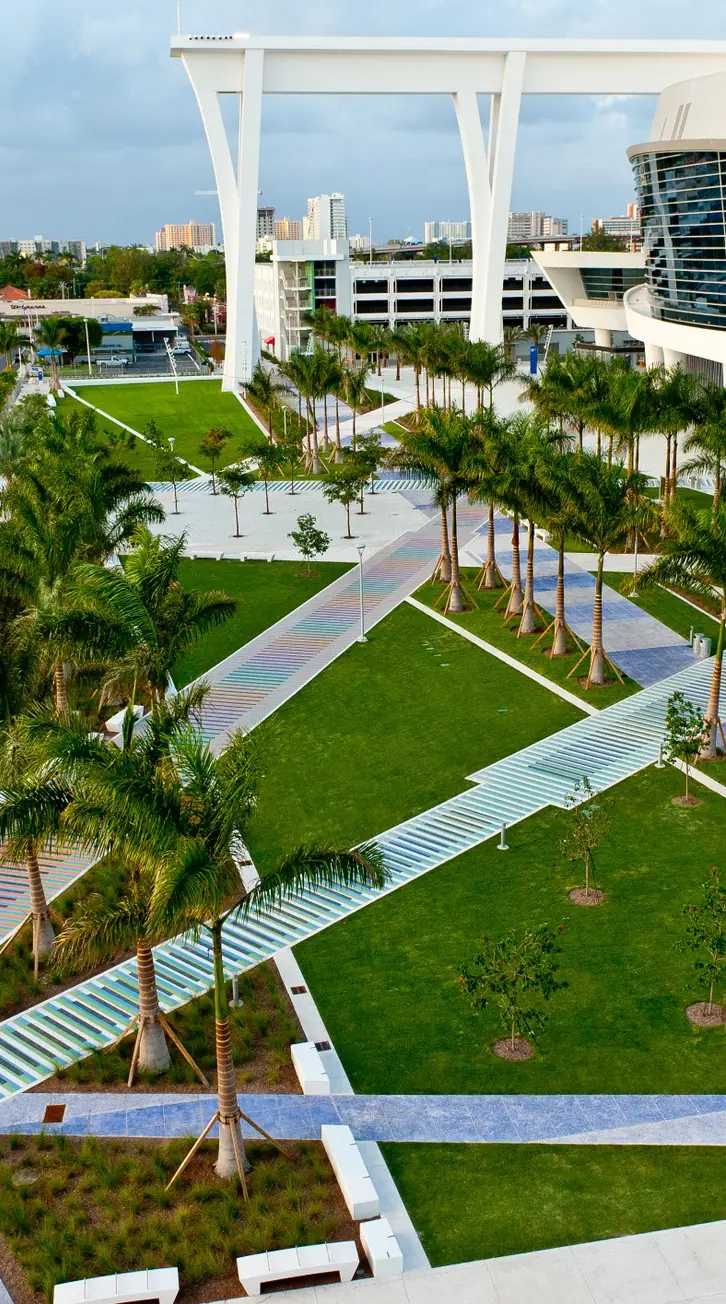
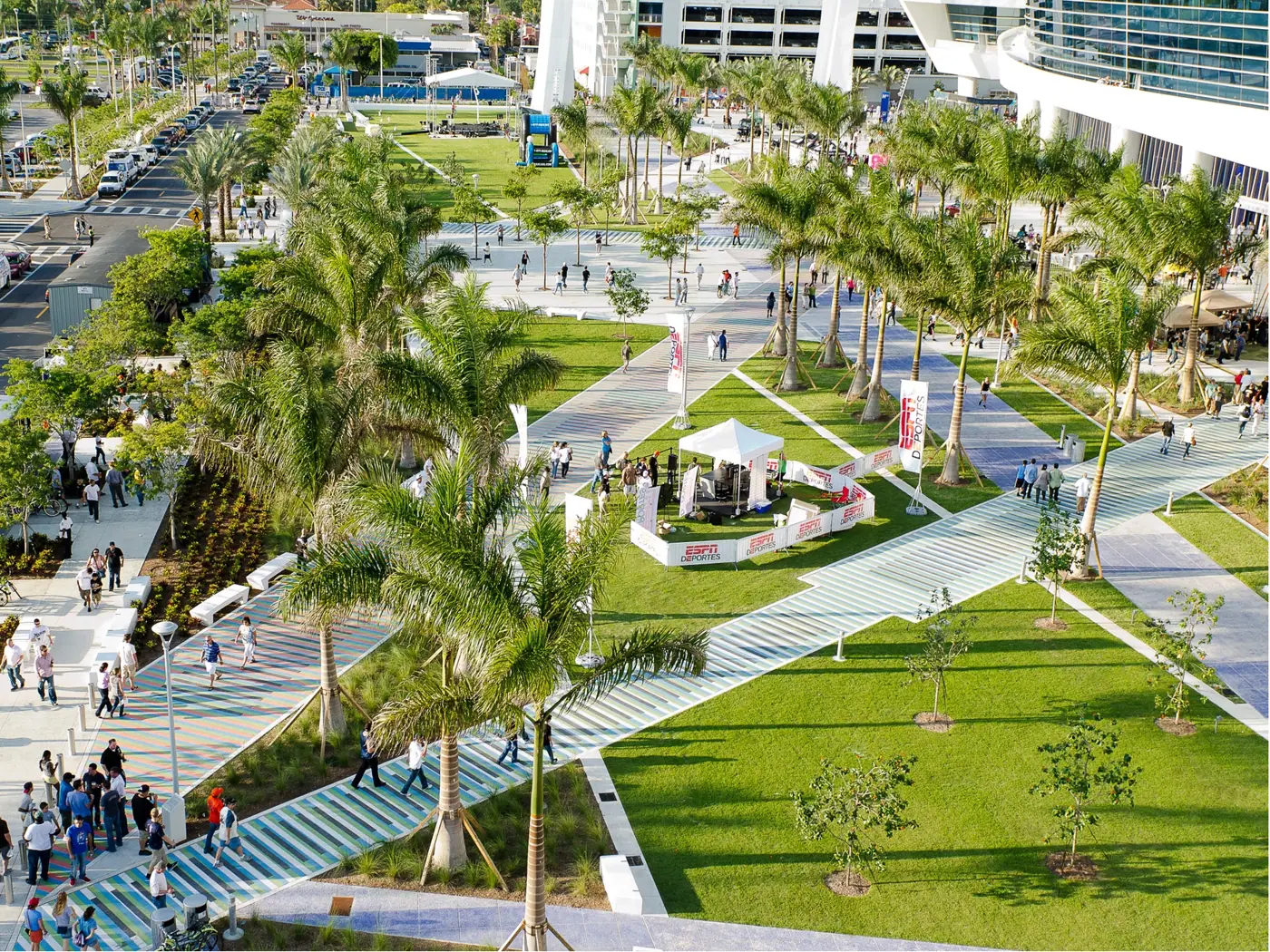
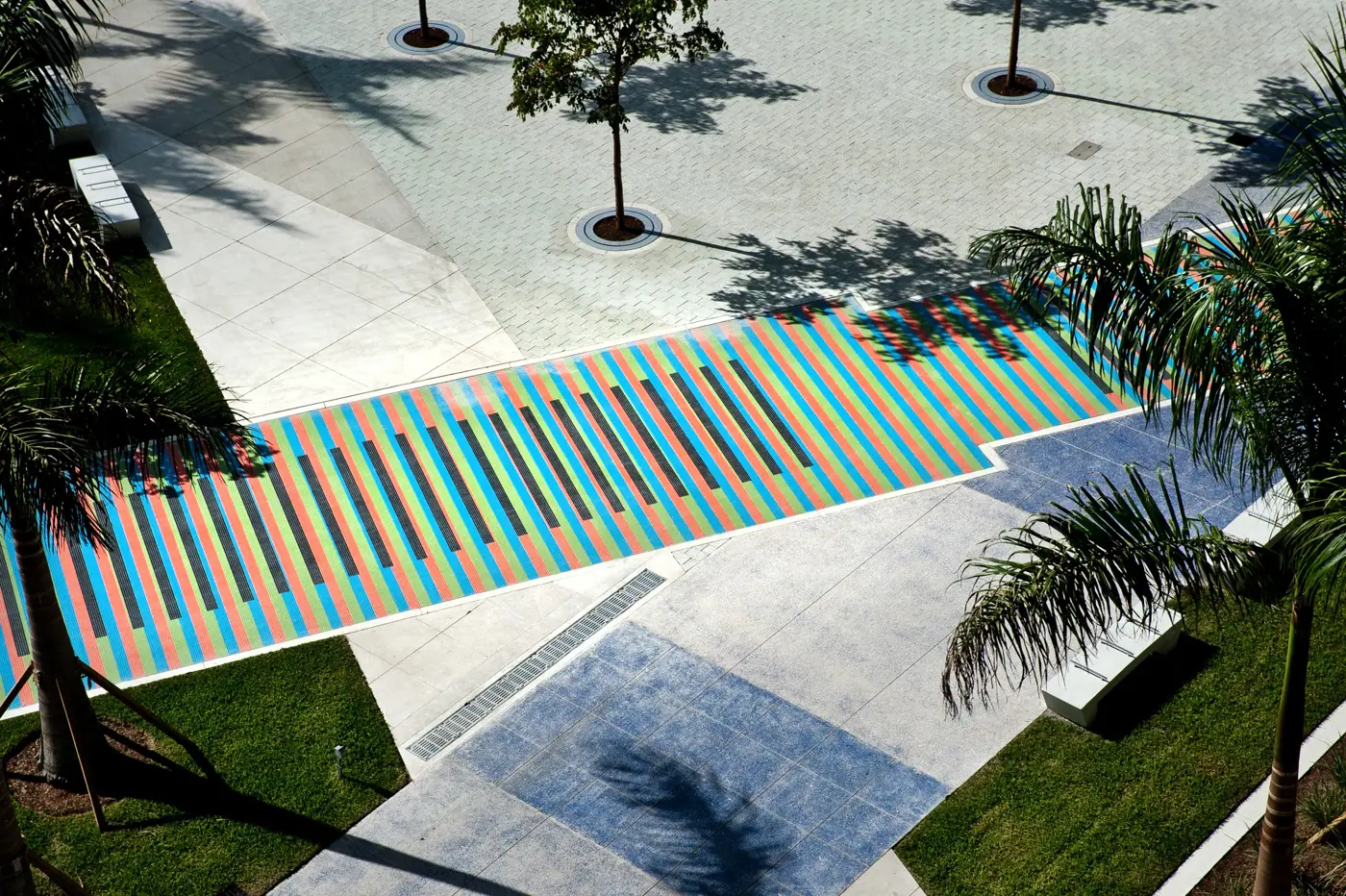
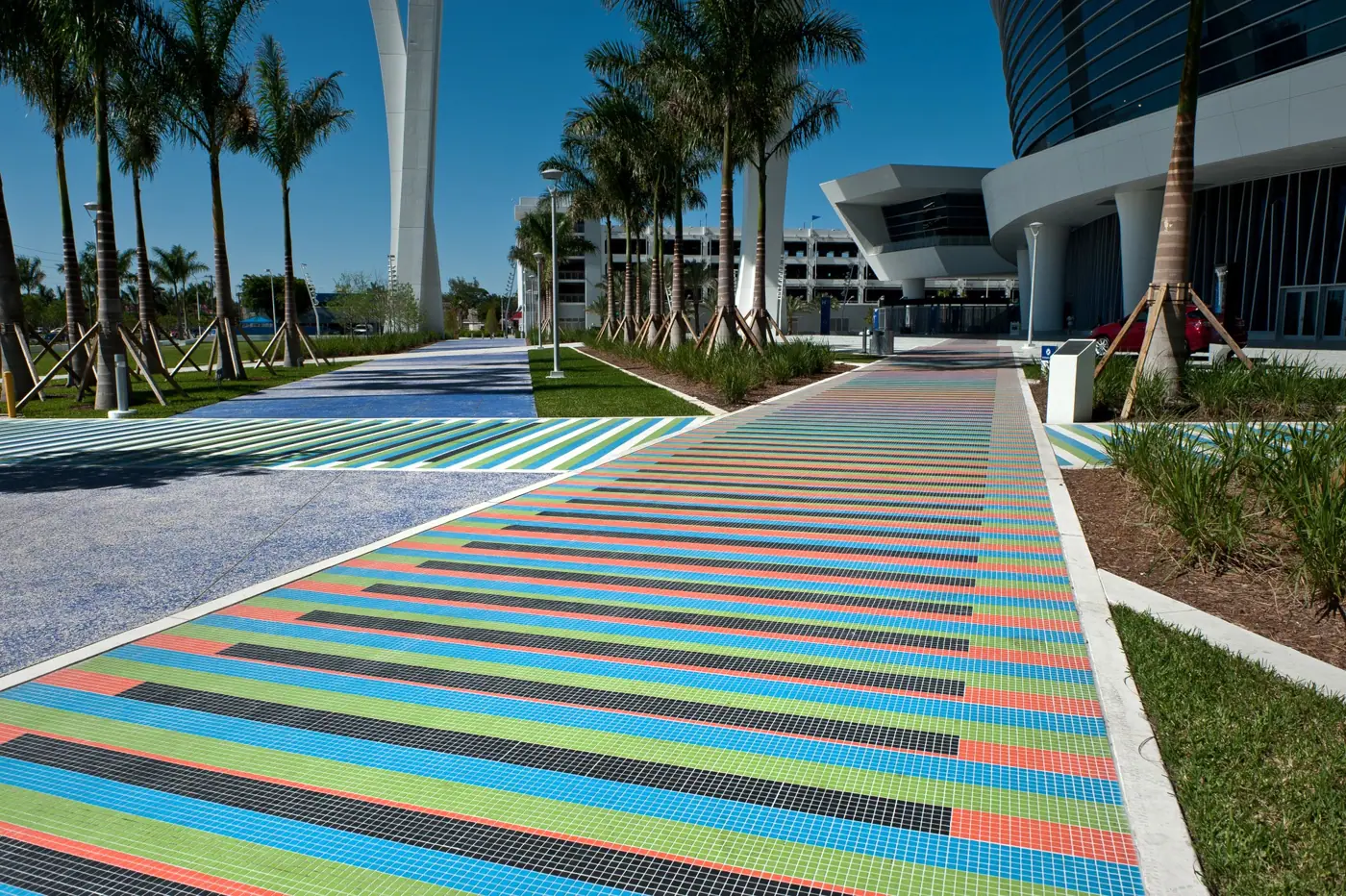
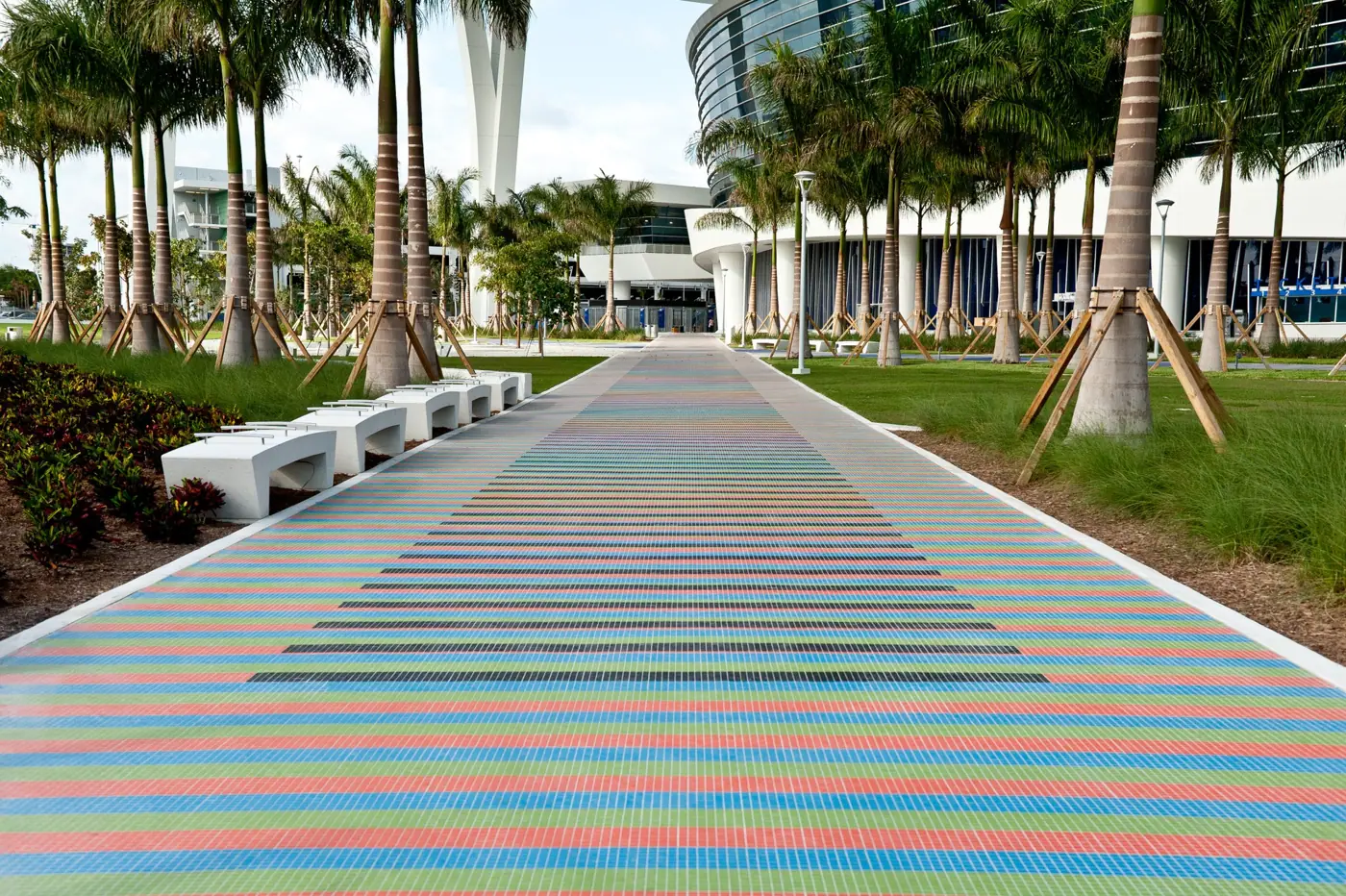
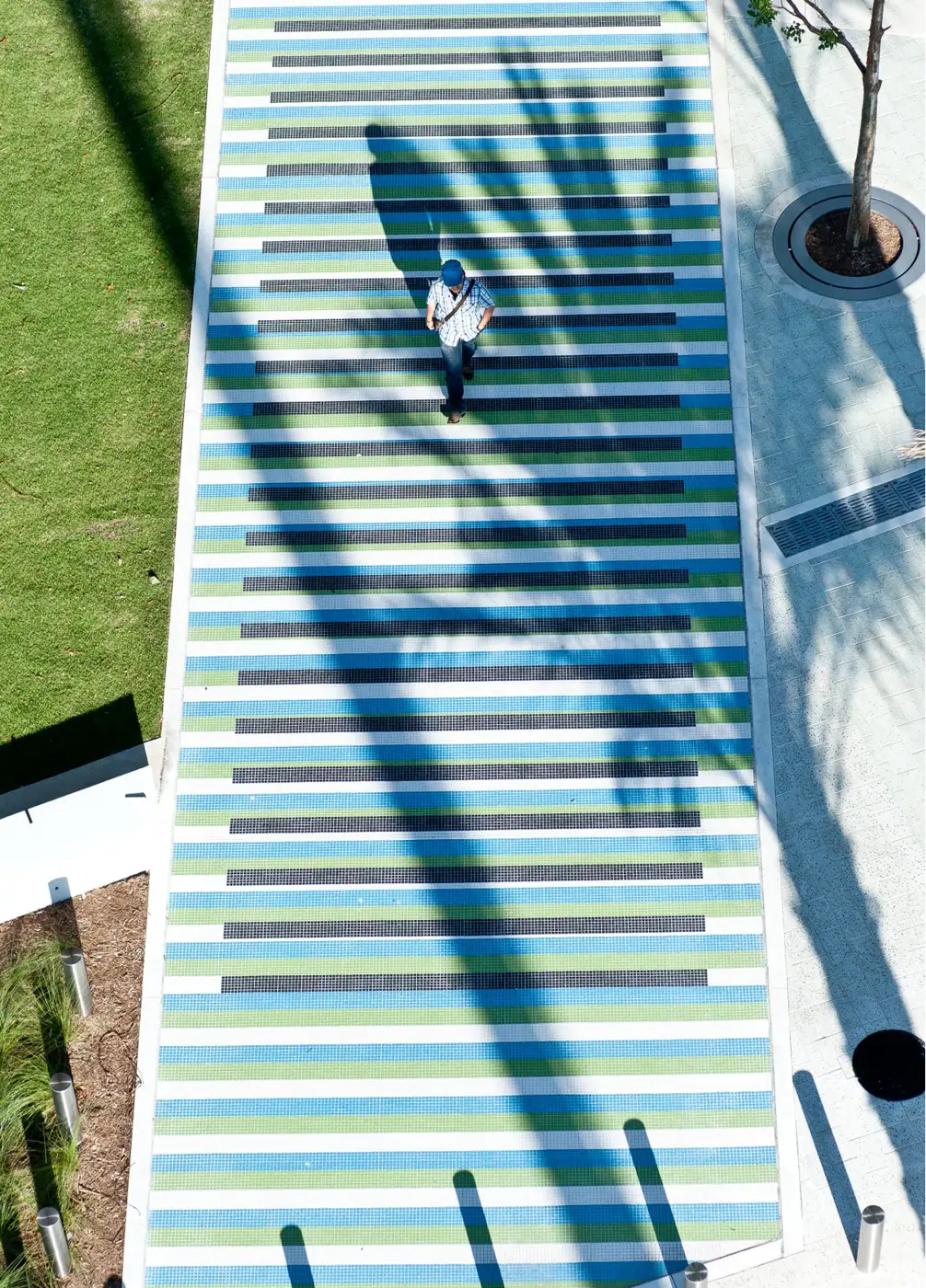
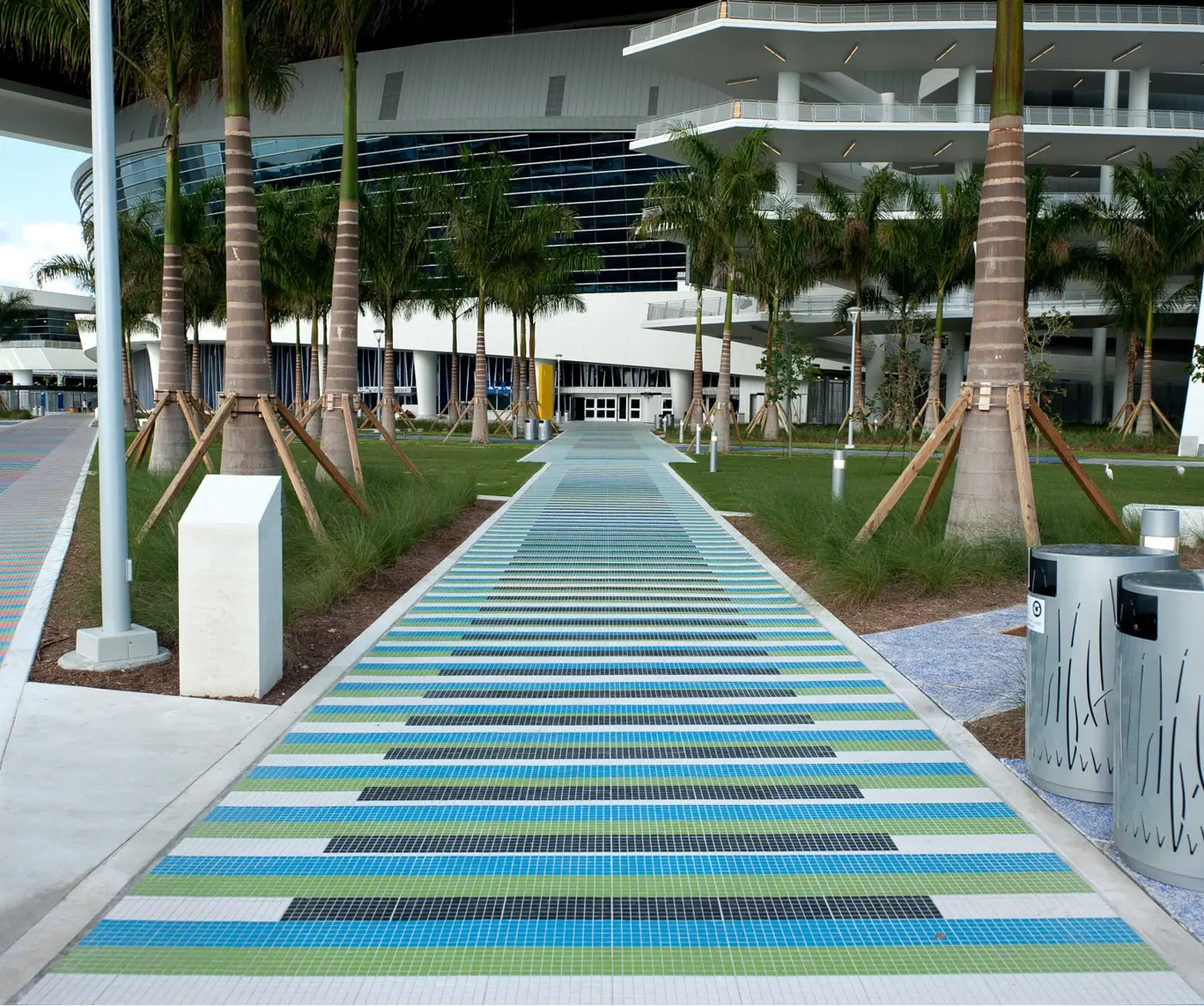
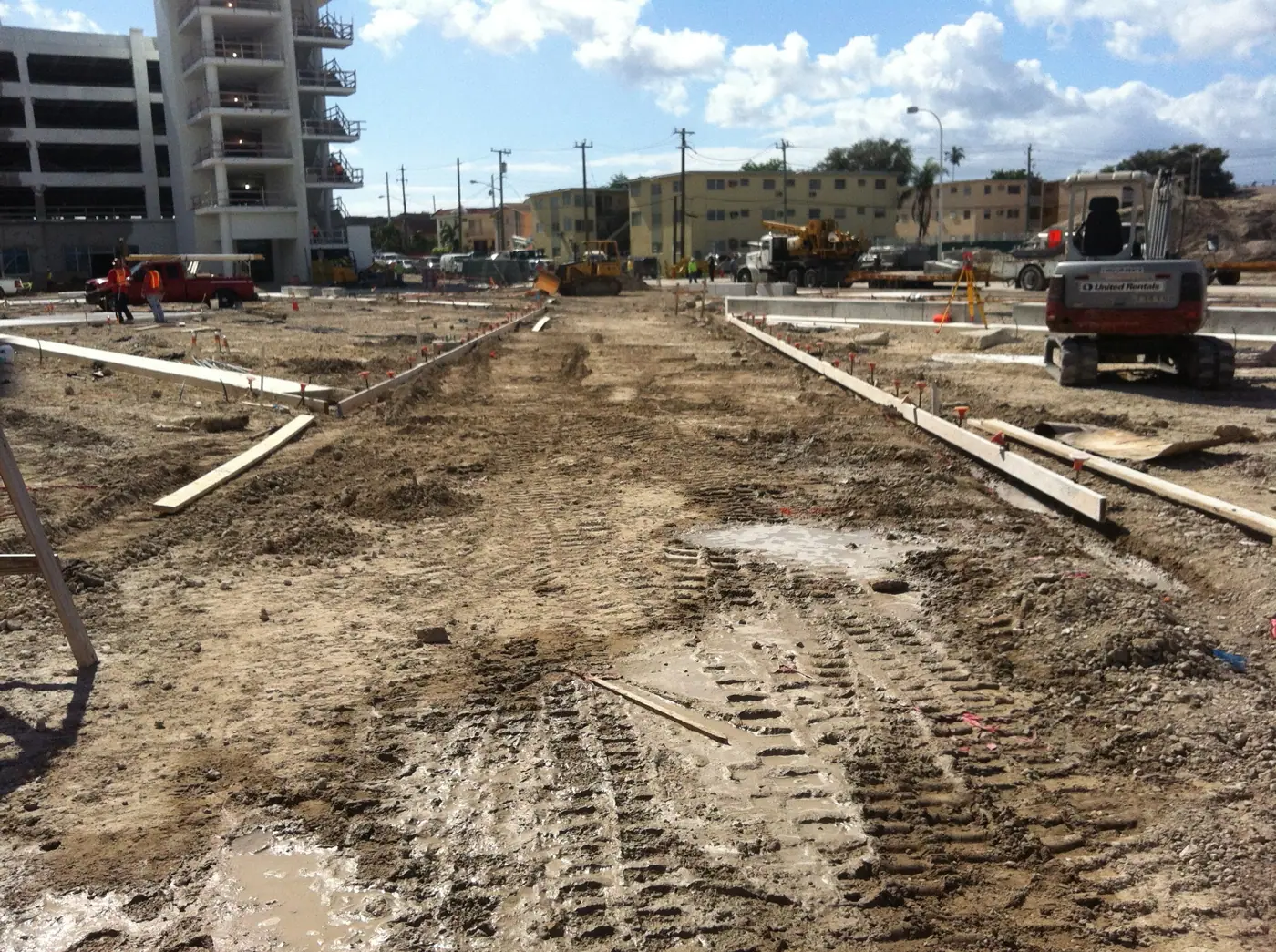
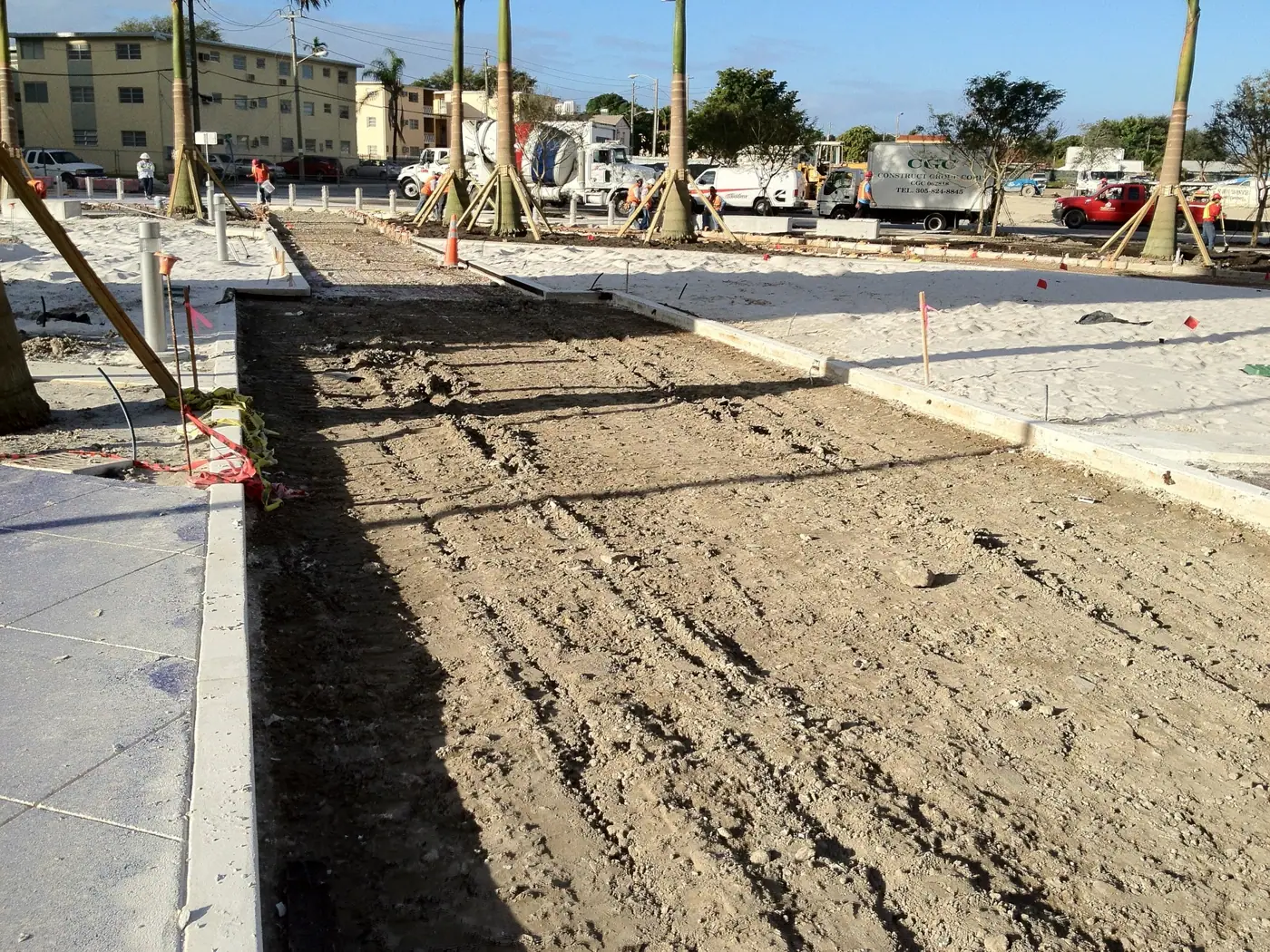
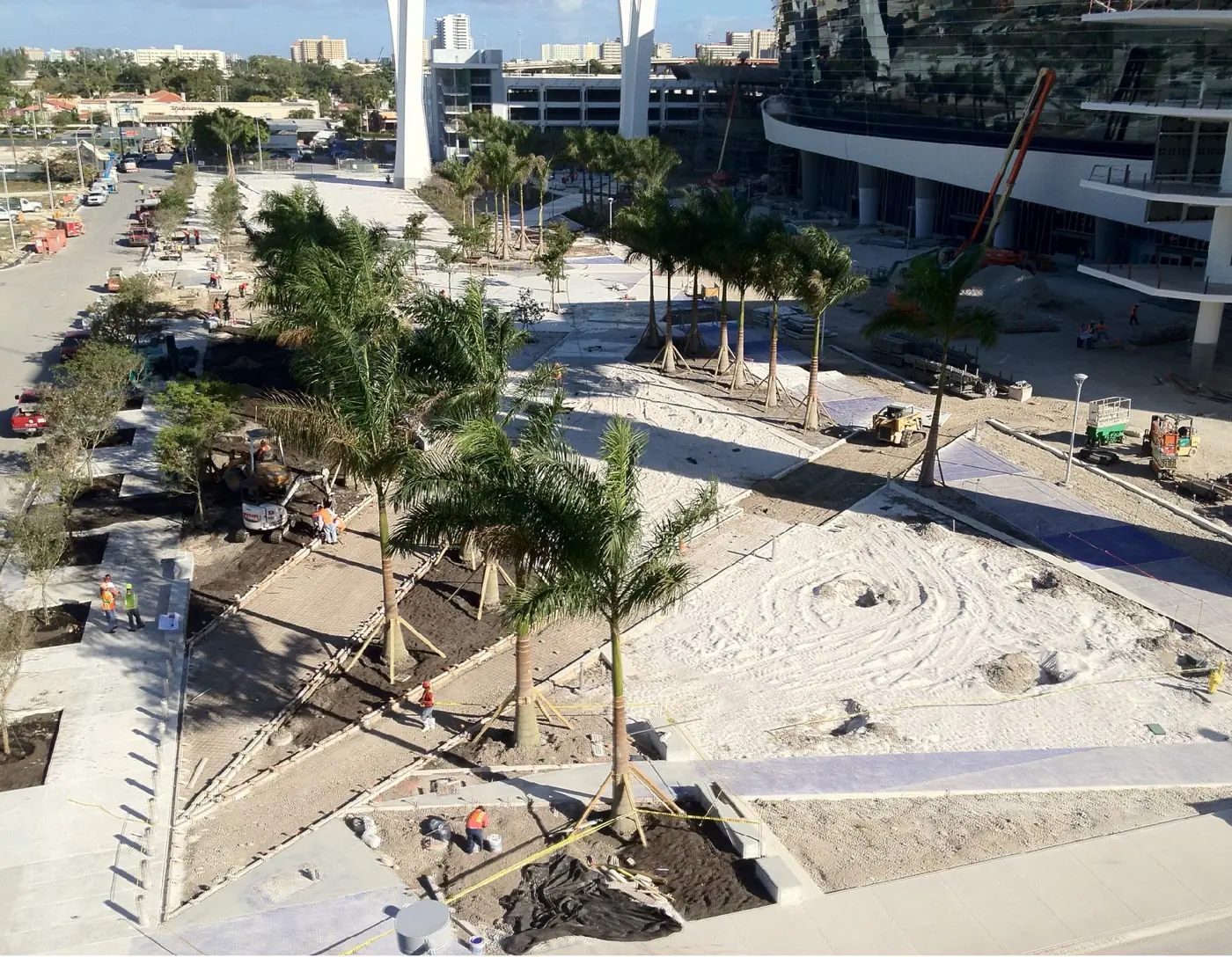
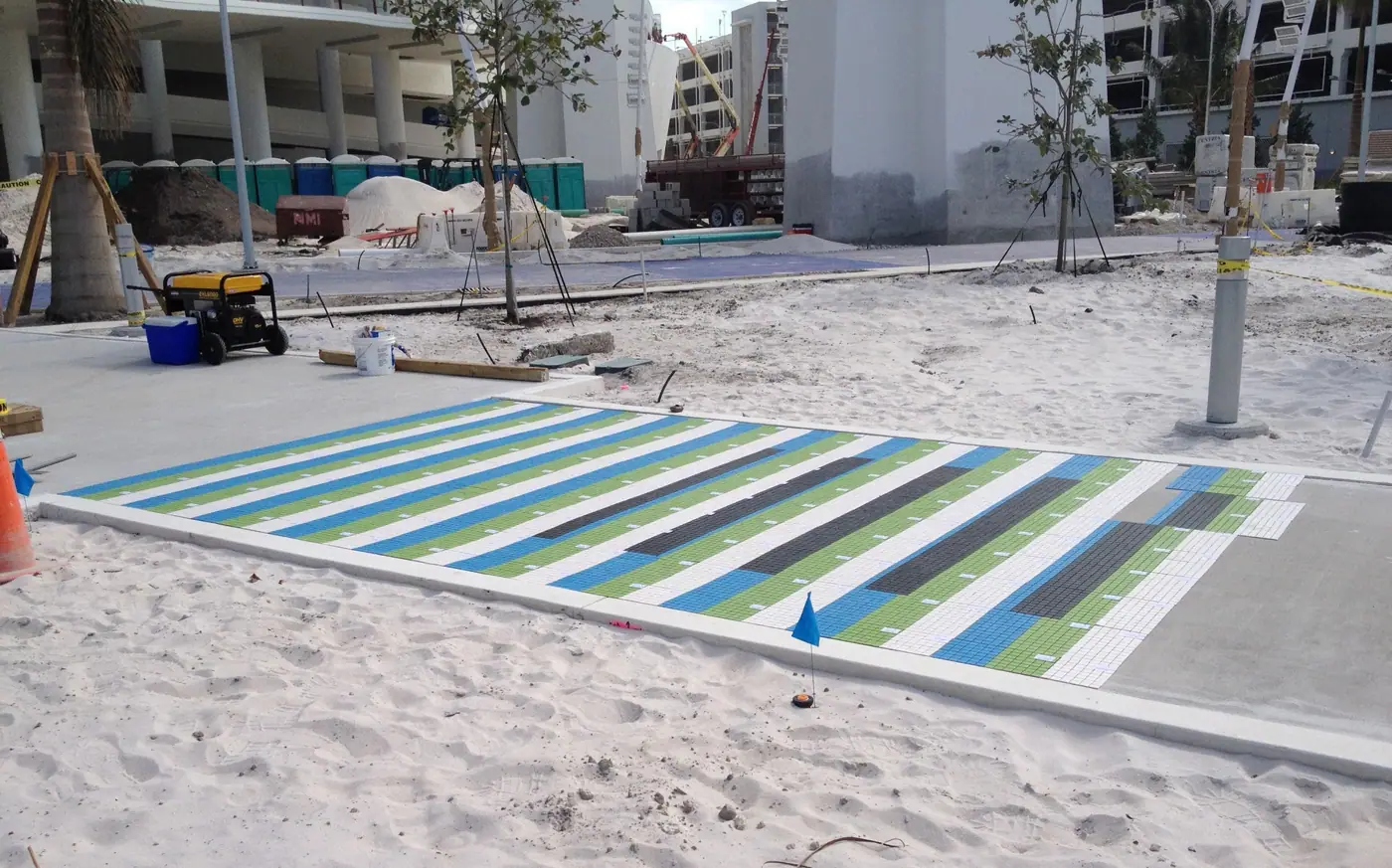
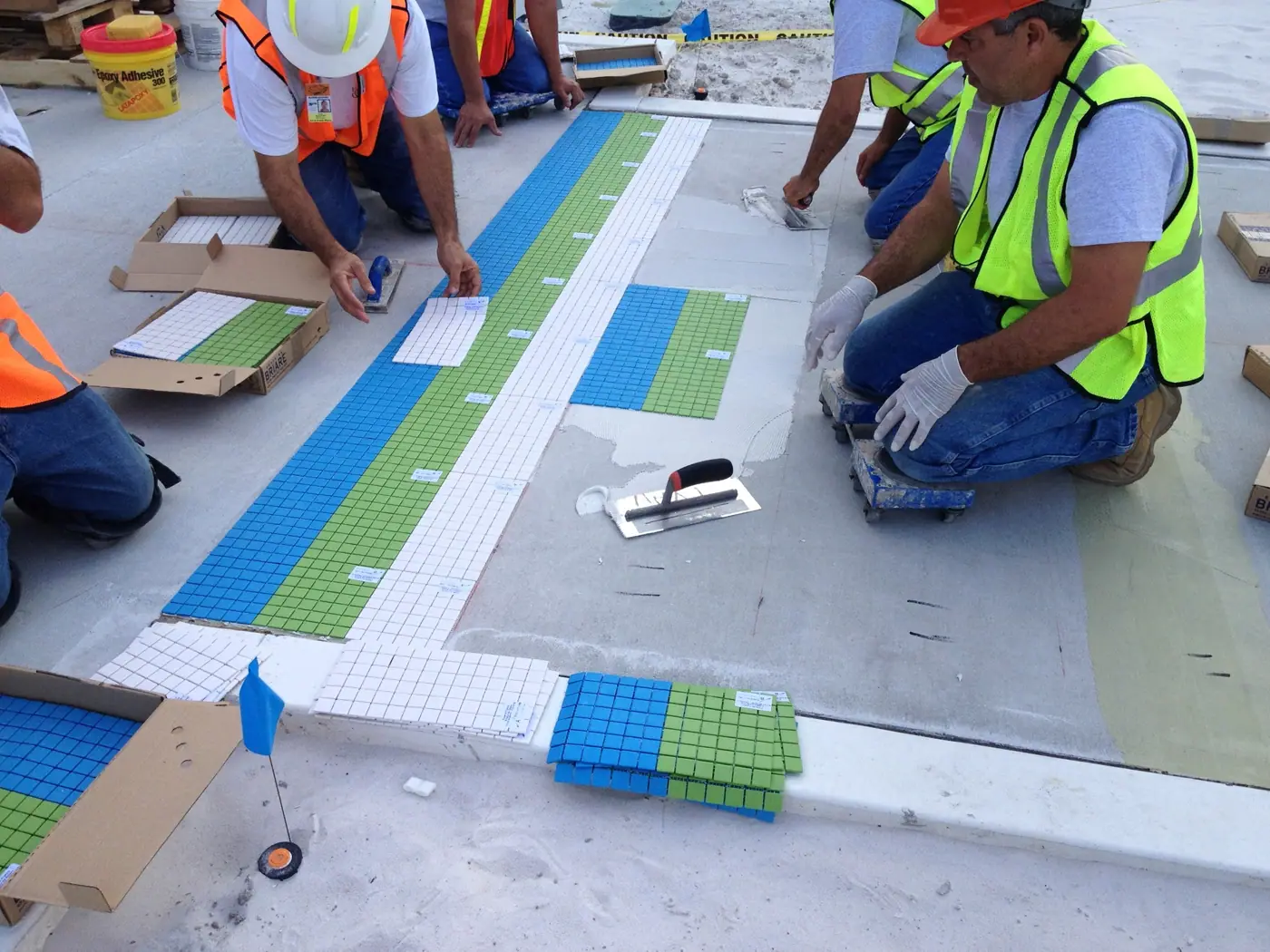
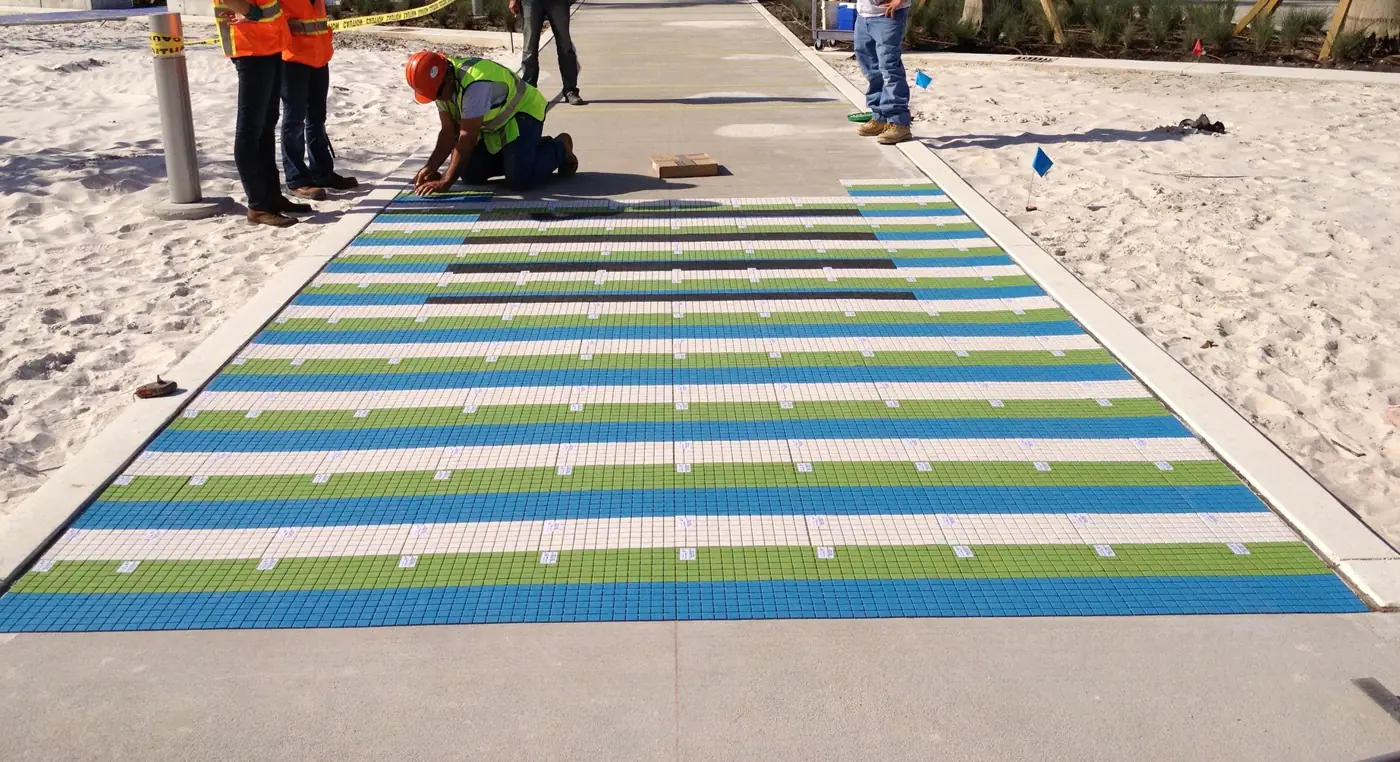
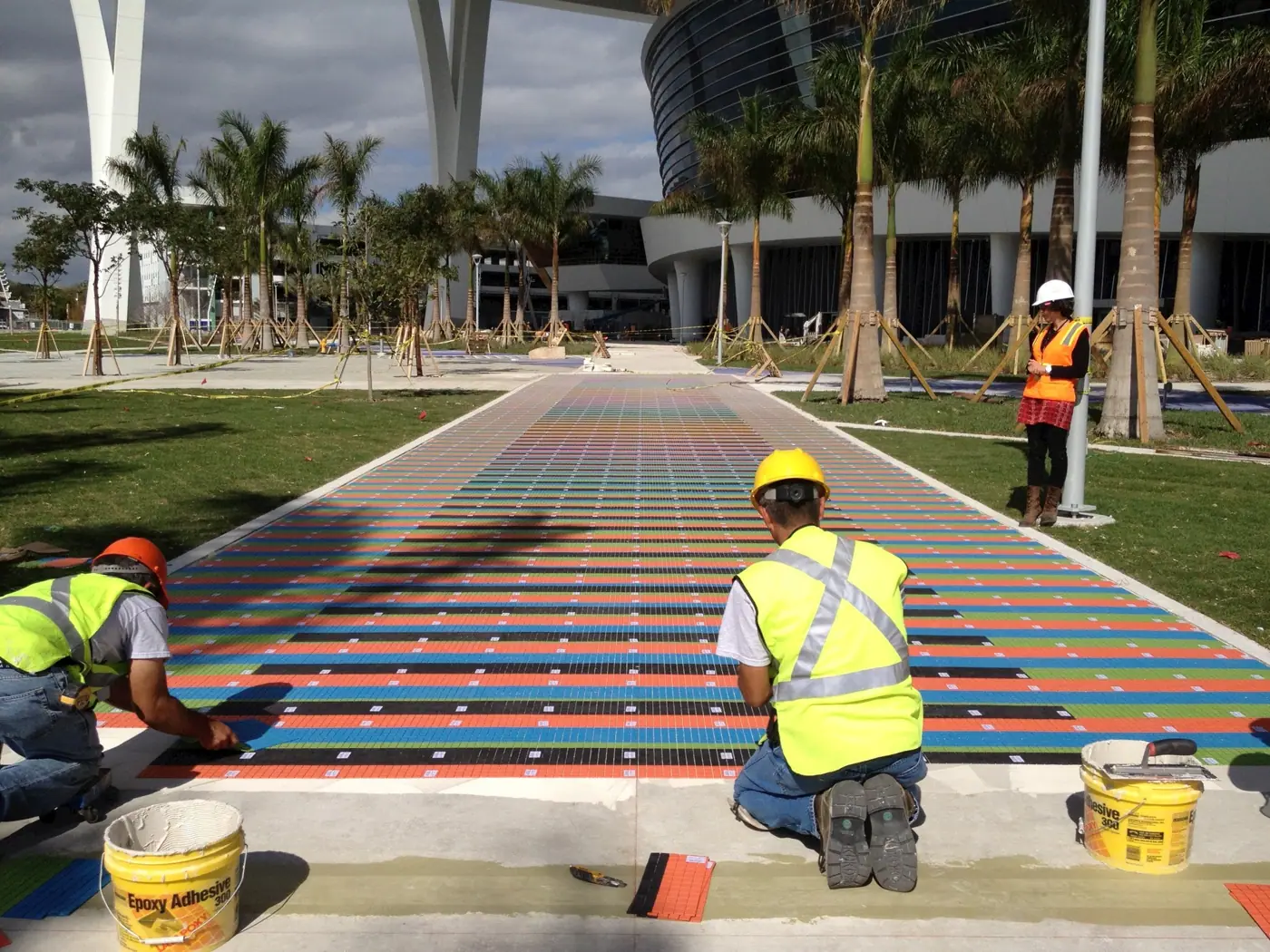
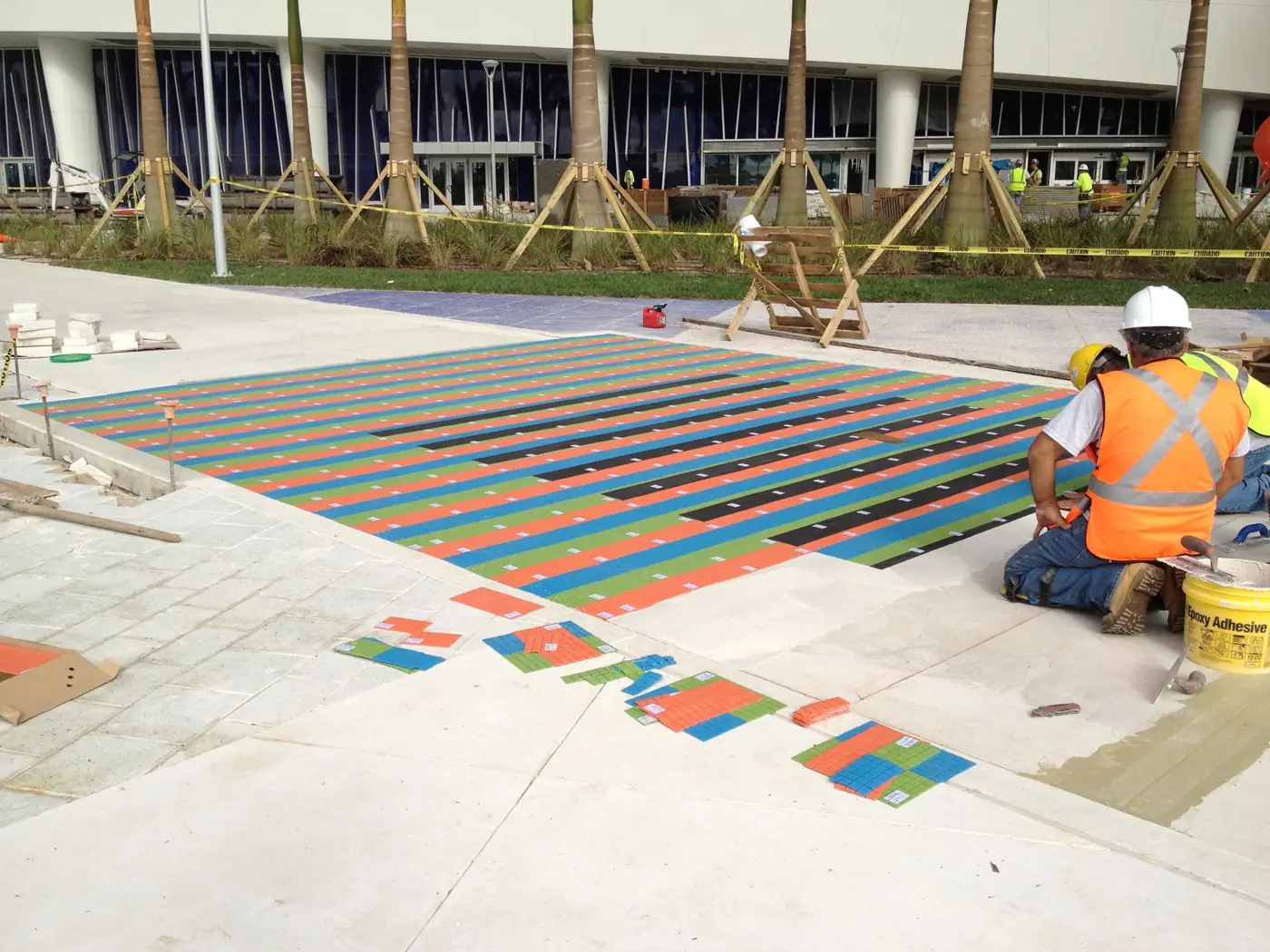
Carlos Cruz-Diez inaugurates his monumental artwork of architectural integration for the Miami Marlins ballpark. The work consists of three walkways with a total area of 1972 m², of a Double-frequency Chromatic Induction which can be appreciated by both spectators and all those who wander through the gardens adjacent to the stadium.
The purpose of the artist is to engage the public to experience color as a phenomenon, subject to infinite and subtle variations (such as changing weather conditions and the displacement of the observer), while achieving it through his long-standing ambition to bring art to public spaces for the enjoyment of all.
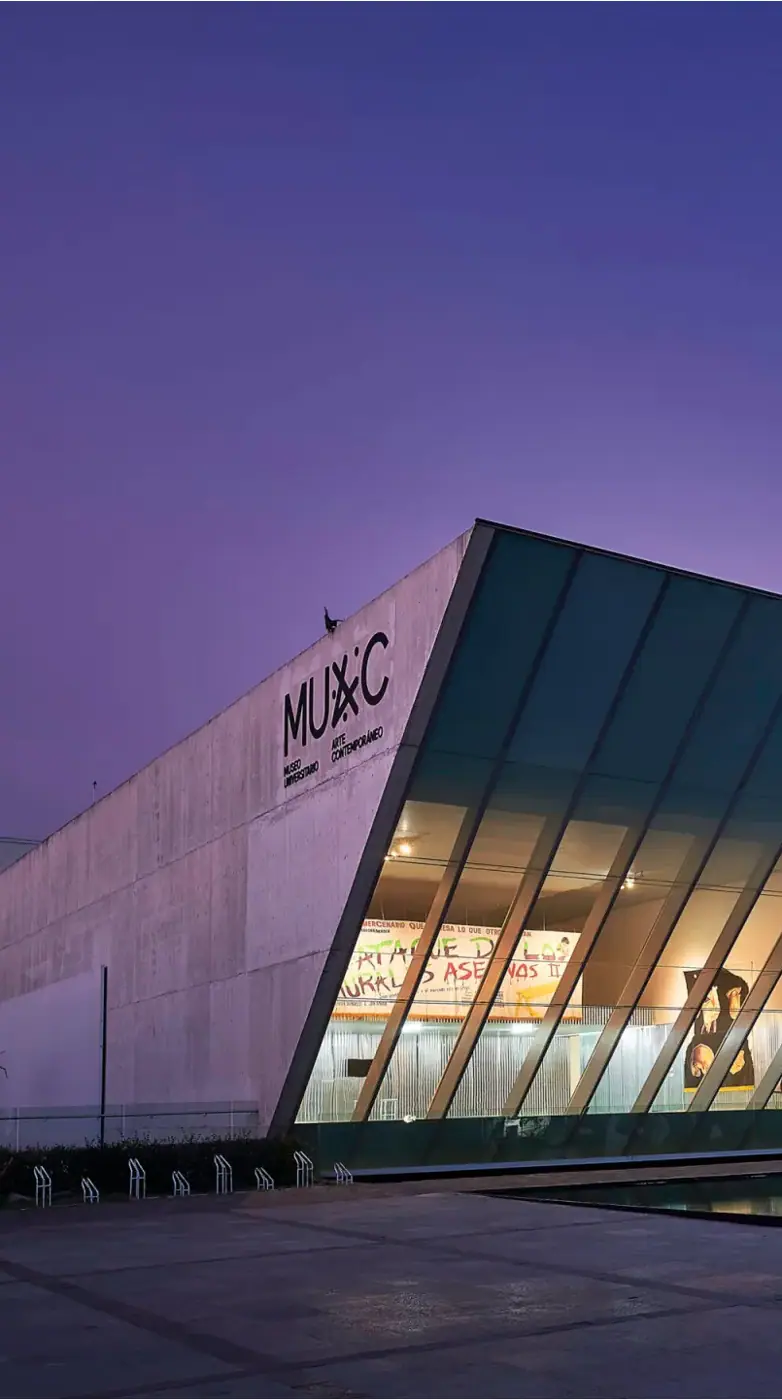
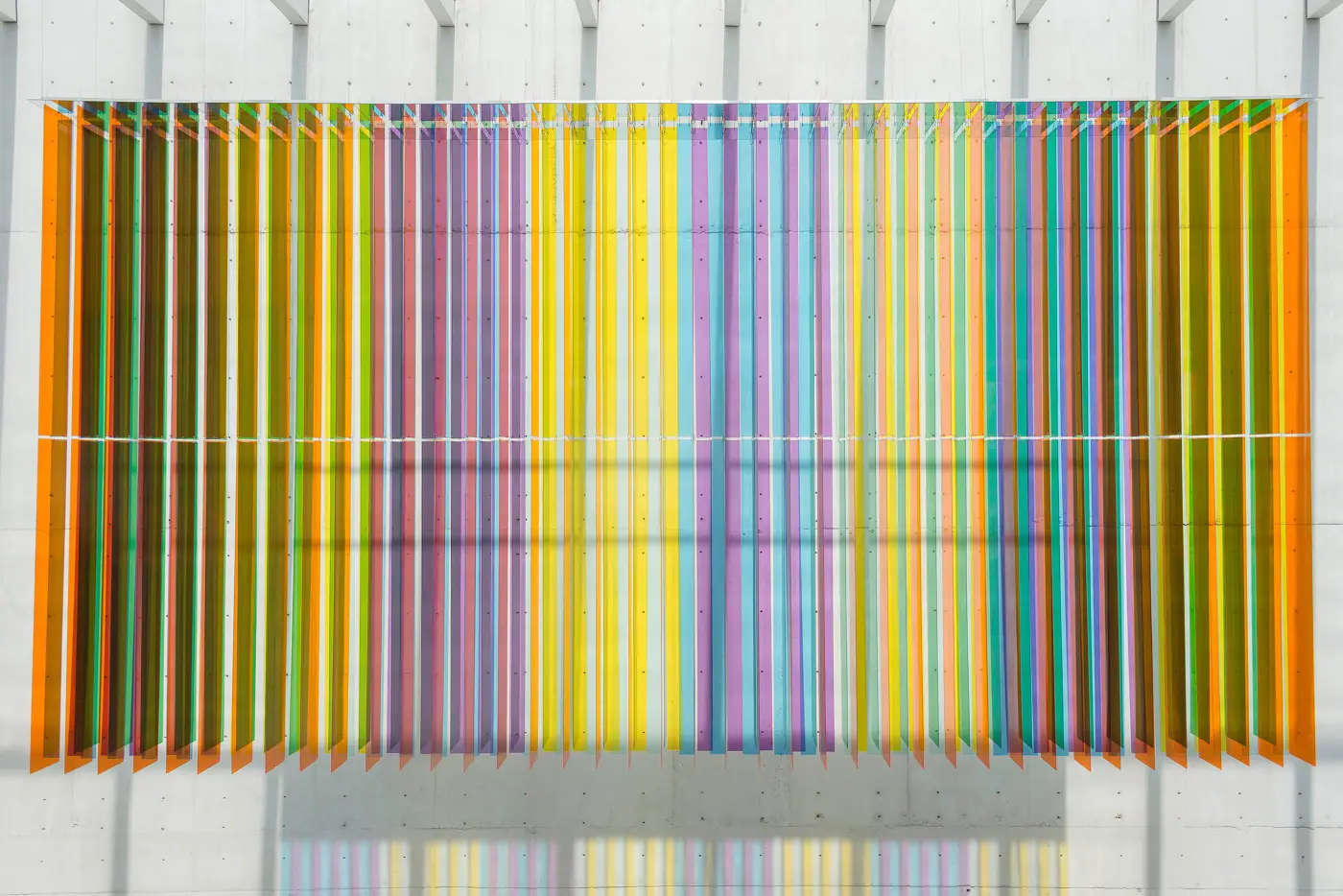
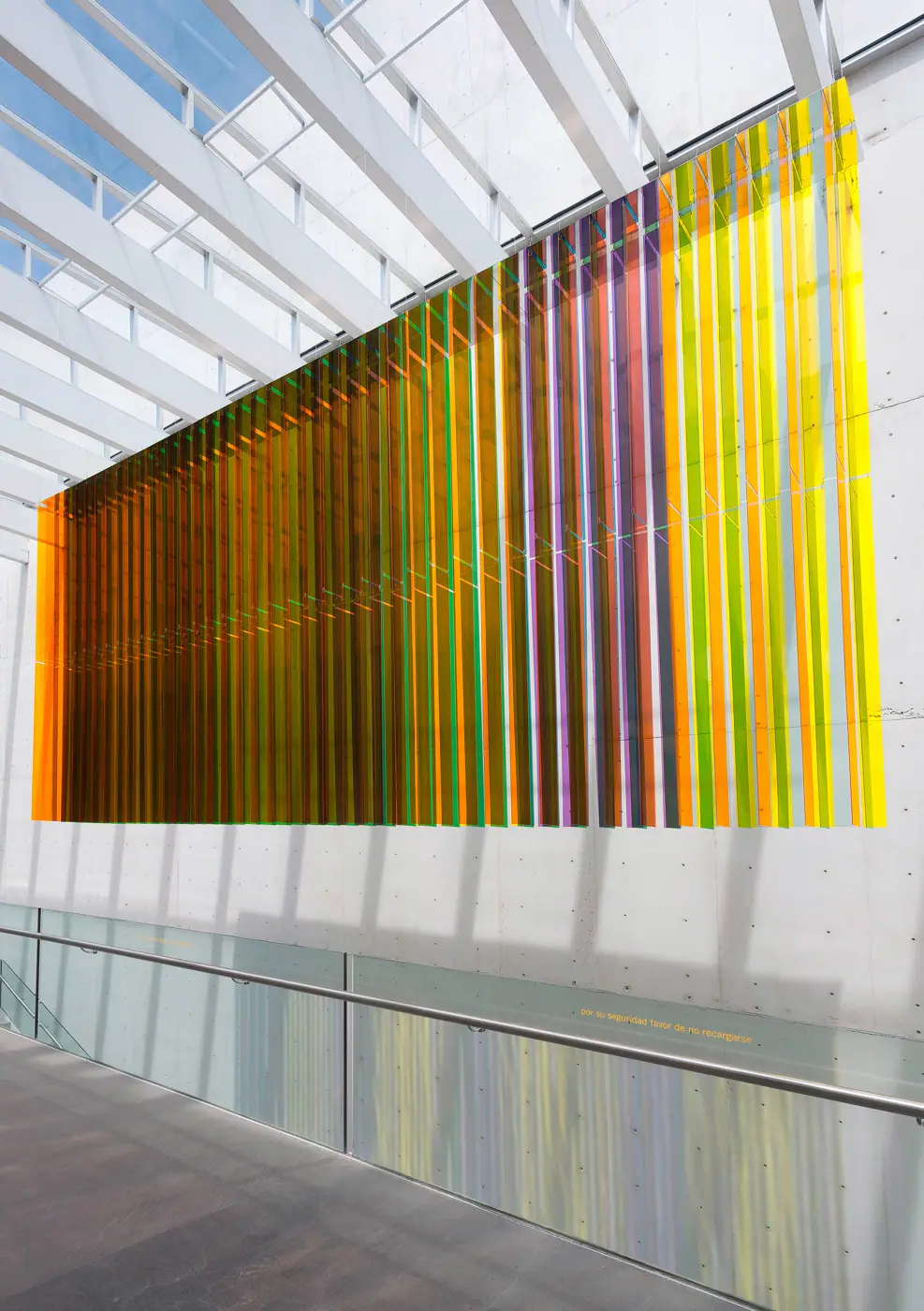
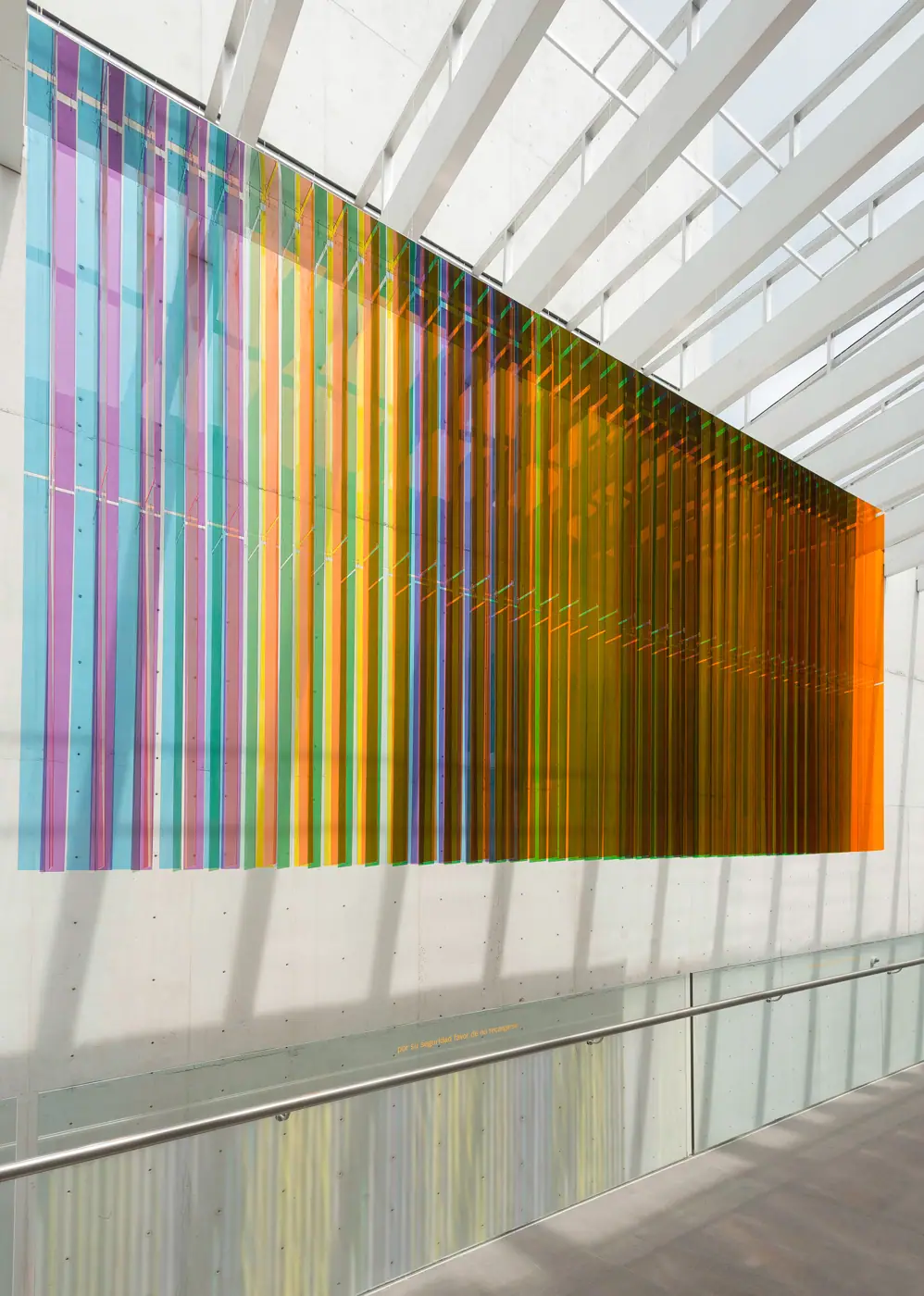
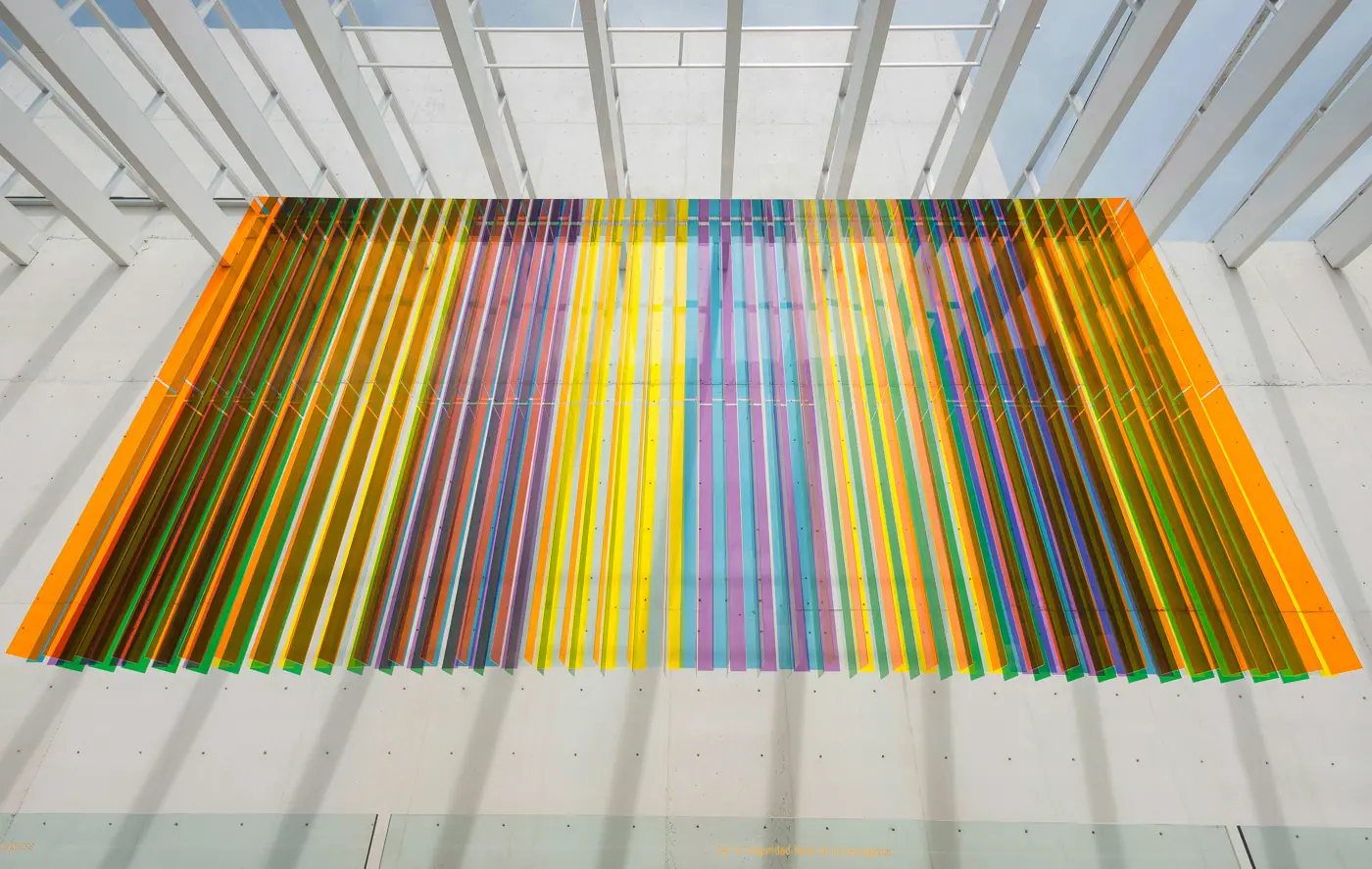
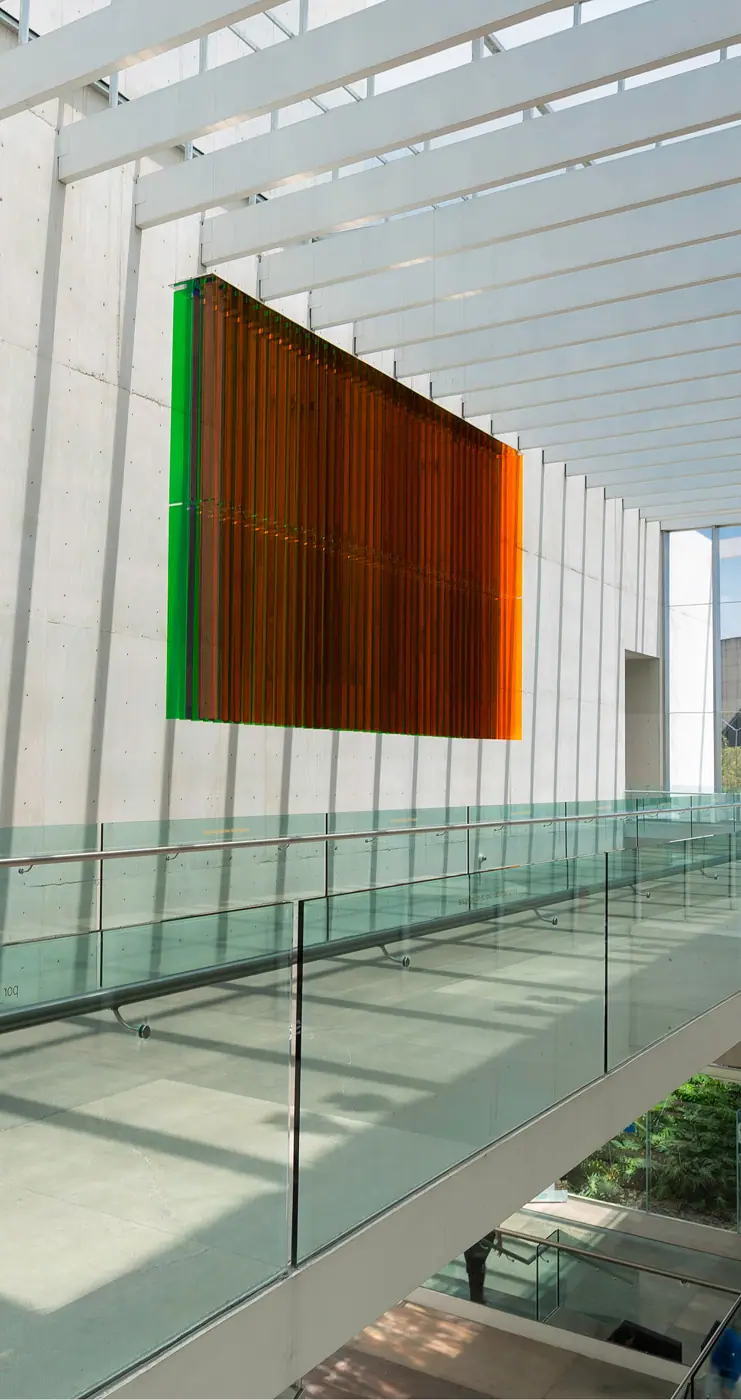
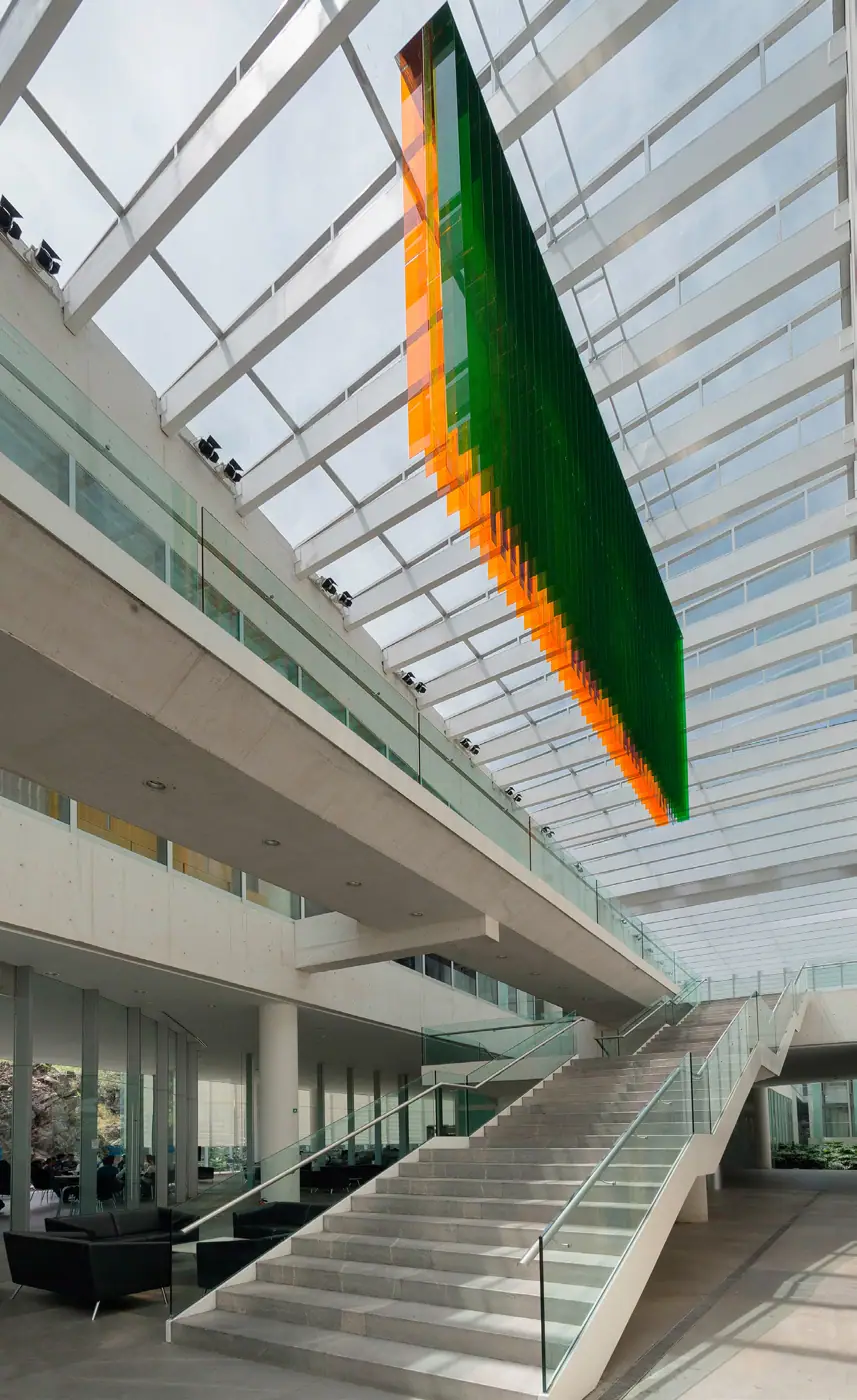
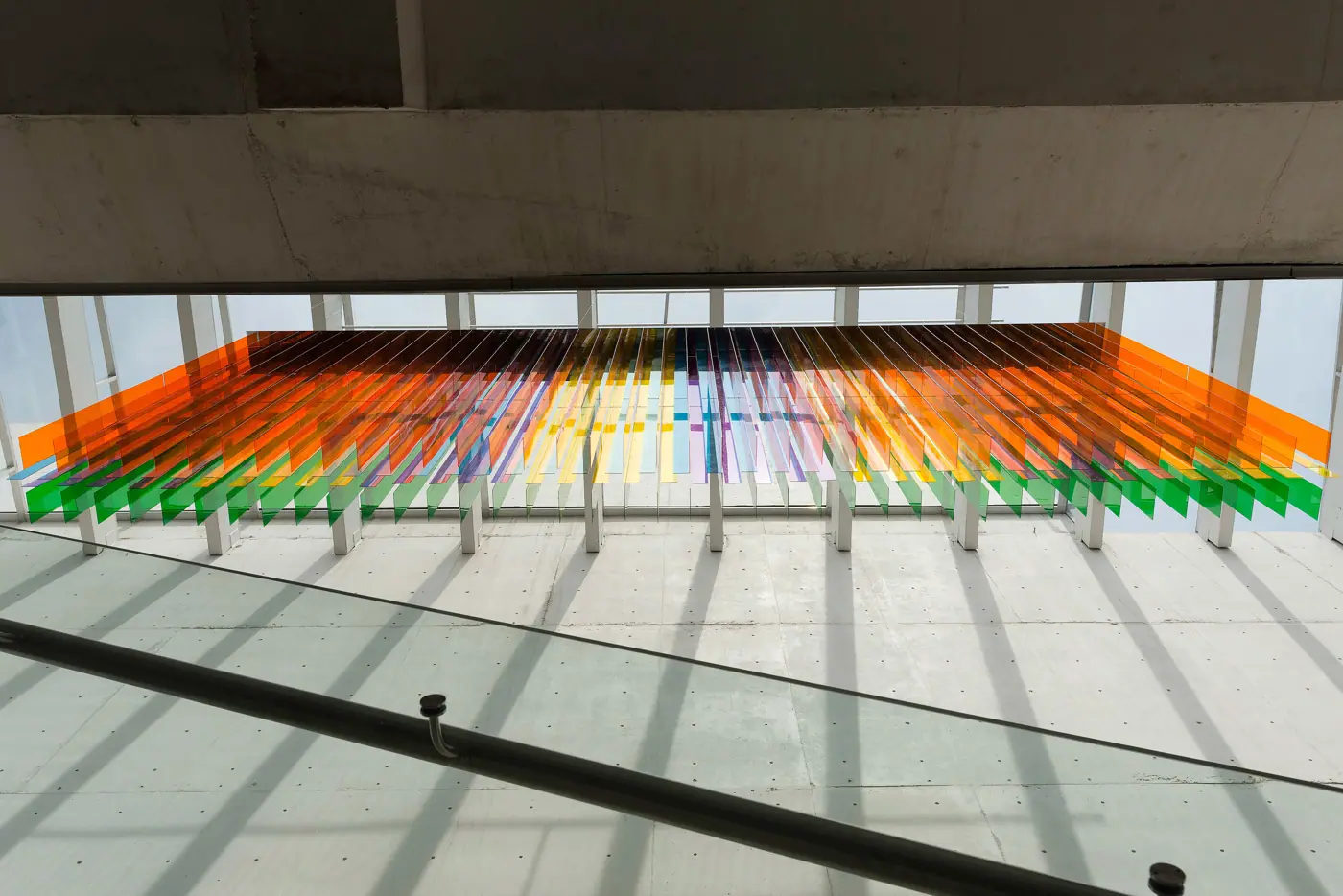
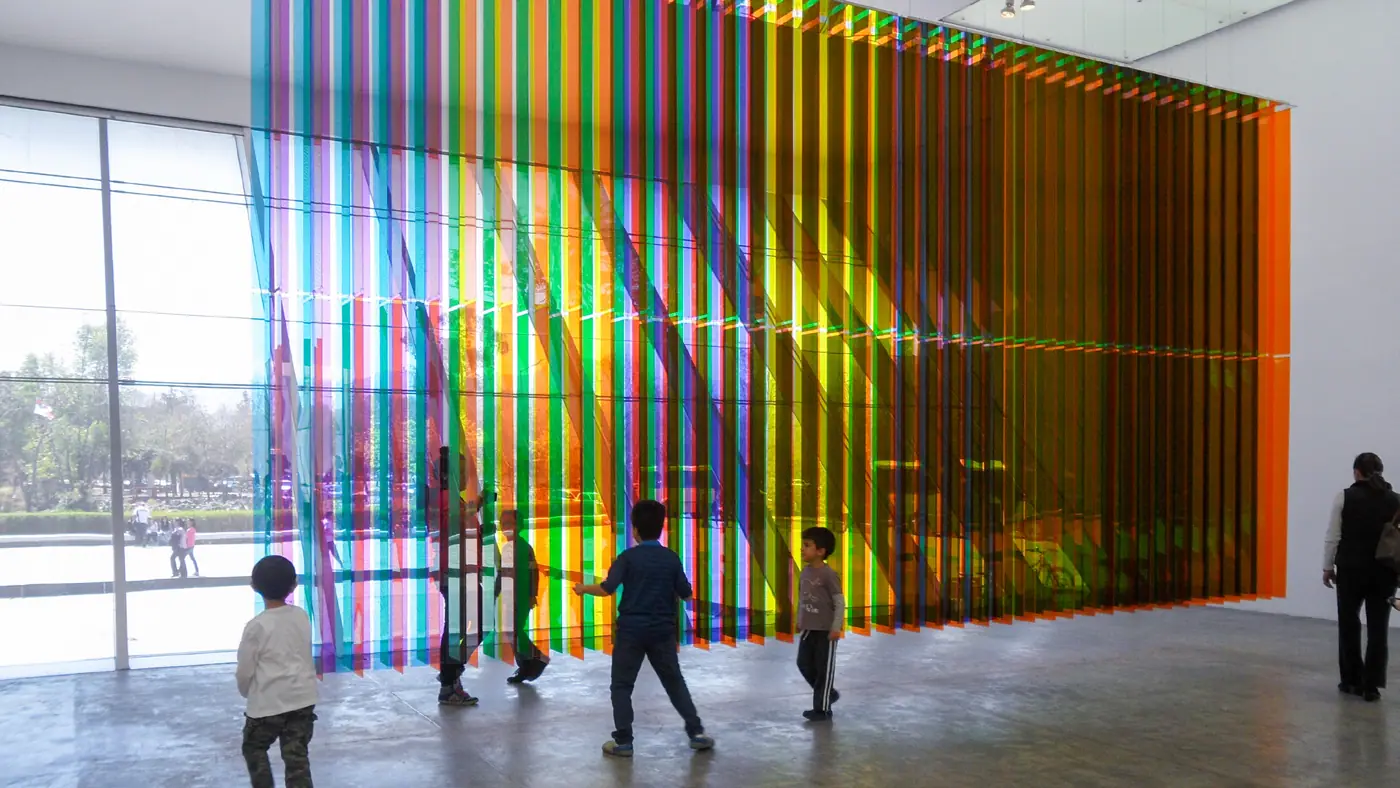
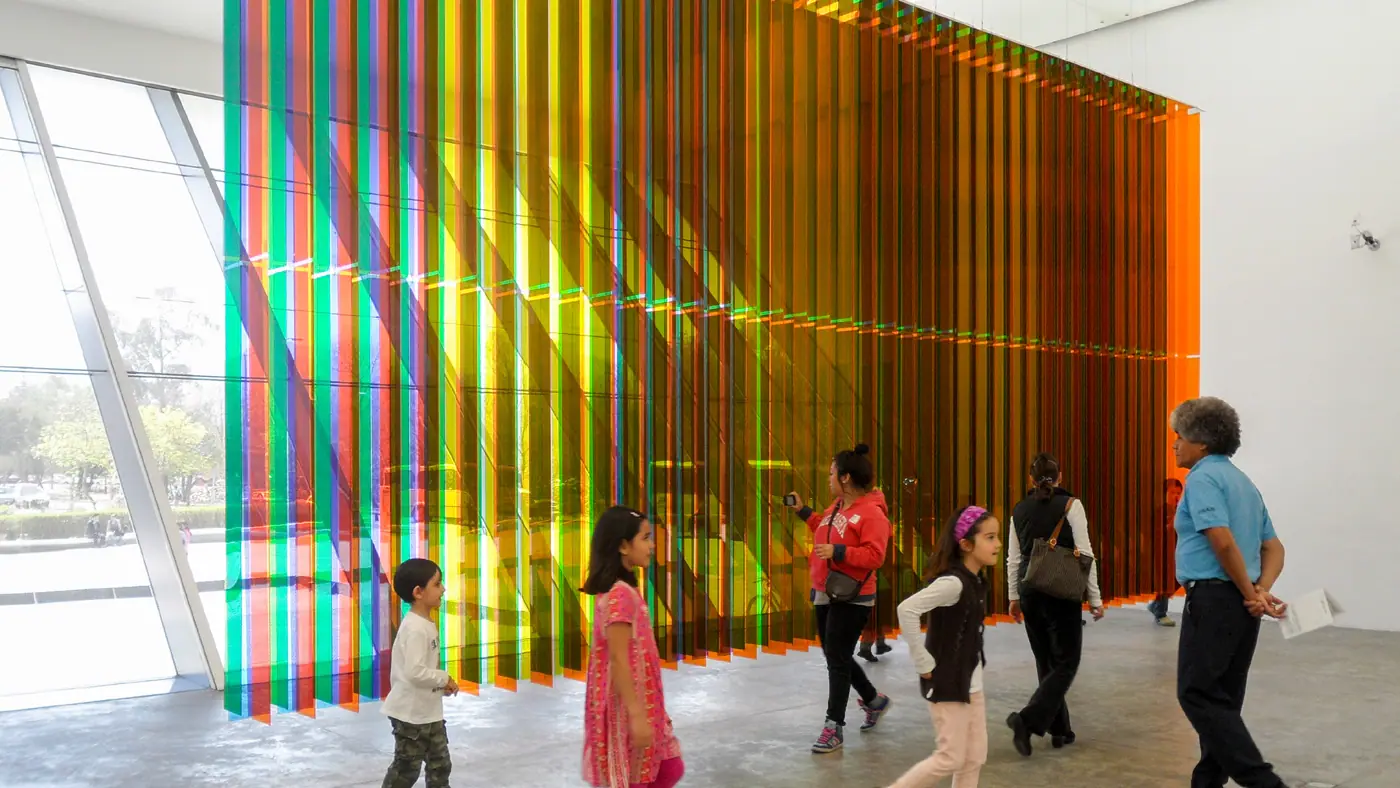
Carlos Cruz-Diez's Grande Transchromie is on view at MUAC, Museo Universitario Arte Contemporáneo, in Mexico City. This monumental work belongs to the Cruz-Diez Foundation Collection.
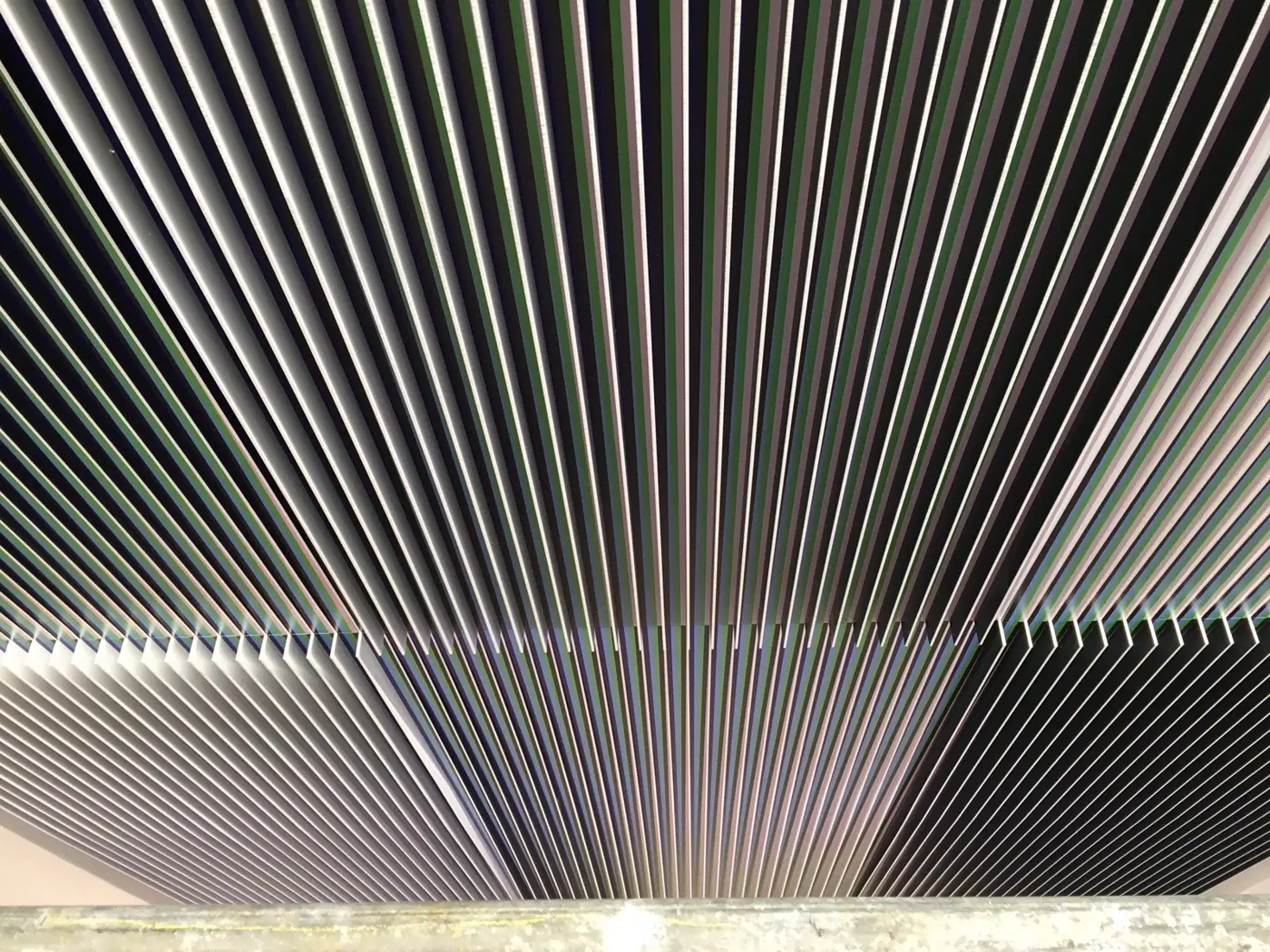
Carlos Cruz-Diez's Transchromies are based on color subtraction. When a number of transparent colored sheets are superimposed at various distances and in a certain order, subtractive combinations are generated and fluctuate as the viewer moves or the light or surrounding colors change.
“When one looks through the transparent colors that make the Transchromie, one sees nature modified by the phenomenon of chromatic subtraction” – Carlos Cruz-Diez
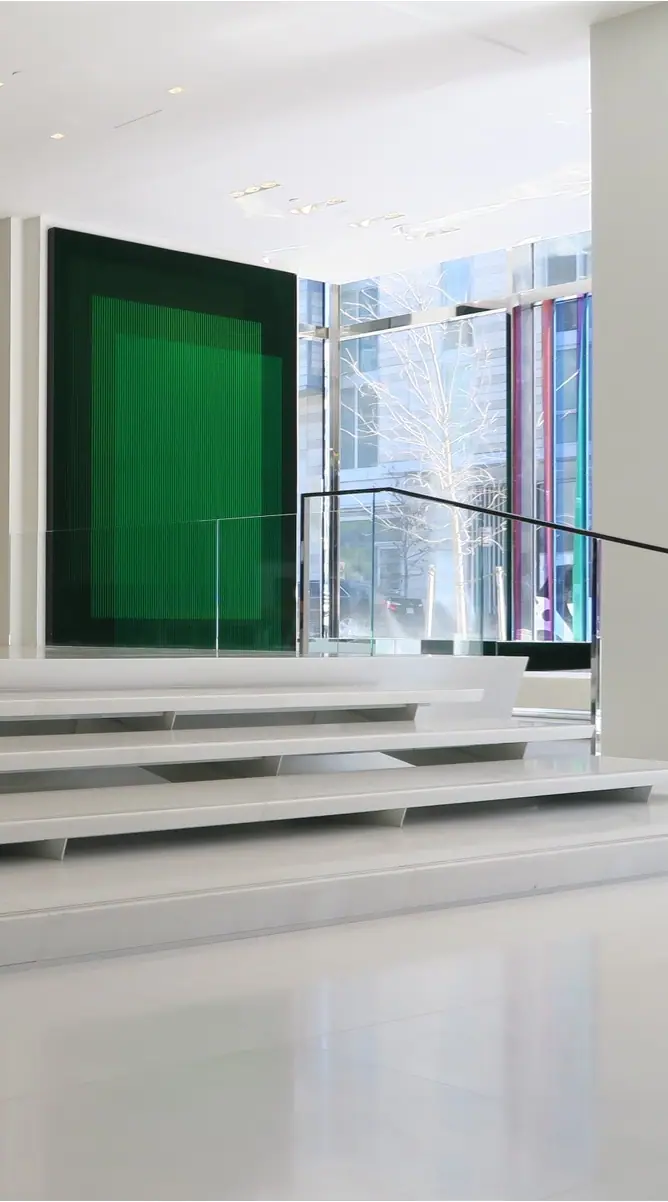
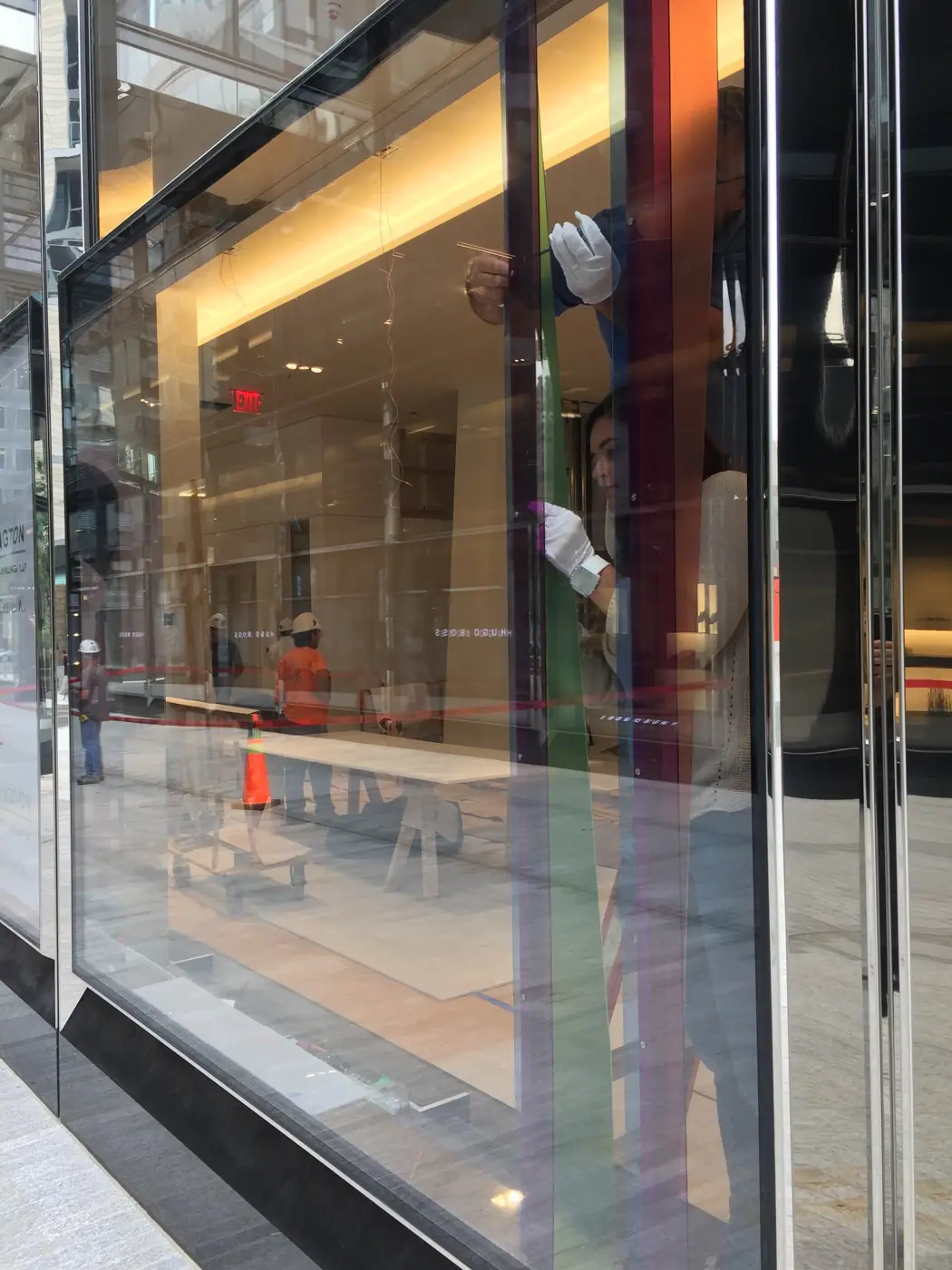
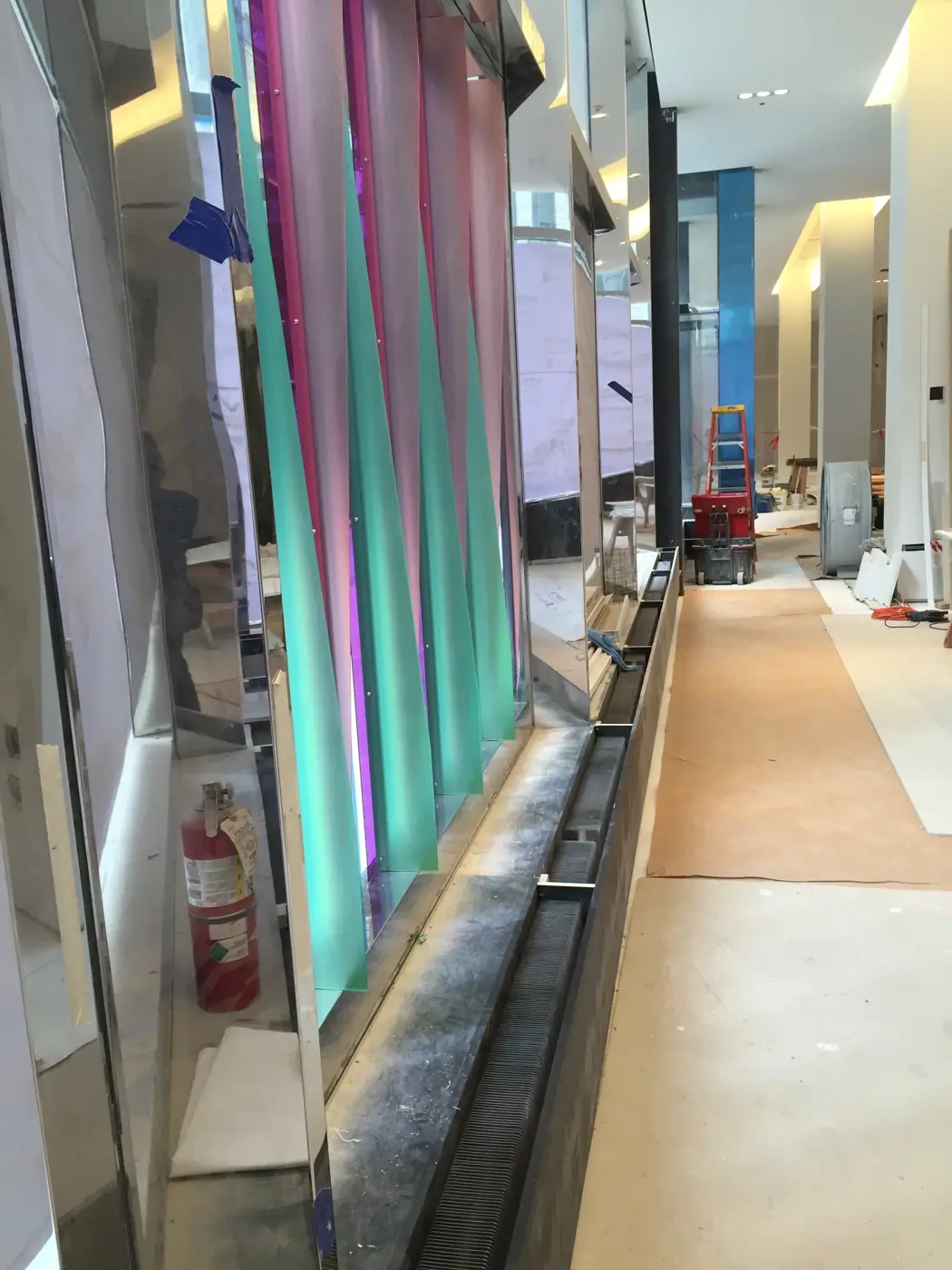
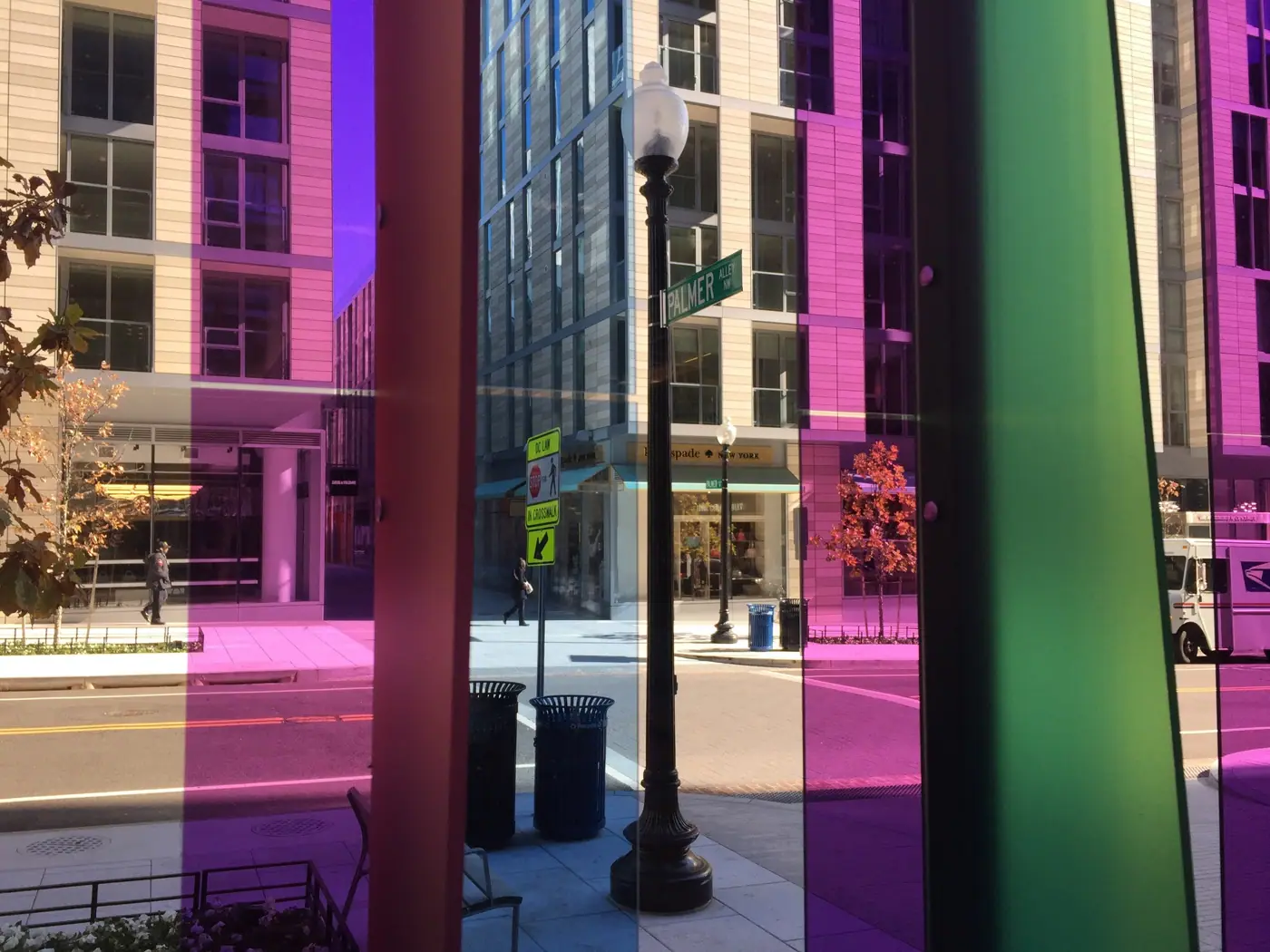
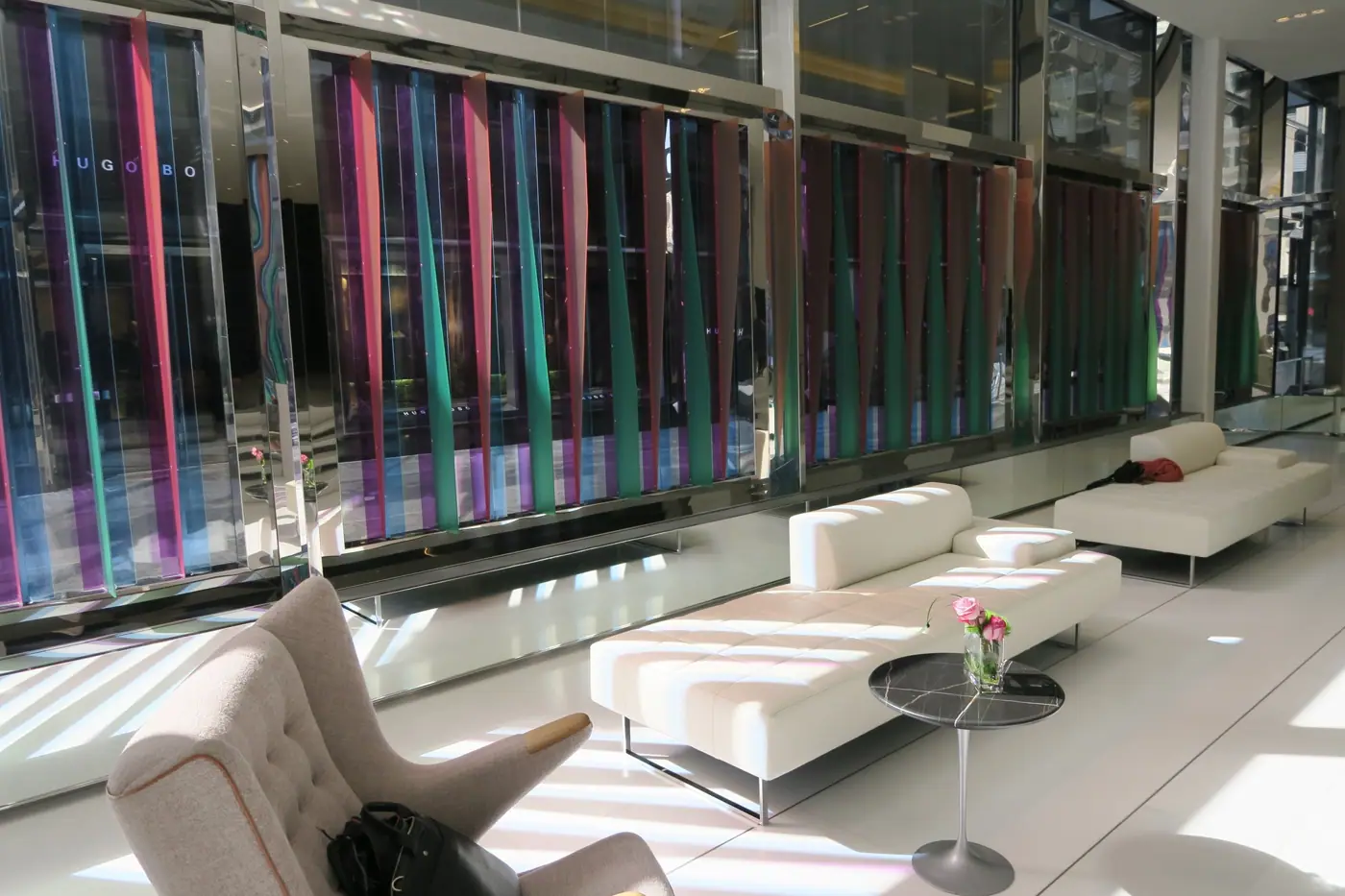
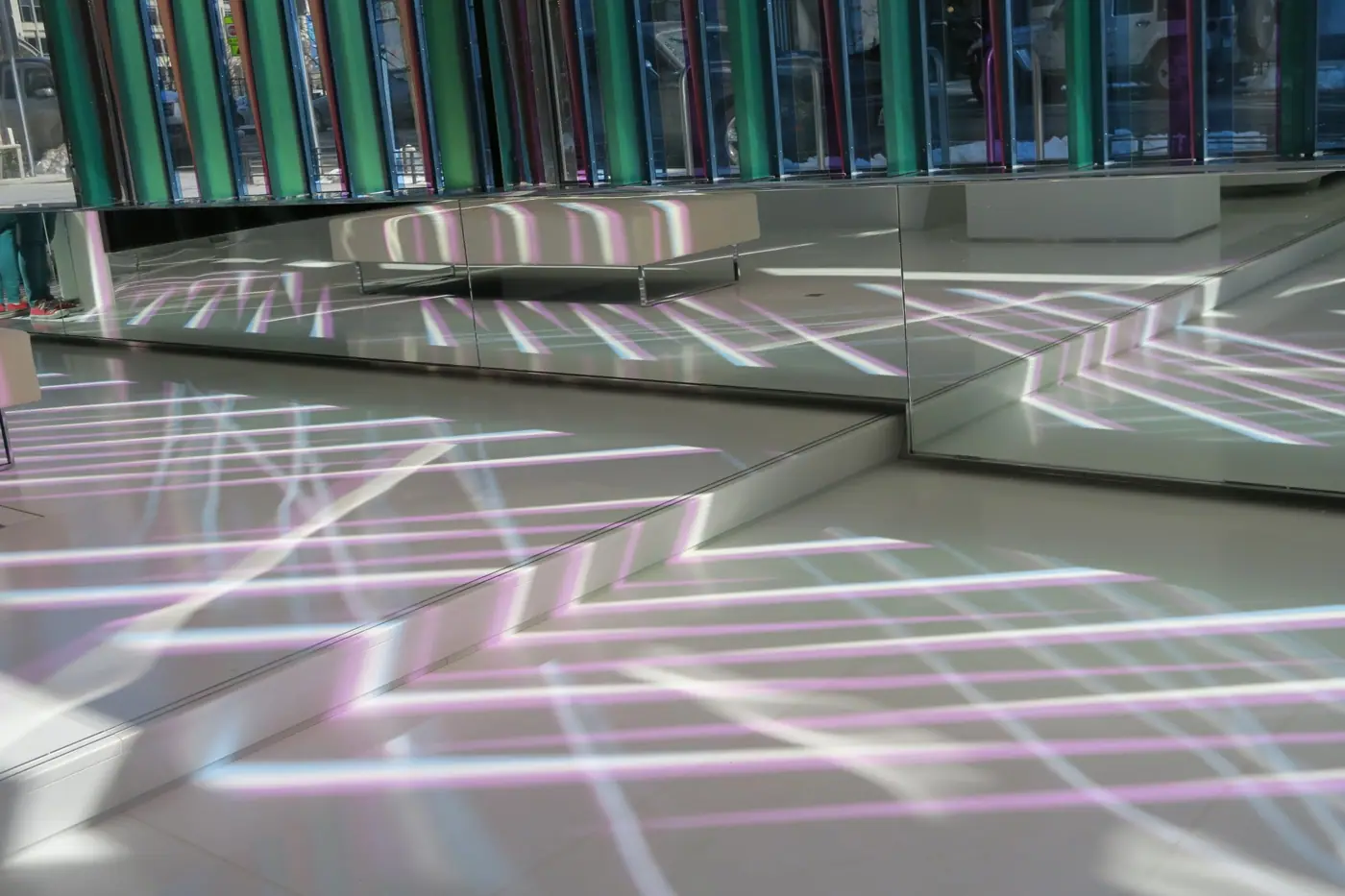
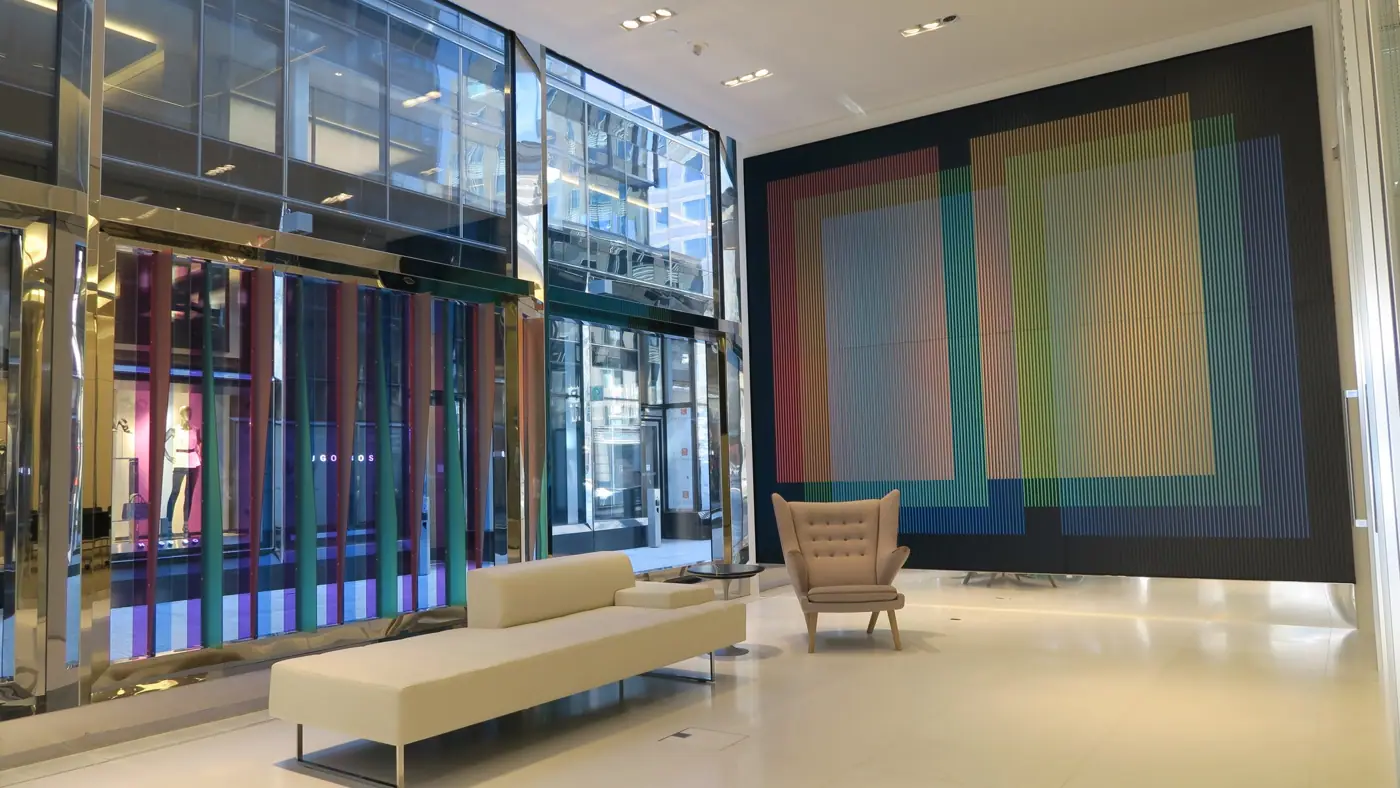
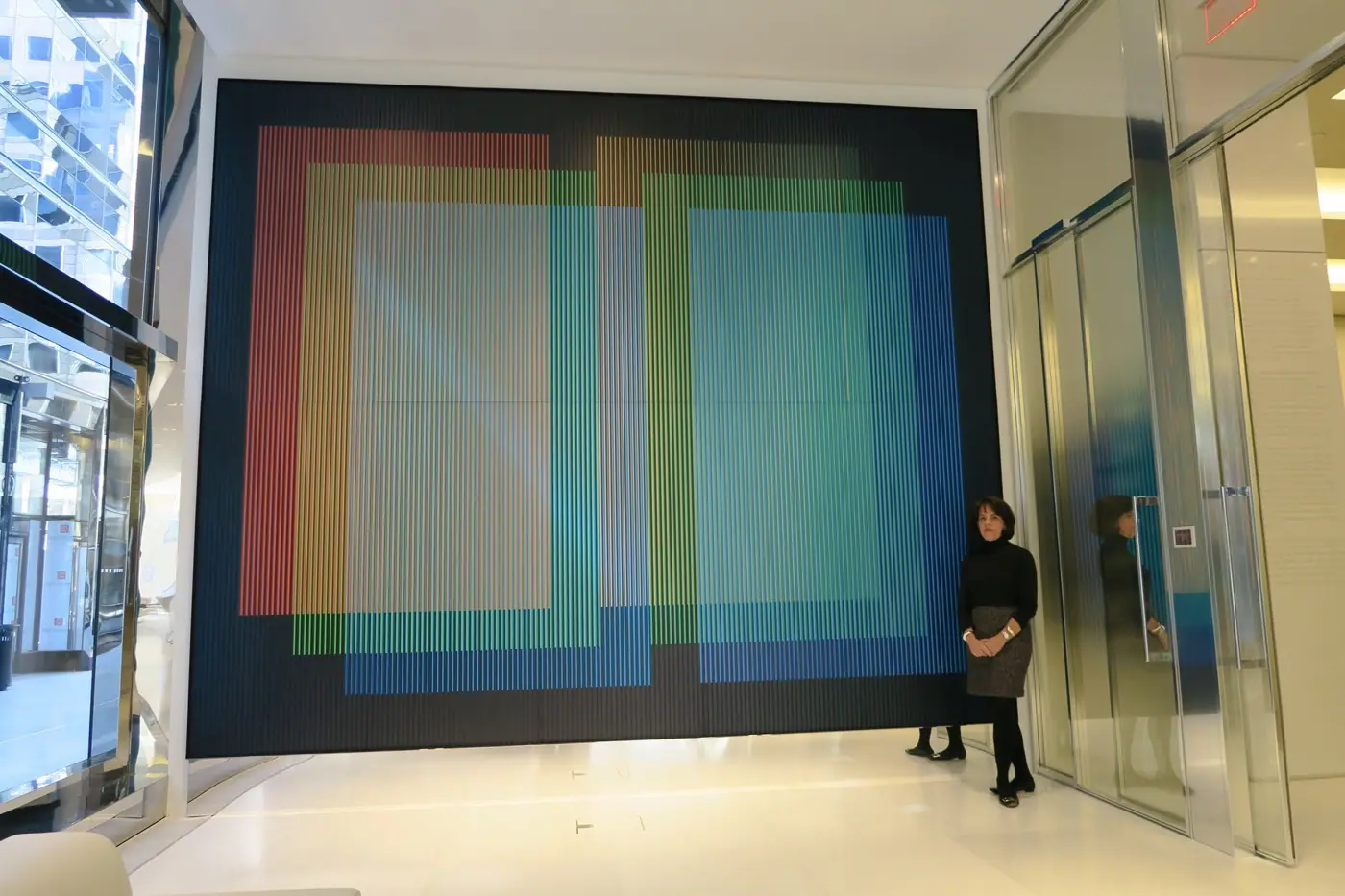
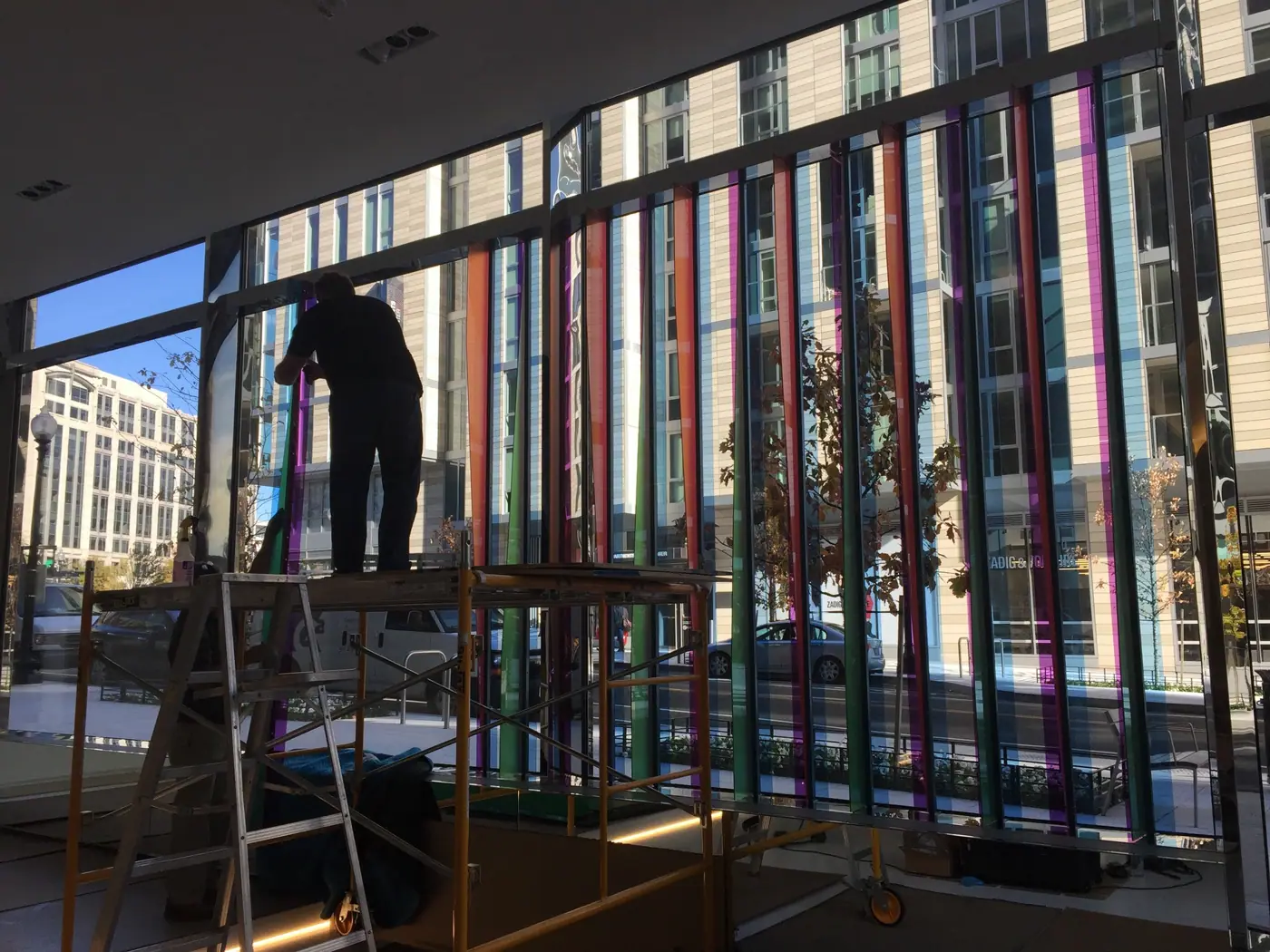
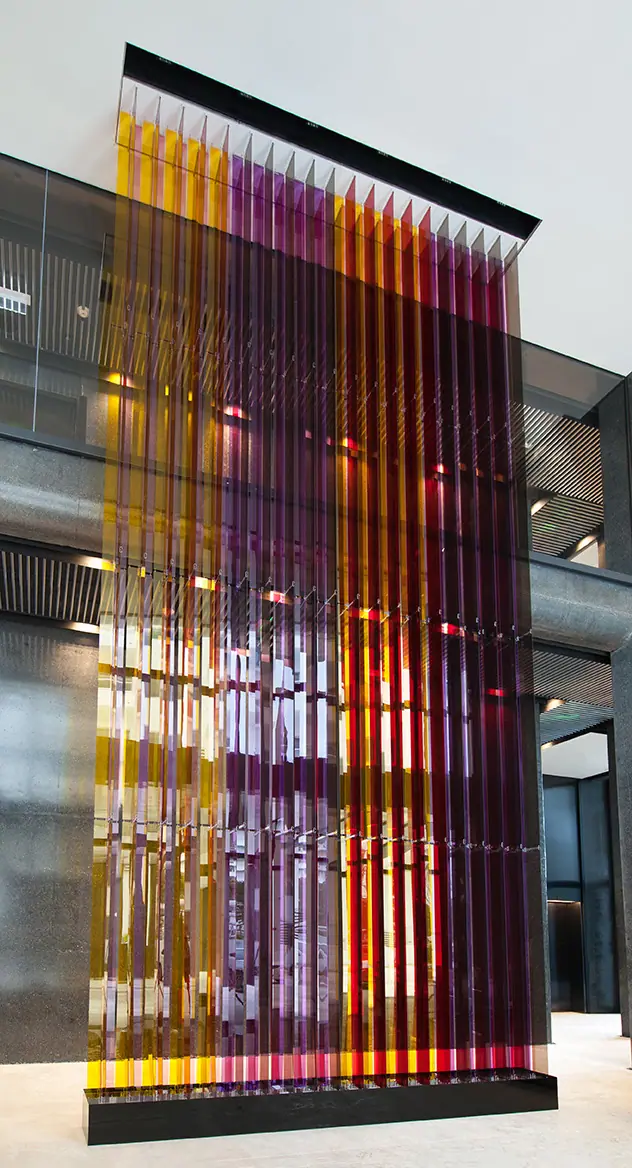
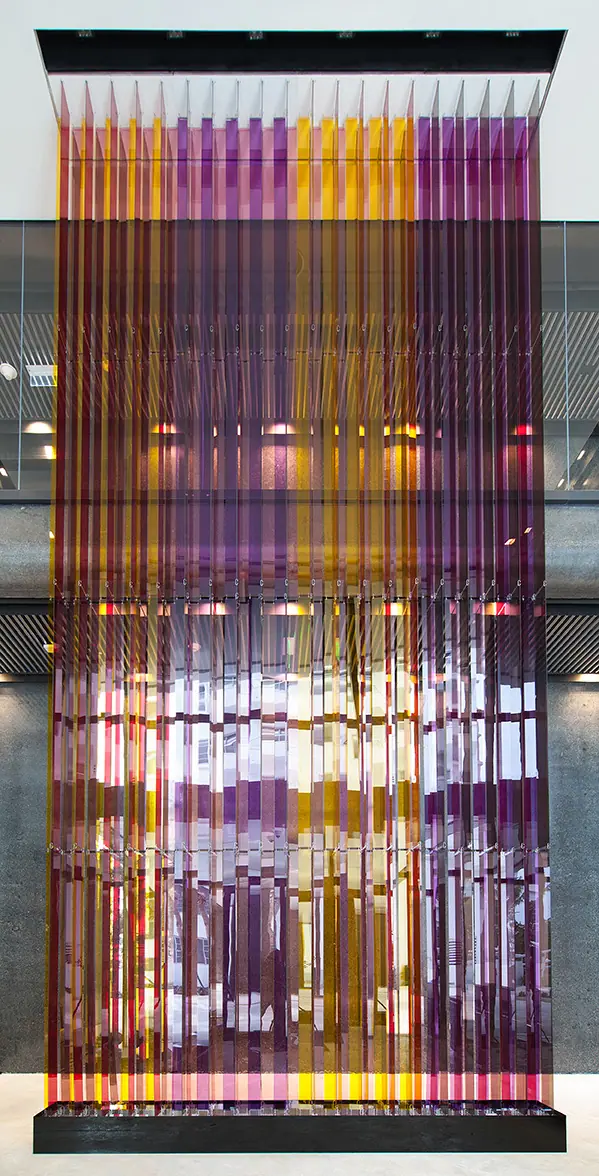
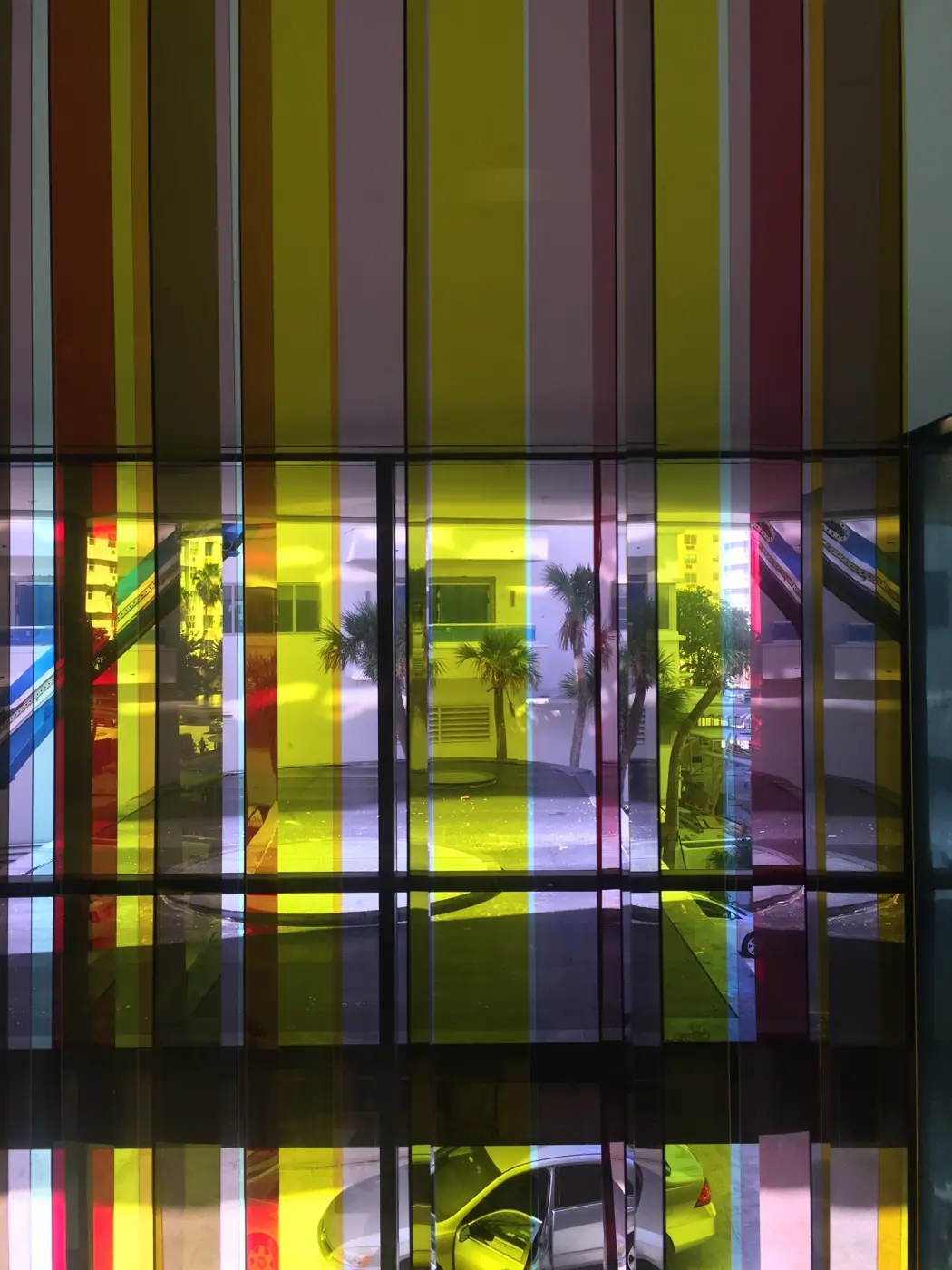
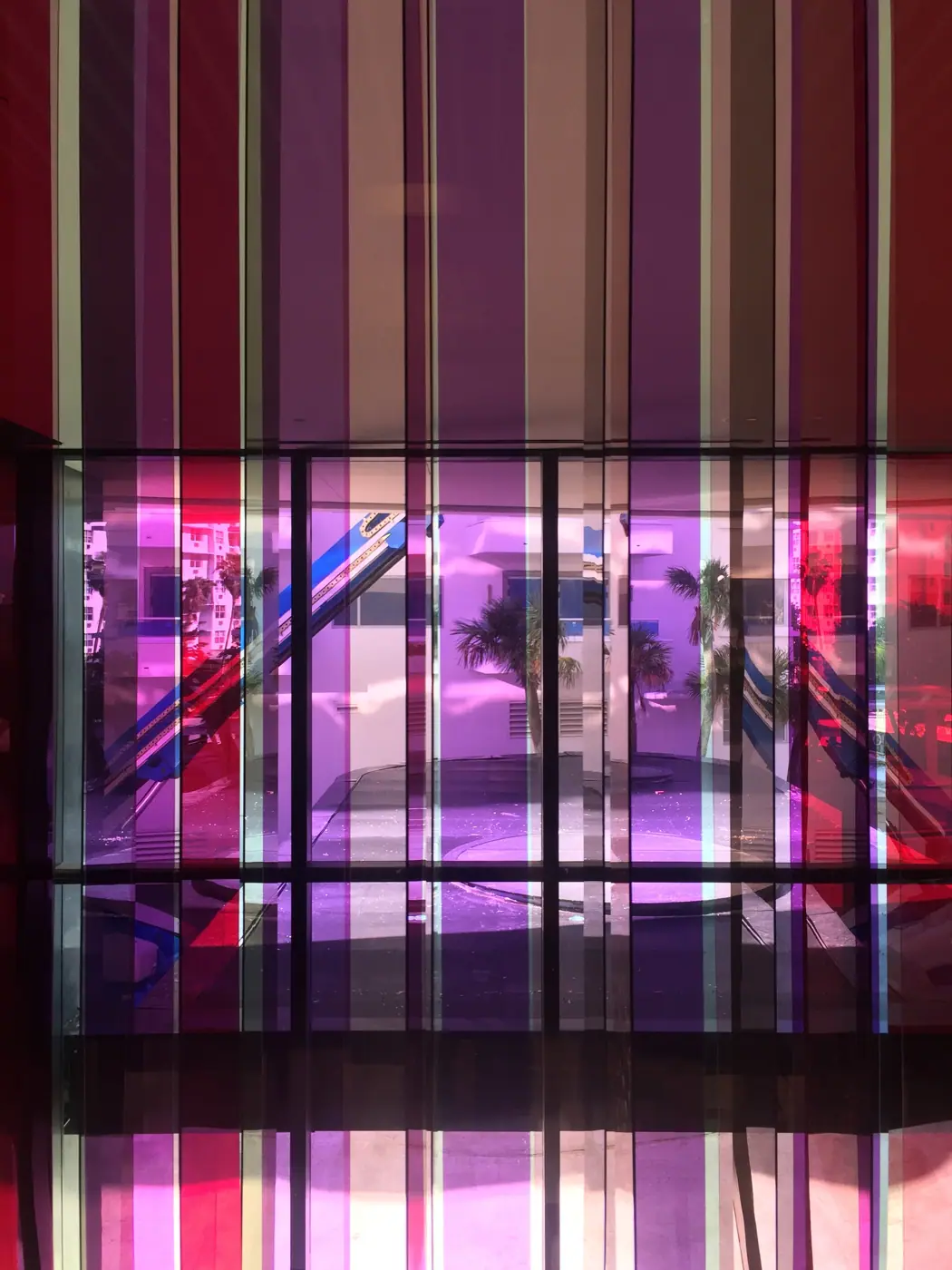
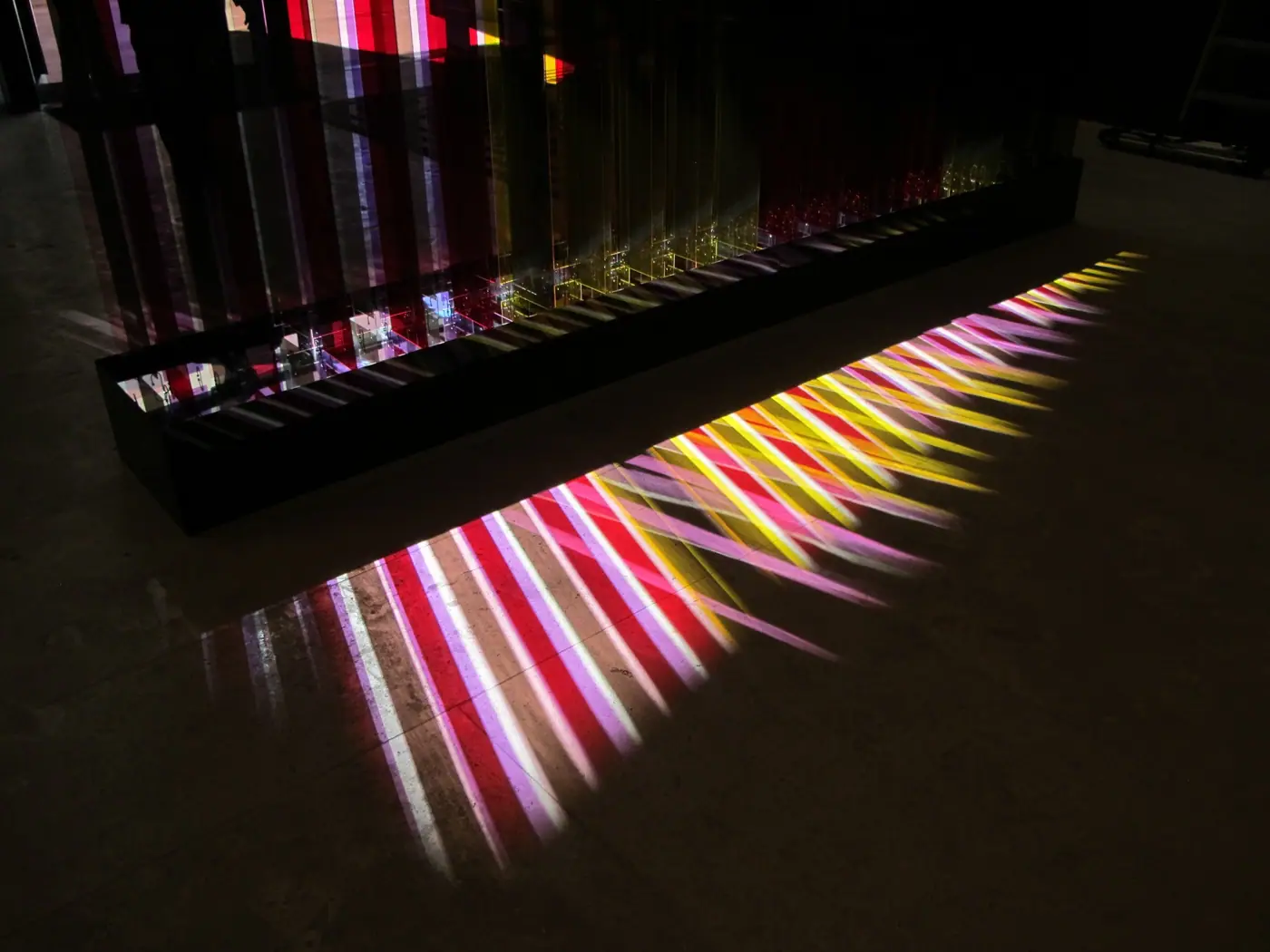
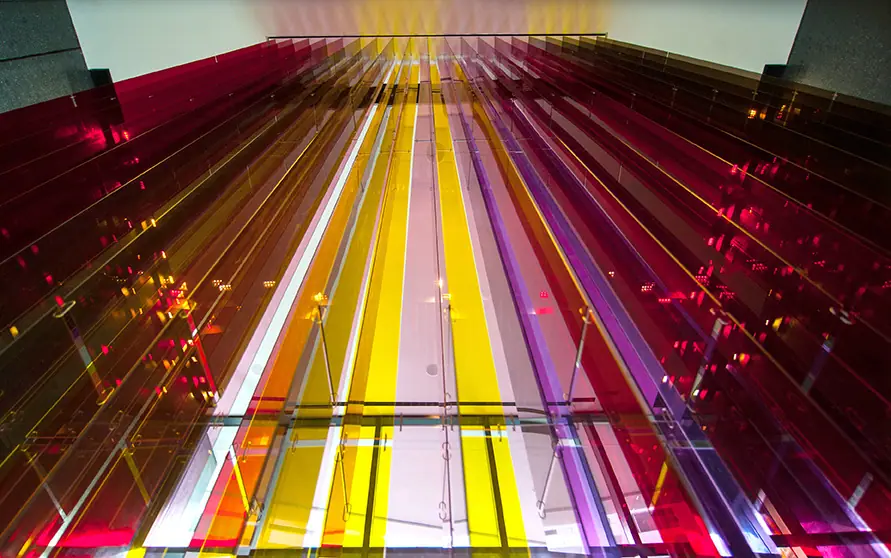
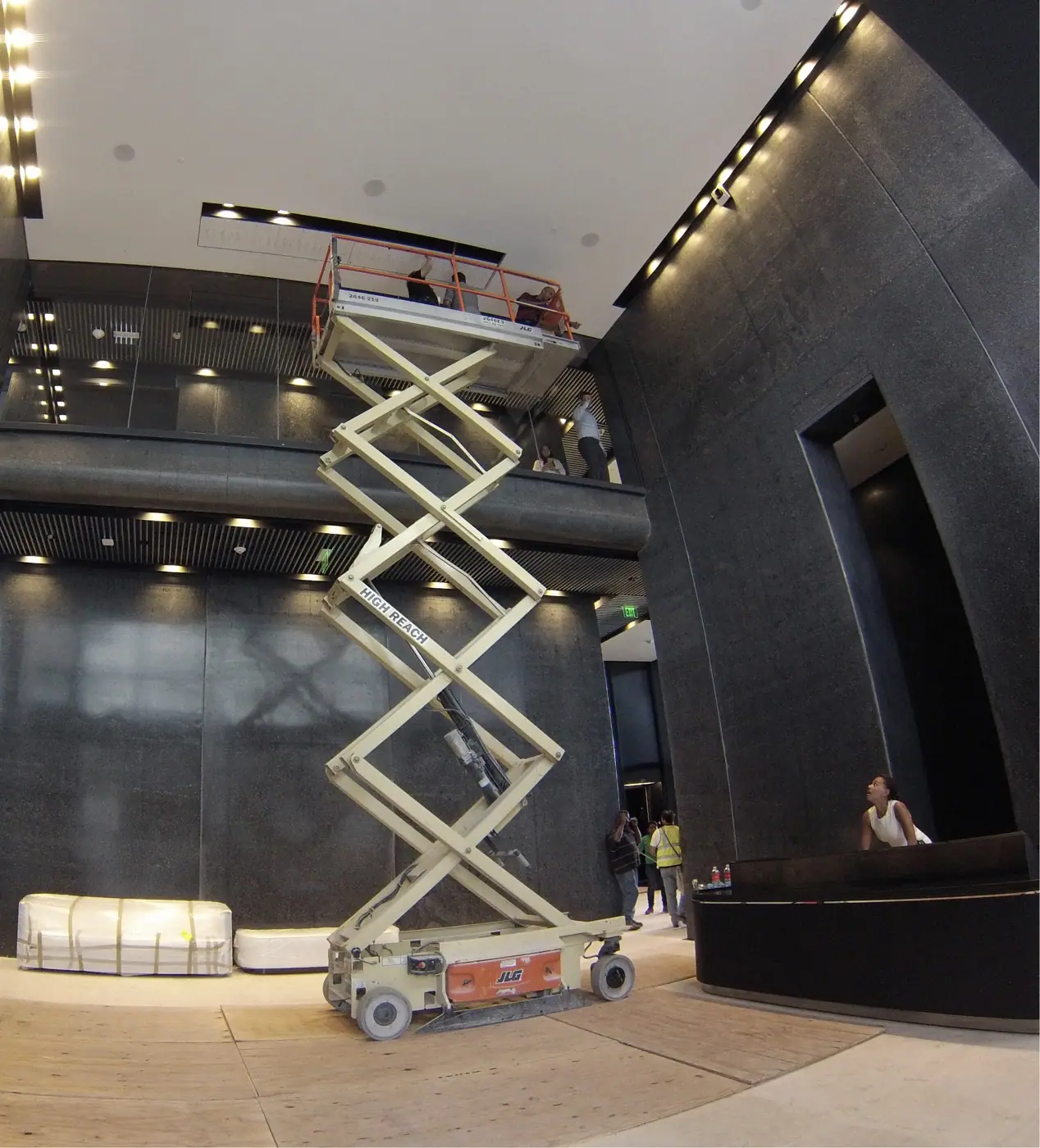
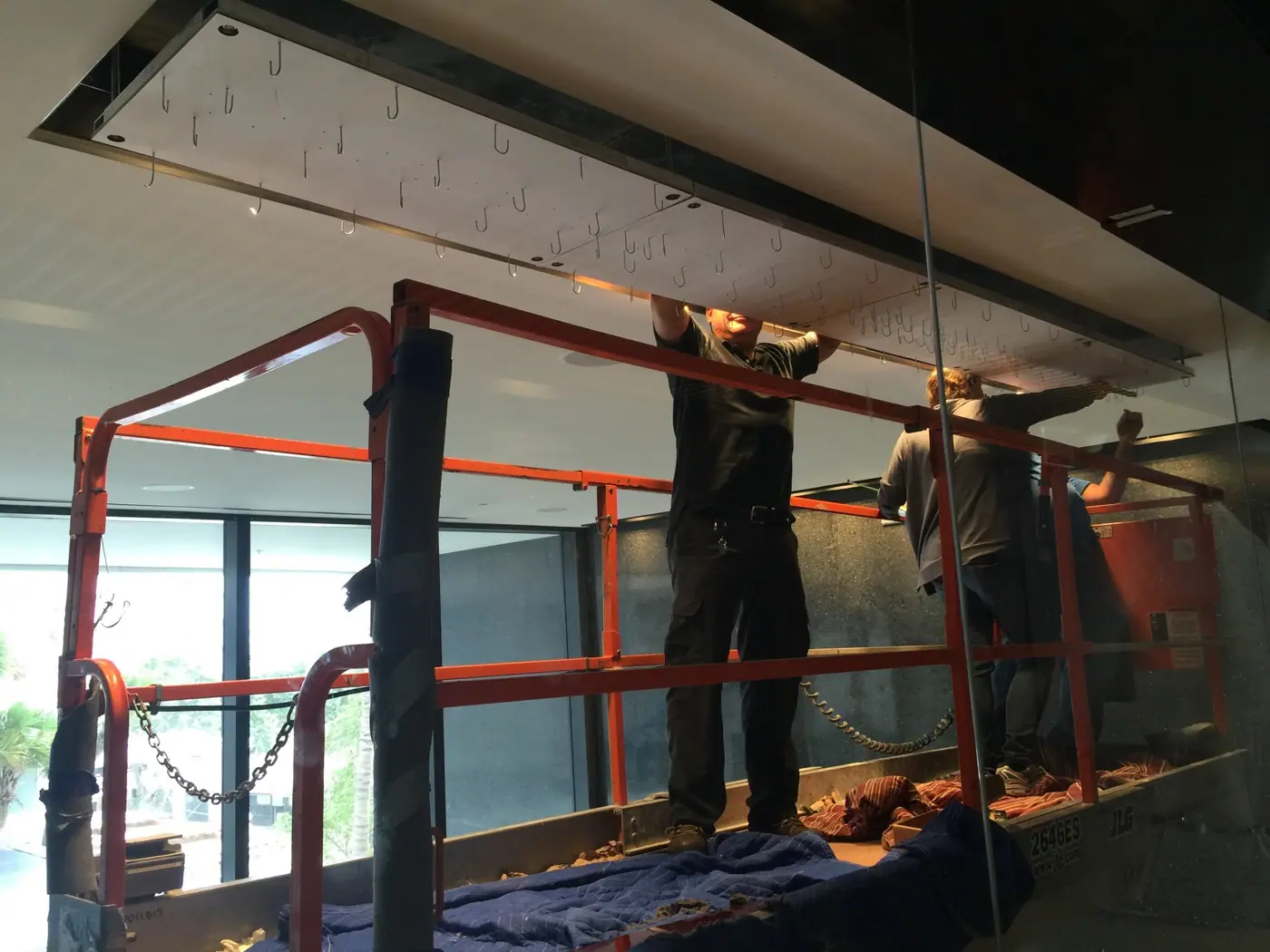
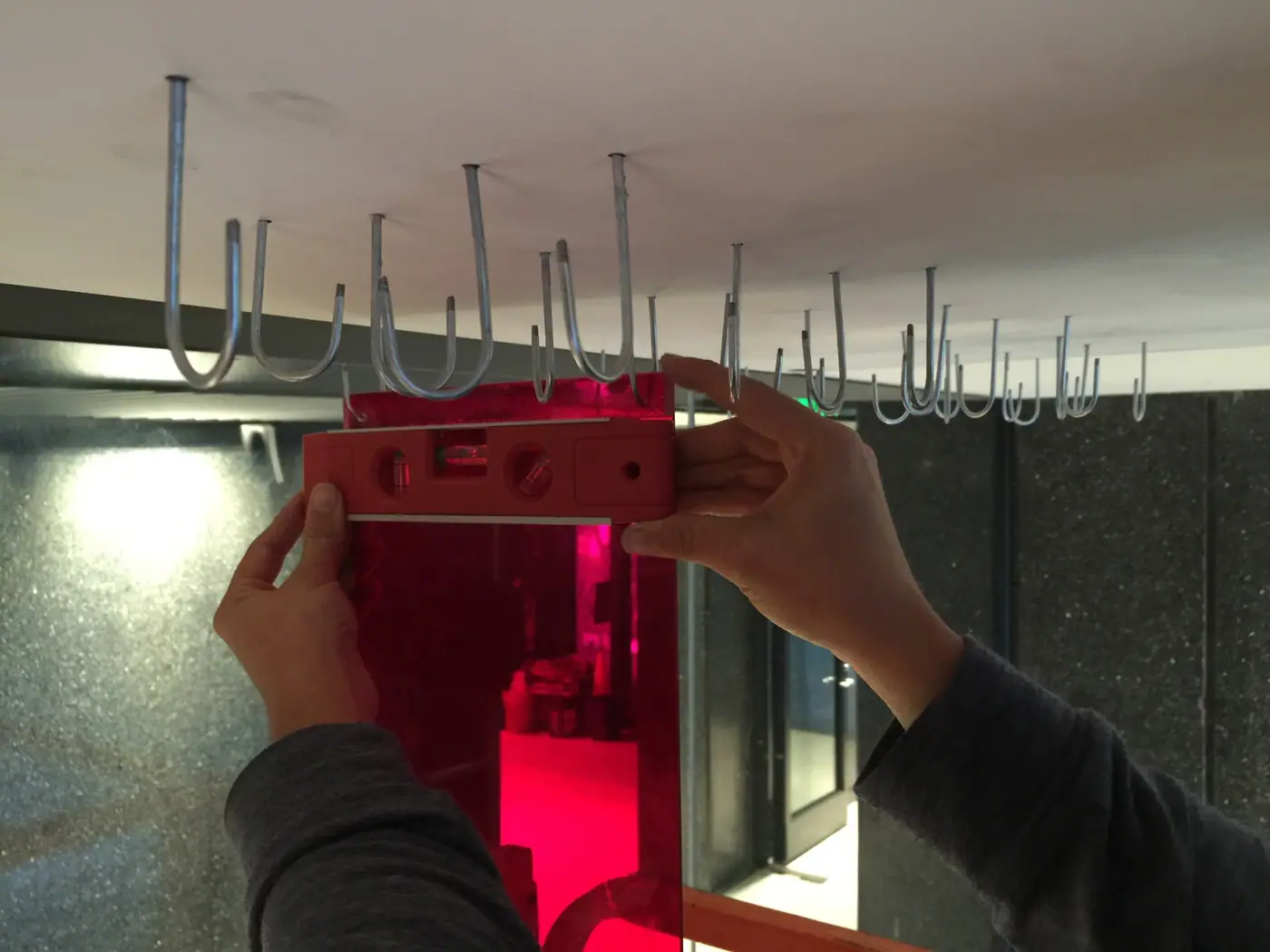
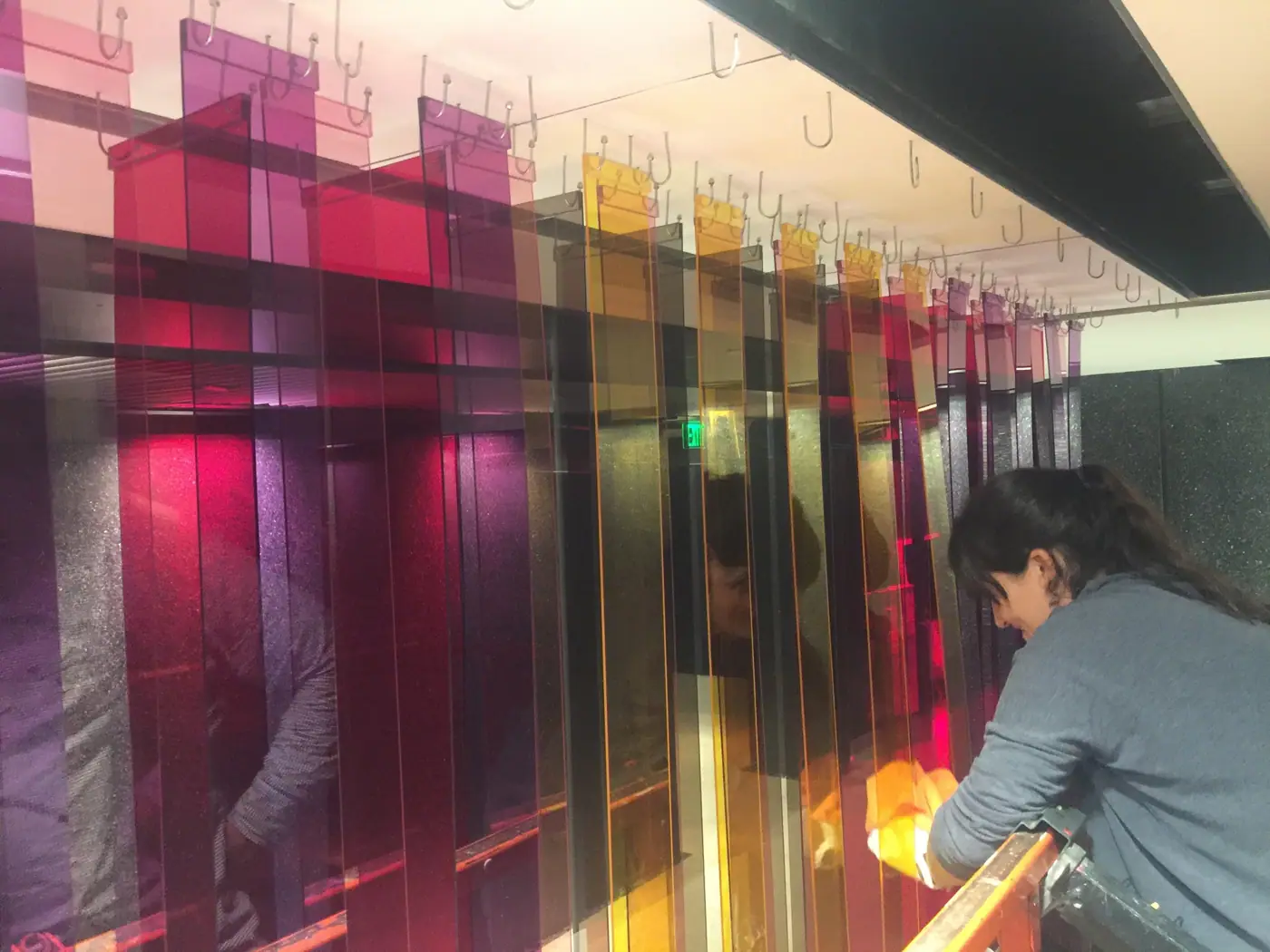
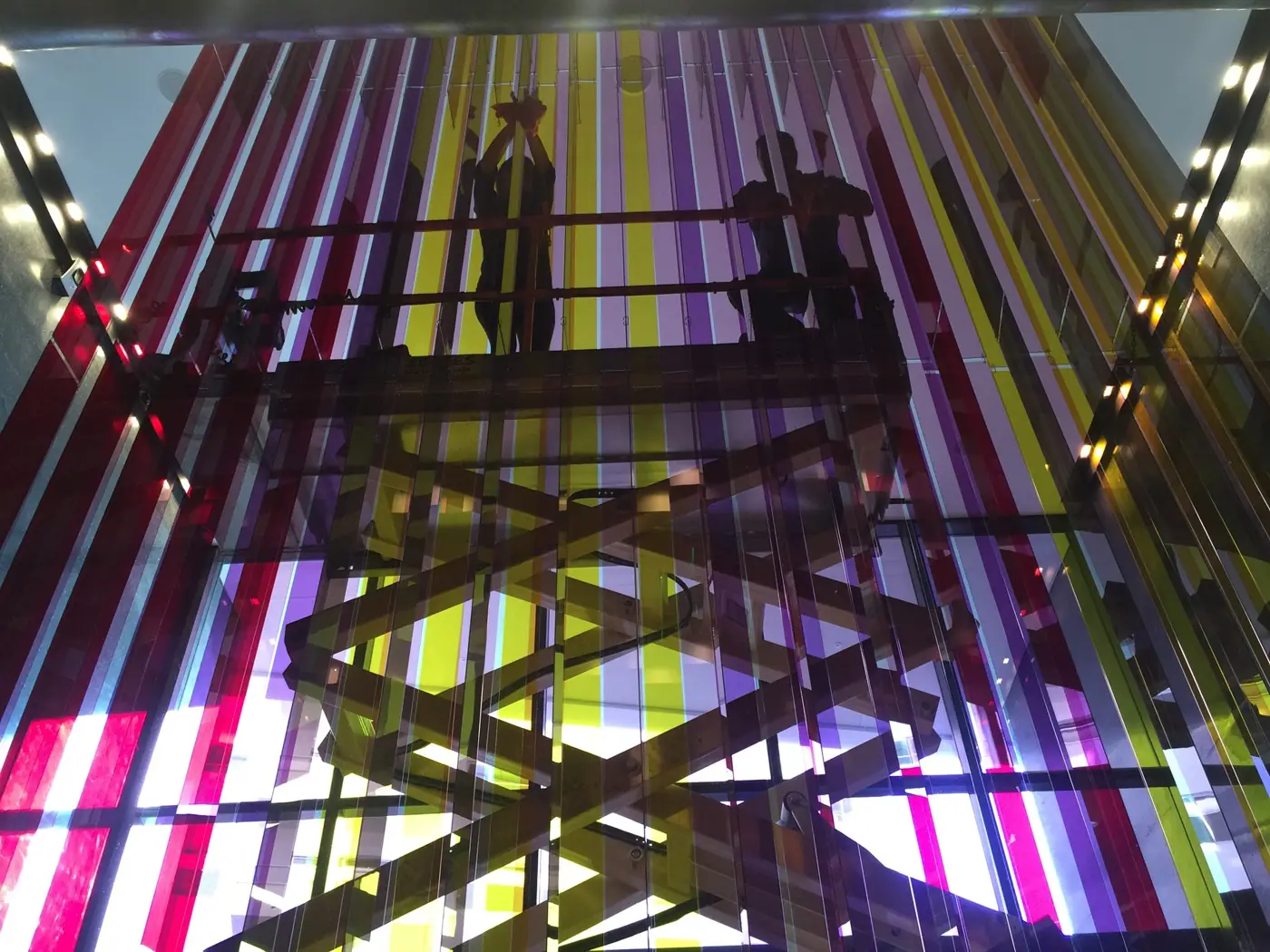
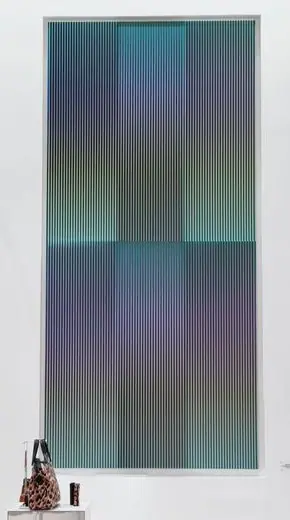
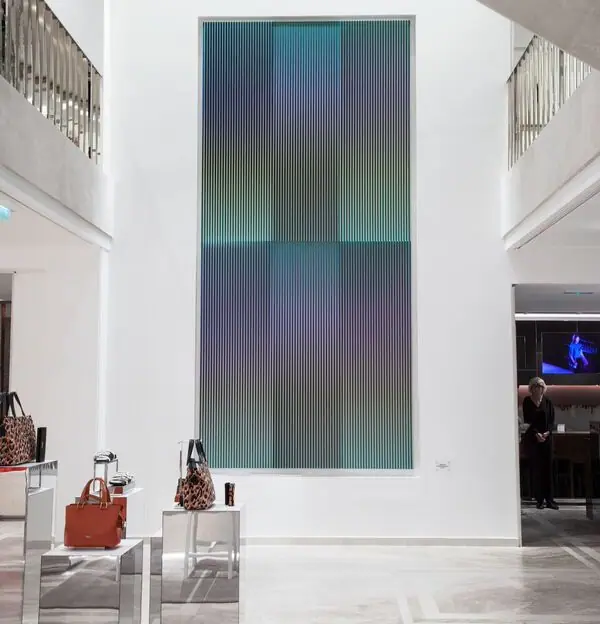
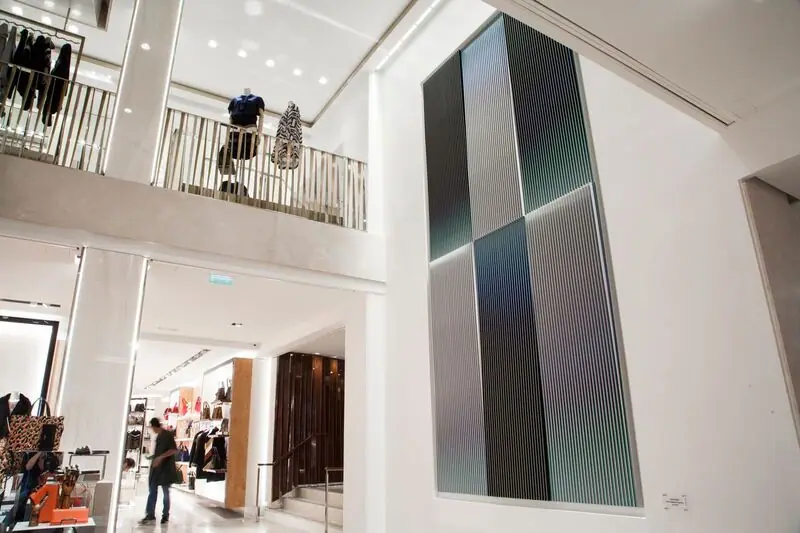
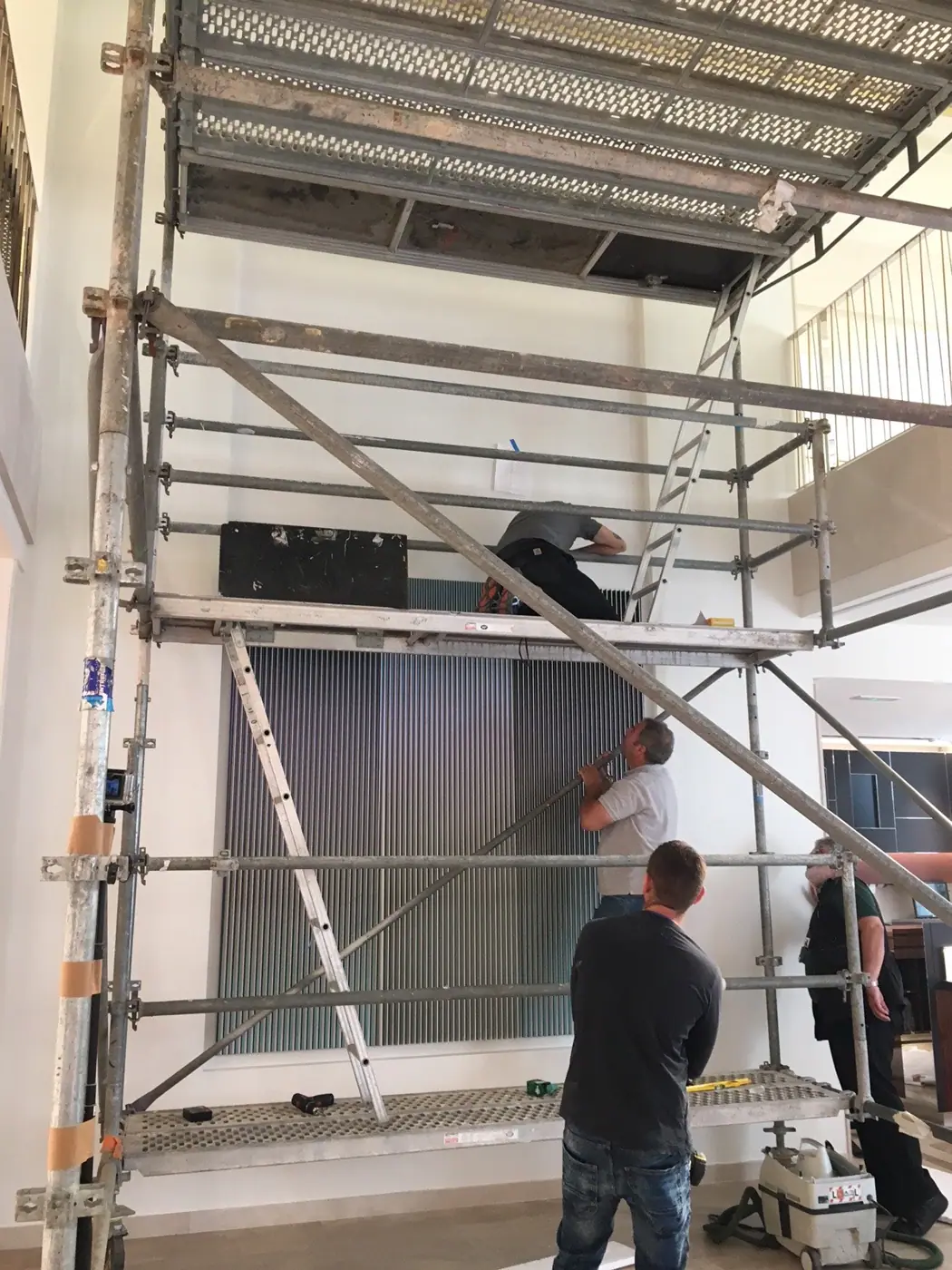
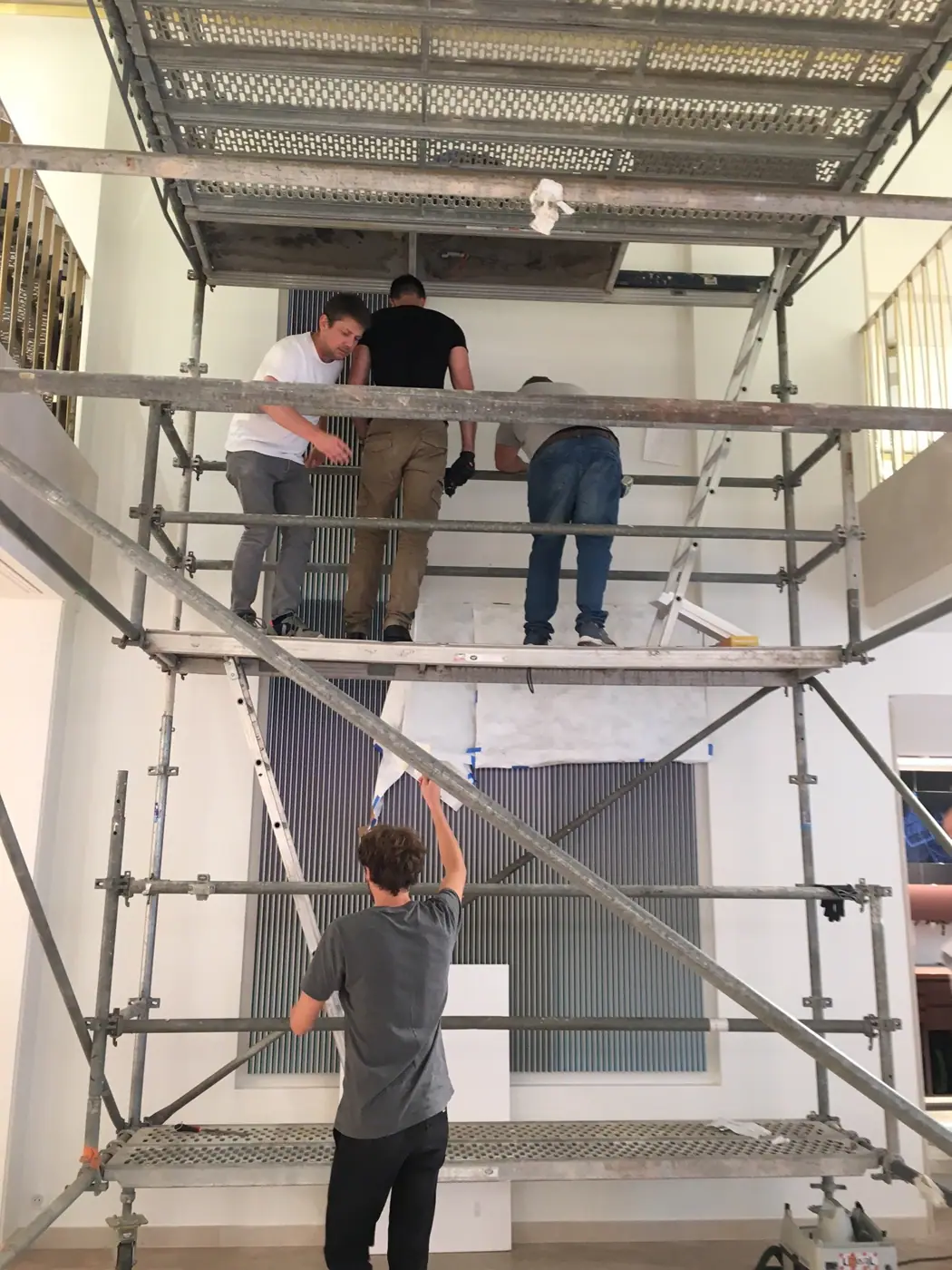
The color at Faena House does not act as static decoration, but as a living event. This transchromy integrates into the architecture to dialogue with Miami's radical light. Translucent panels intercept the sun, transforming the lobby into a dynamic prism. Natural light passes through the structure, creating shifting patterns of transparent color. Through subtractive theory, tones overlap and generate new visual realities. The triple-height residential space thus becomes a three-dimensional canvas. The viewer does not contemplate a fixed image; they activate the work by moving past it. With every step and change of hour, the architectural environment reveals a unique vibration.
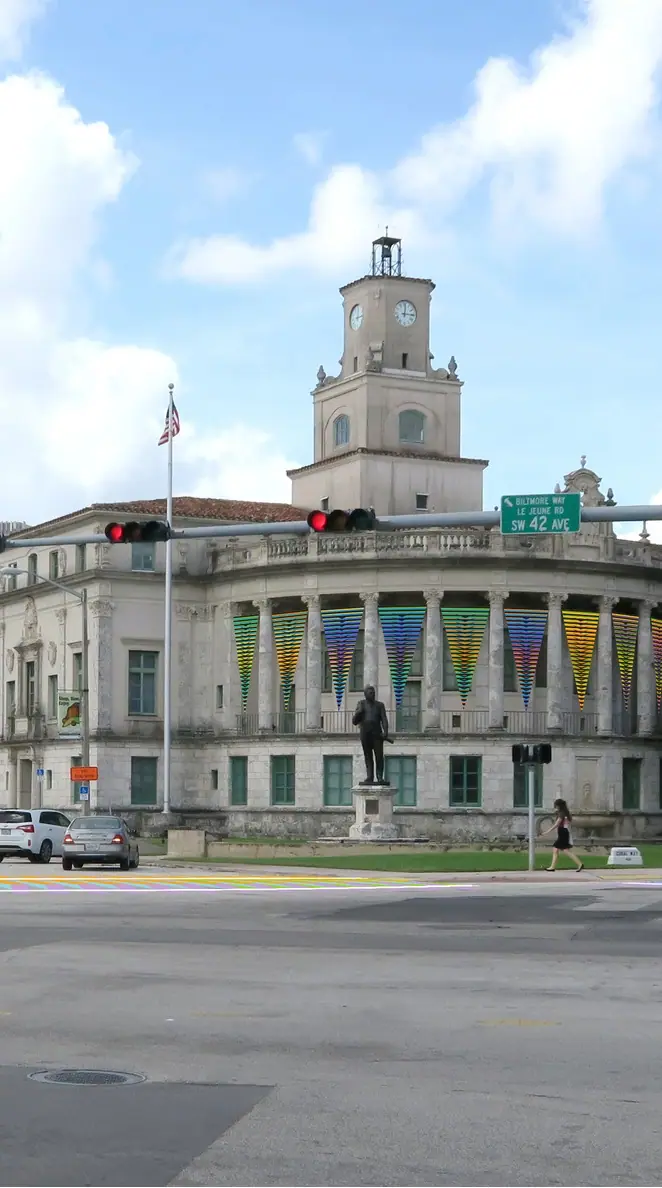
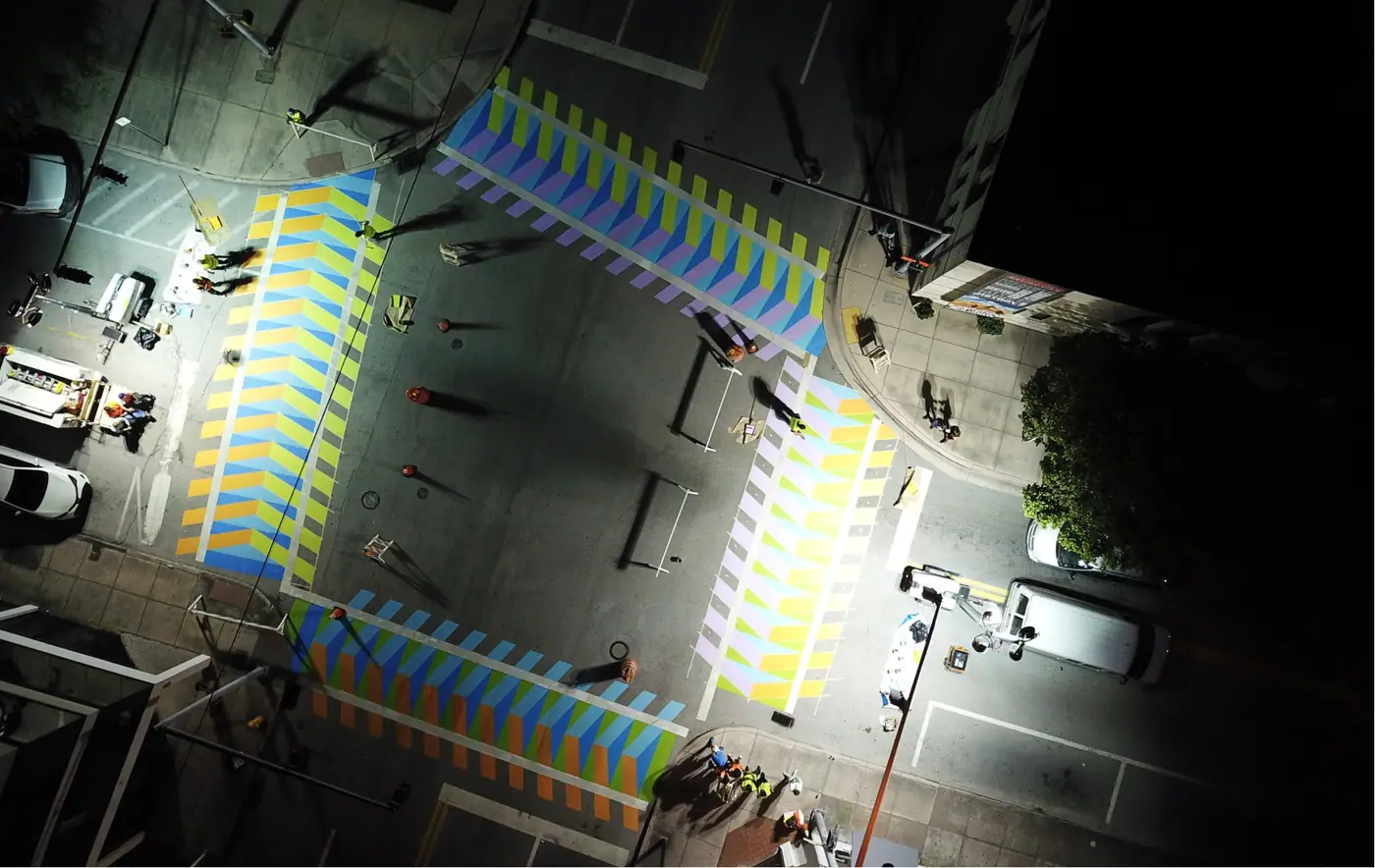
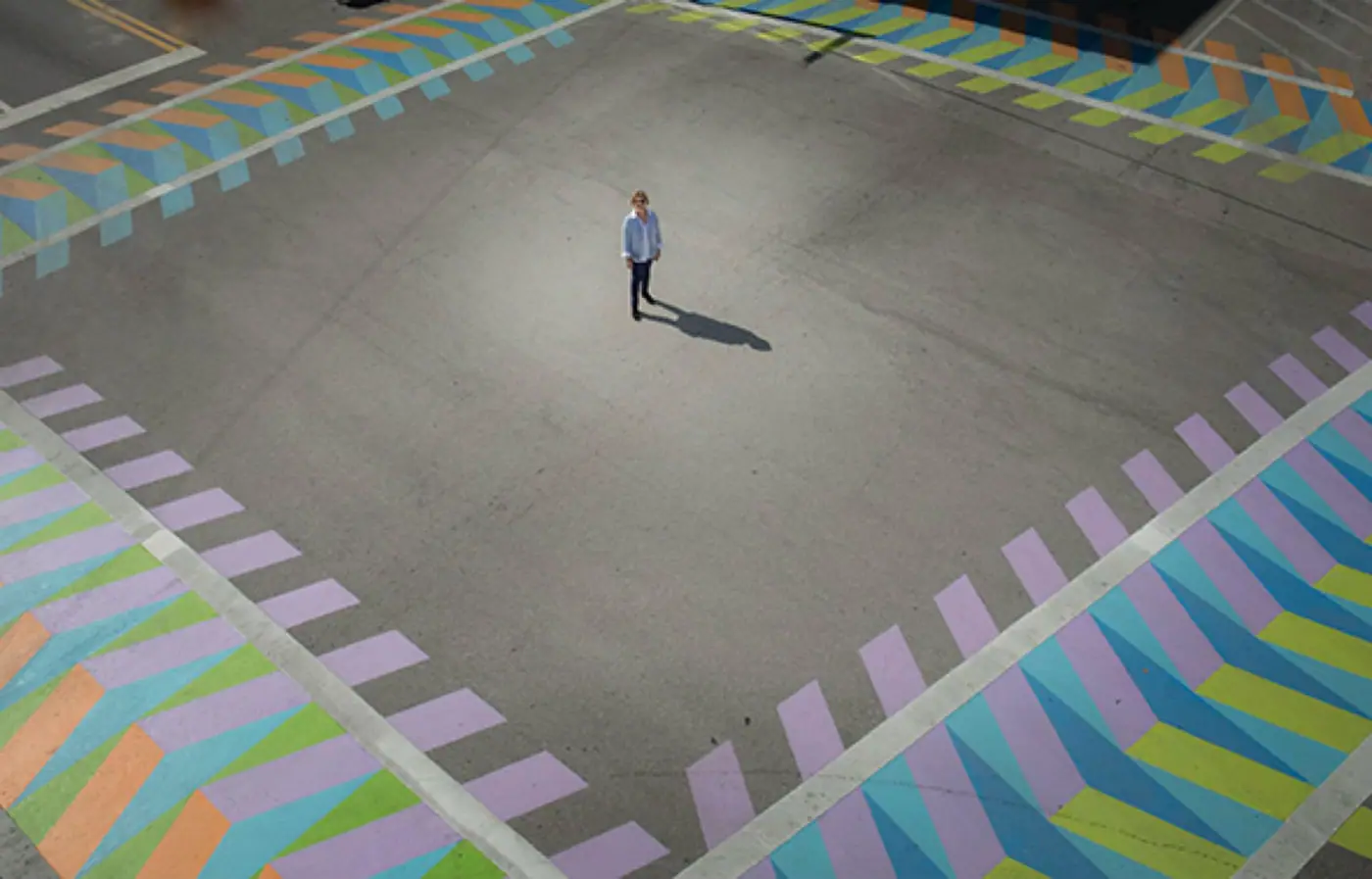
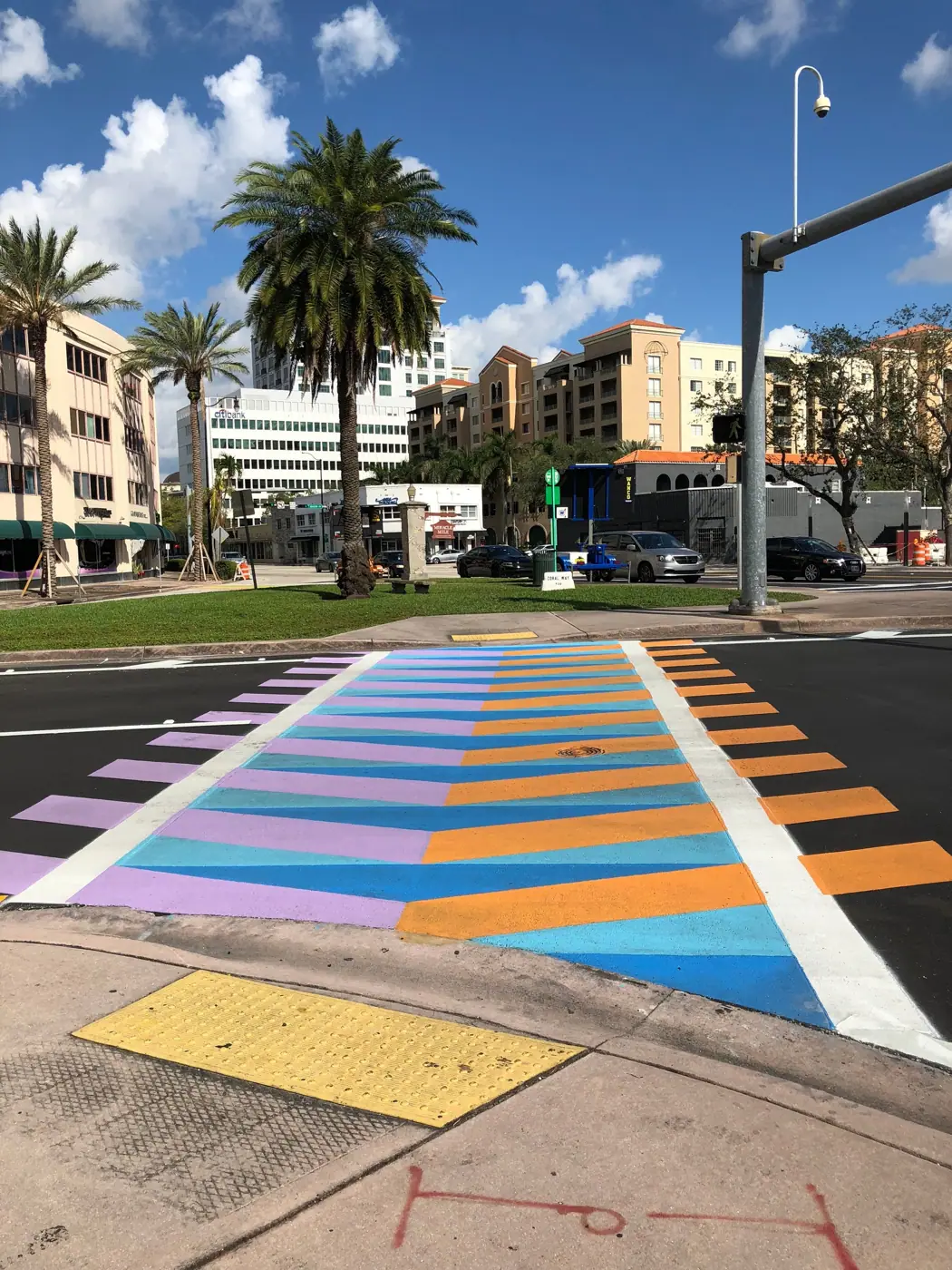
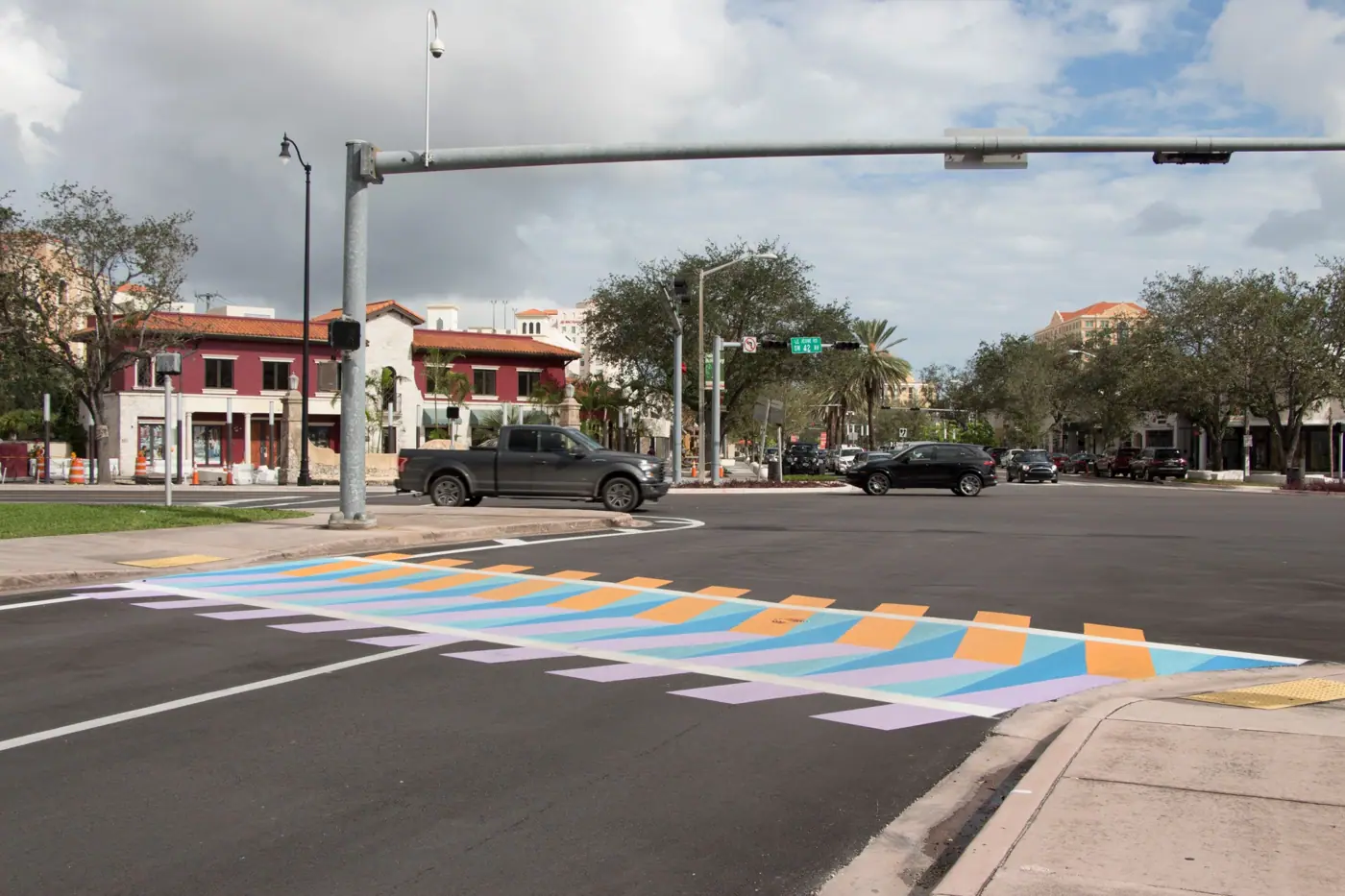
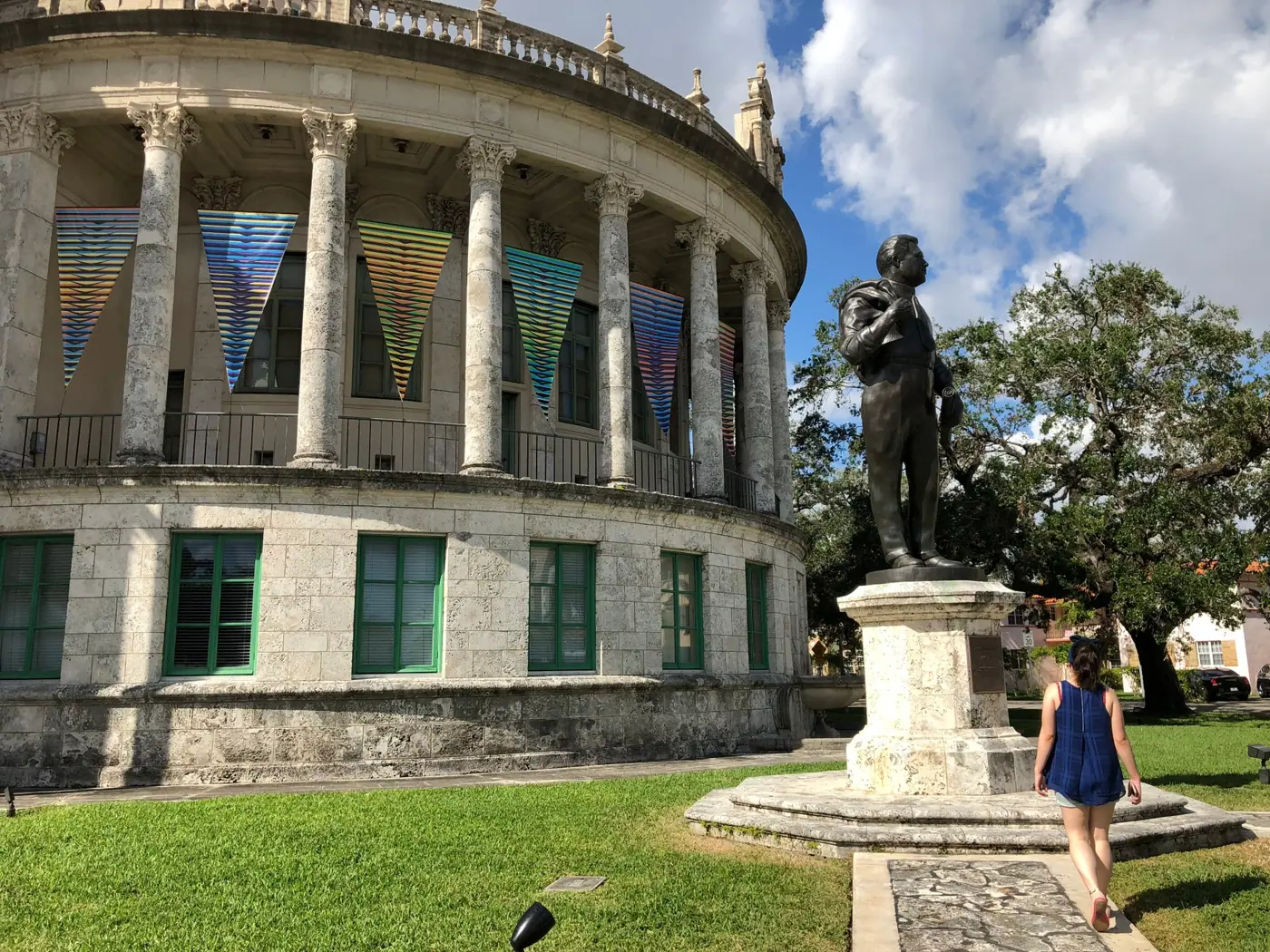
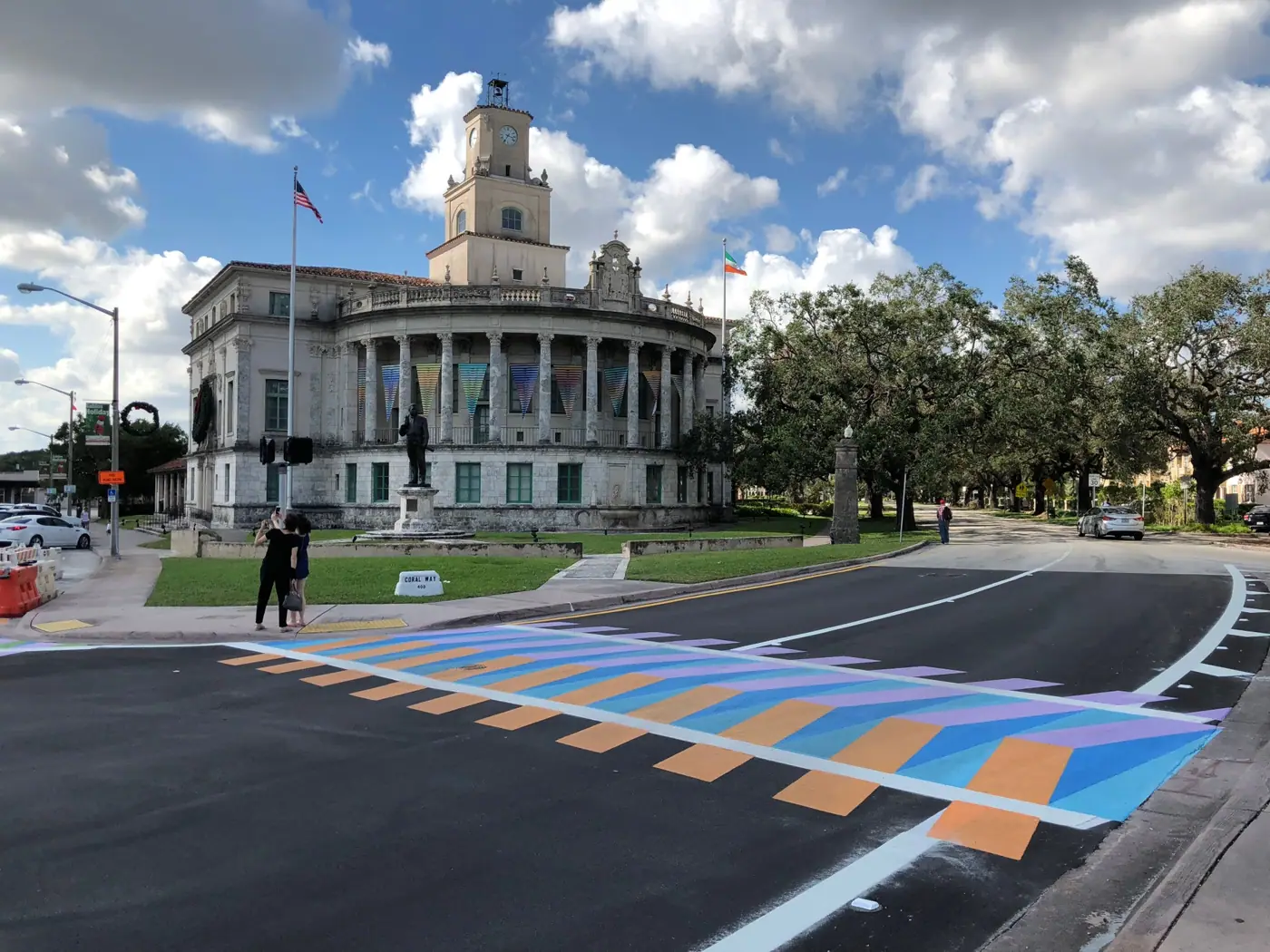
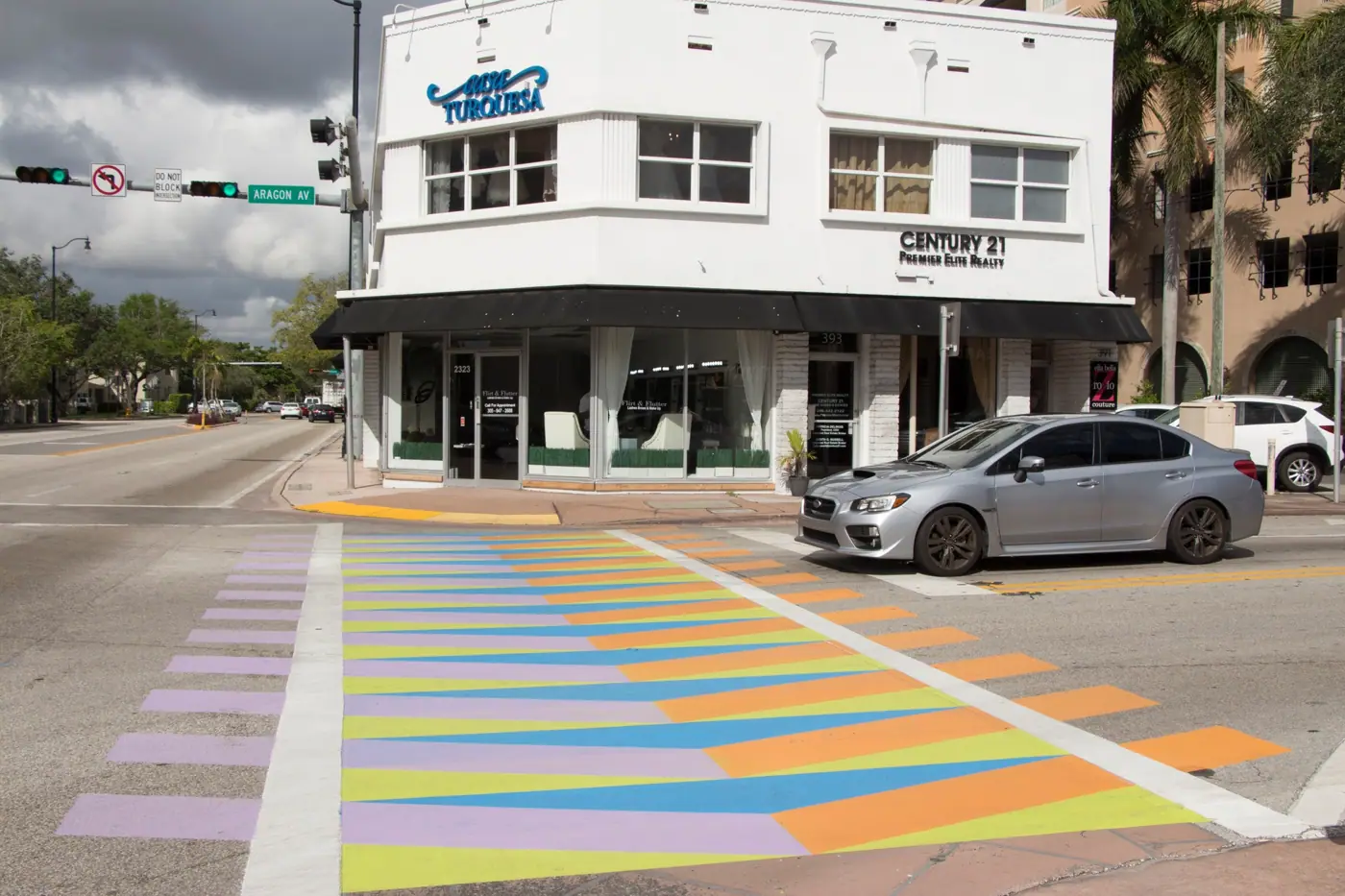
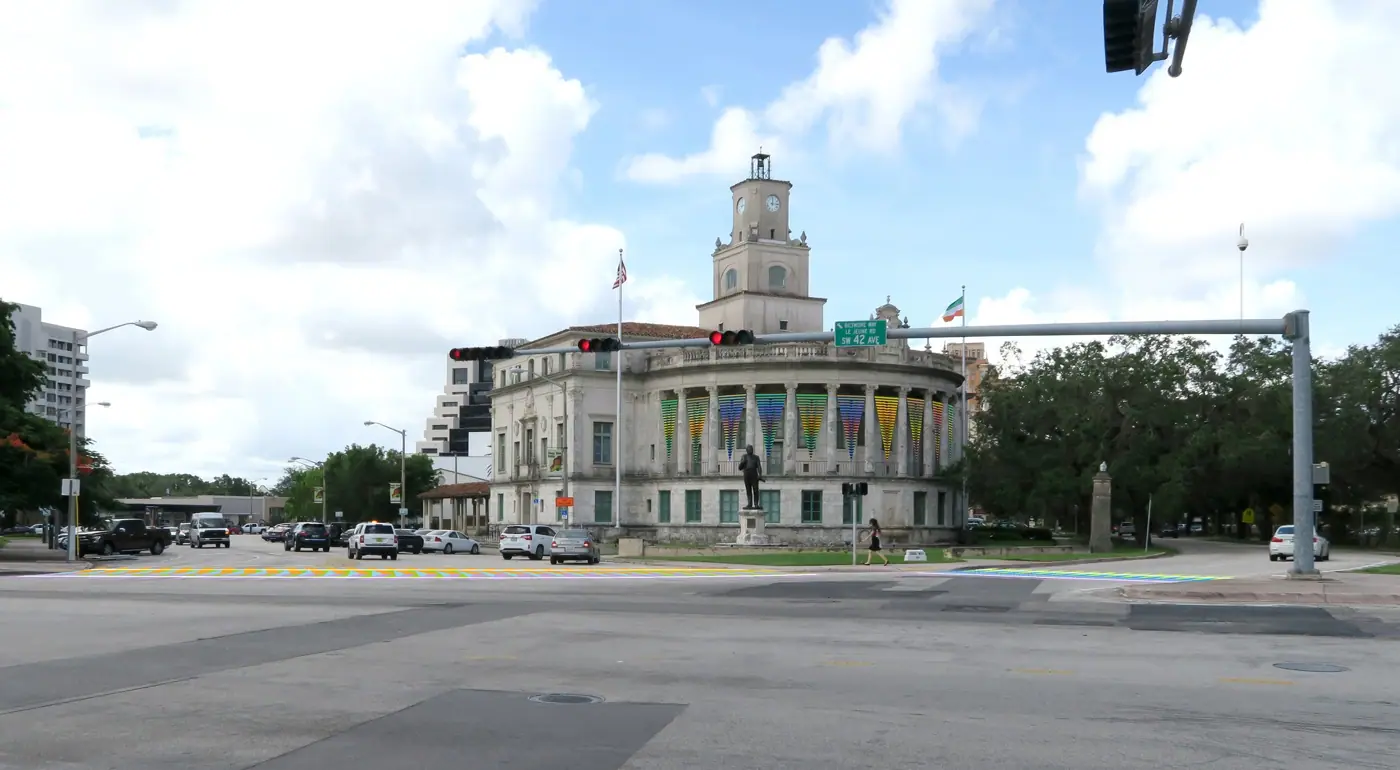
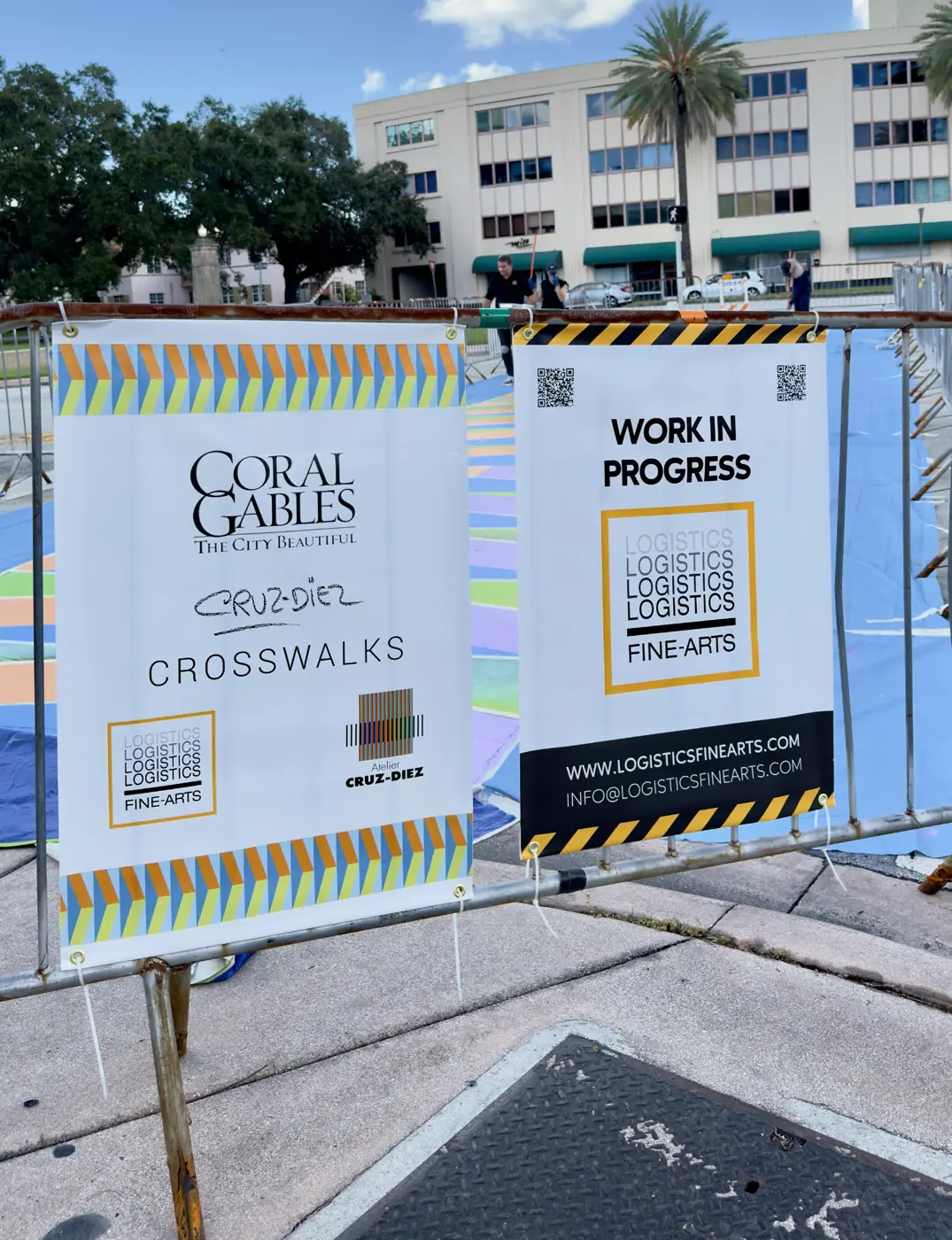
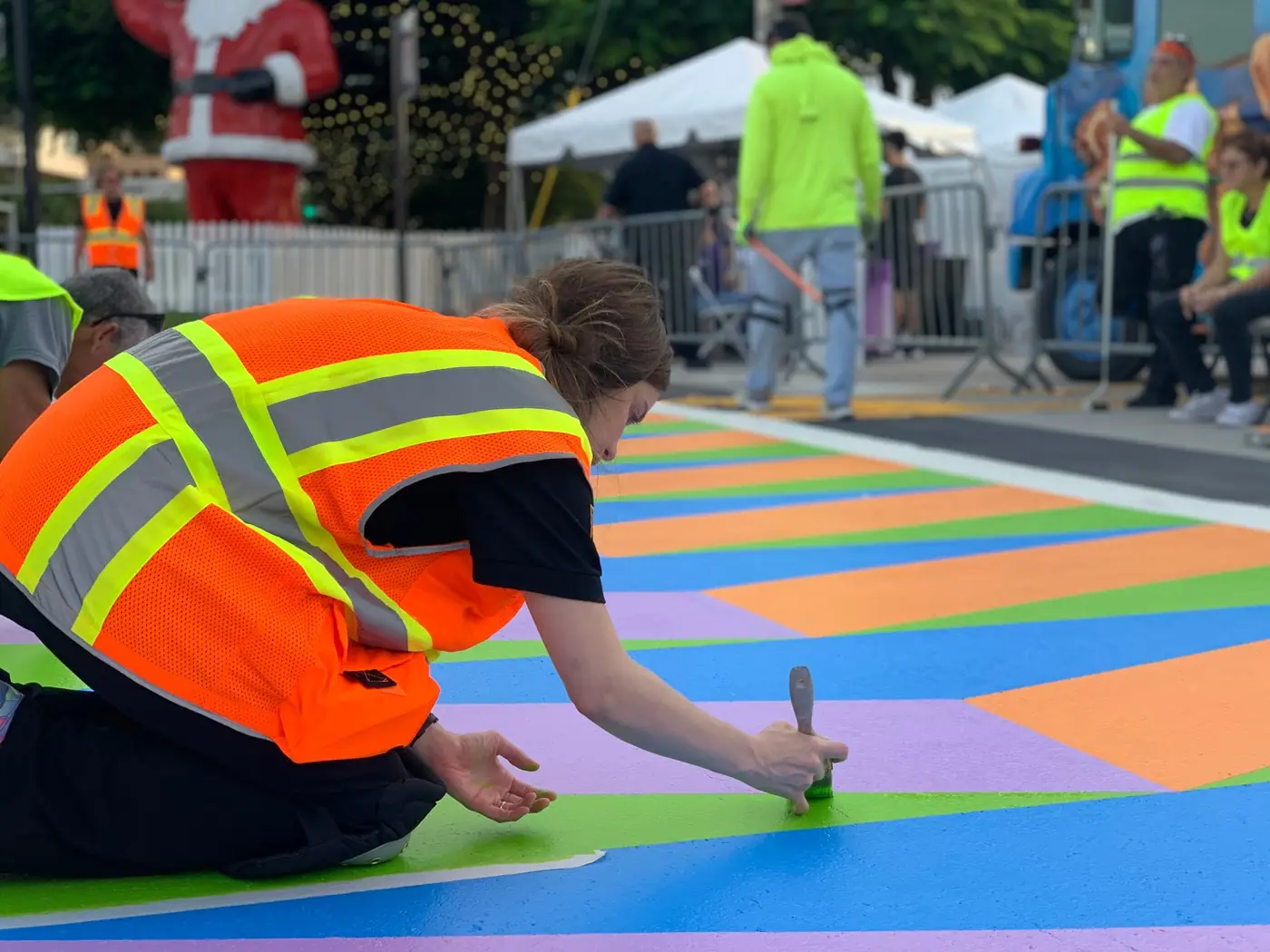
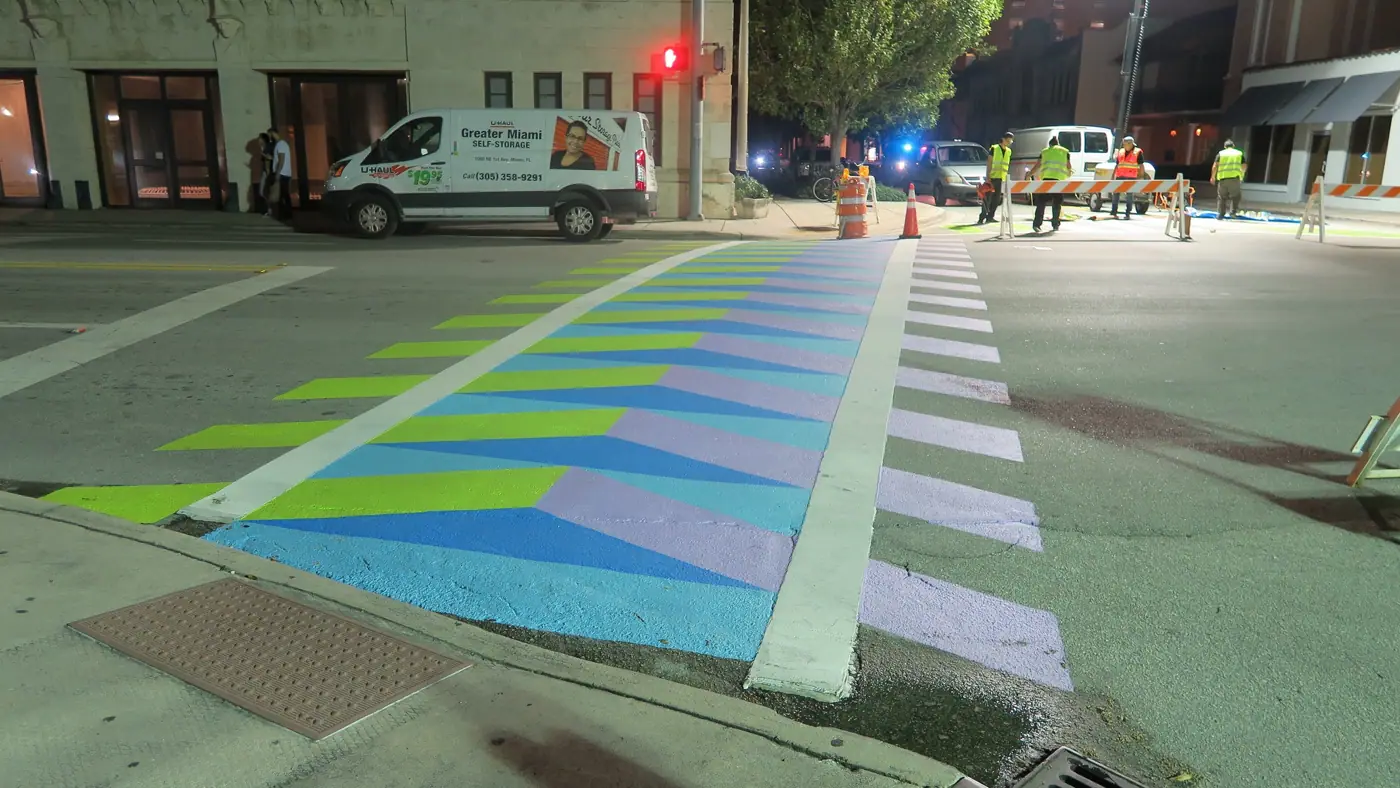
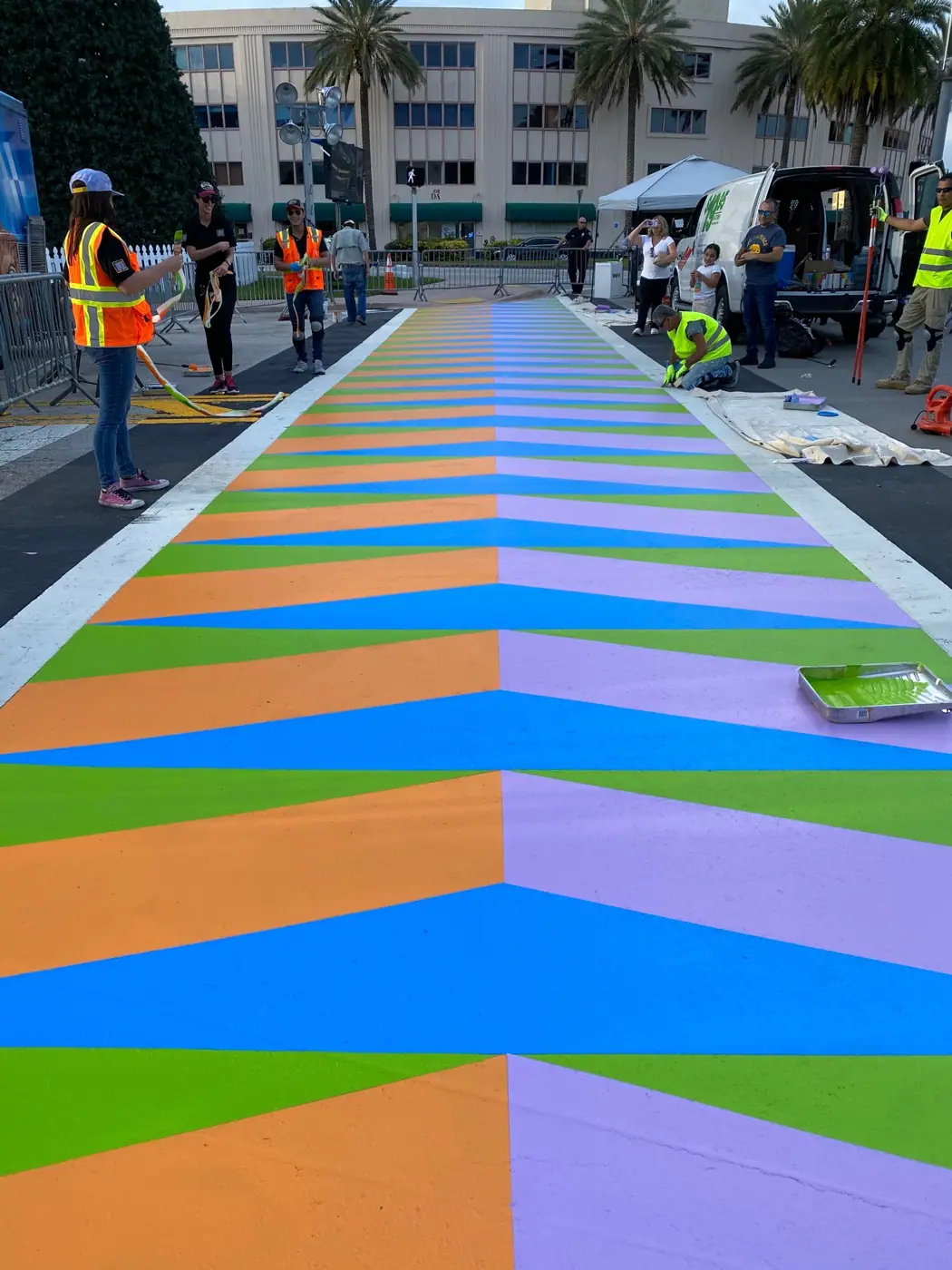
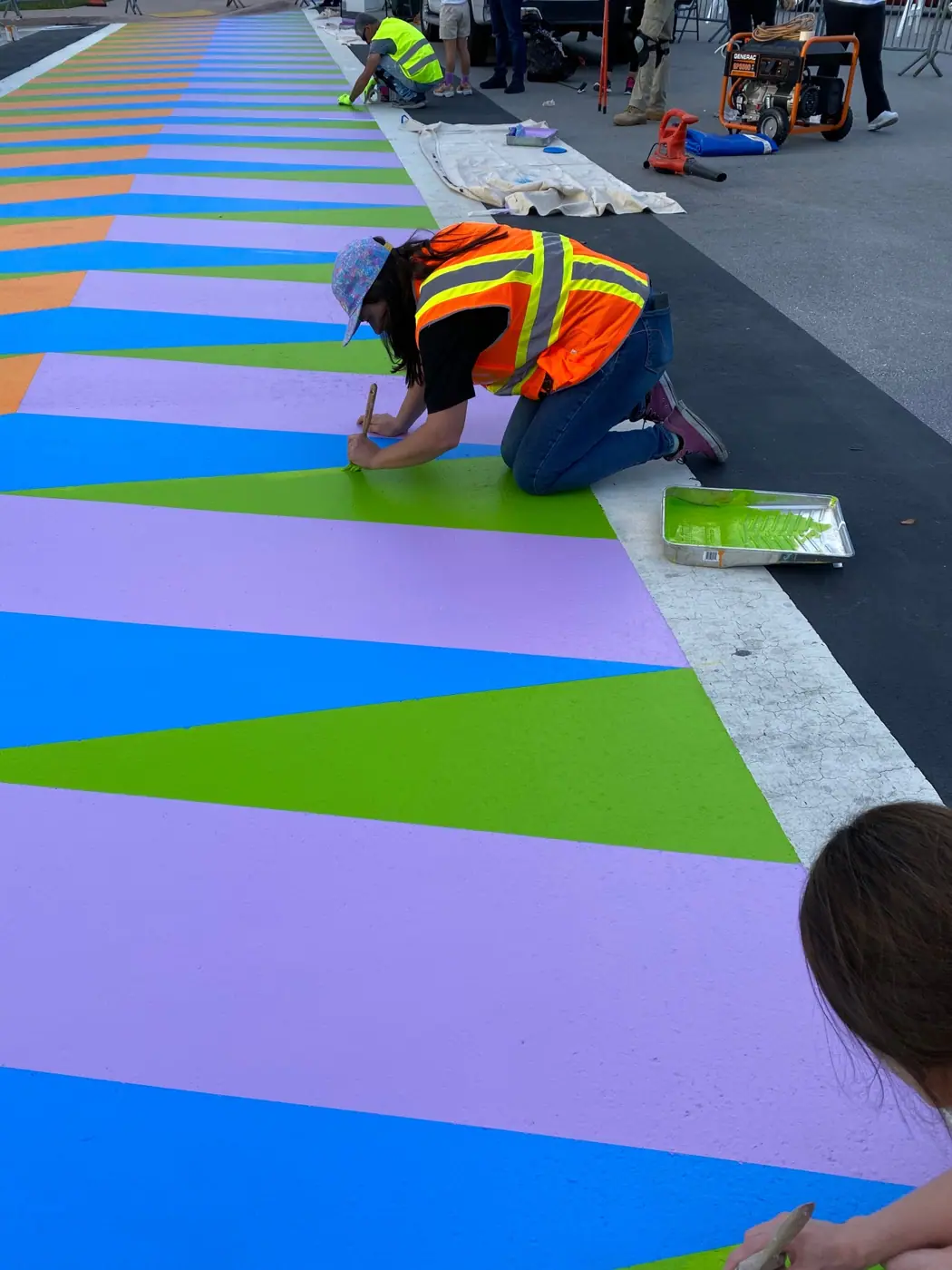
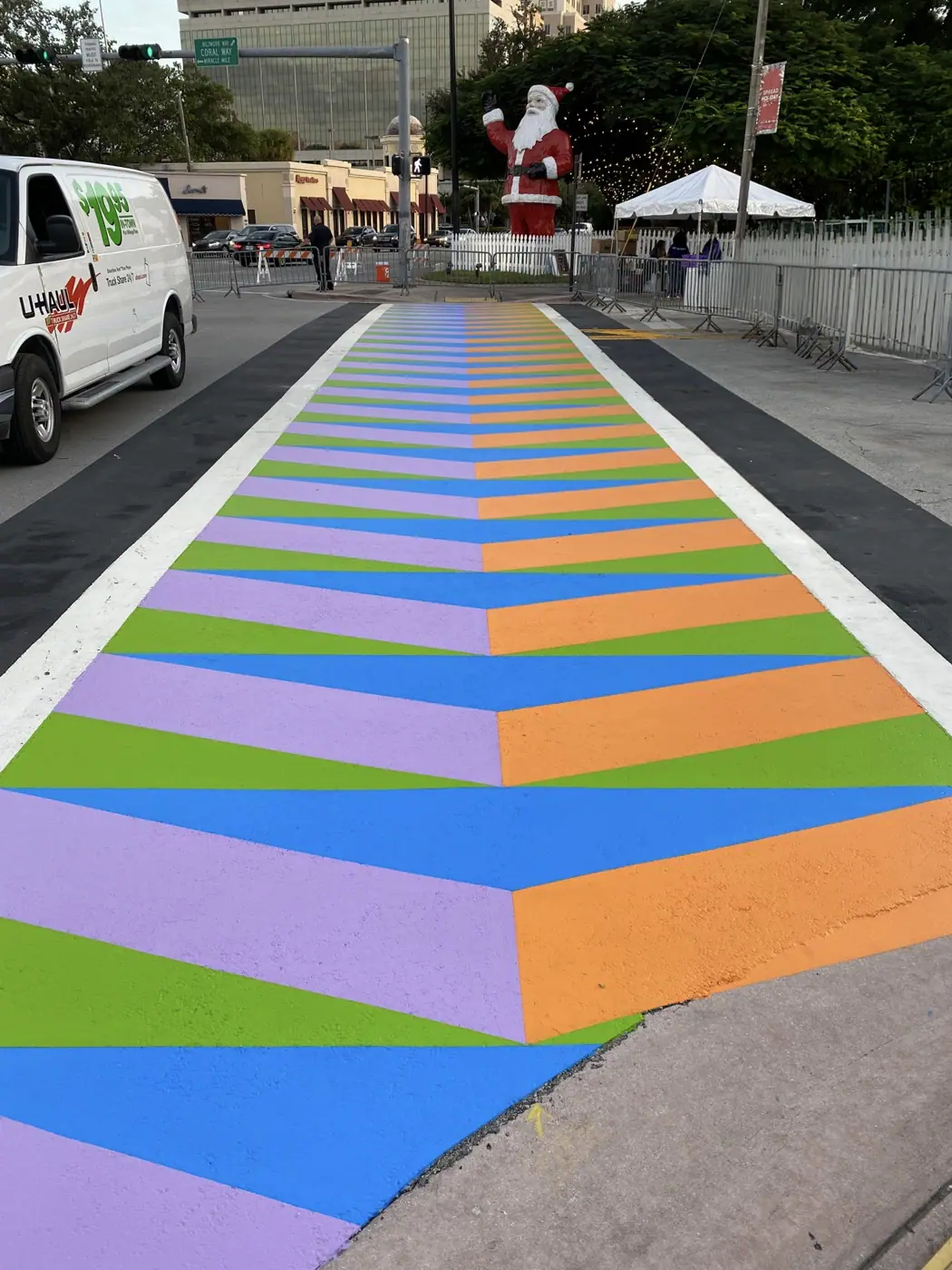
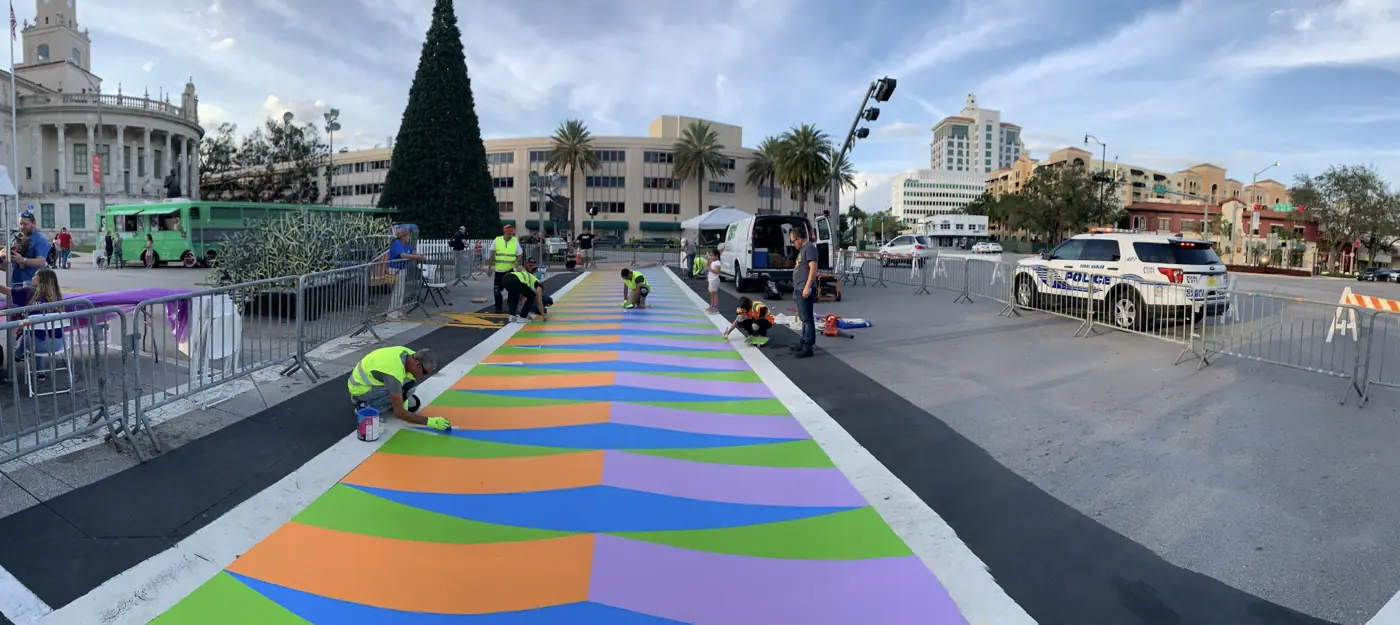
The Carlos Cruz-Diez crosswalk project in Coral Gables constitutes a milestone in urban cultural intervention, transforming road infrastructure into a living kinetic canvas. Through his concept of Chromatic Induction, the Venezuelan master transcends the limits of the traditional museum to democratize the aesthetic experience, integrating it into the daily fabric of the city. The bands of color interact with sunlight and the movement of the passerby, turning the simple act of crossing the street into a participatory and immersive sensory experience. This artwork not only embellishes the gray asphalt but also humanizes the urban environment by subverting the priority of the automobile in favor of the pedestrian, using art as a tool for traffic calming and spatial appropriation. By becoming part of the public heritage, the installation engaged in a direct dialogue with the diverse identity and architectural vanguard of Coral Gables.
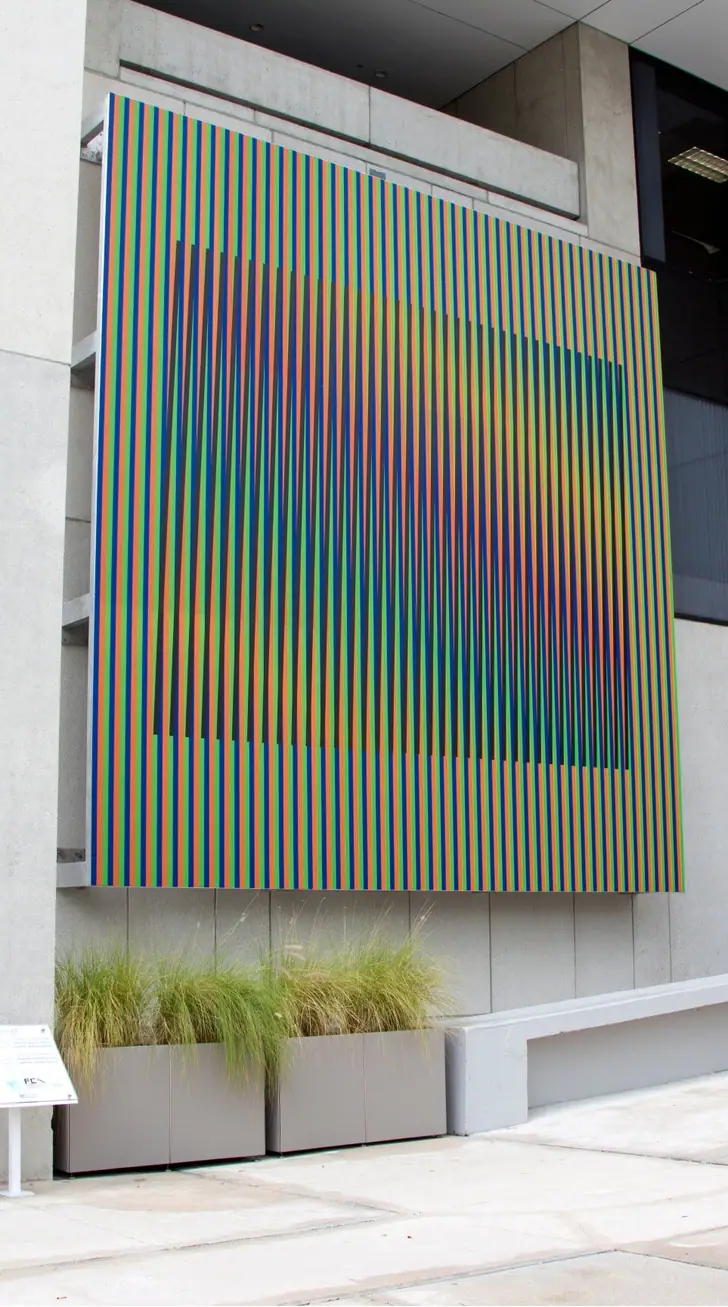
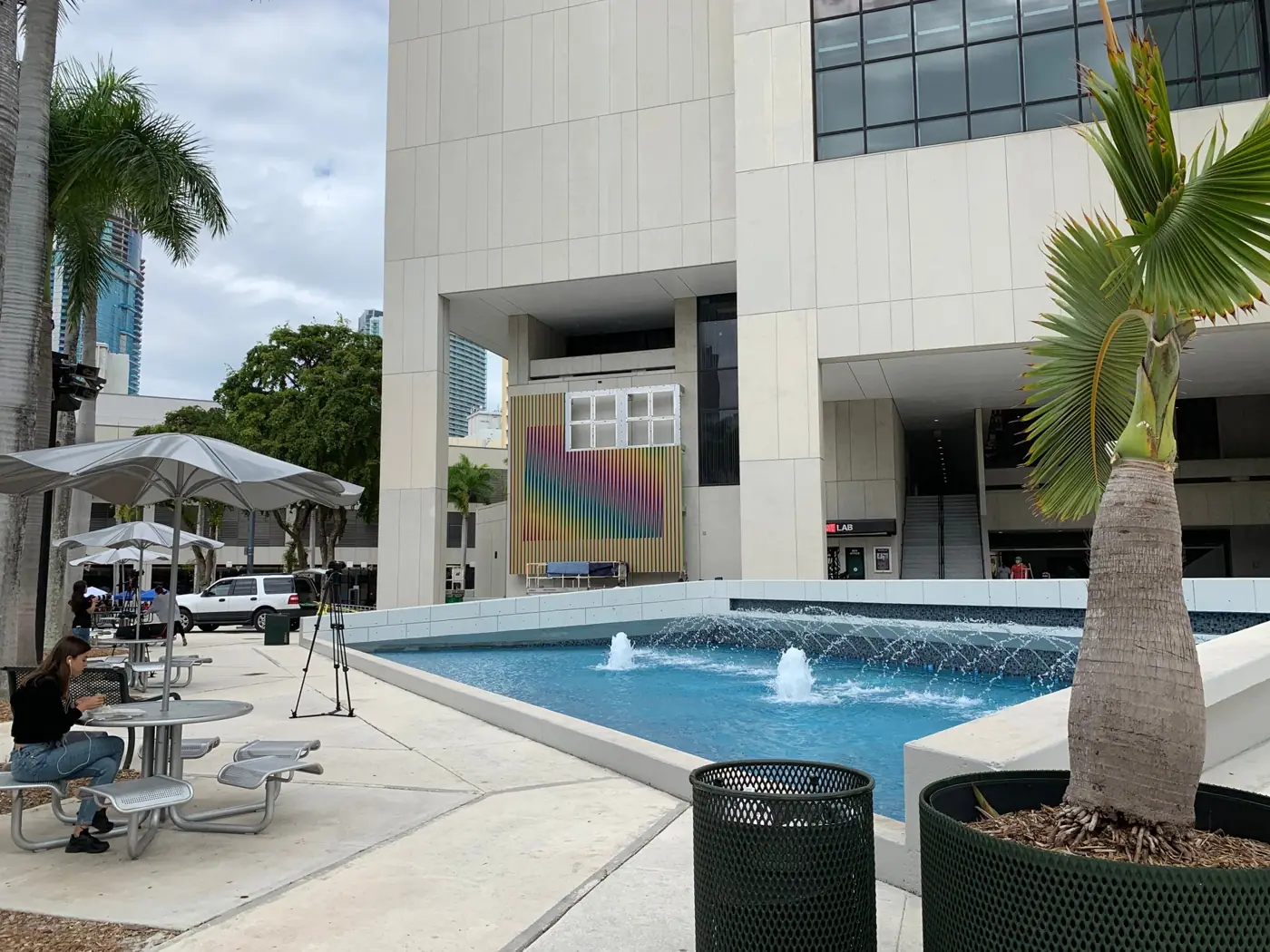
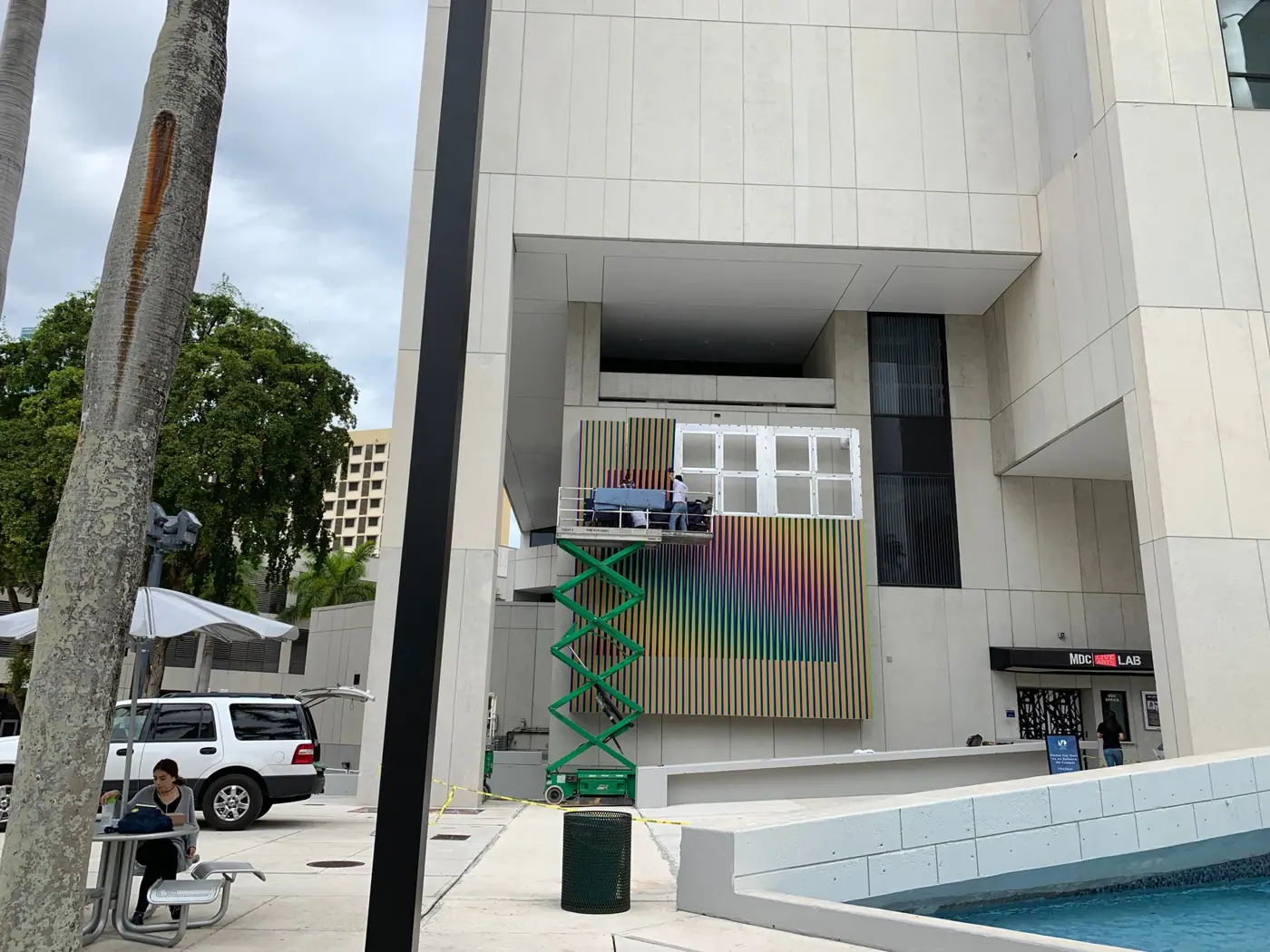
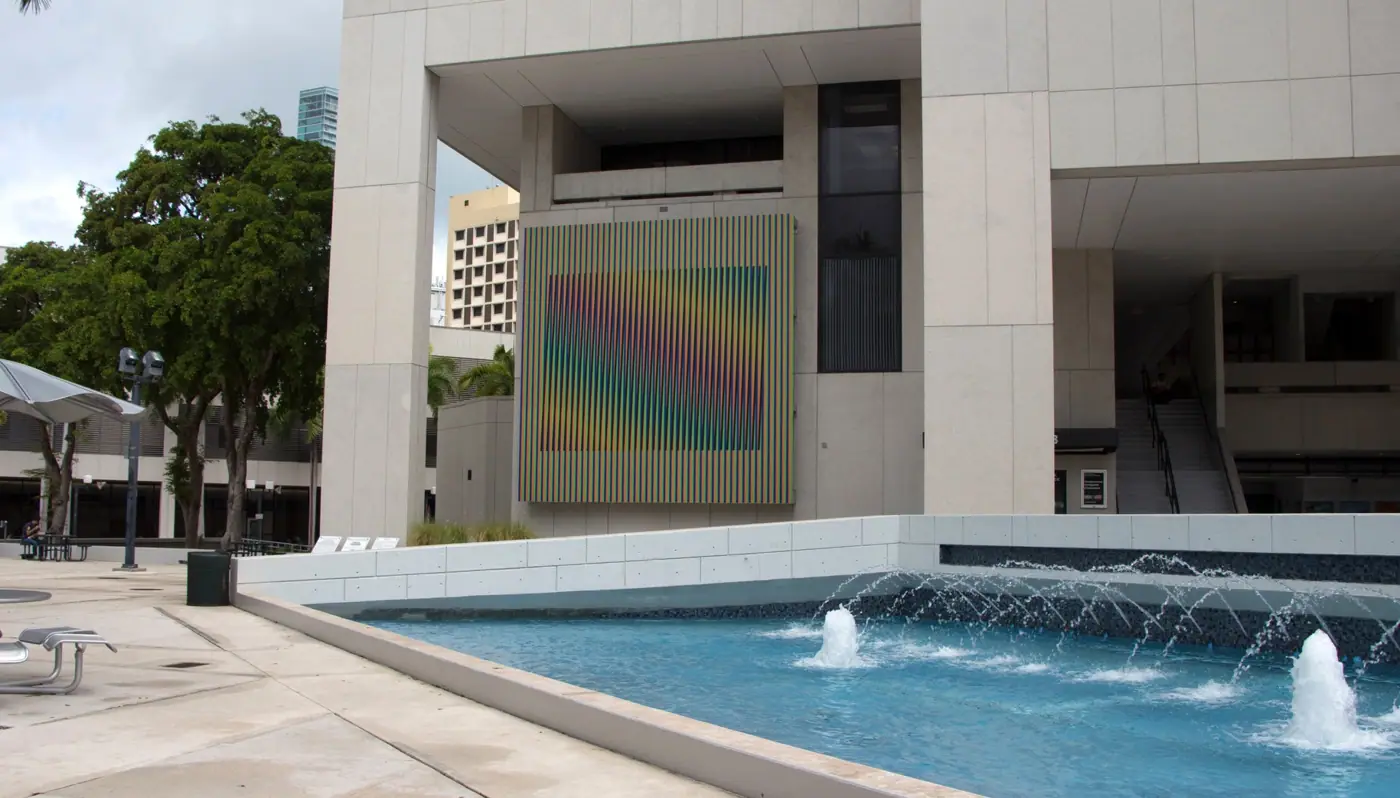
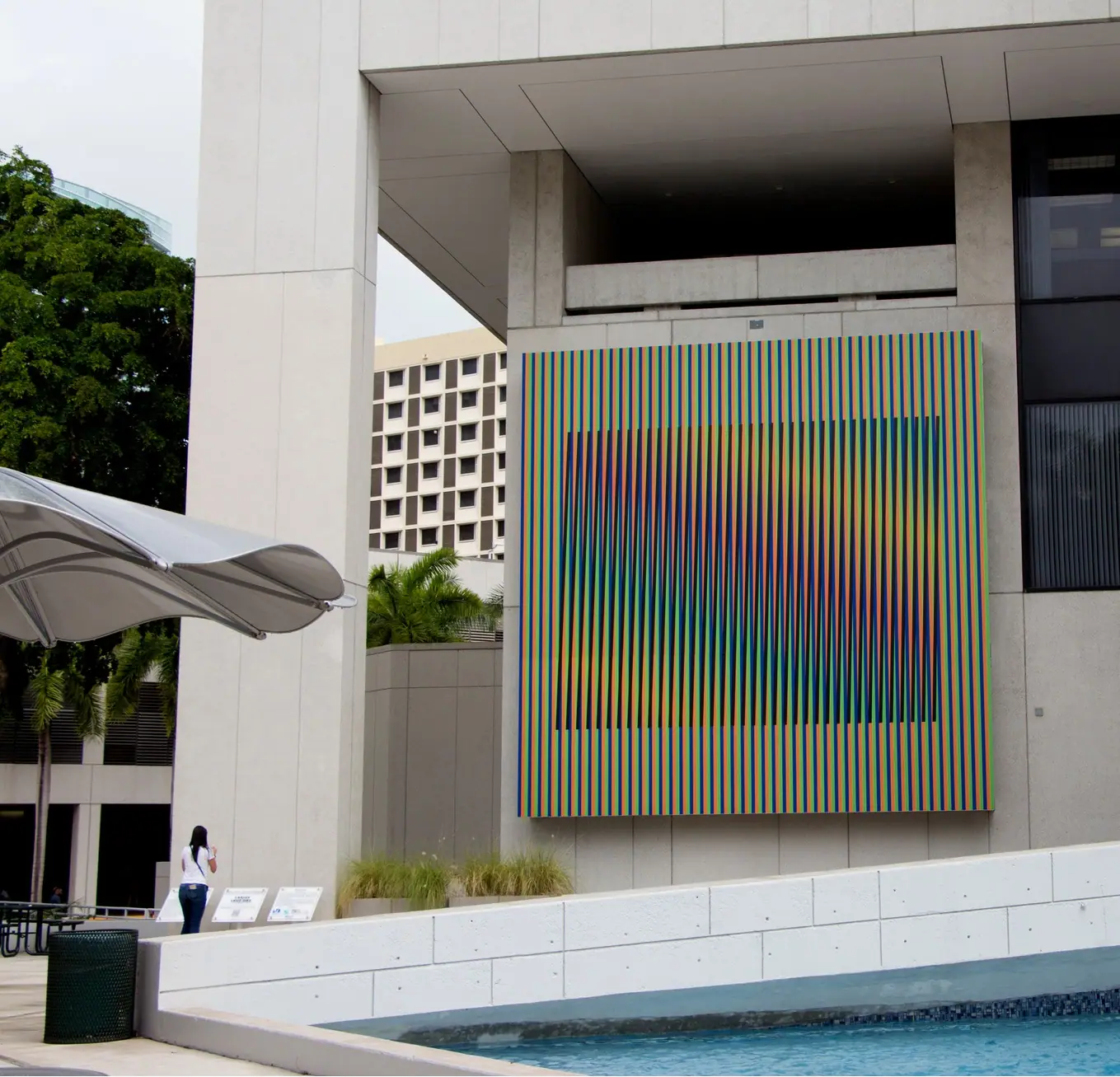
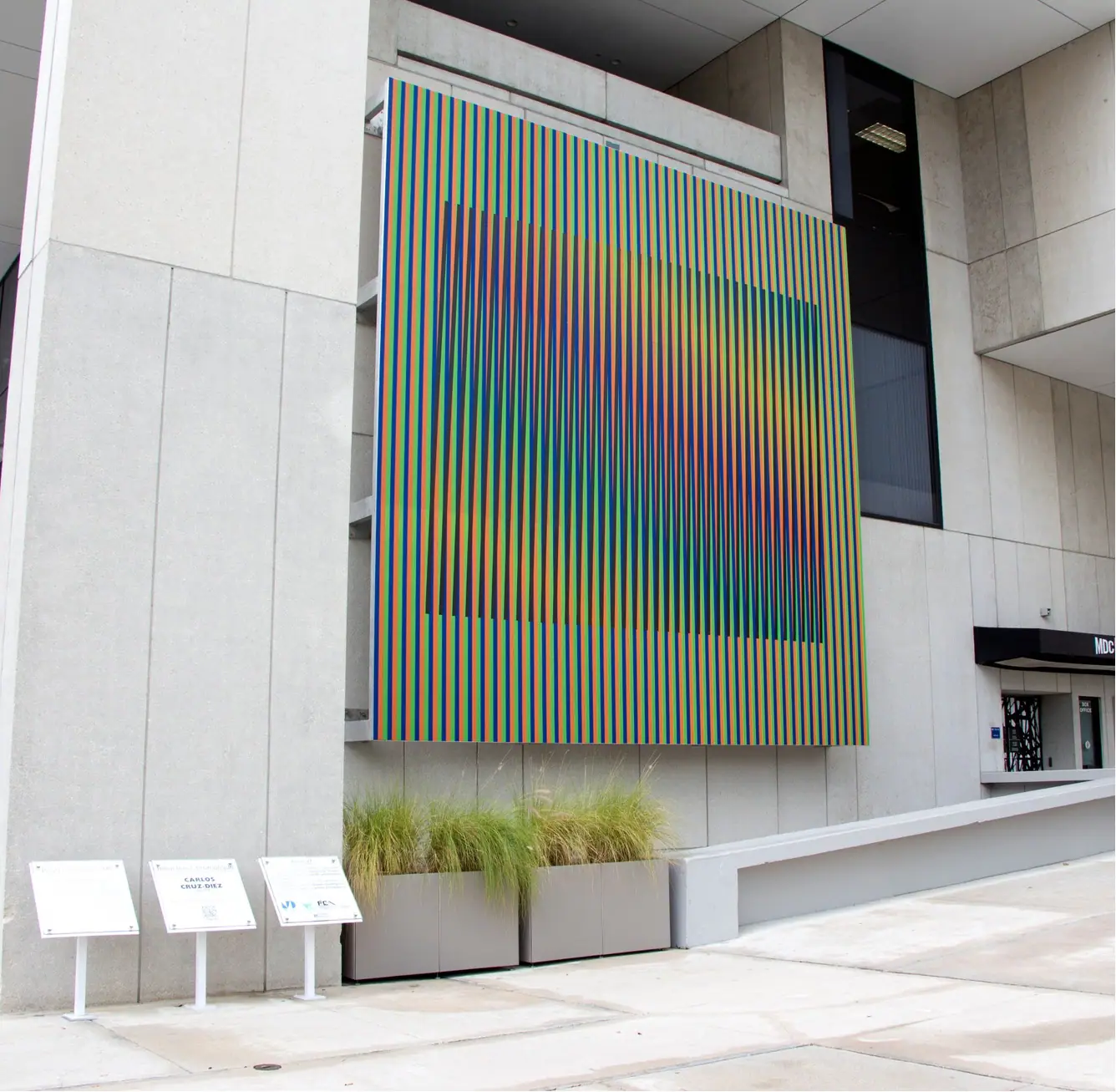
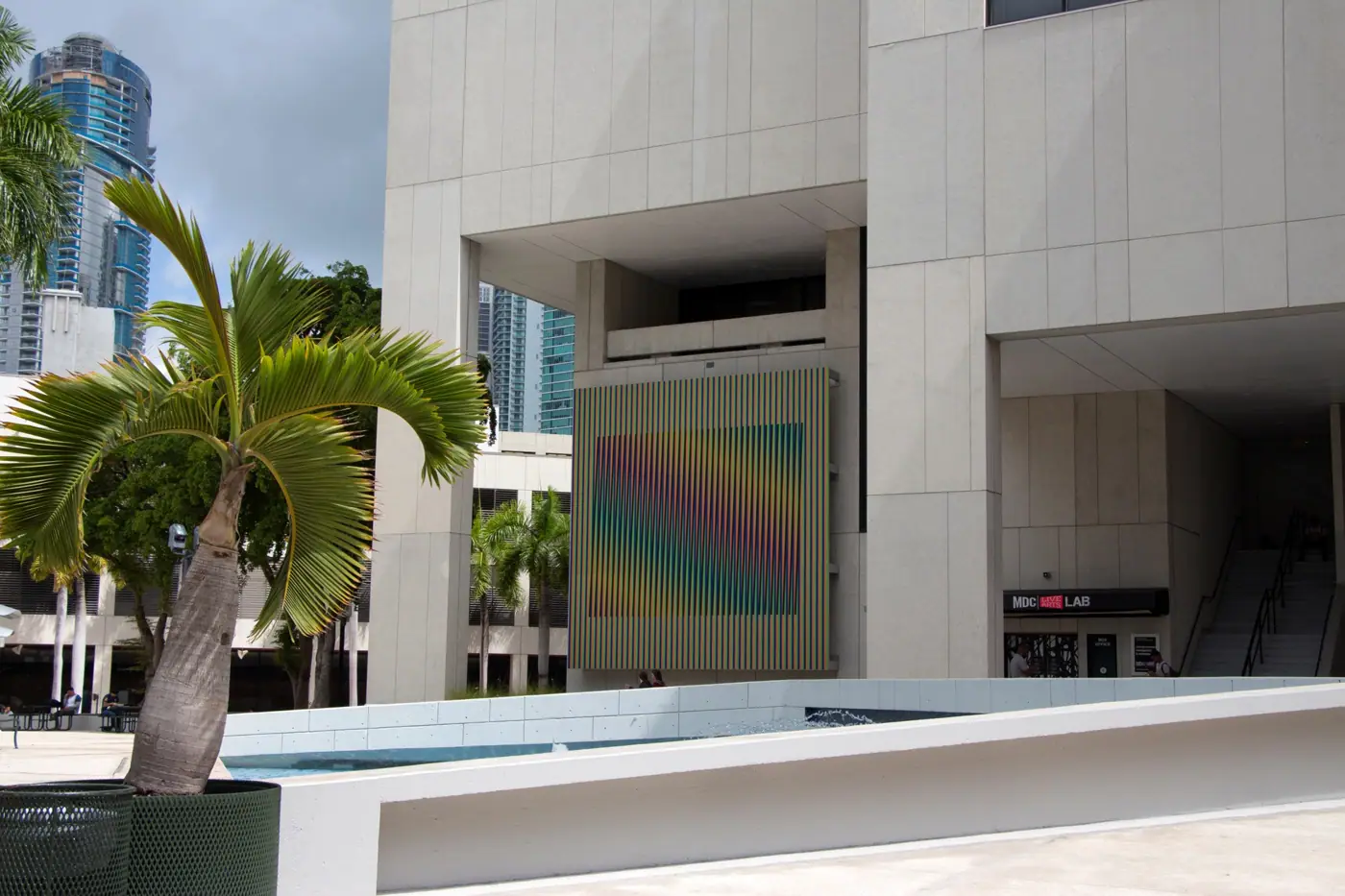
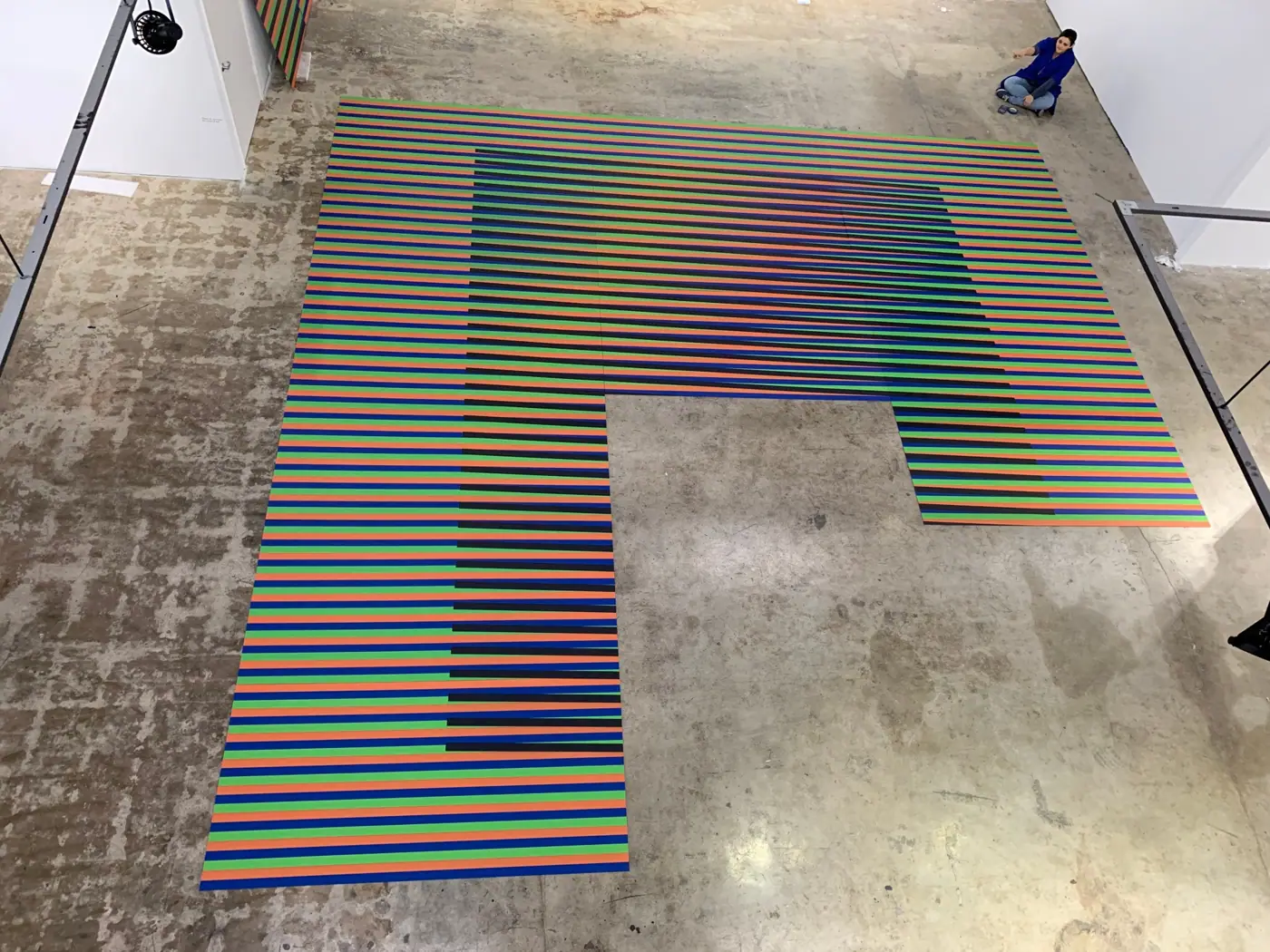
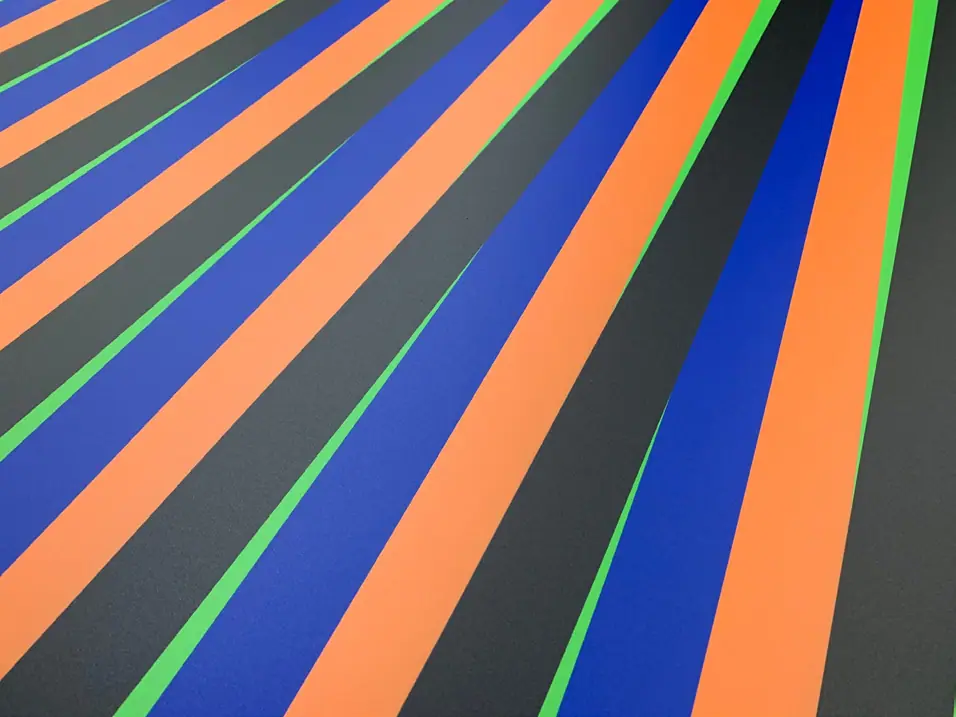
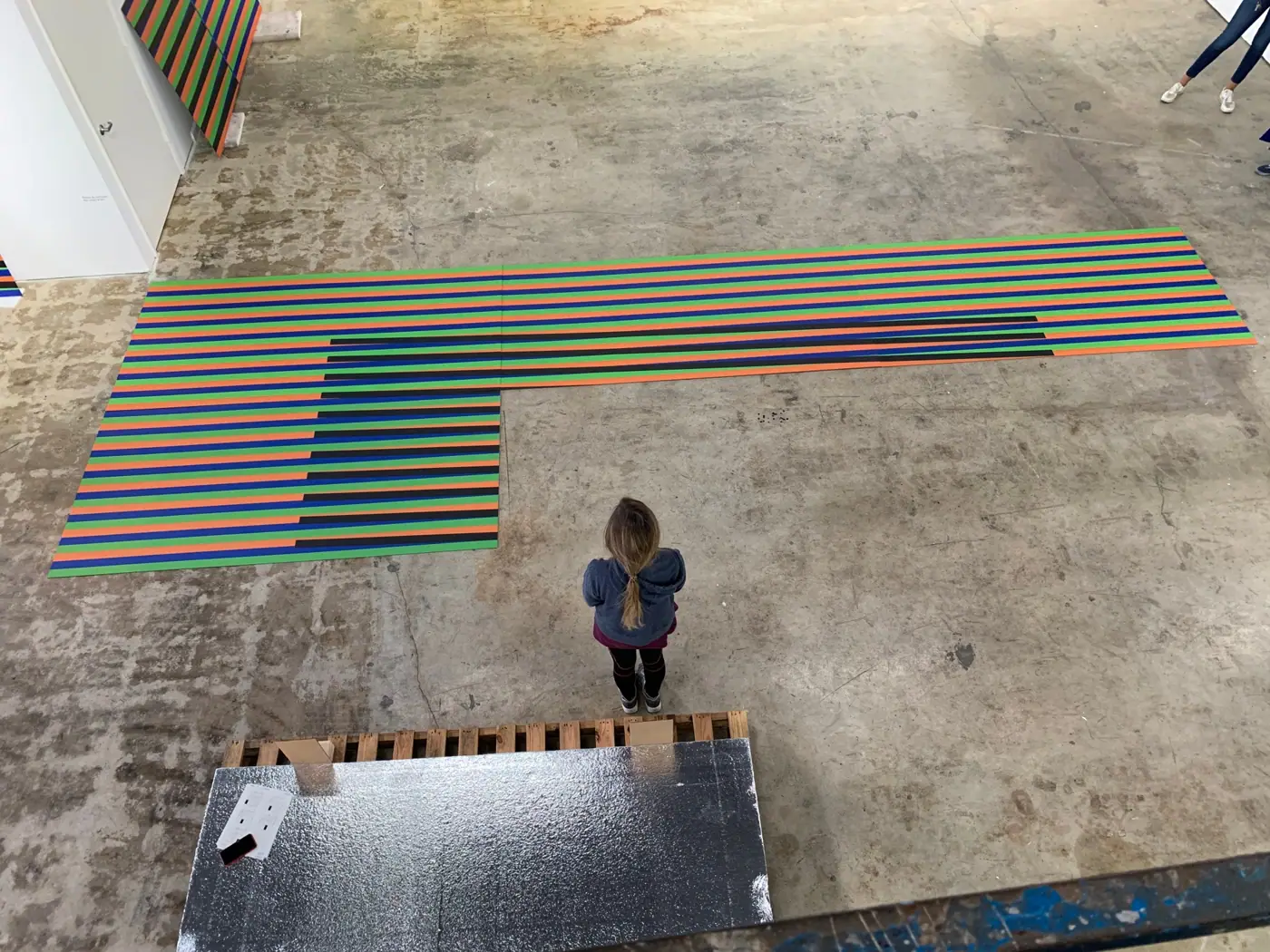
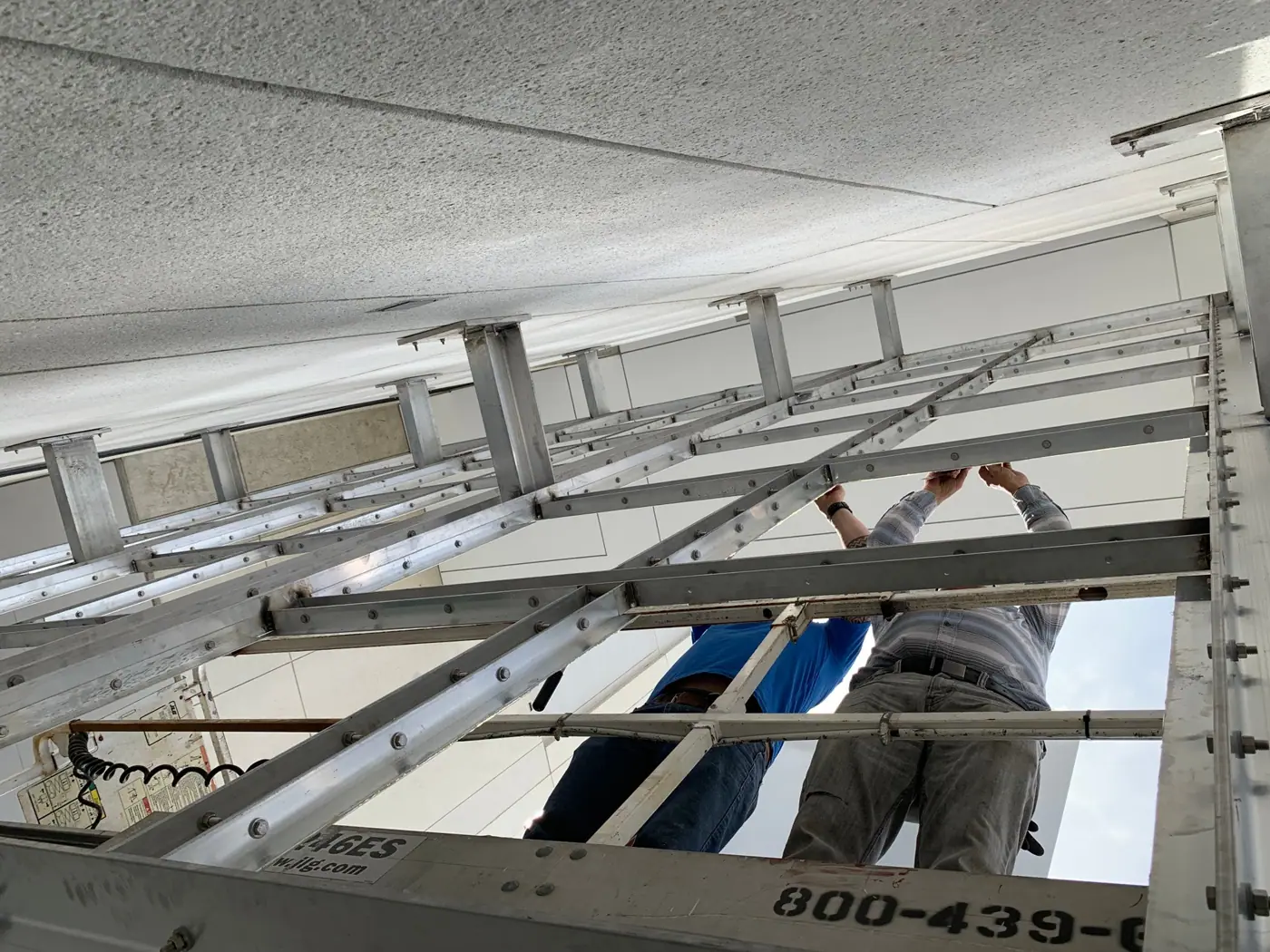
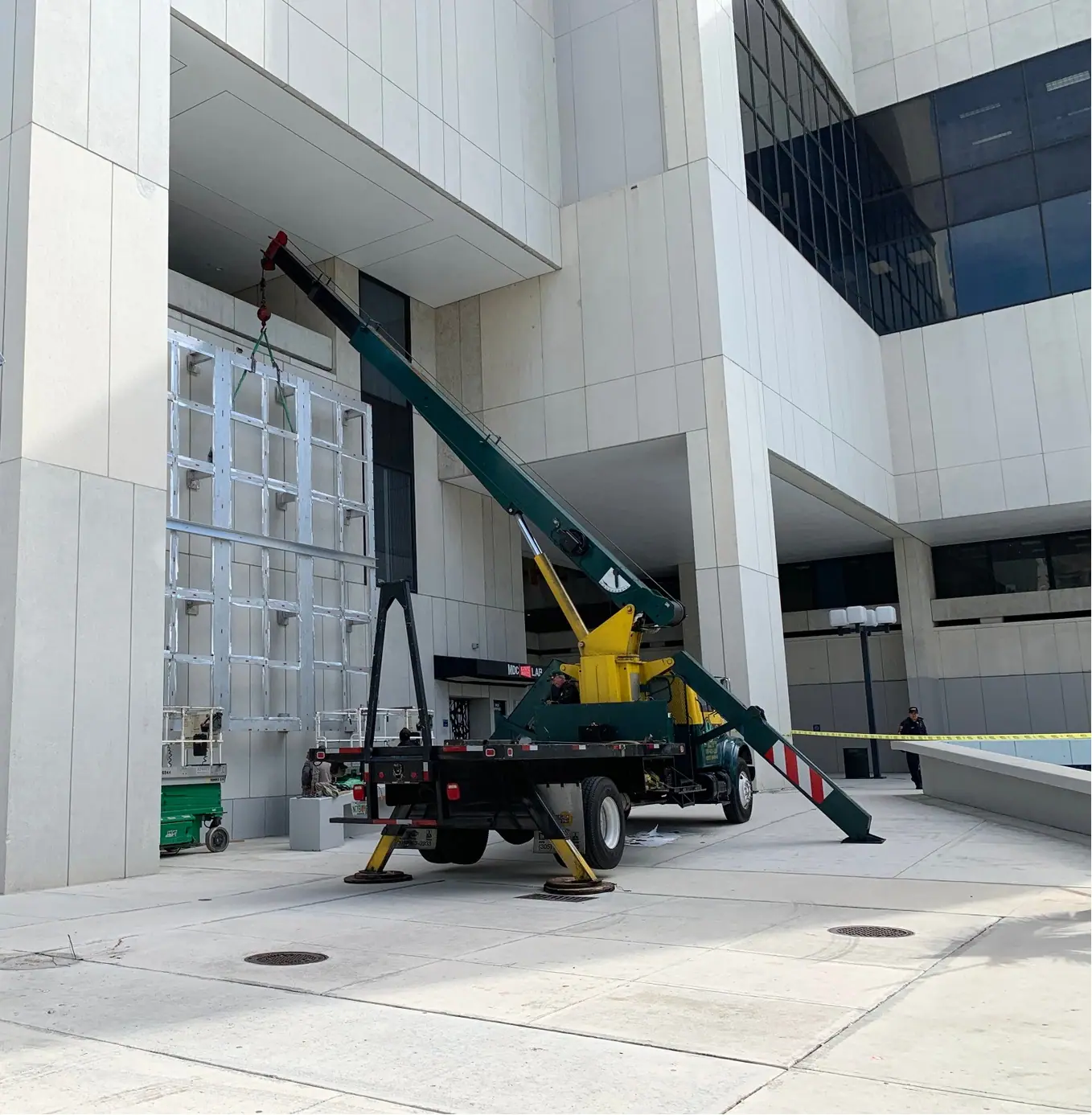
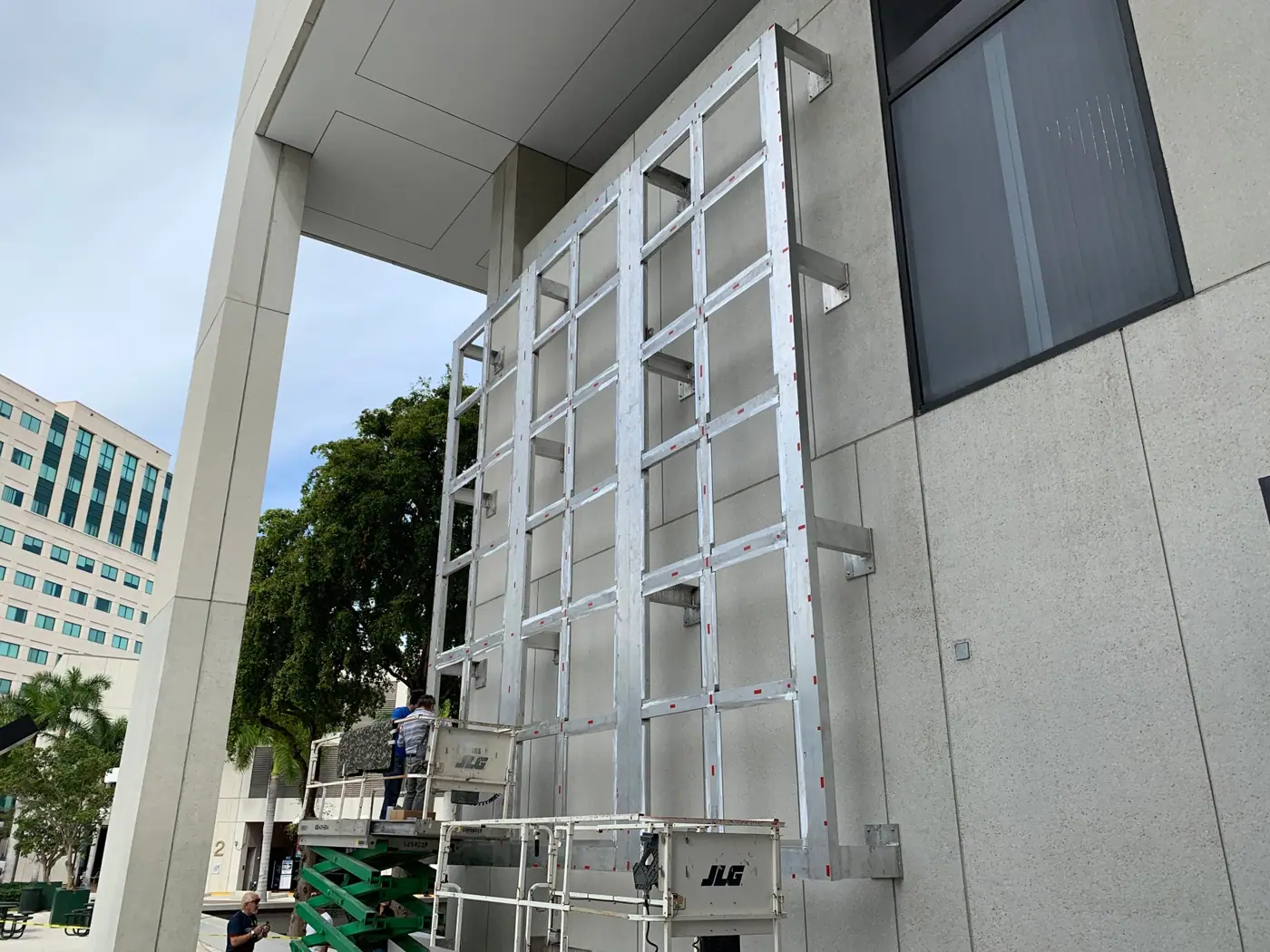
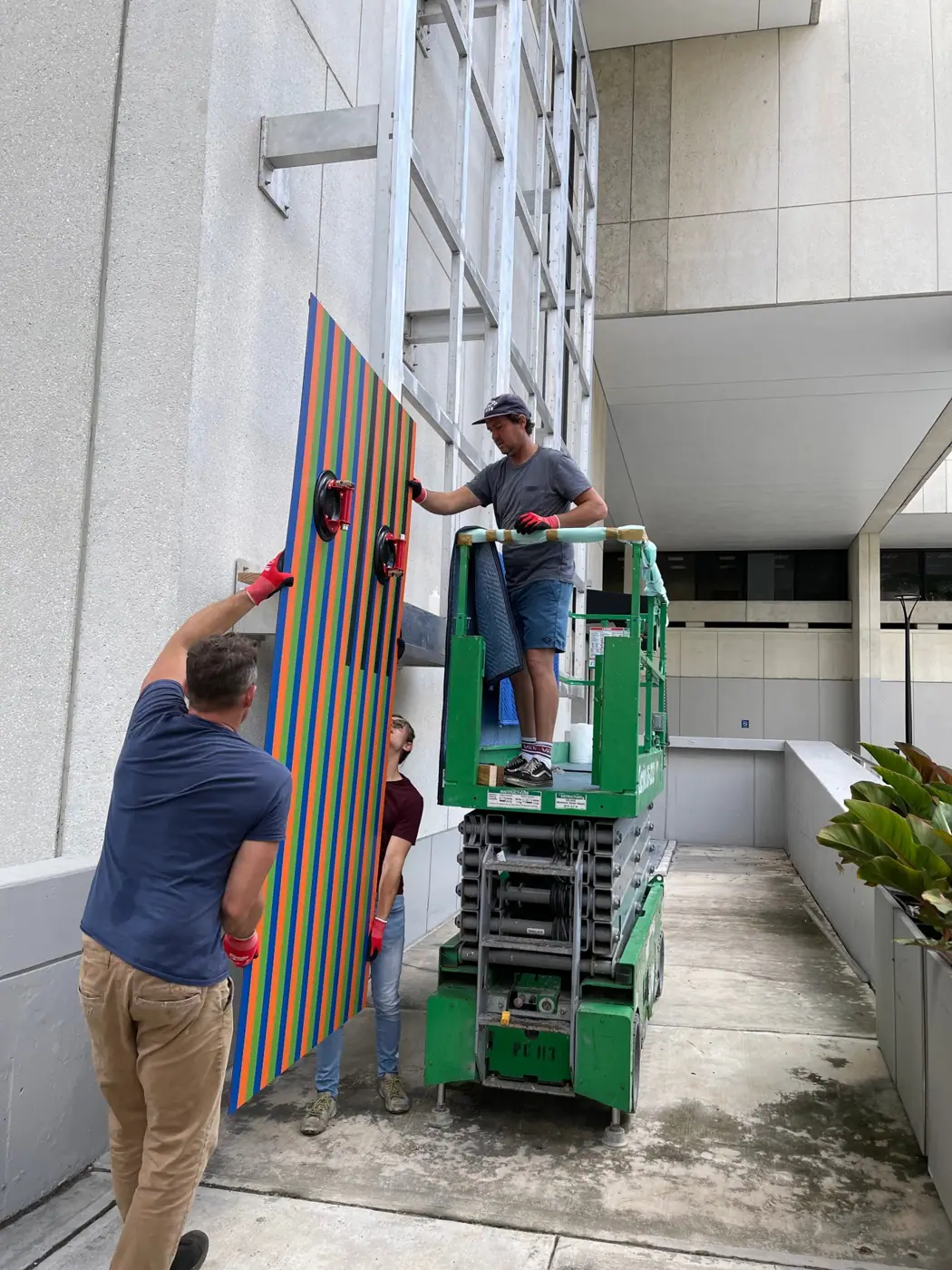
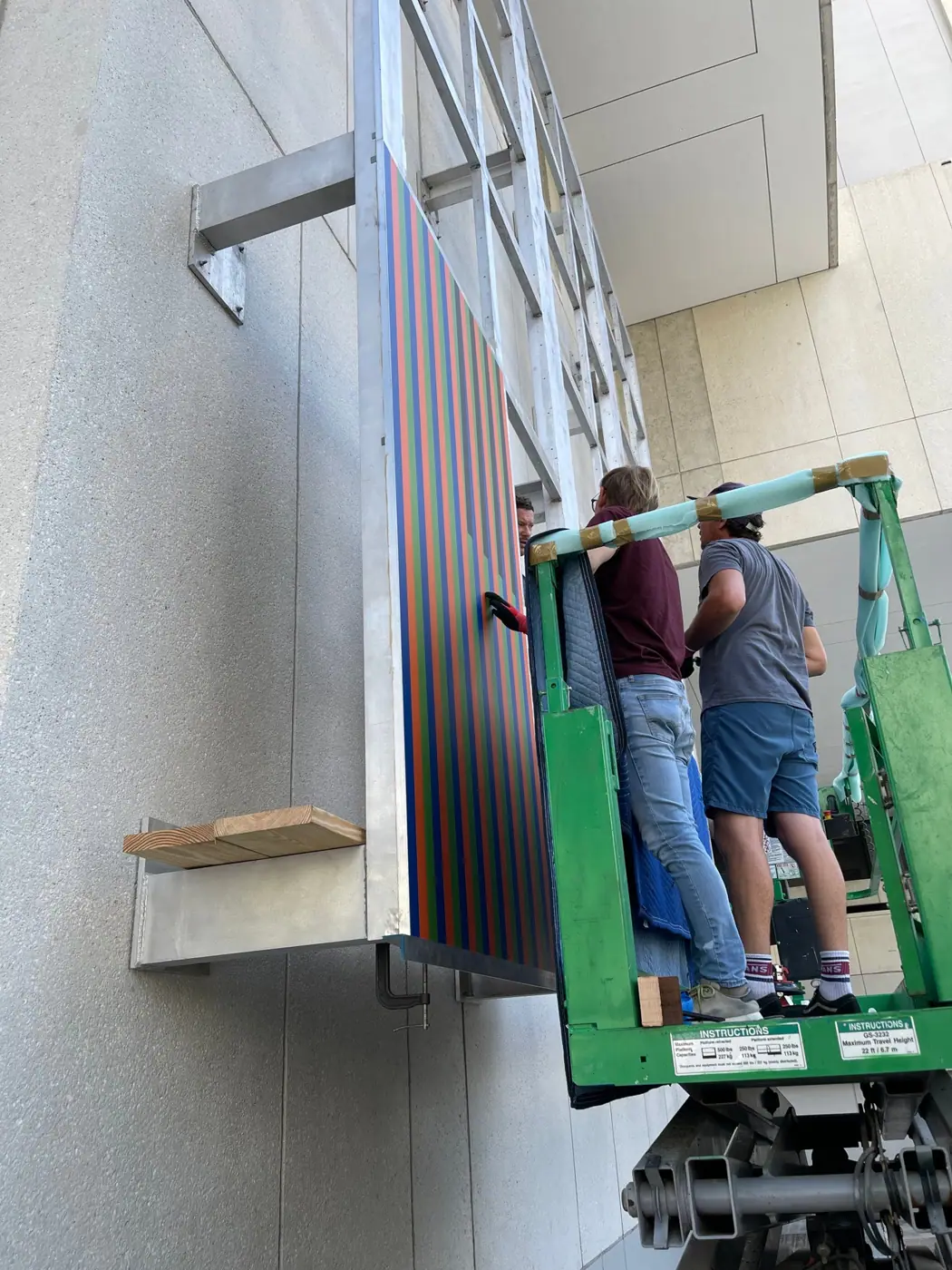
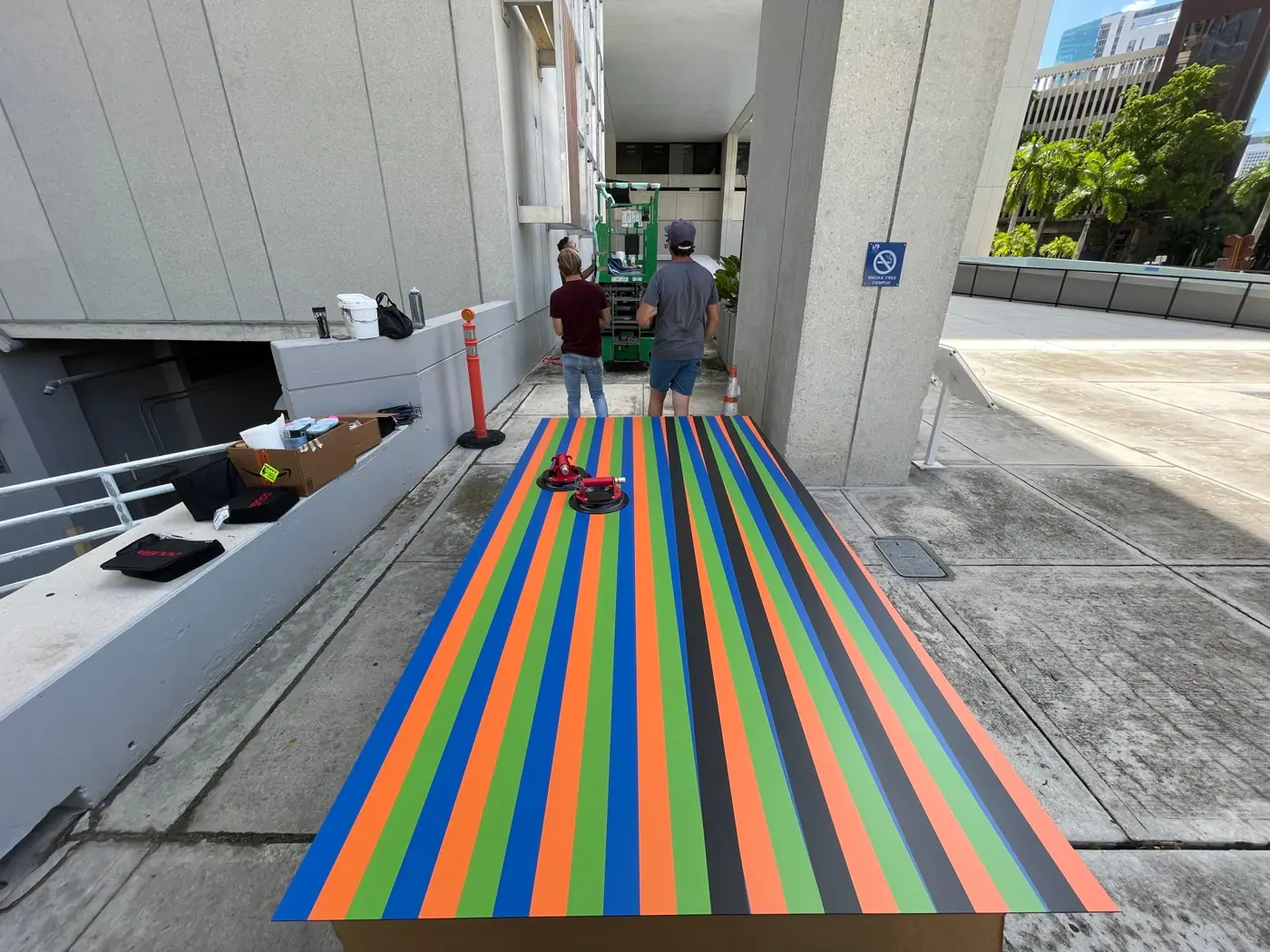
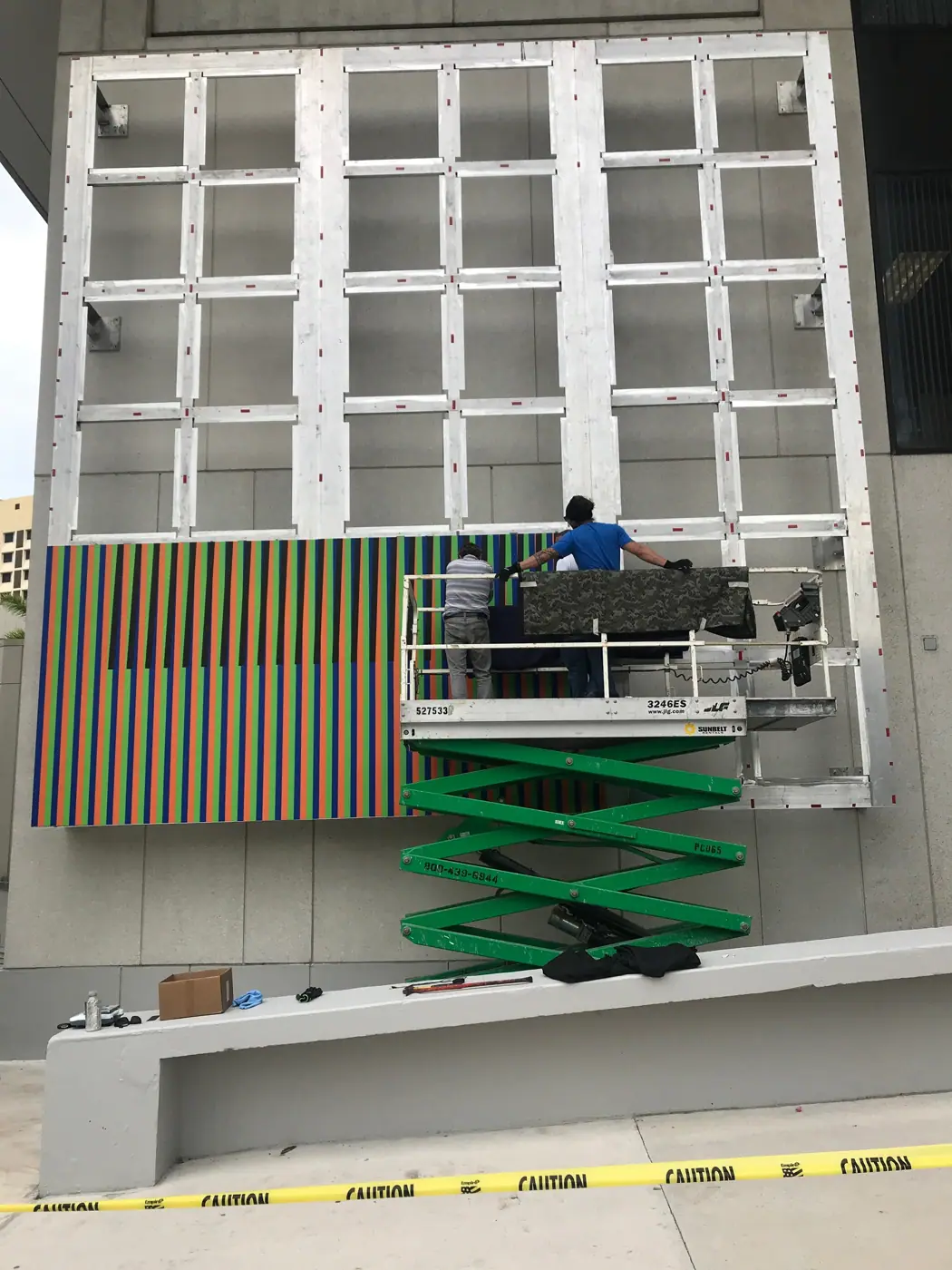
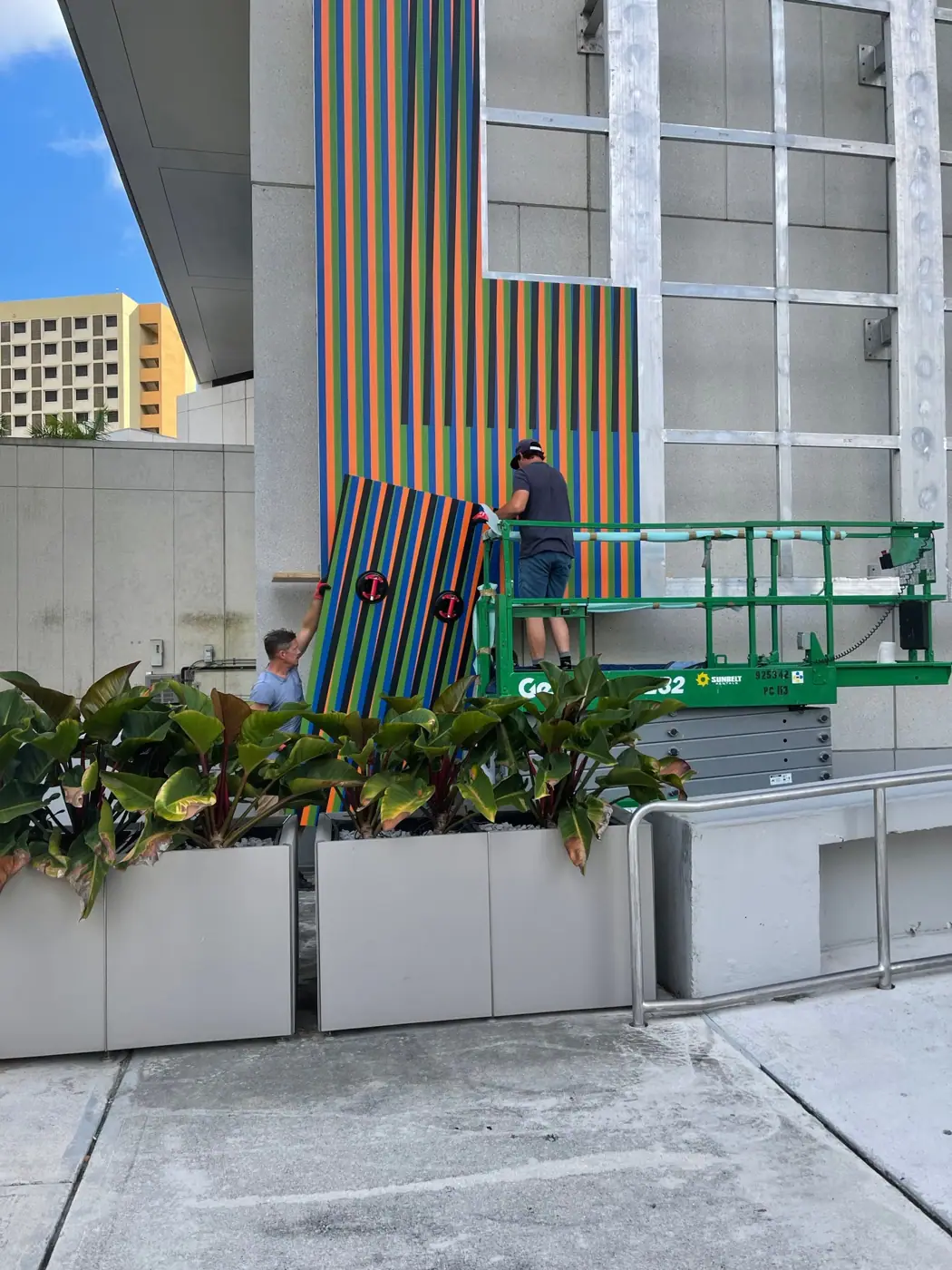
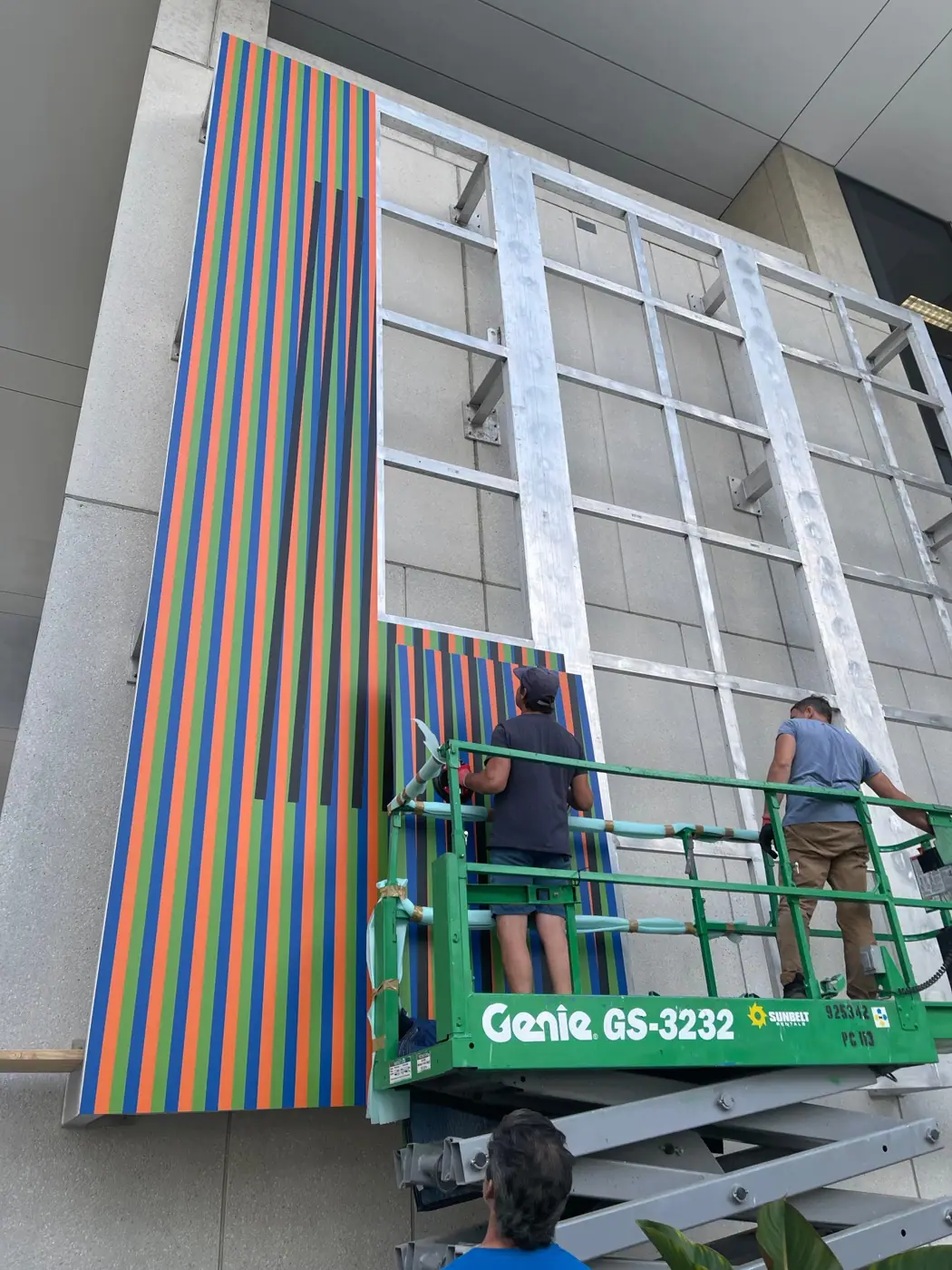
Inducción Cromática, the monumental installation by Venezuelan master Carlos Cruz-Diez located at the Miami Dade College Wolfson Campus, transforms the urban environment into a dynamic laboratory of perception where art interacts directly with the passerby. Through the mathematical juxtaposition of parallel lines of color across eighteen aluminum panels, the artwork liberates color from traditional form, turning it into an ephemeral event generated in real time on the viewer's retina. As citizens move in front of the structure, they activate an optical phenomenon of virtual movement that challenges the physical stability of the metallic support, causing the piece to shift according to each individual’s unique perspective.
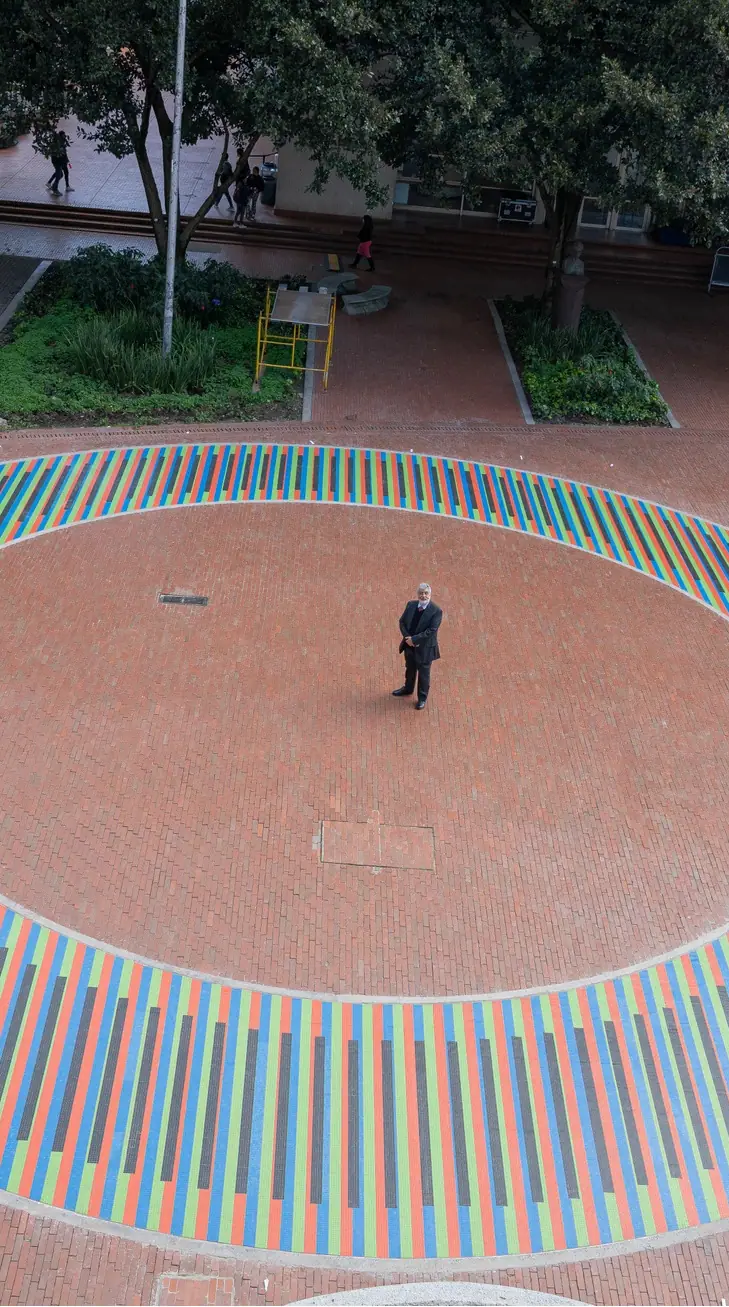
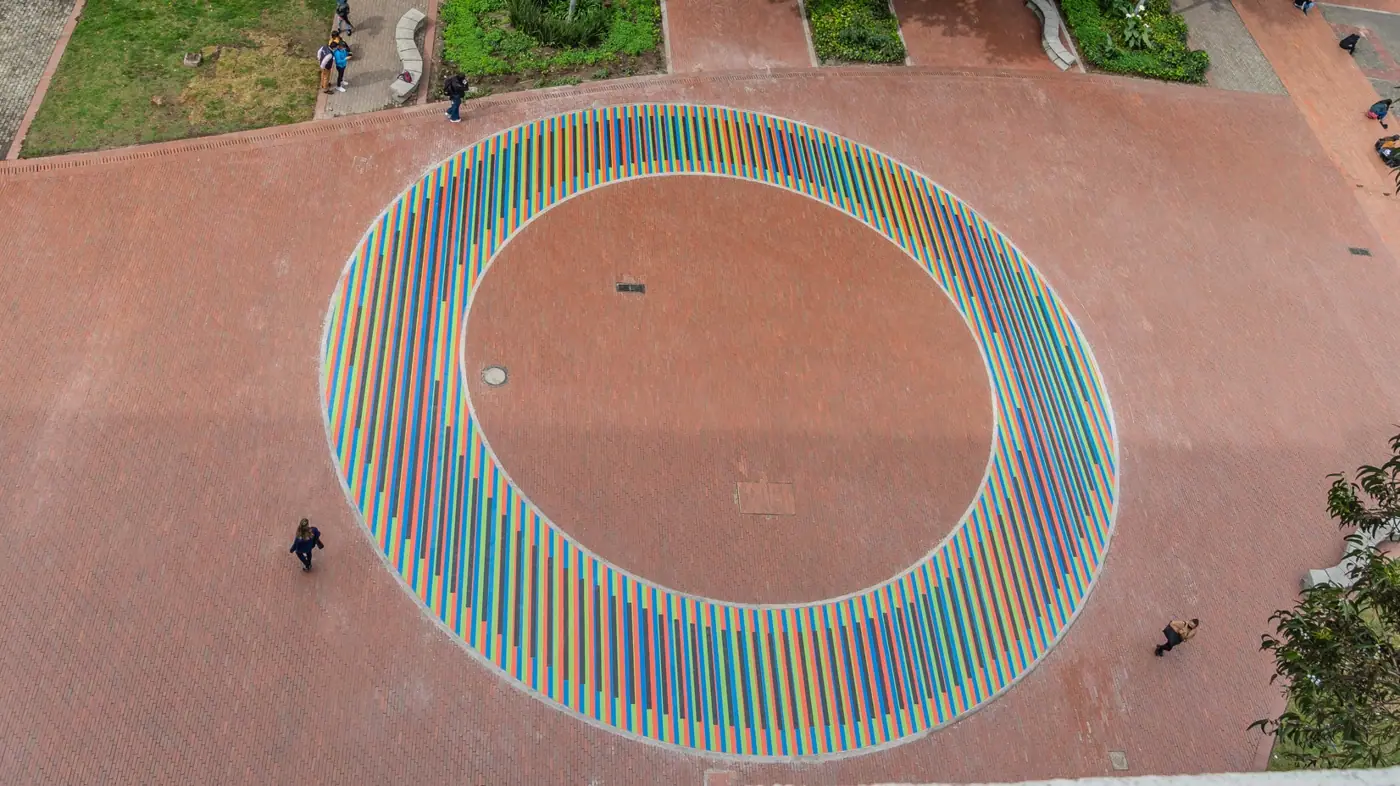
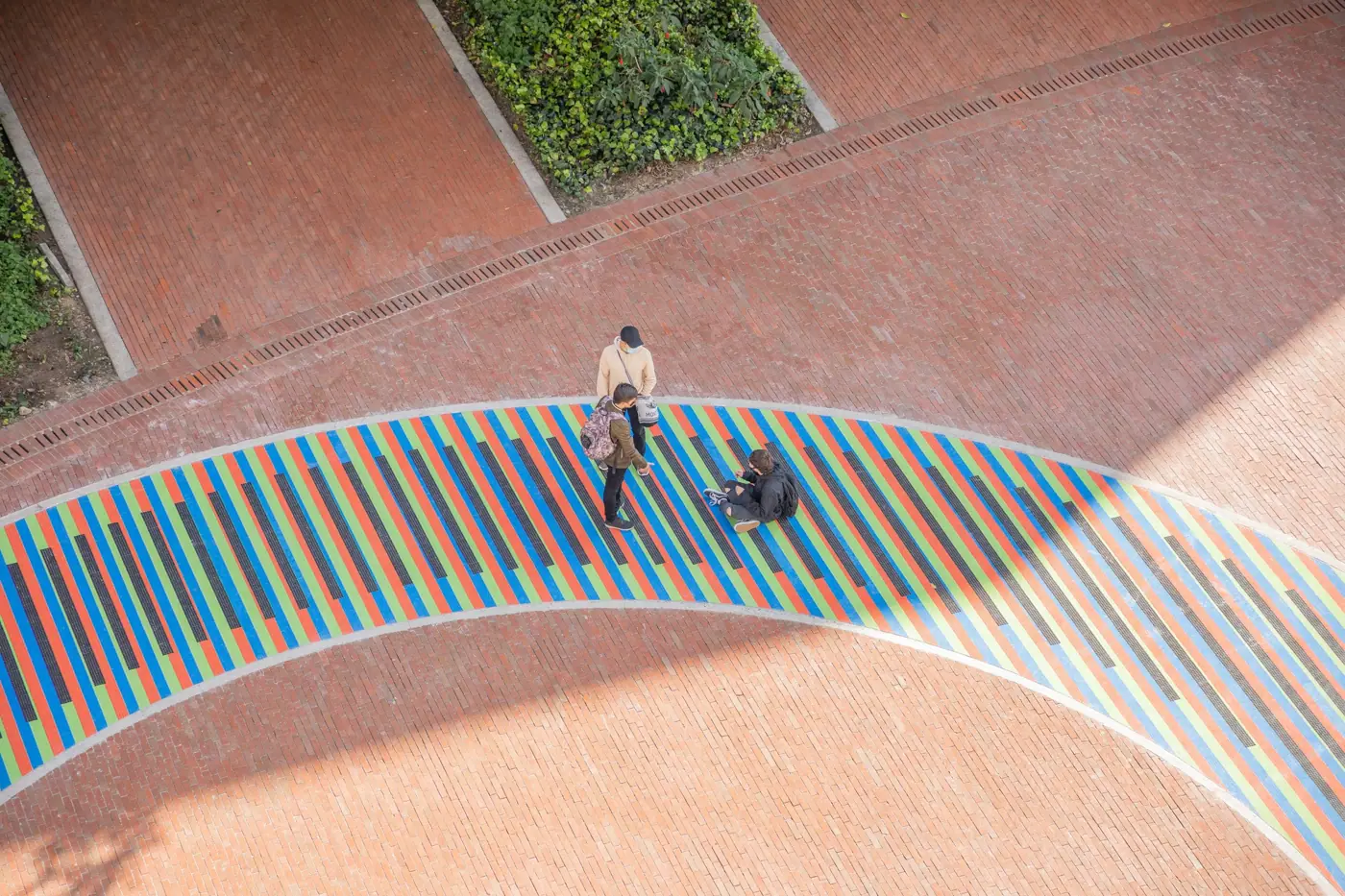
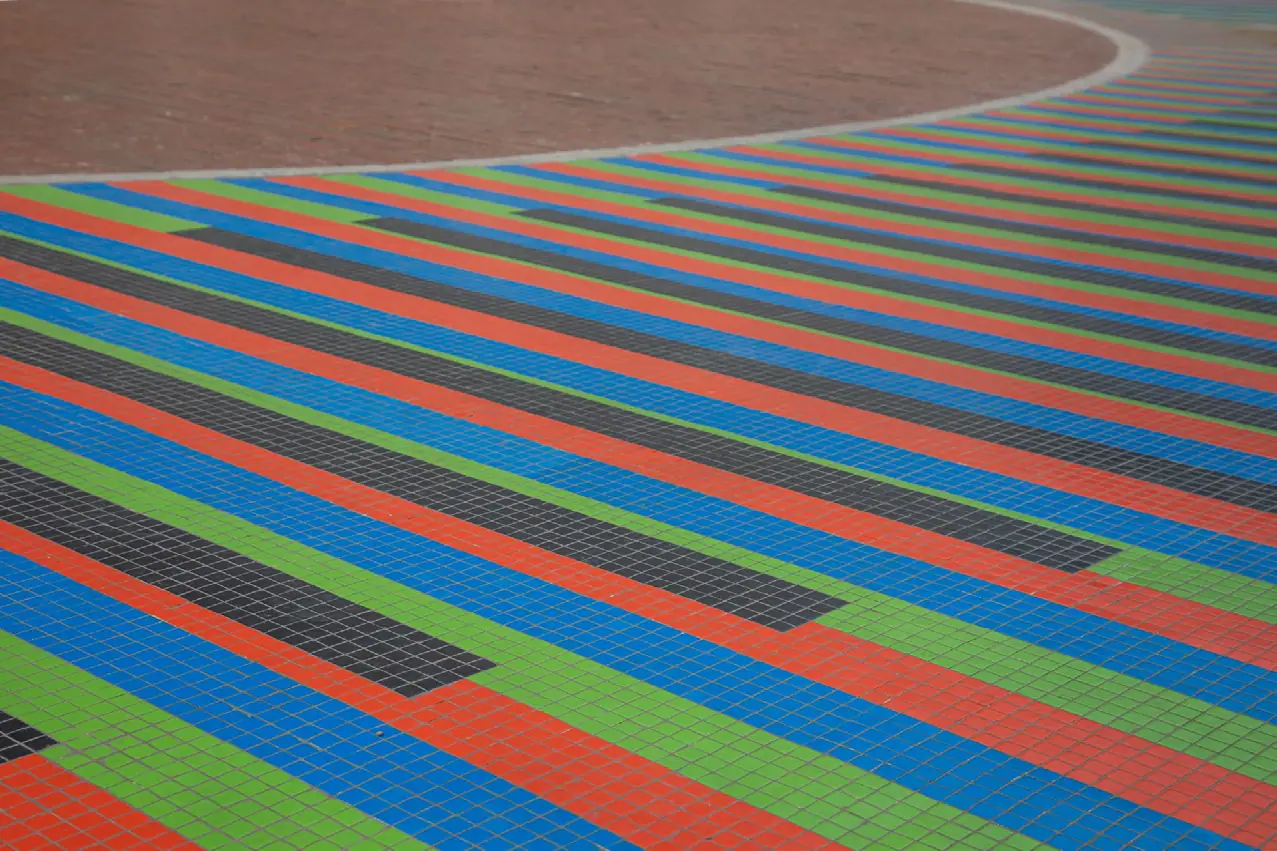
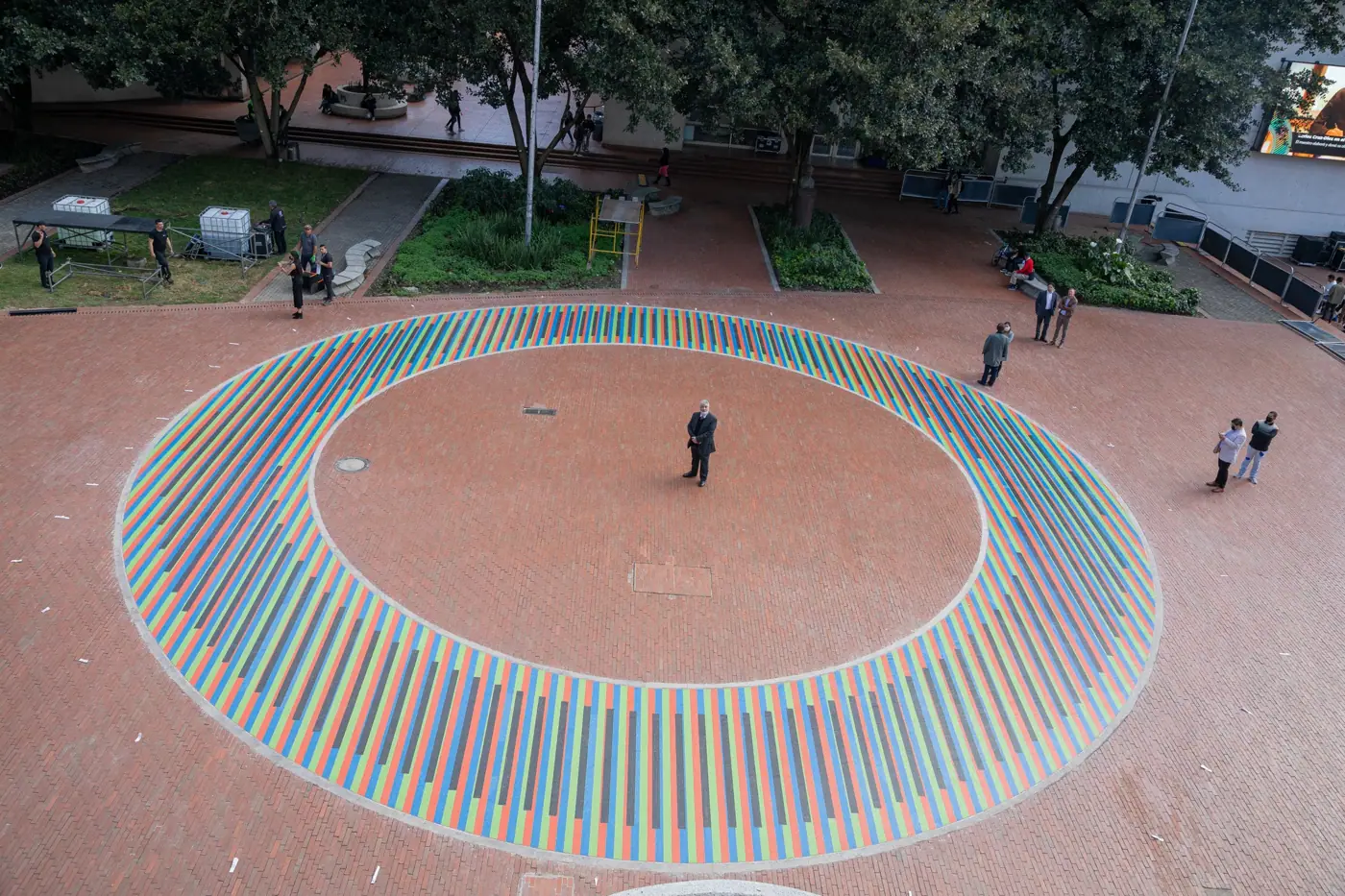
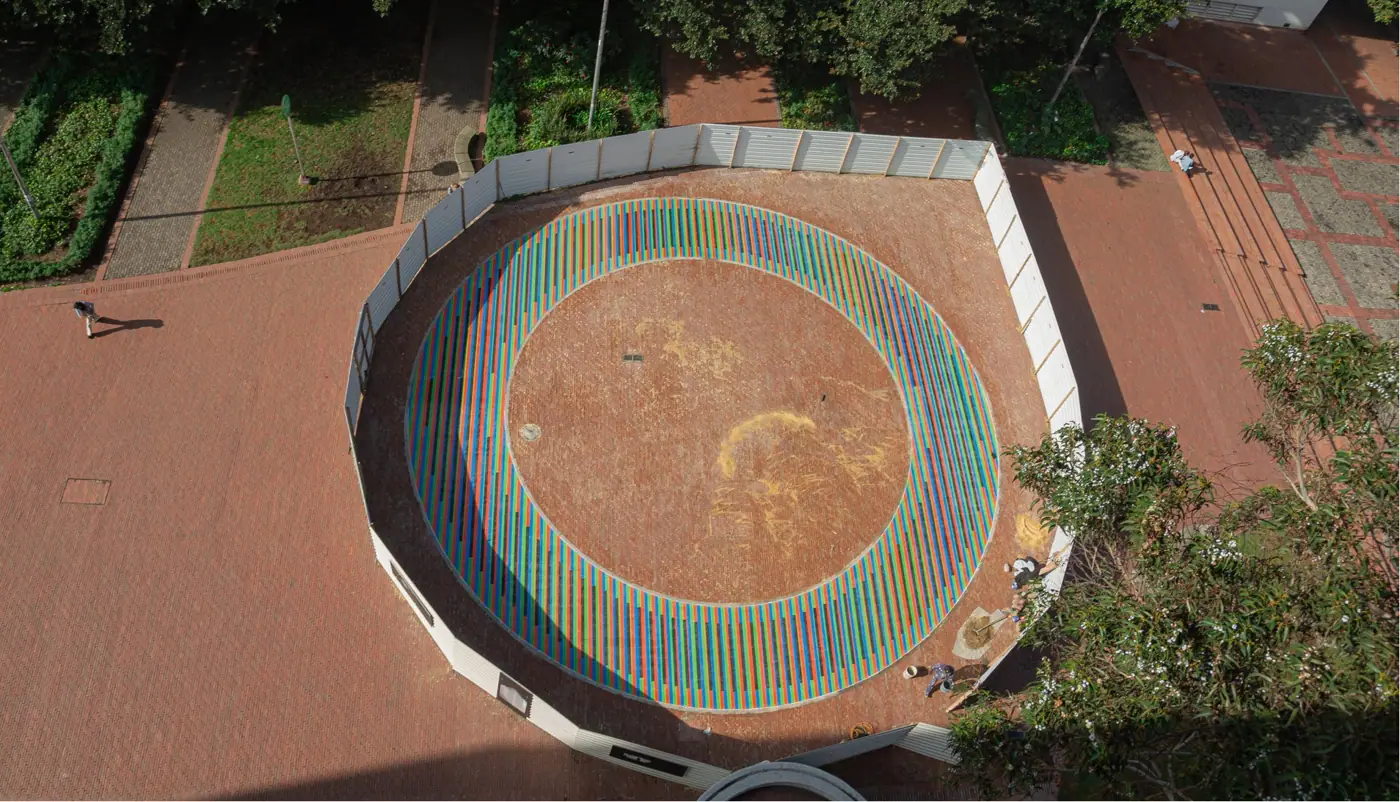
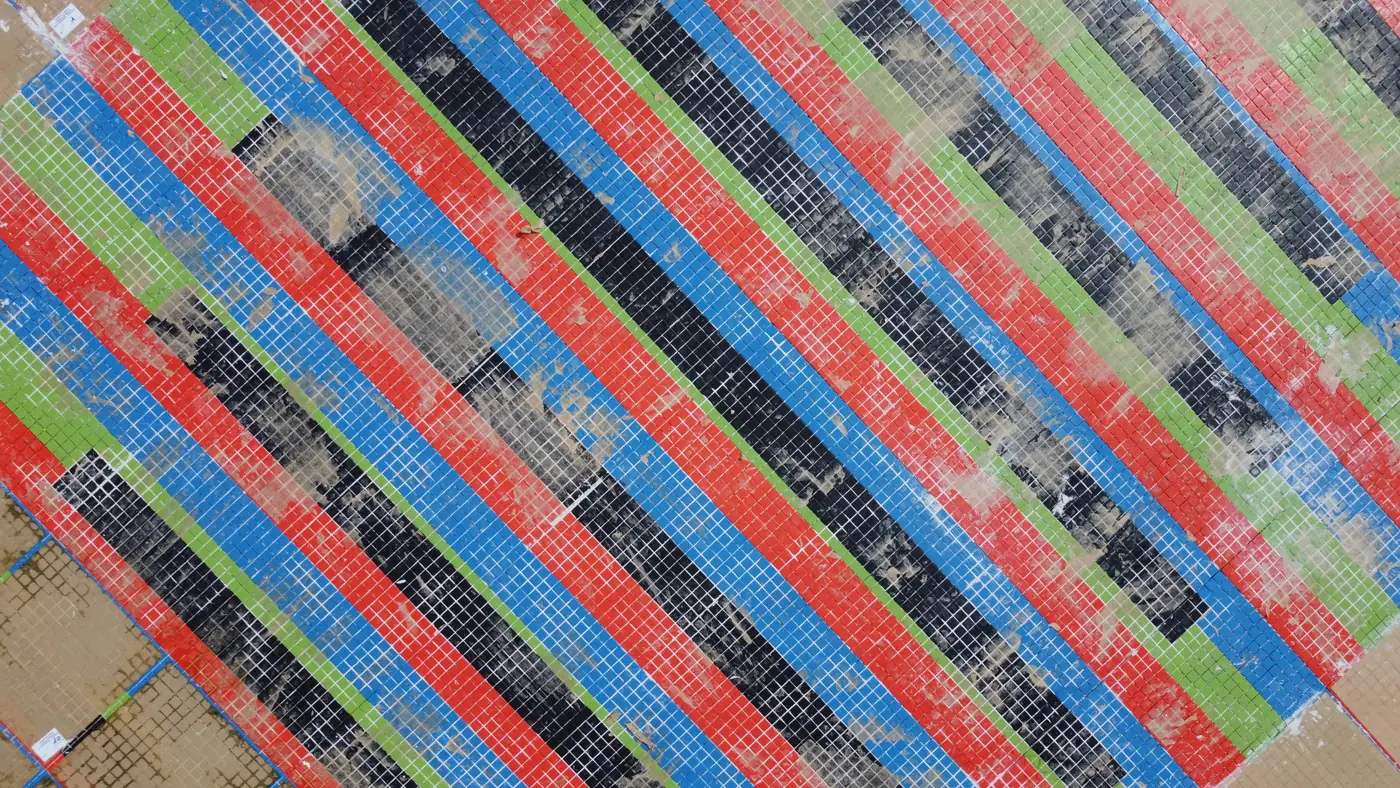
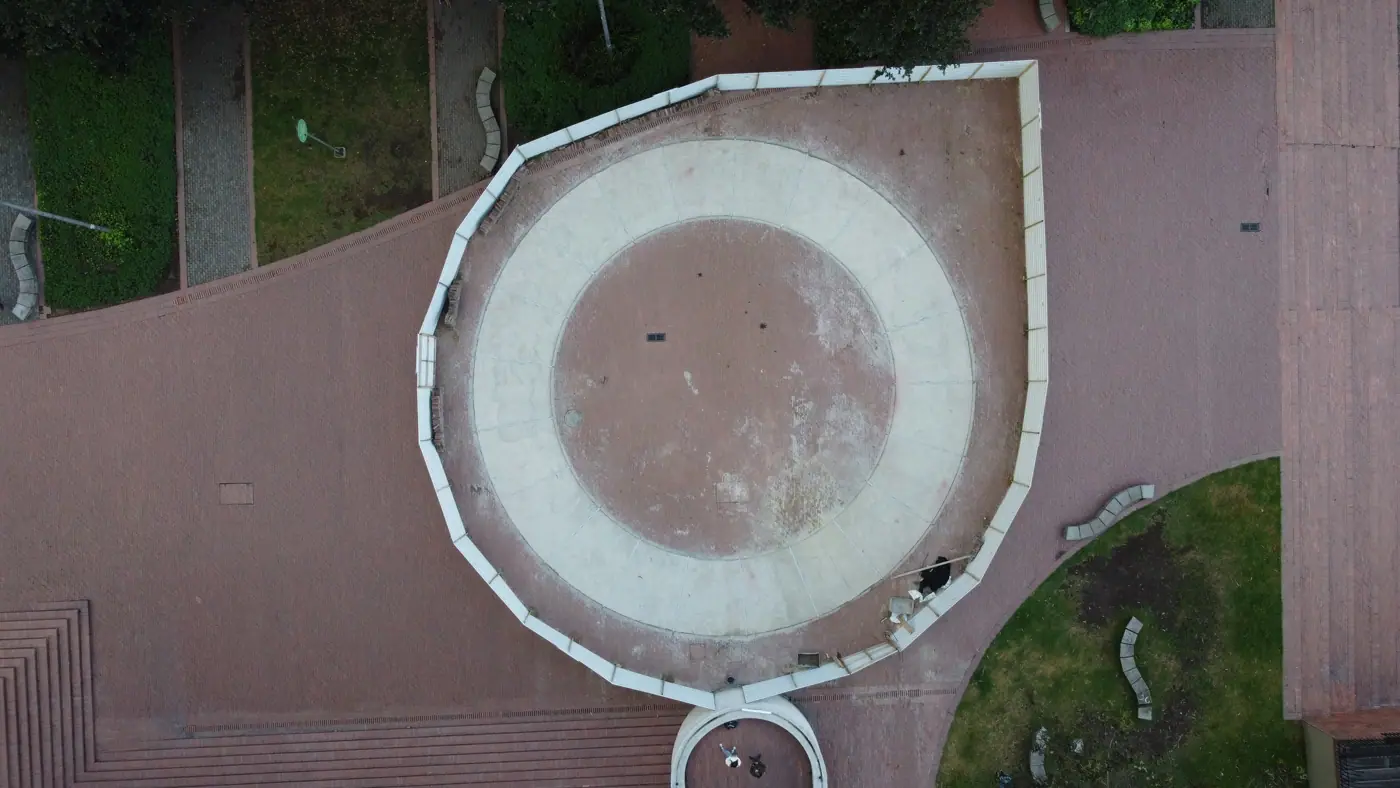
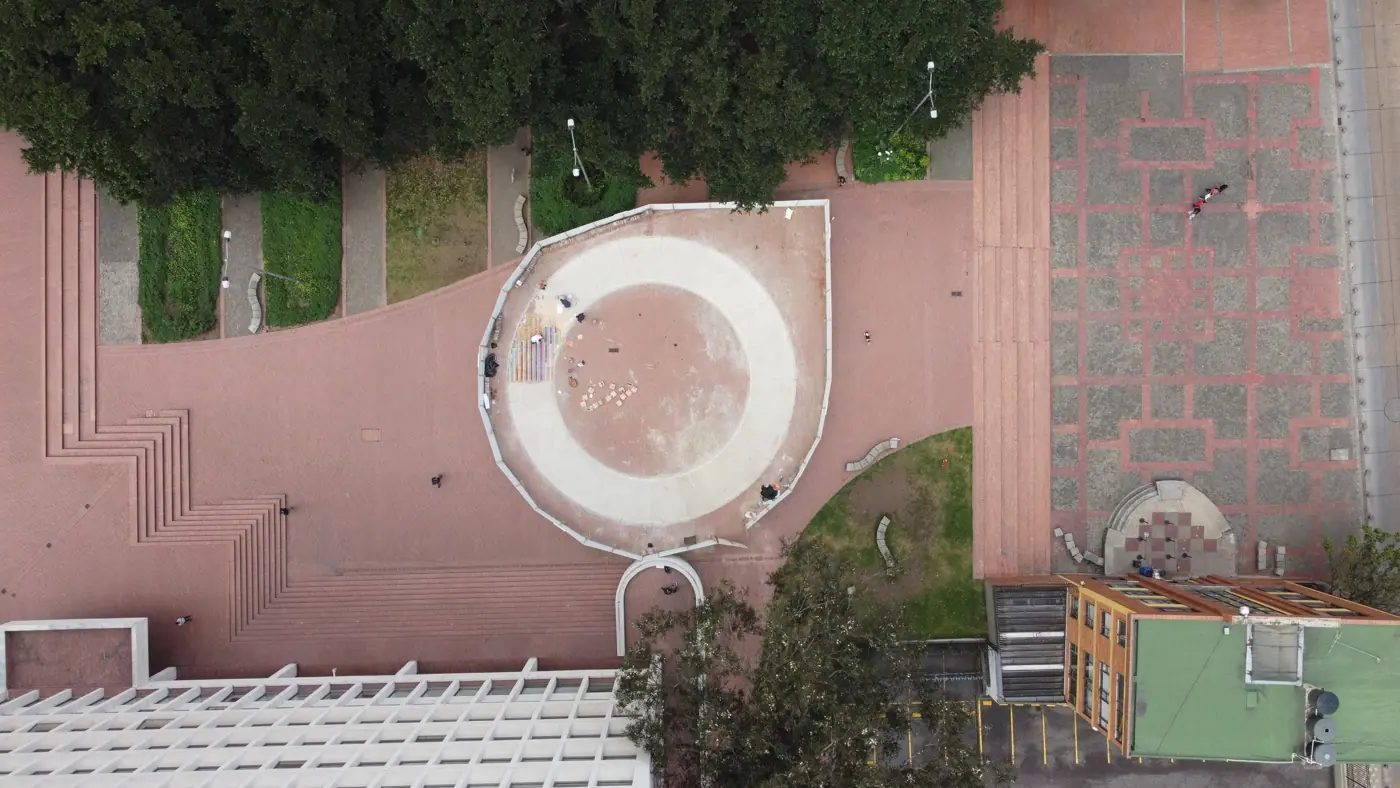
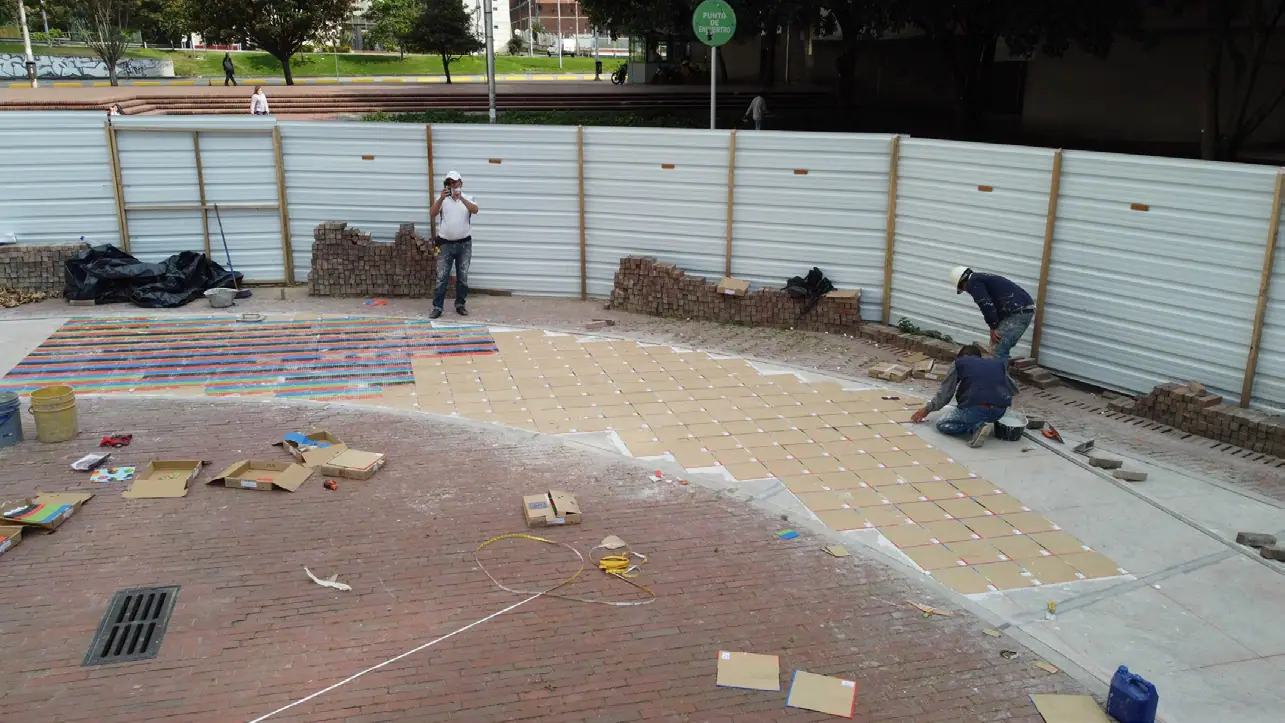
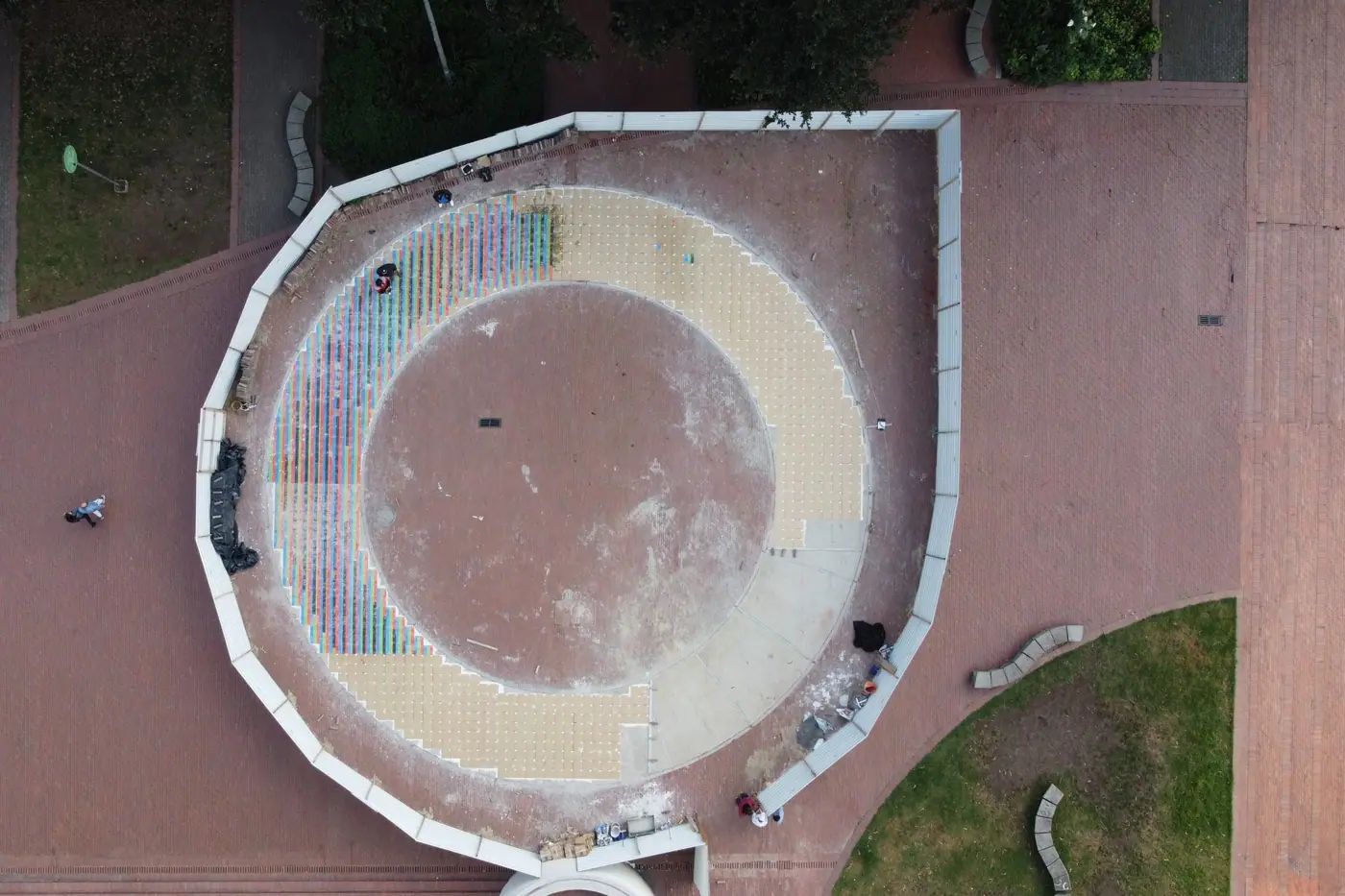
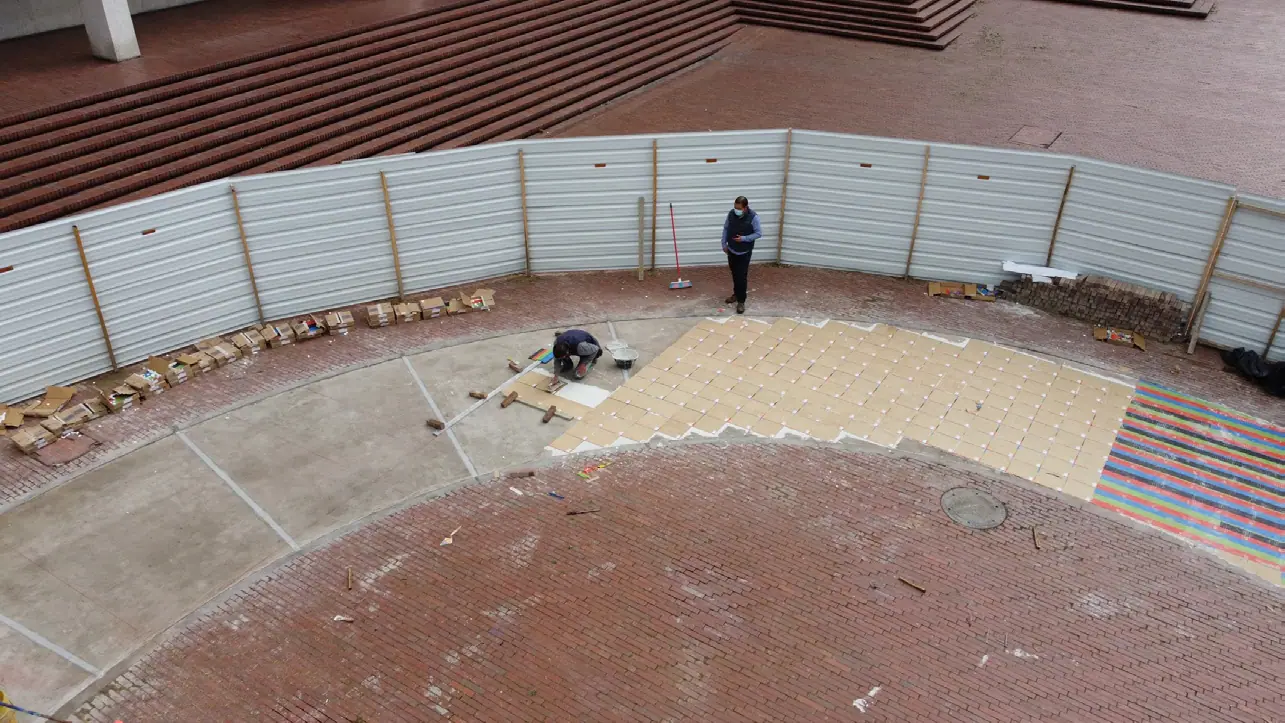
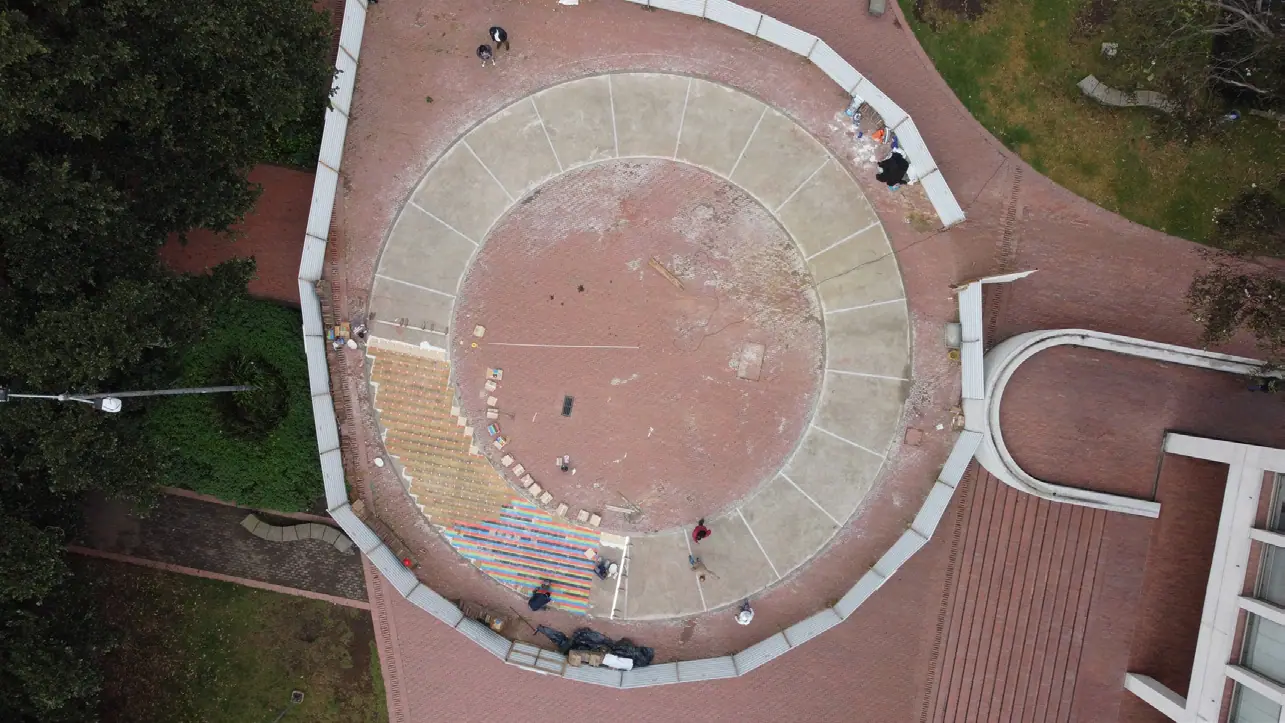
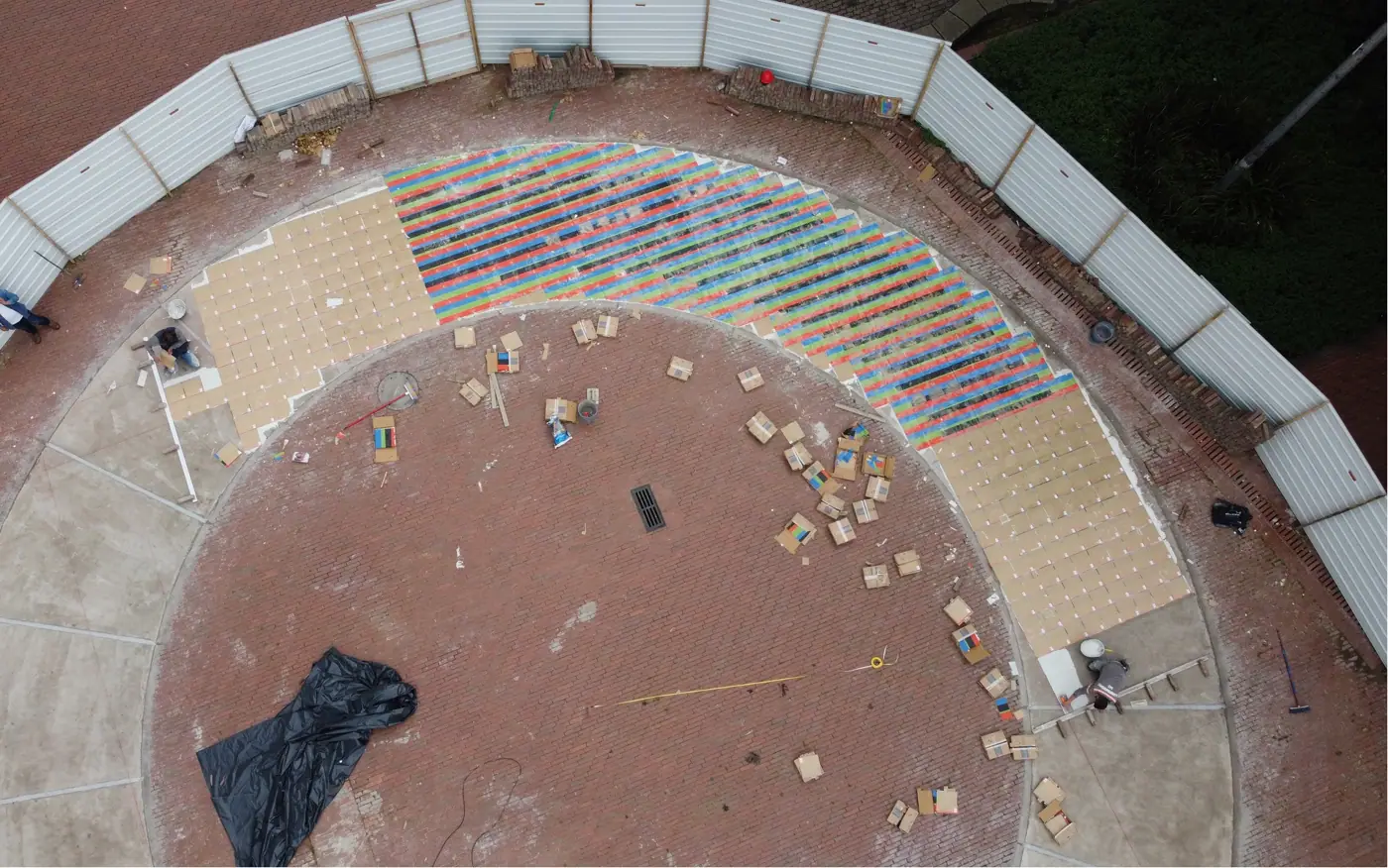
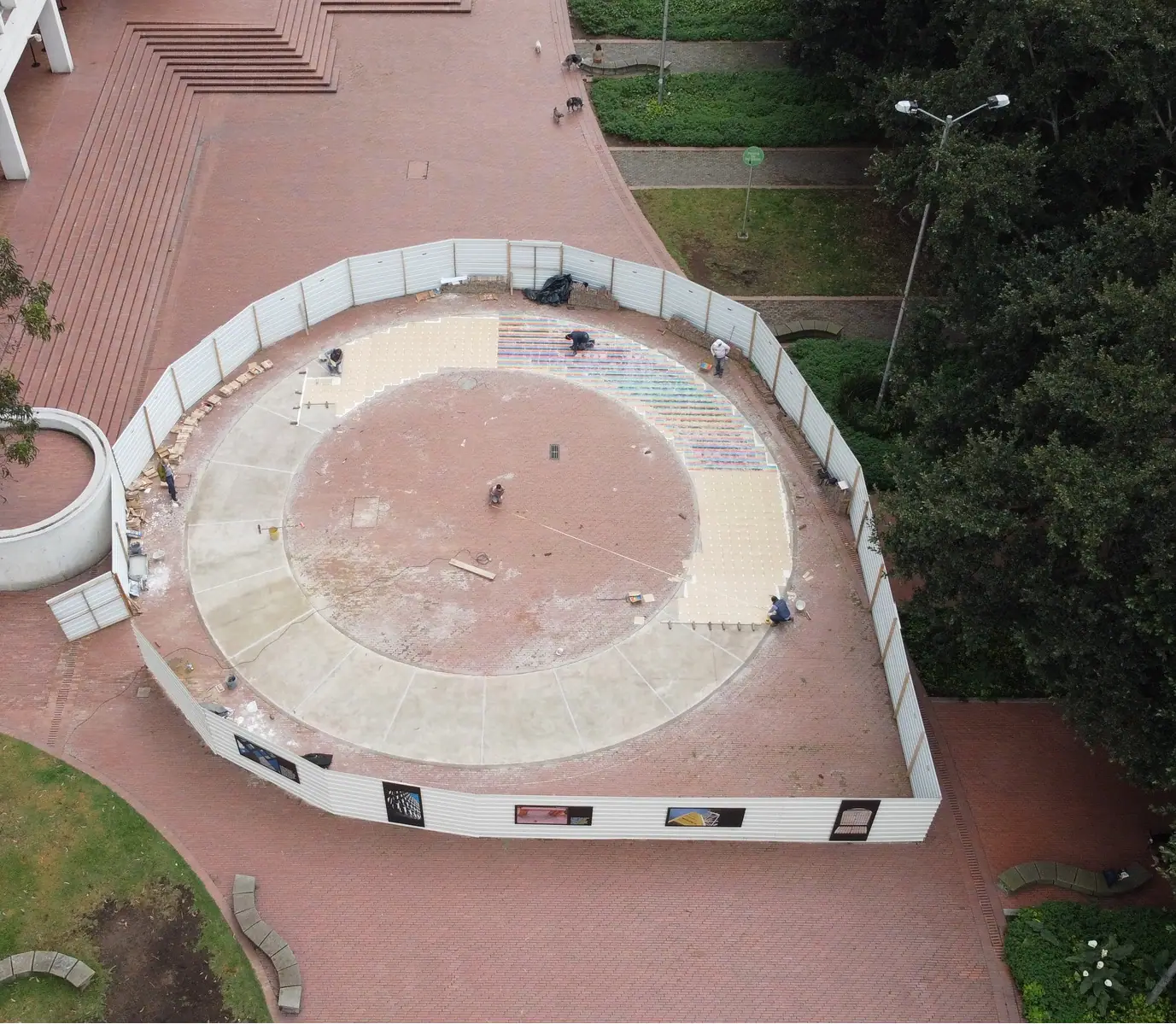
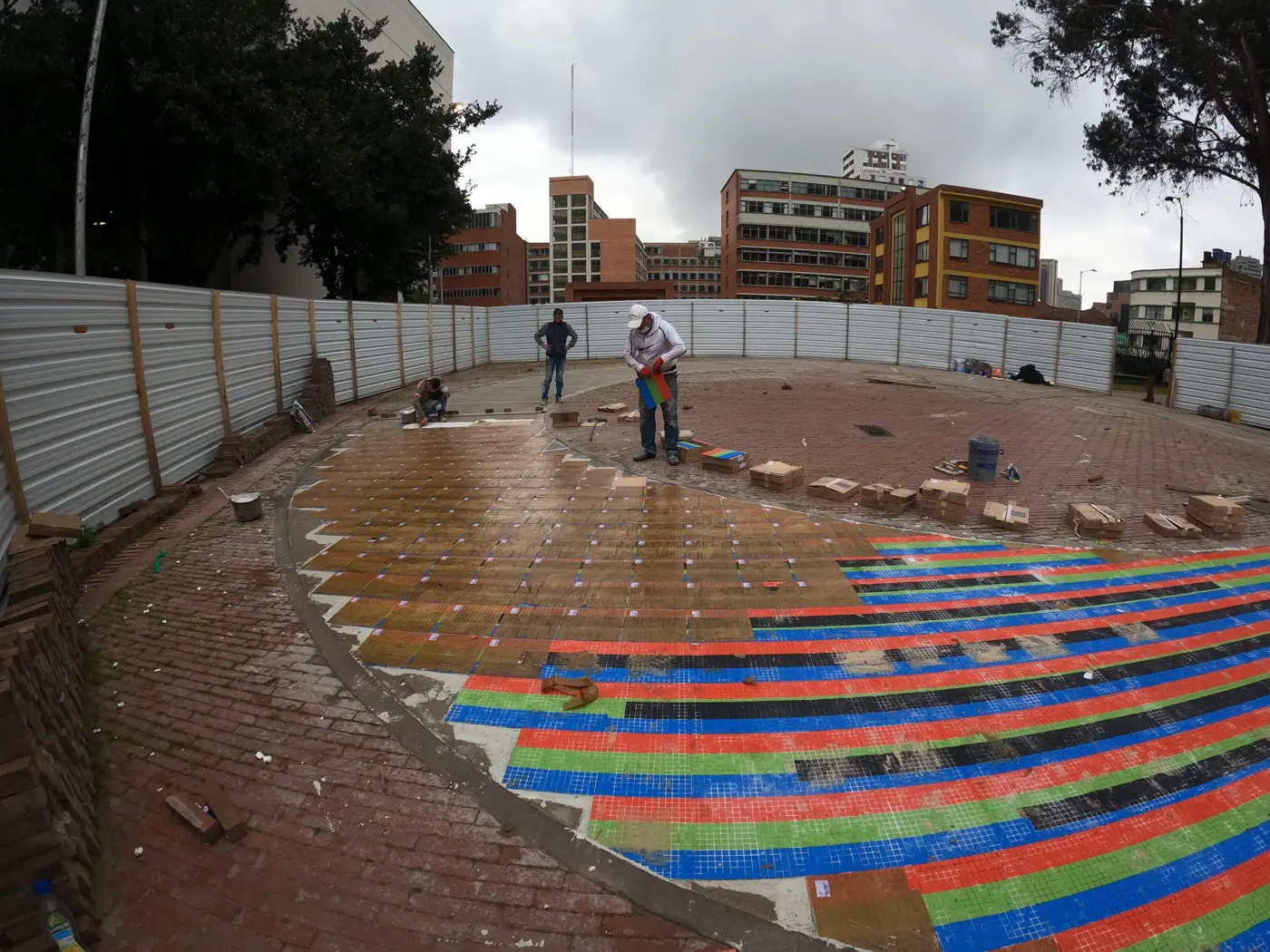
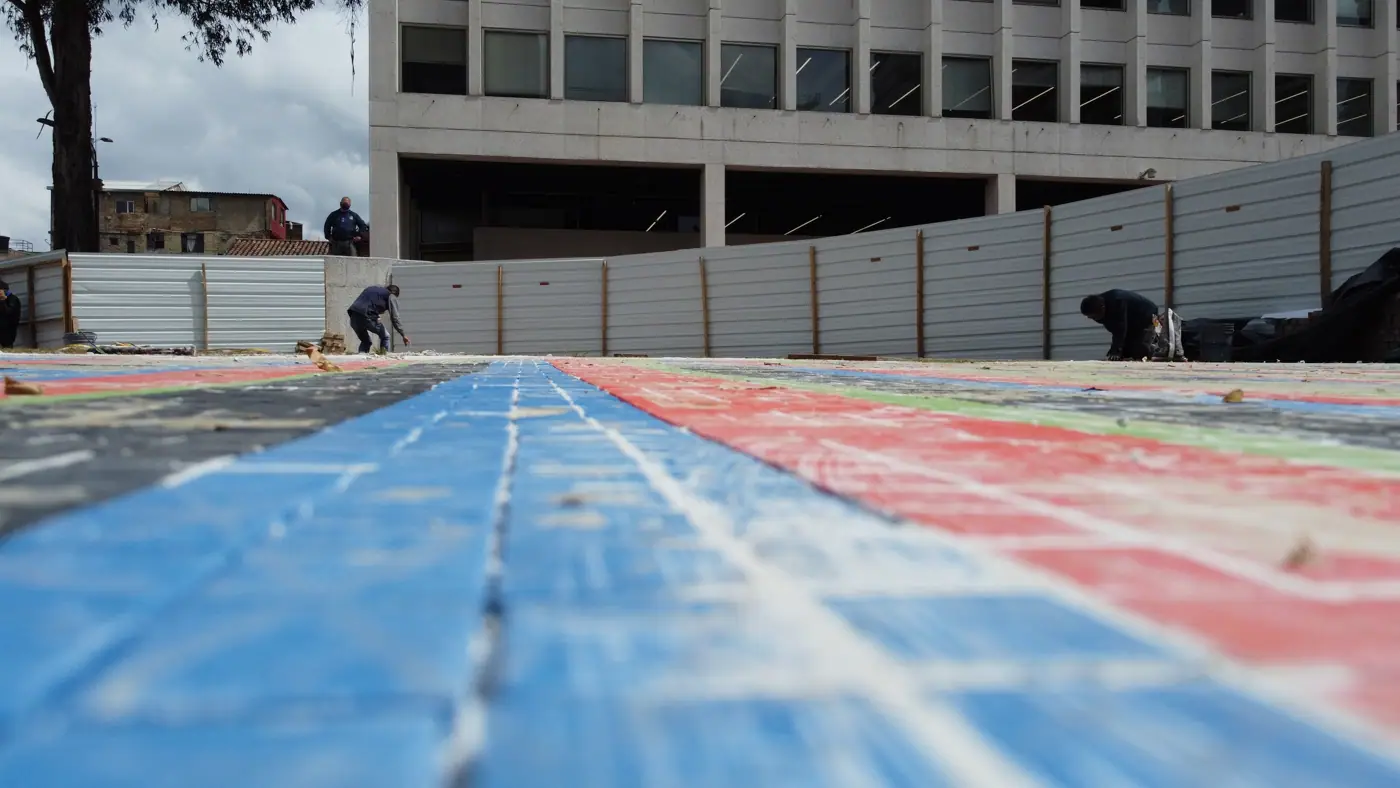
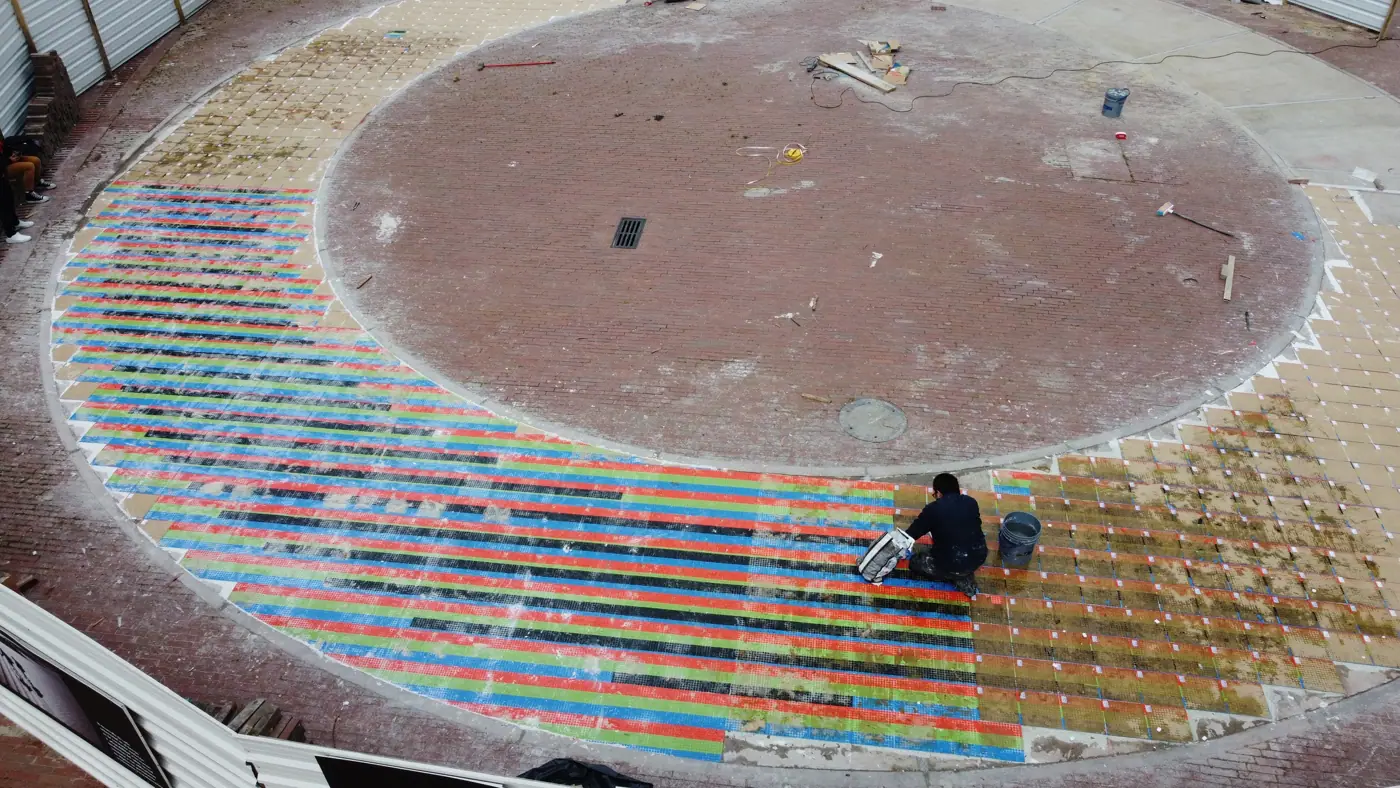
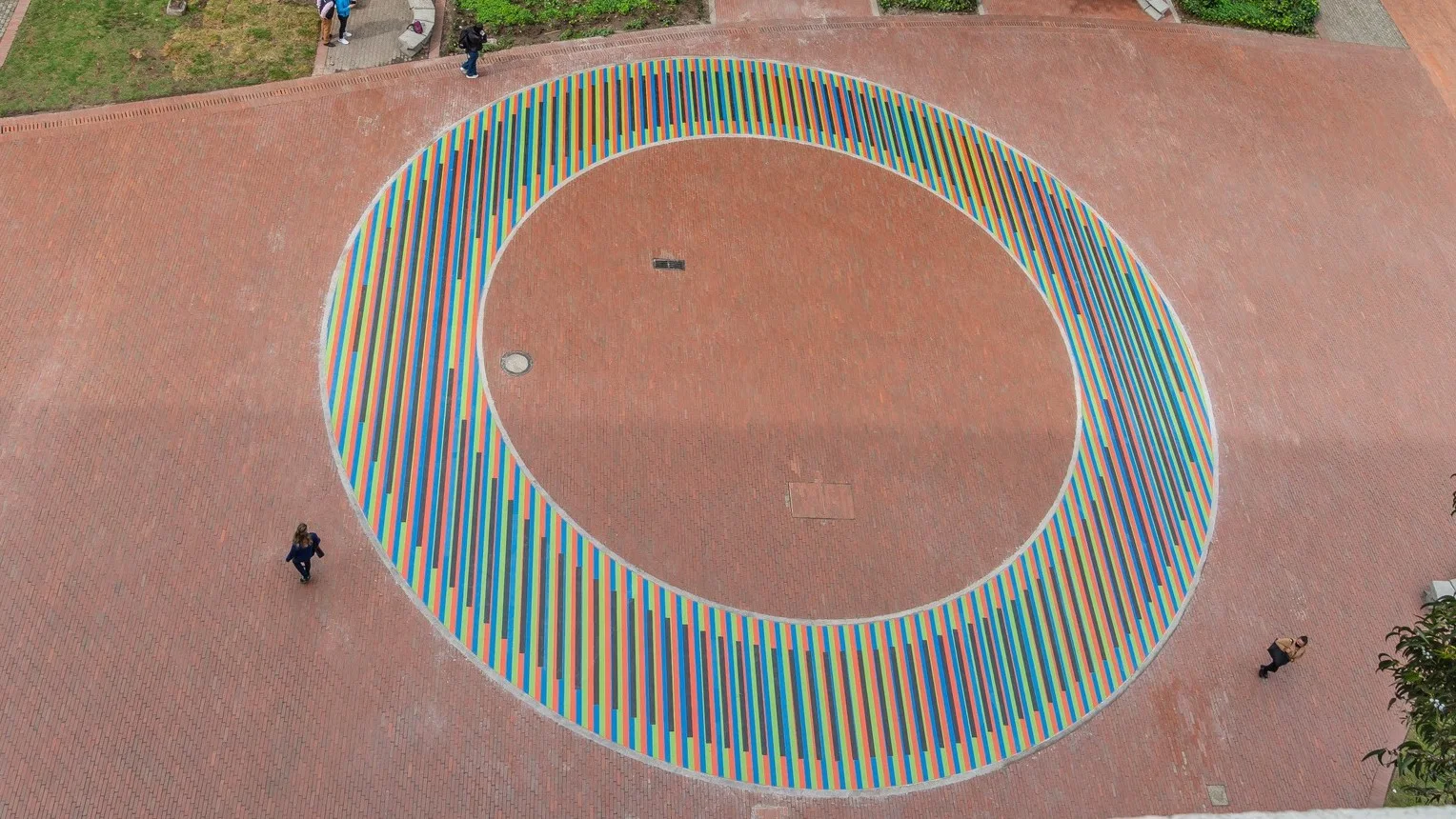
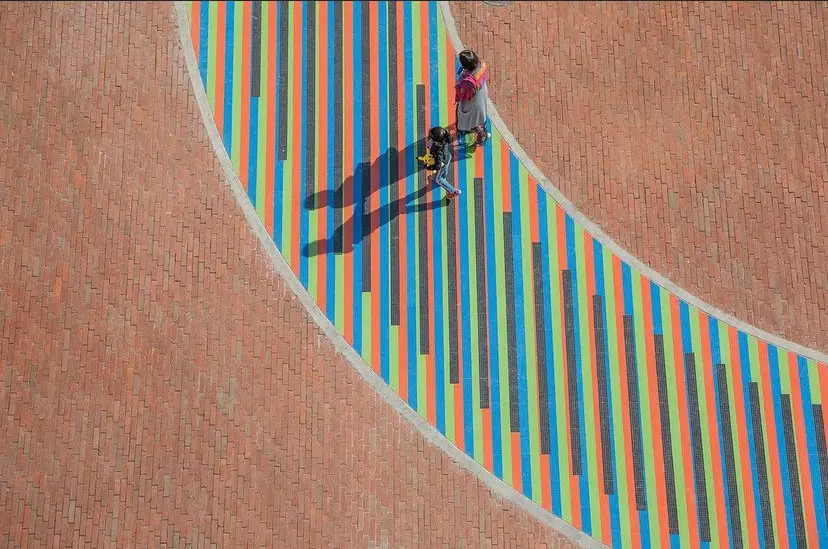
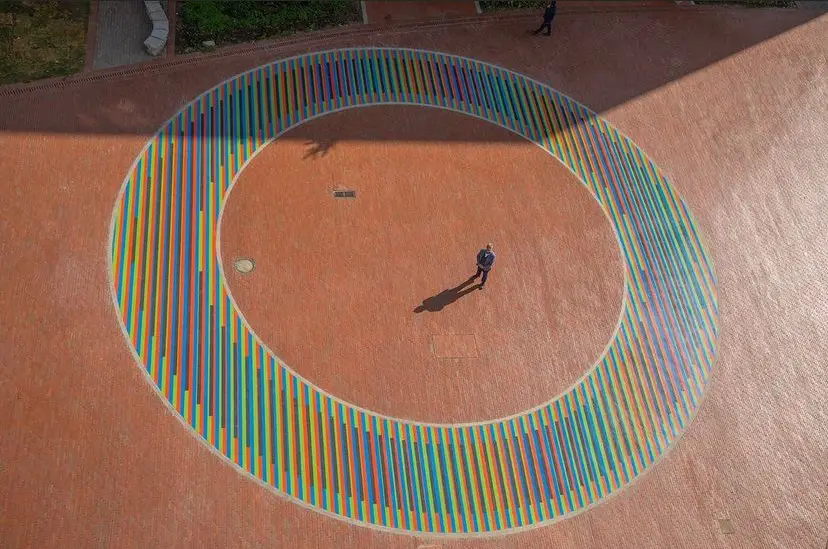
Anillo de Inducción Cromática by Carlos Cruz-Diez is a public artwork donated by the artist and located at the Jorge Tadeo Lozano University in Bogotá, transforming the urban ground into a pure visual event and an autonomous reality. By integrating into this public plaza, the artwork breaks down the walls of the traditional museum and democratizes kinetic art. Rather than a structure for passive contemplation, it is a walkable surface spanning 20 meters in diameter that alters the daily rhythm of the city. The passerby becomes a co-author of the piece, as their own movement combined with the shifting sunlight activates the aesthetic experience. From a technical perspective, the intervention relies on the mathematical juxtaposition of colored lines that generate a third virtual color in the viewer's retina. Its large-scale execution required the exact radial layout of more than 400,000 highly durable mosaic tiles capable of withstanding the city's climate and heavy pedestrian traffic. This rigorous geometric precision ensures that the optical phenomenon functions with total chromatic clarity from any viewing angle. Thus, engineering and optical art merge within the public space, turning daily transit into a living laboratory of collective perception.
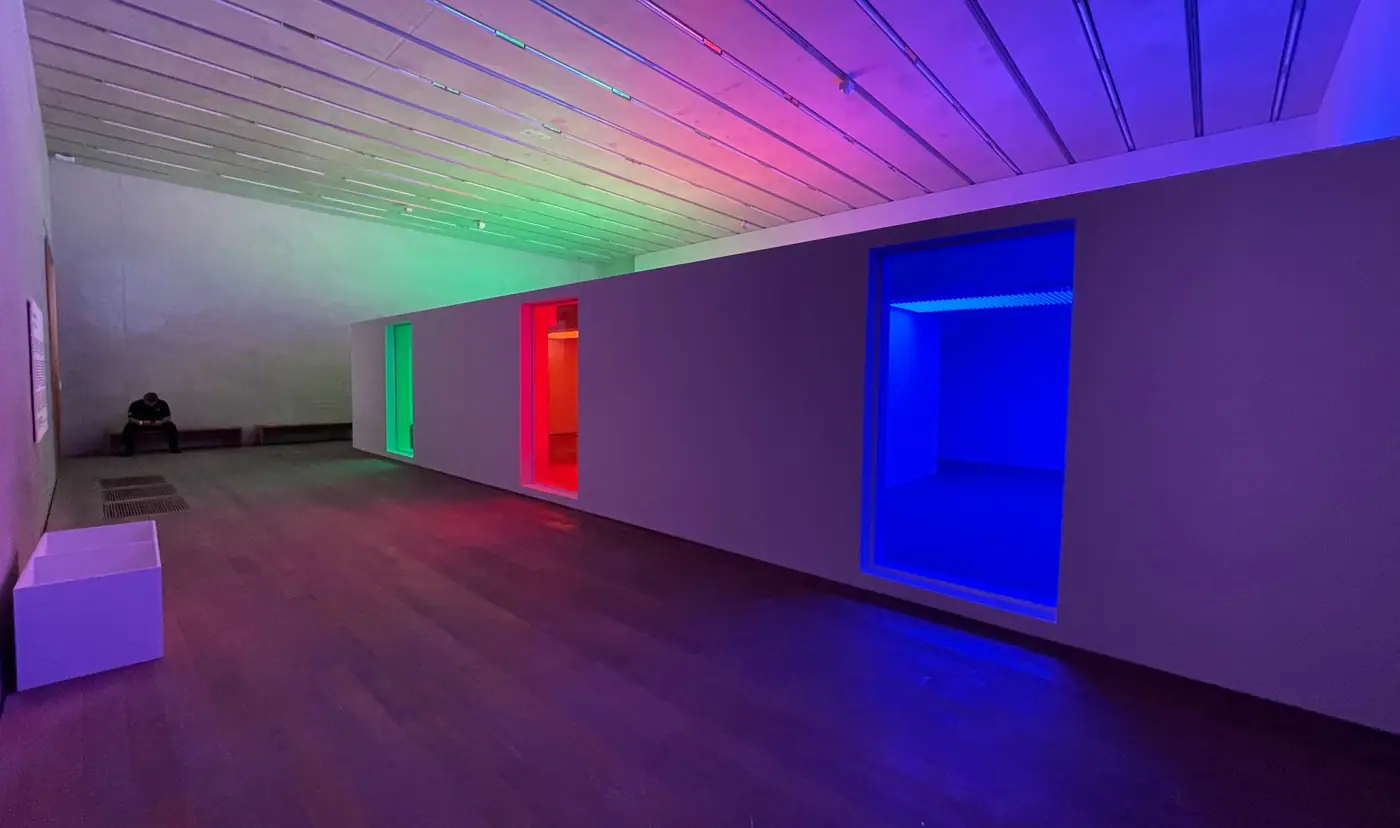
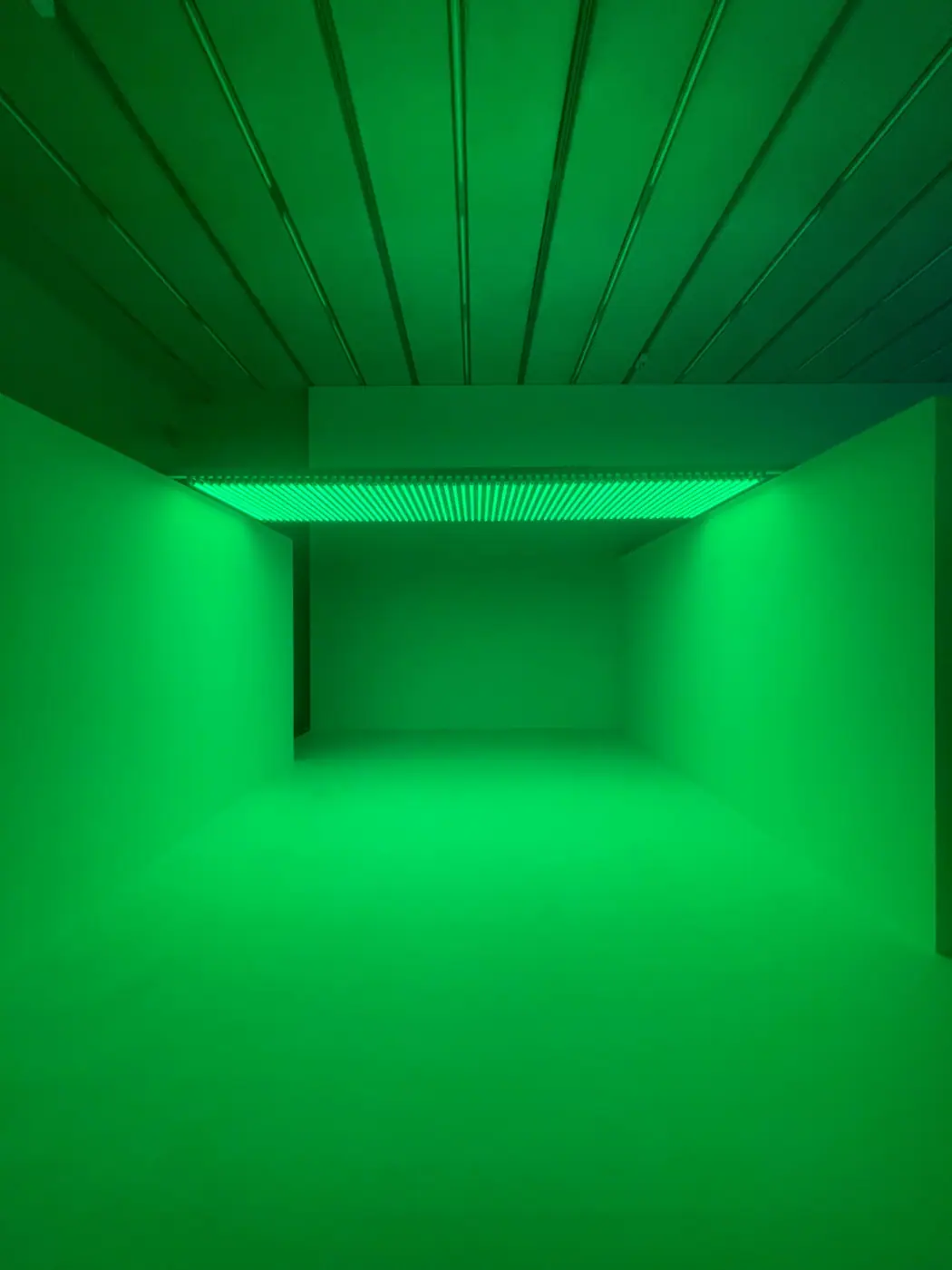
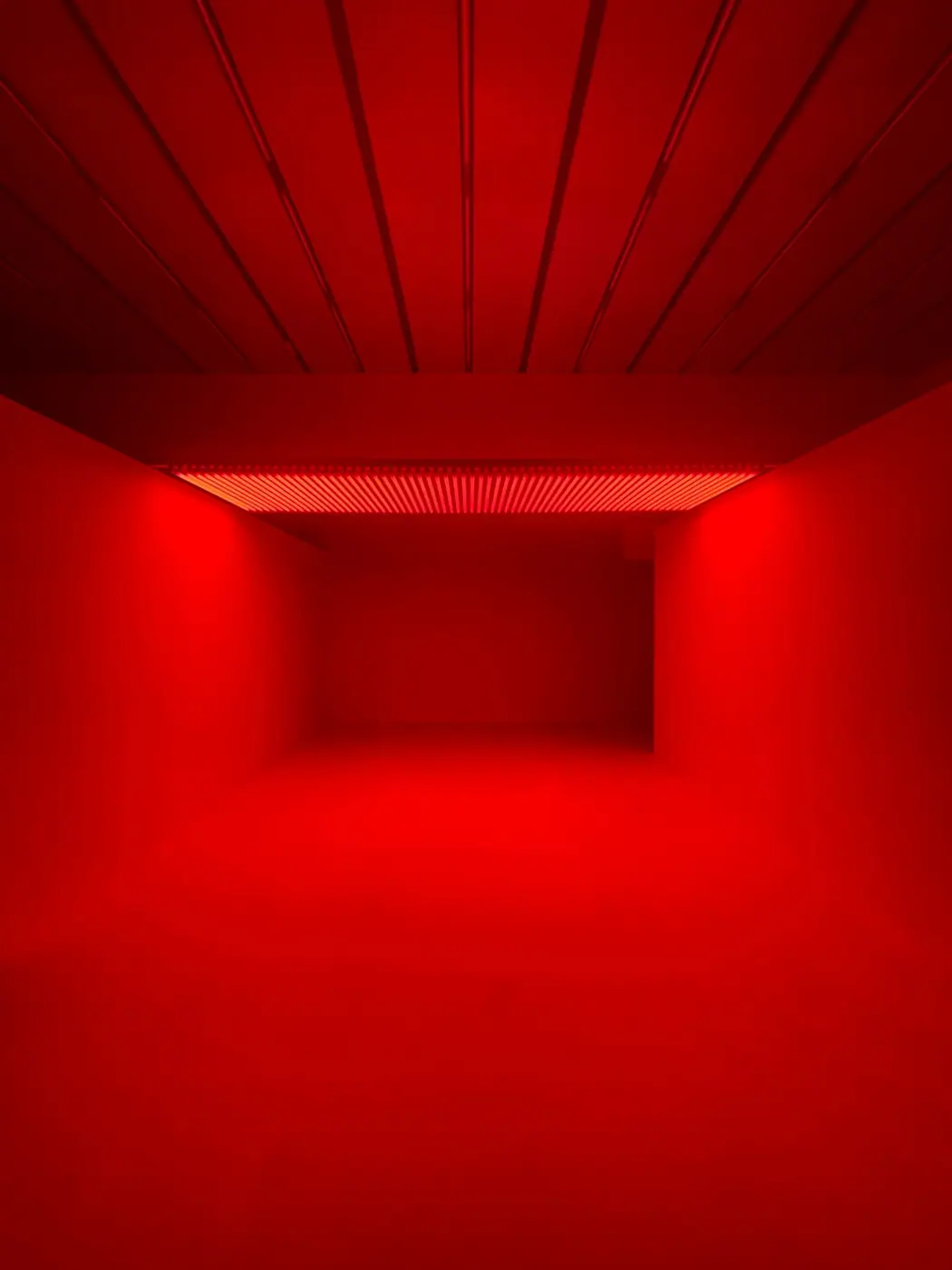
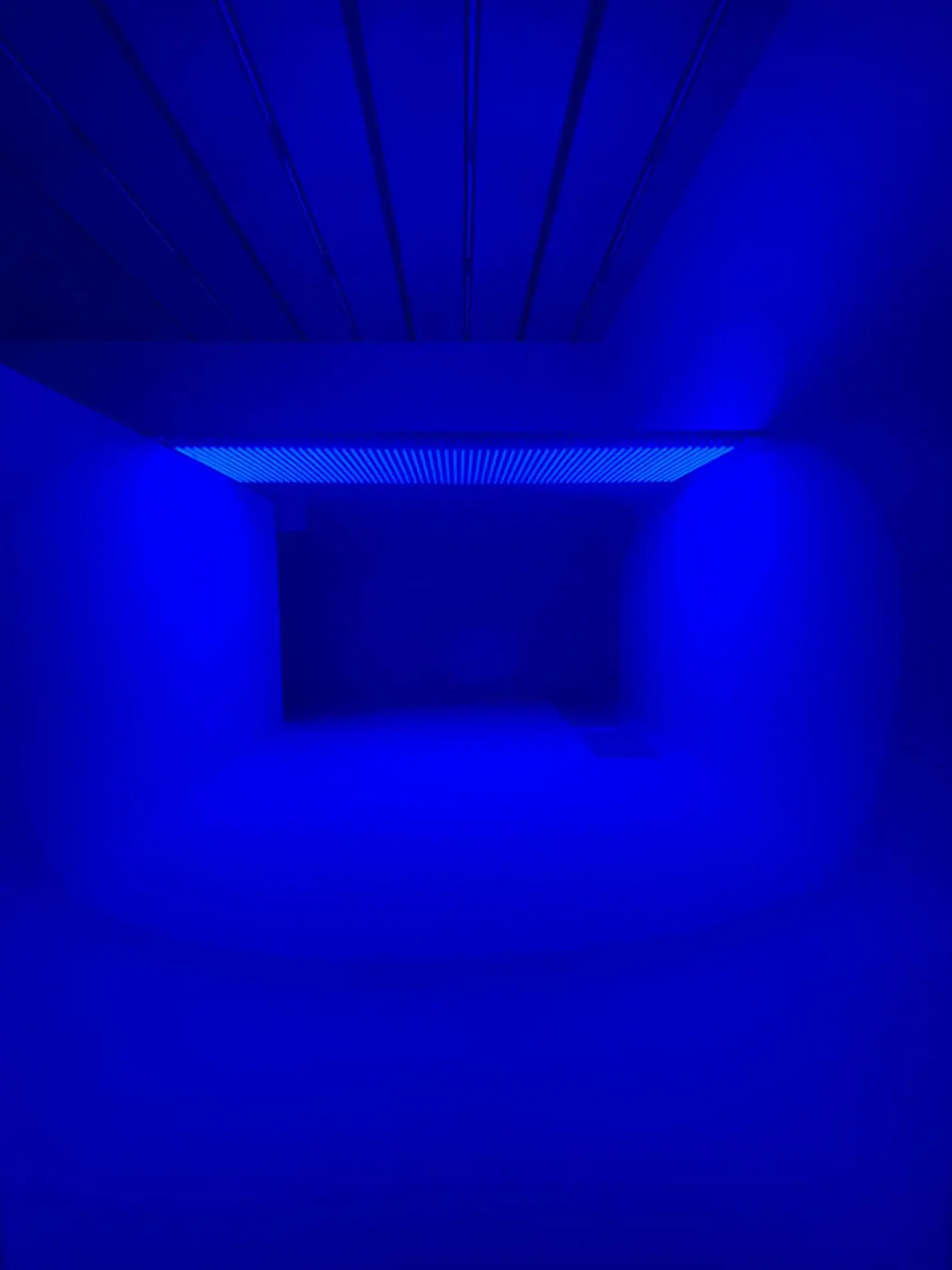
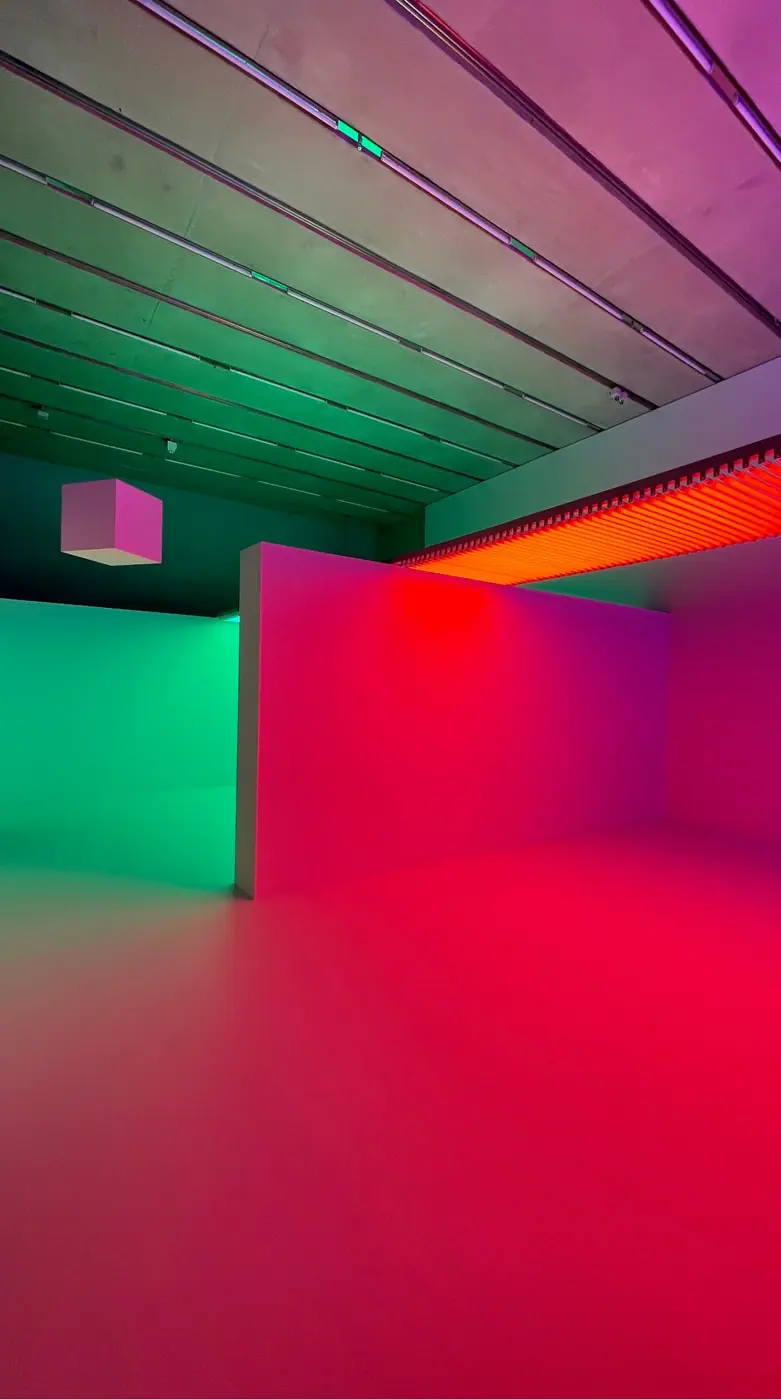
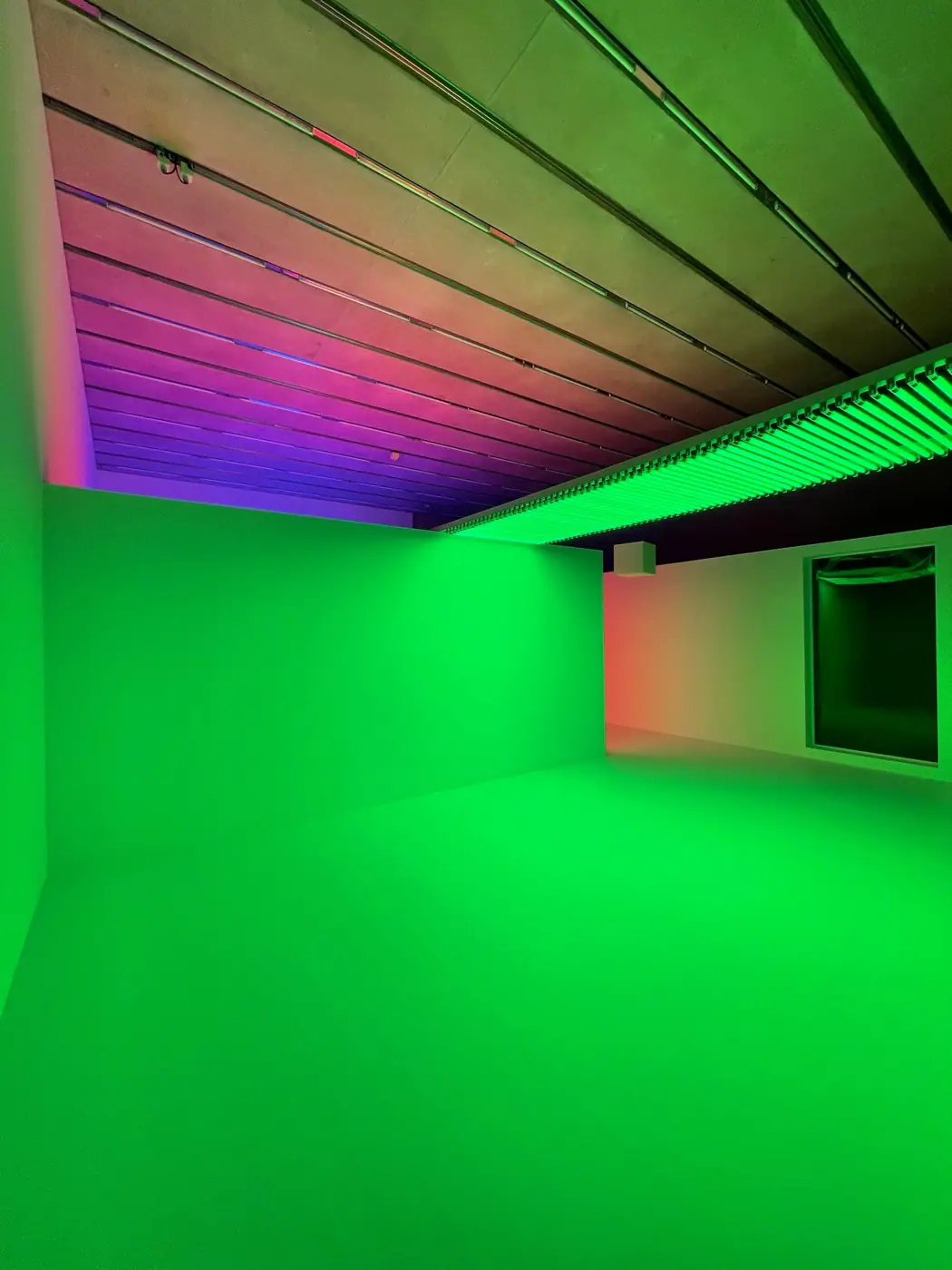
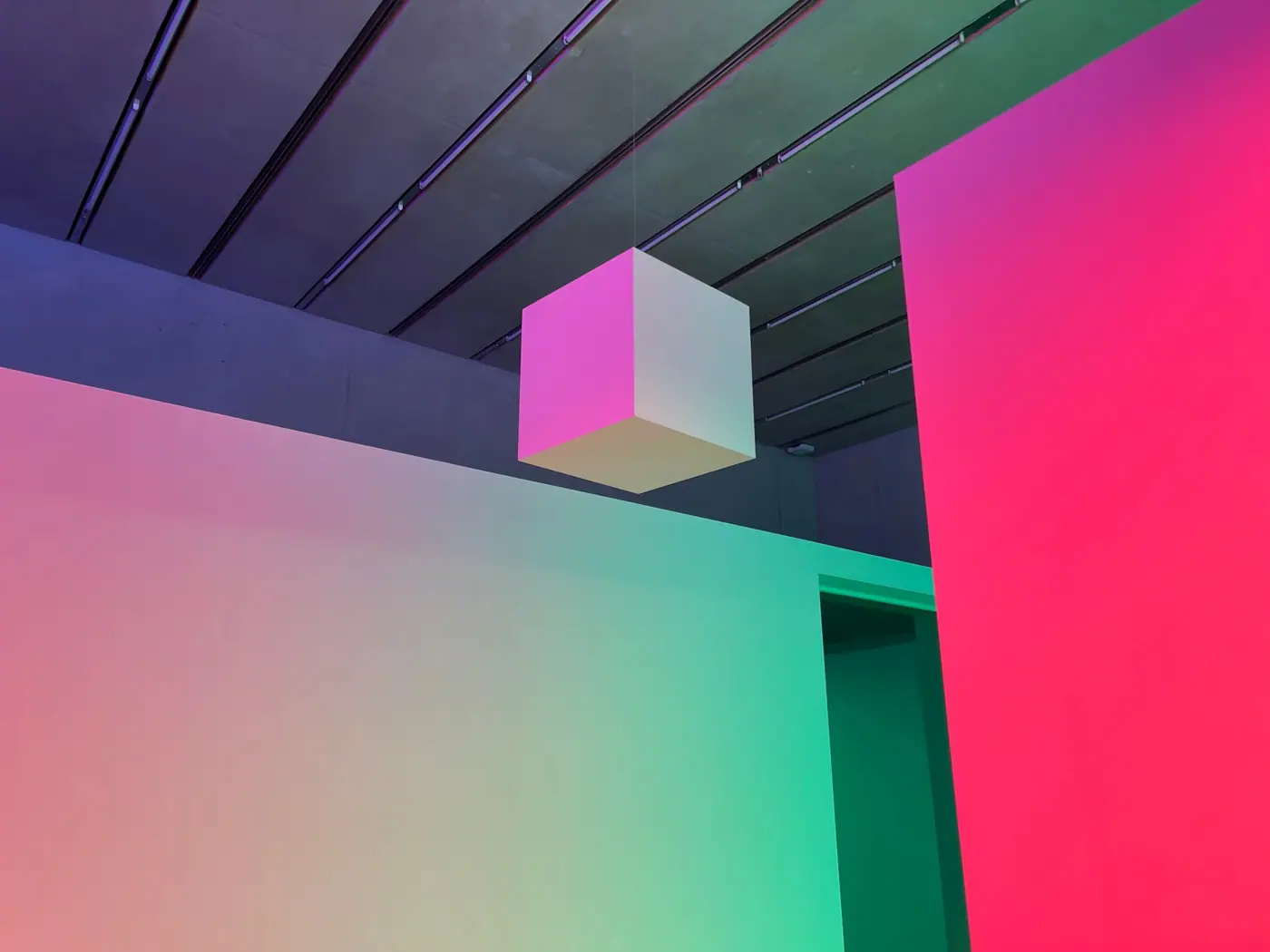
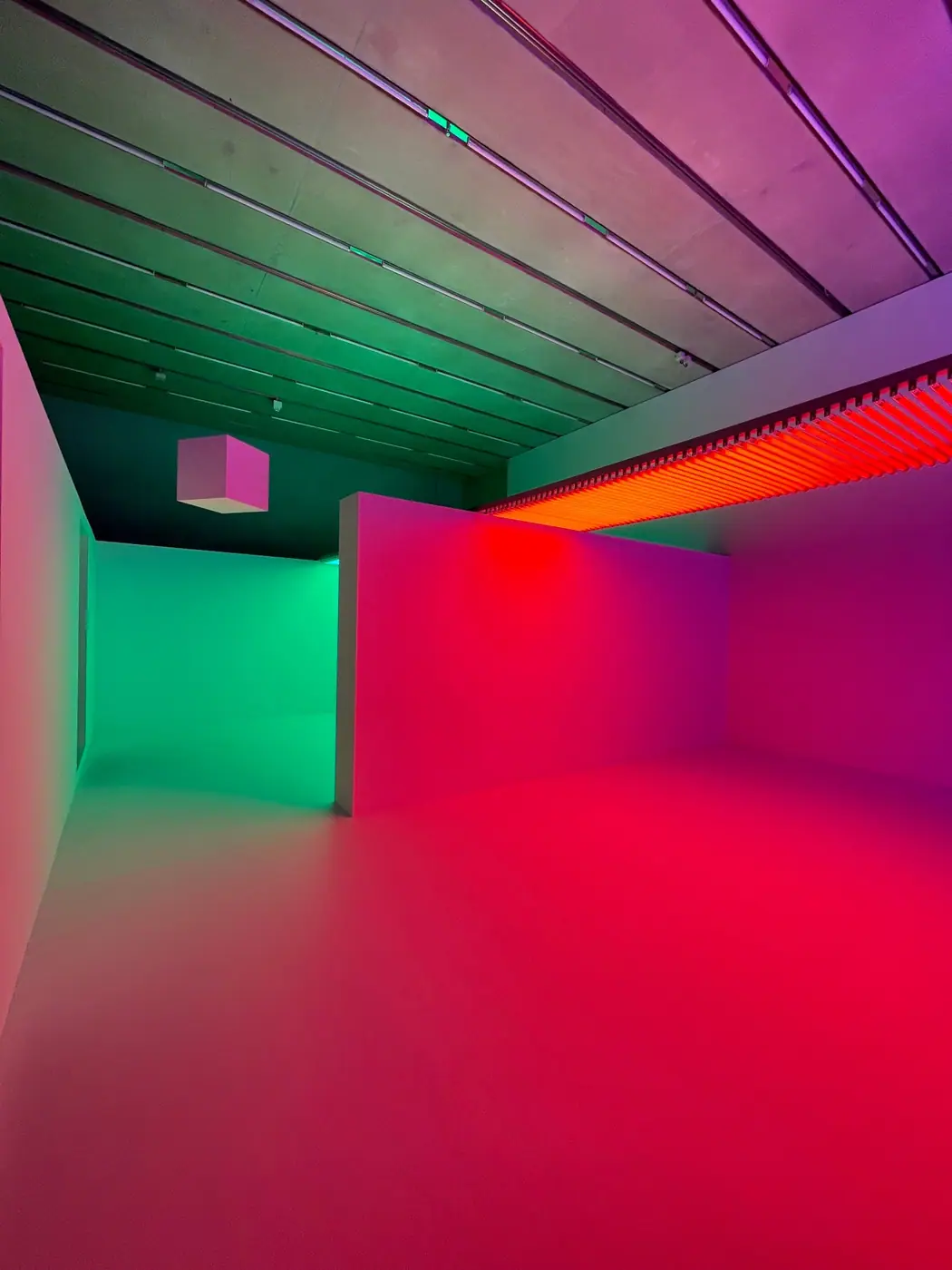
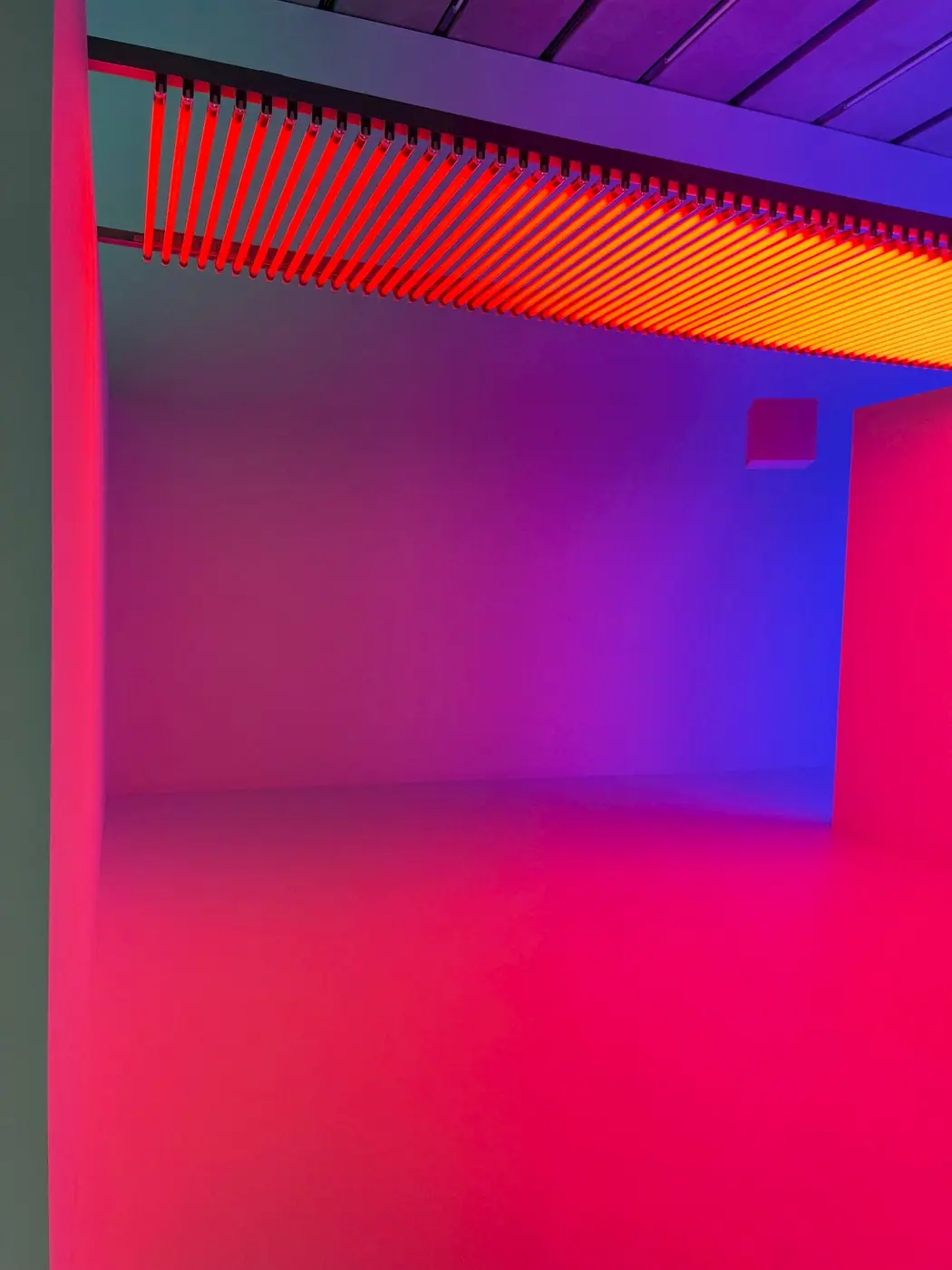
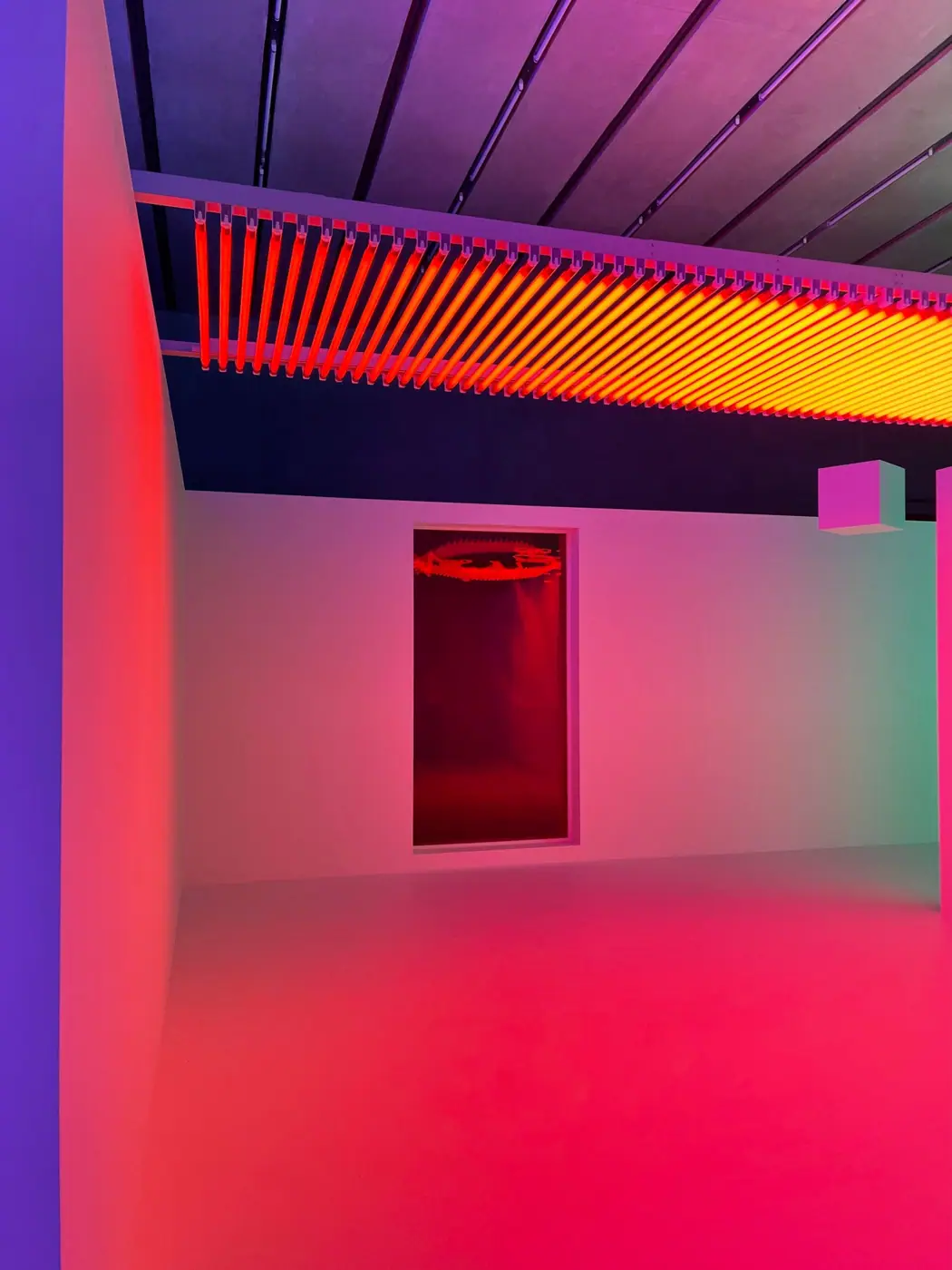
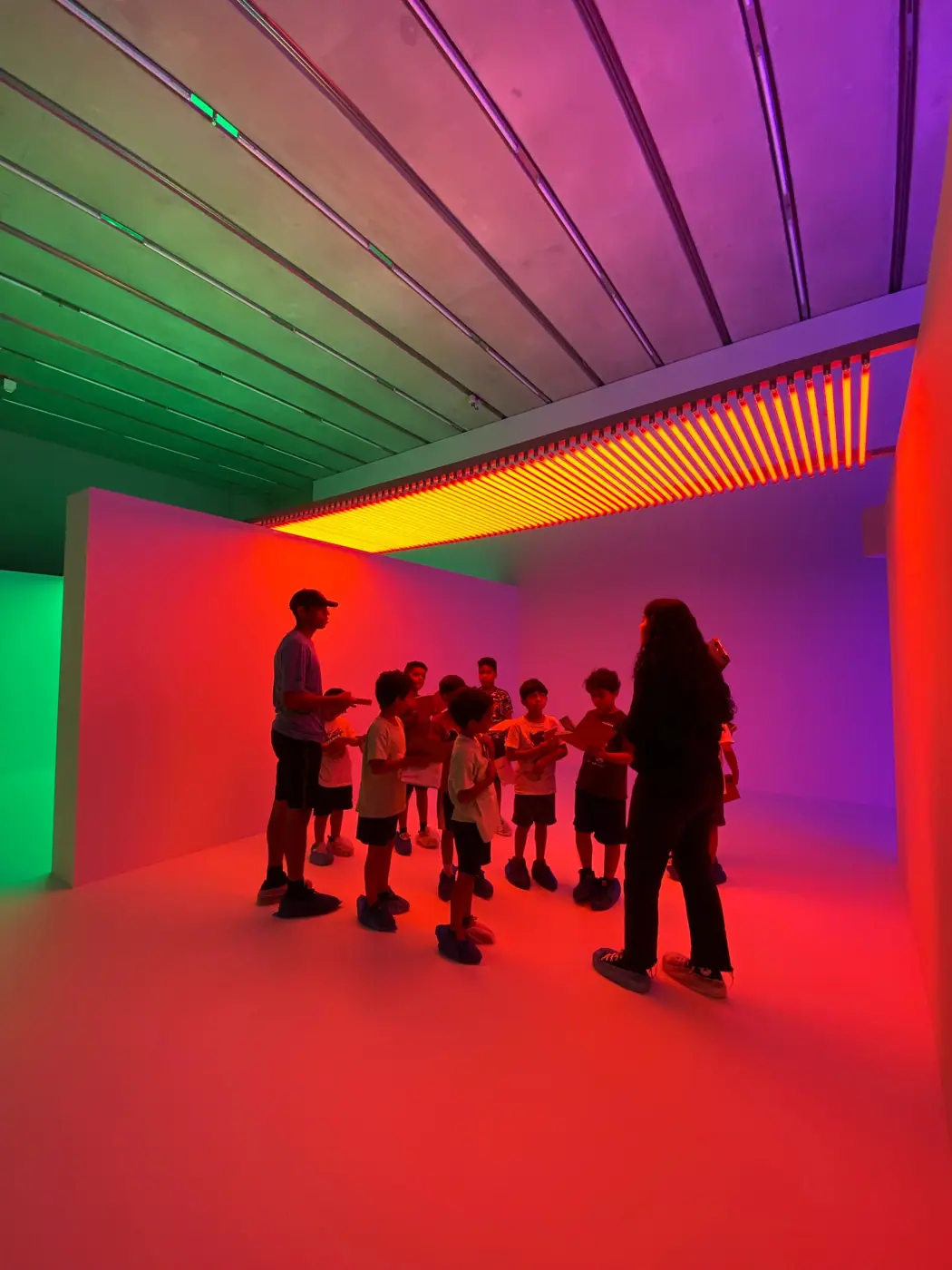
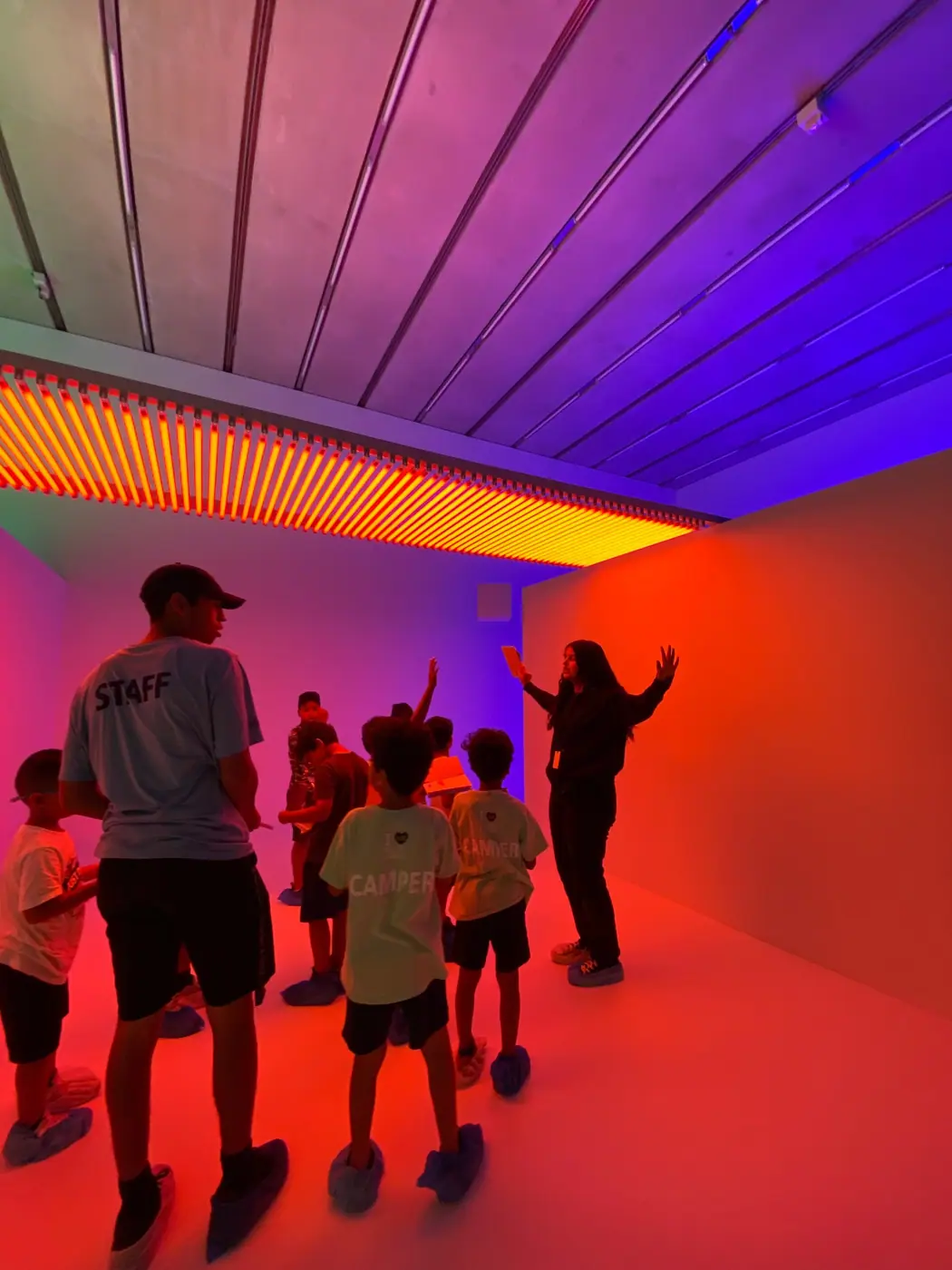
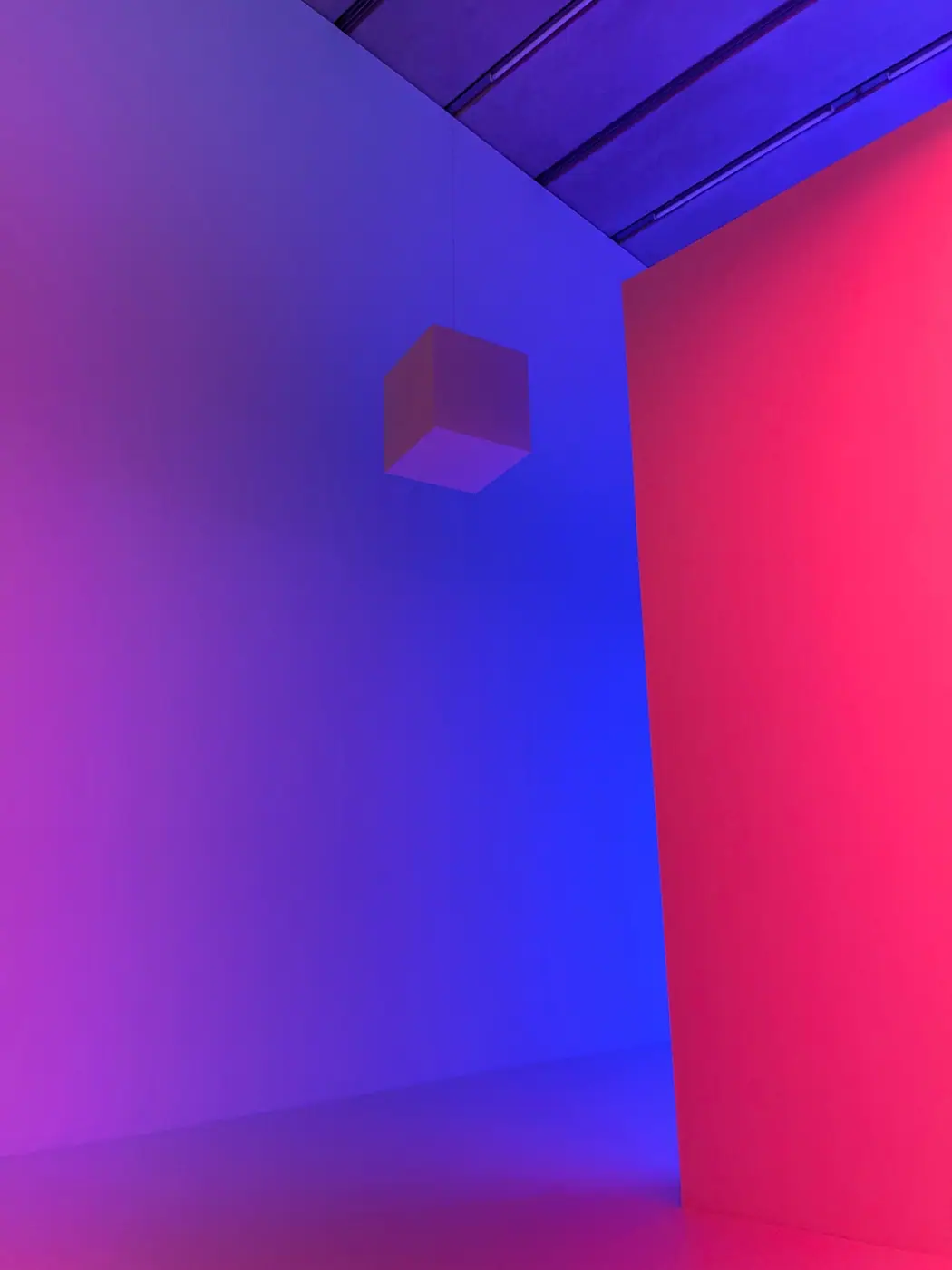
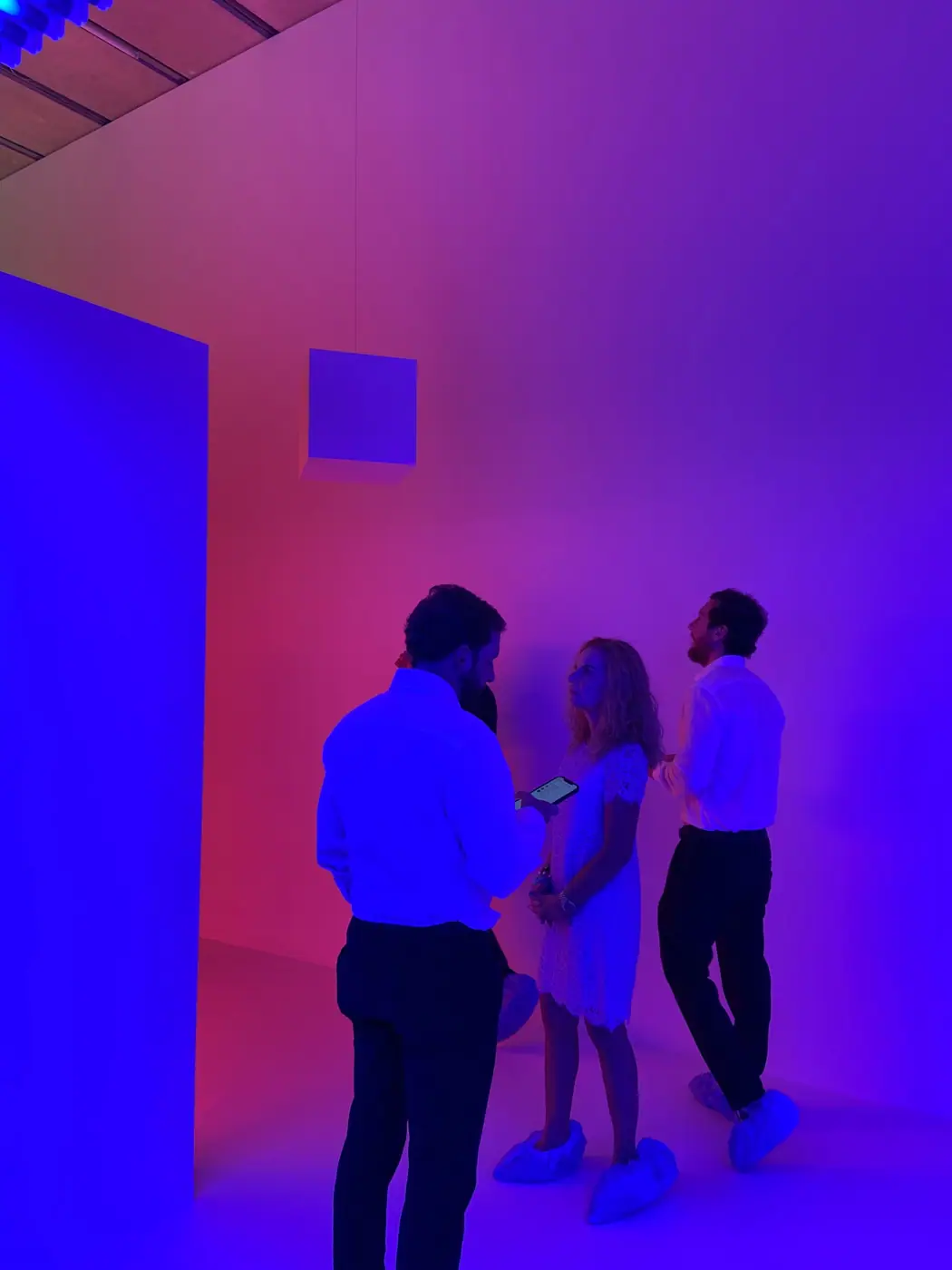
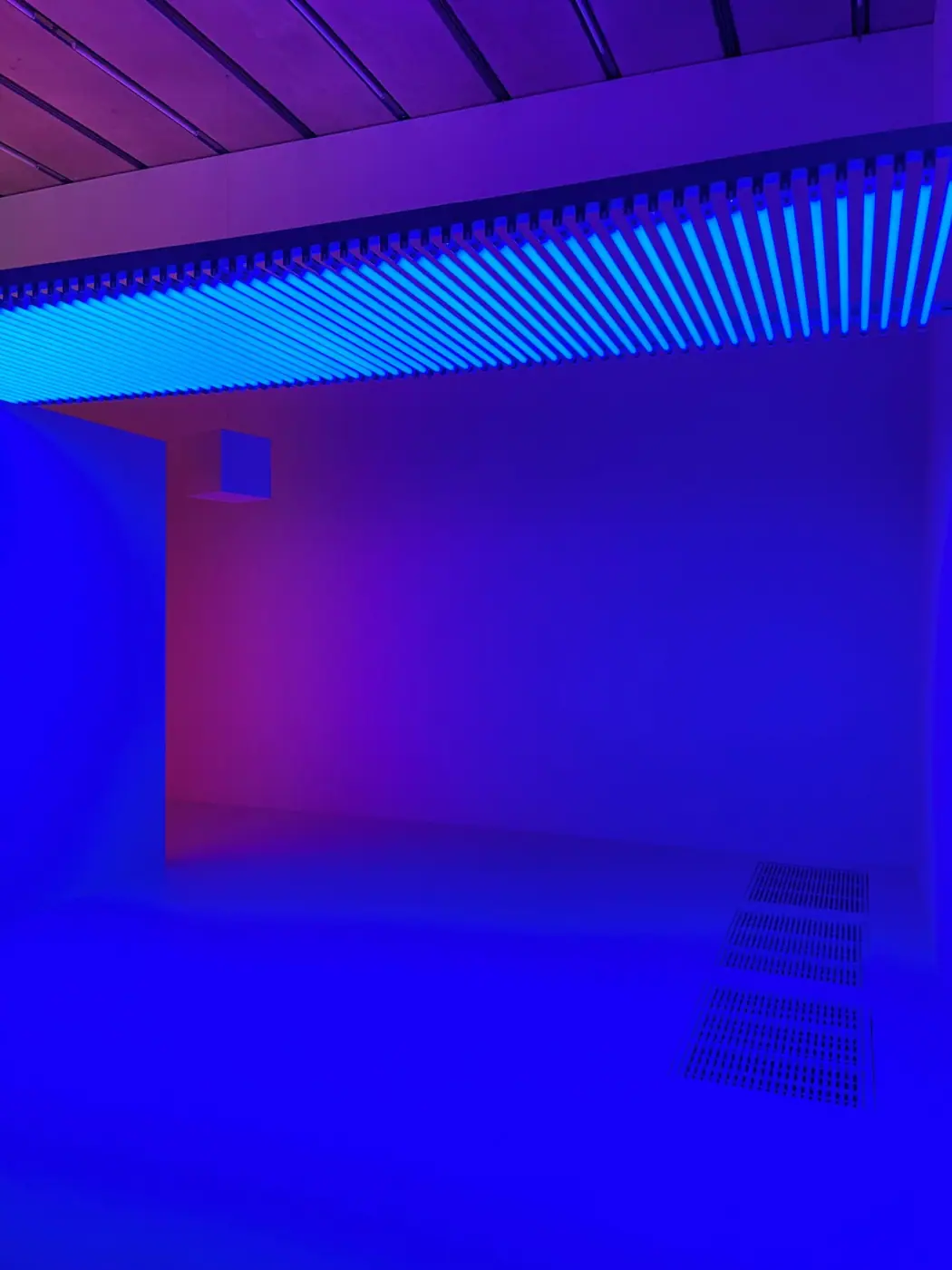
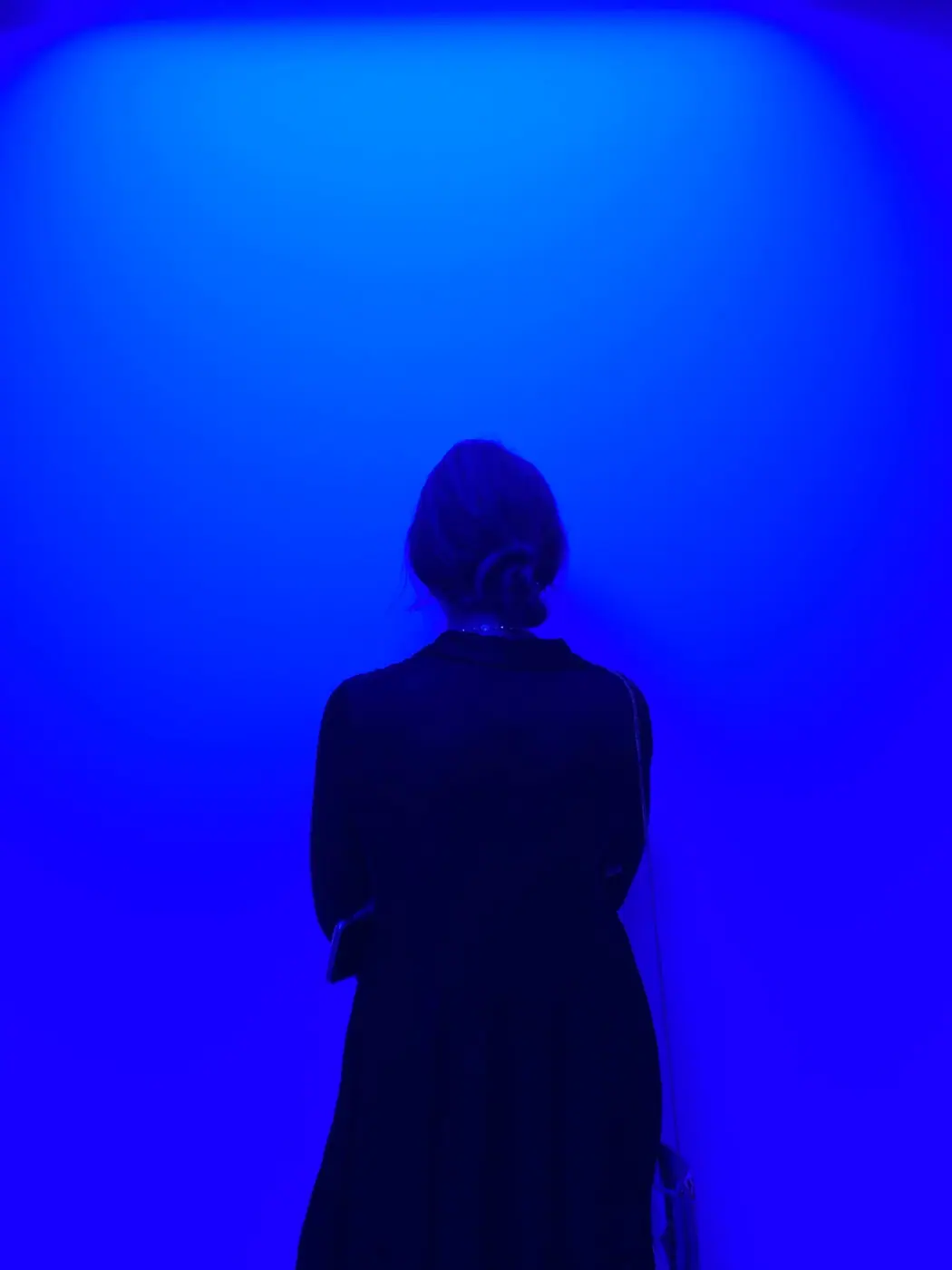
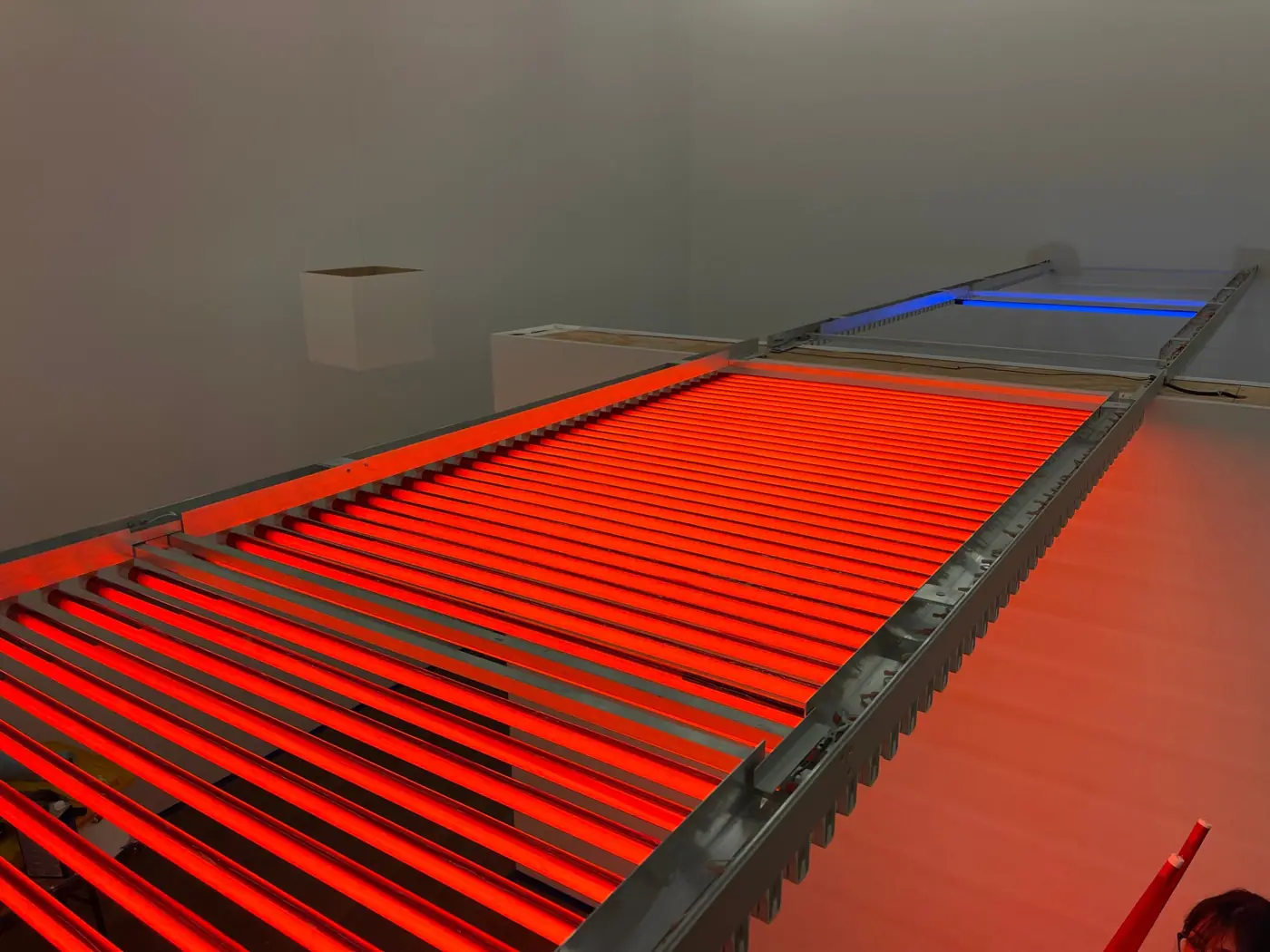
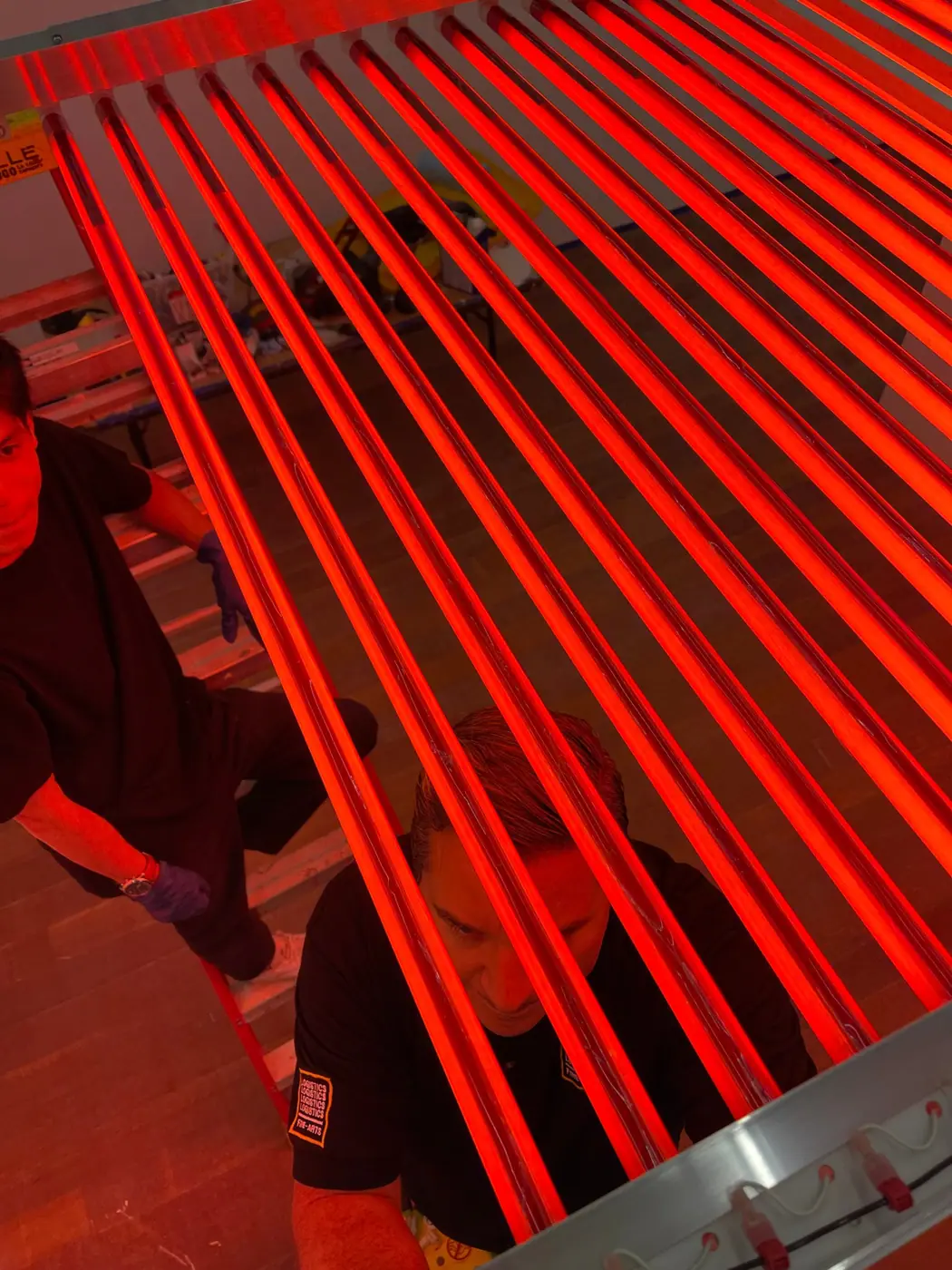
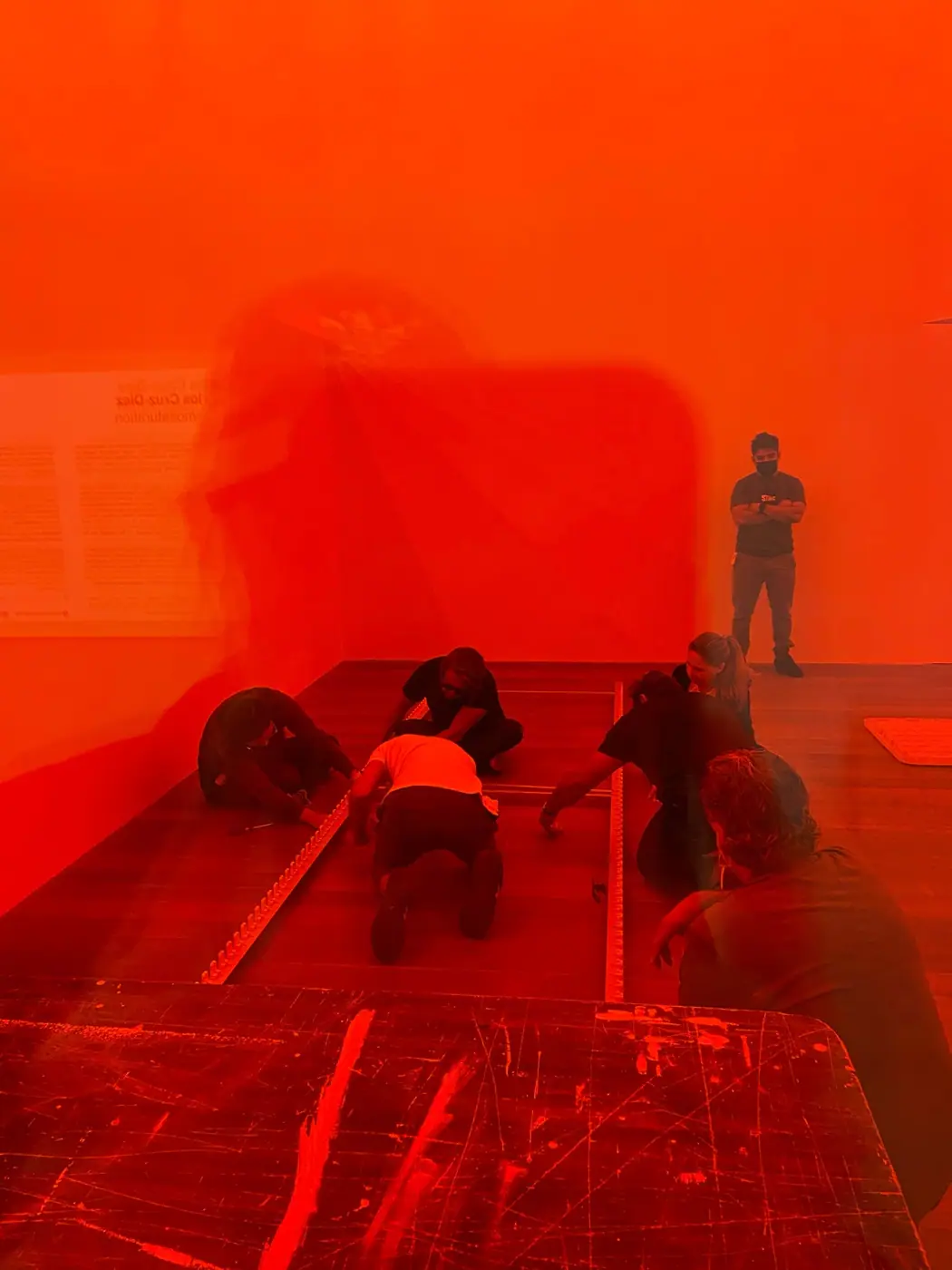
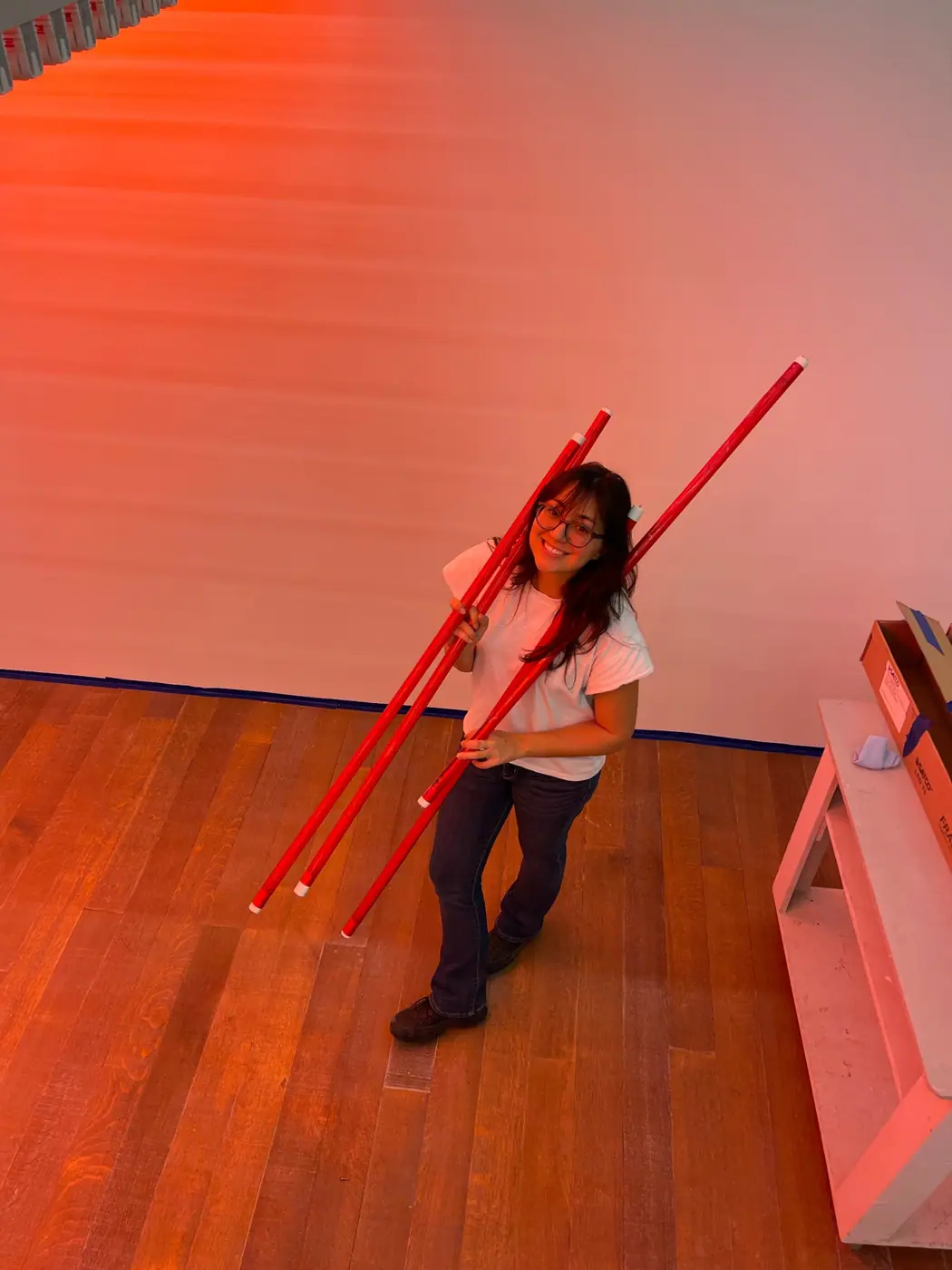
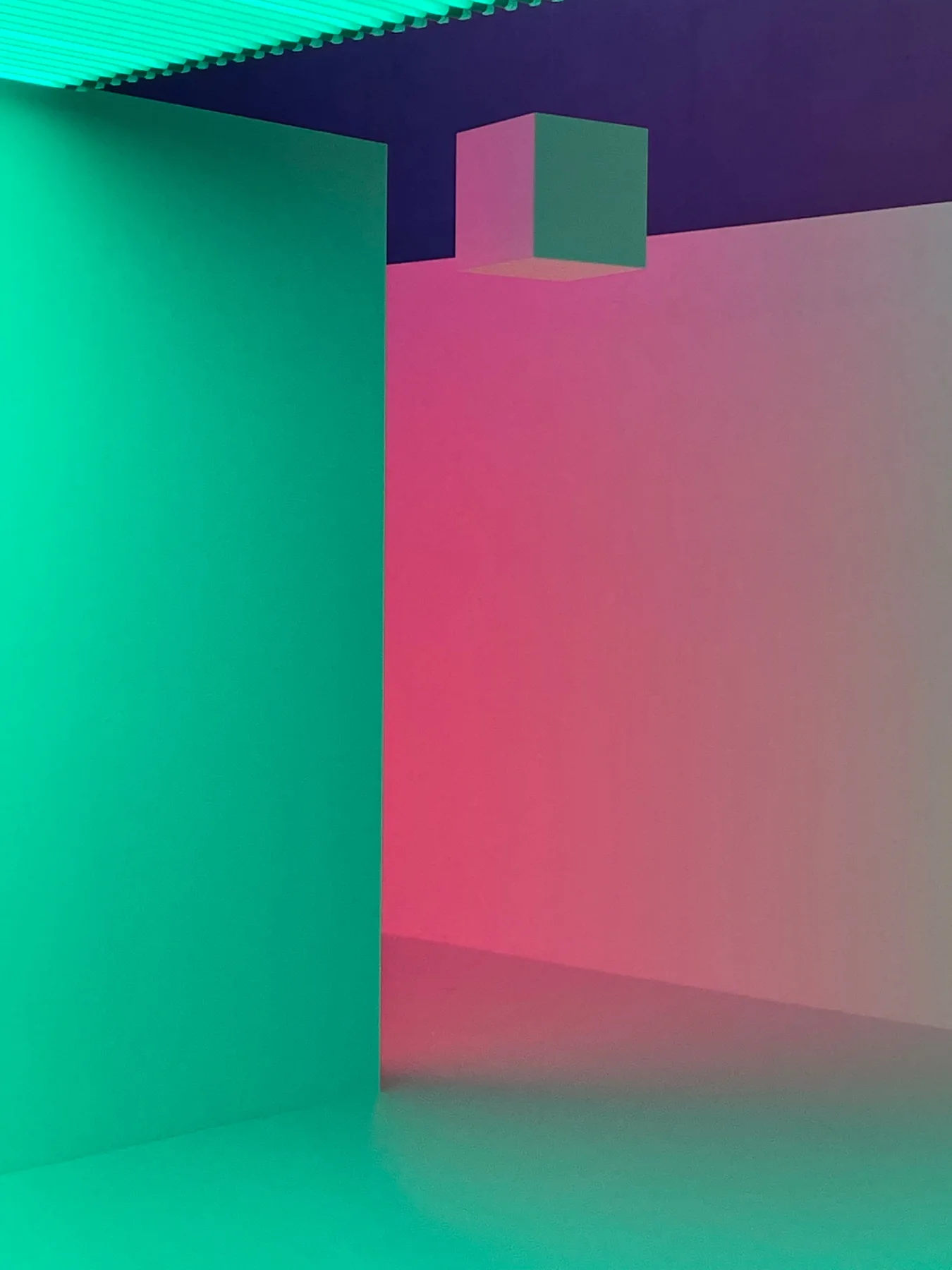
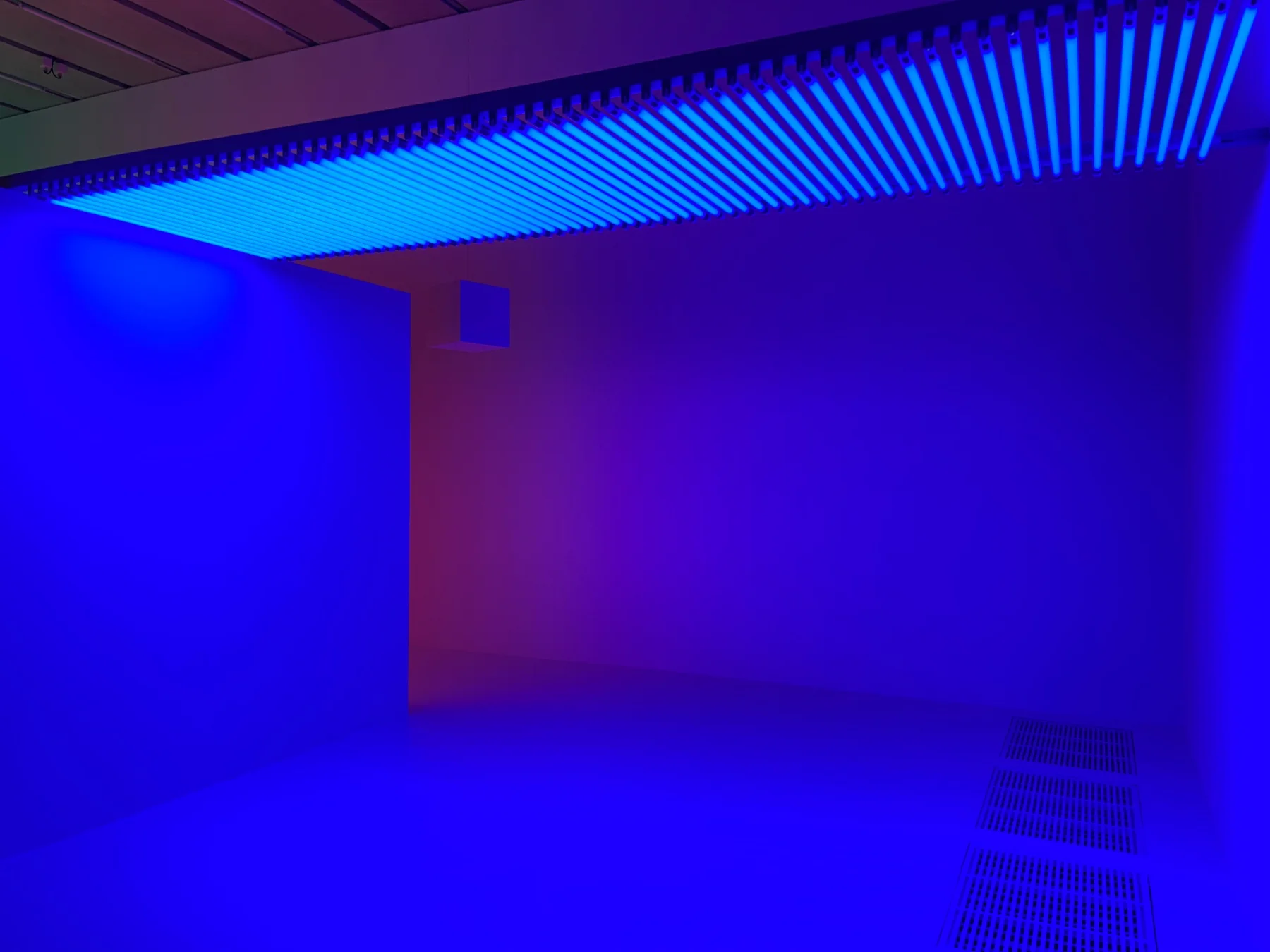
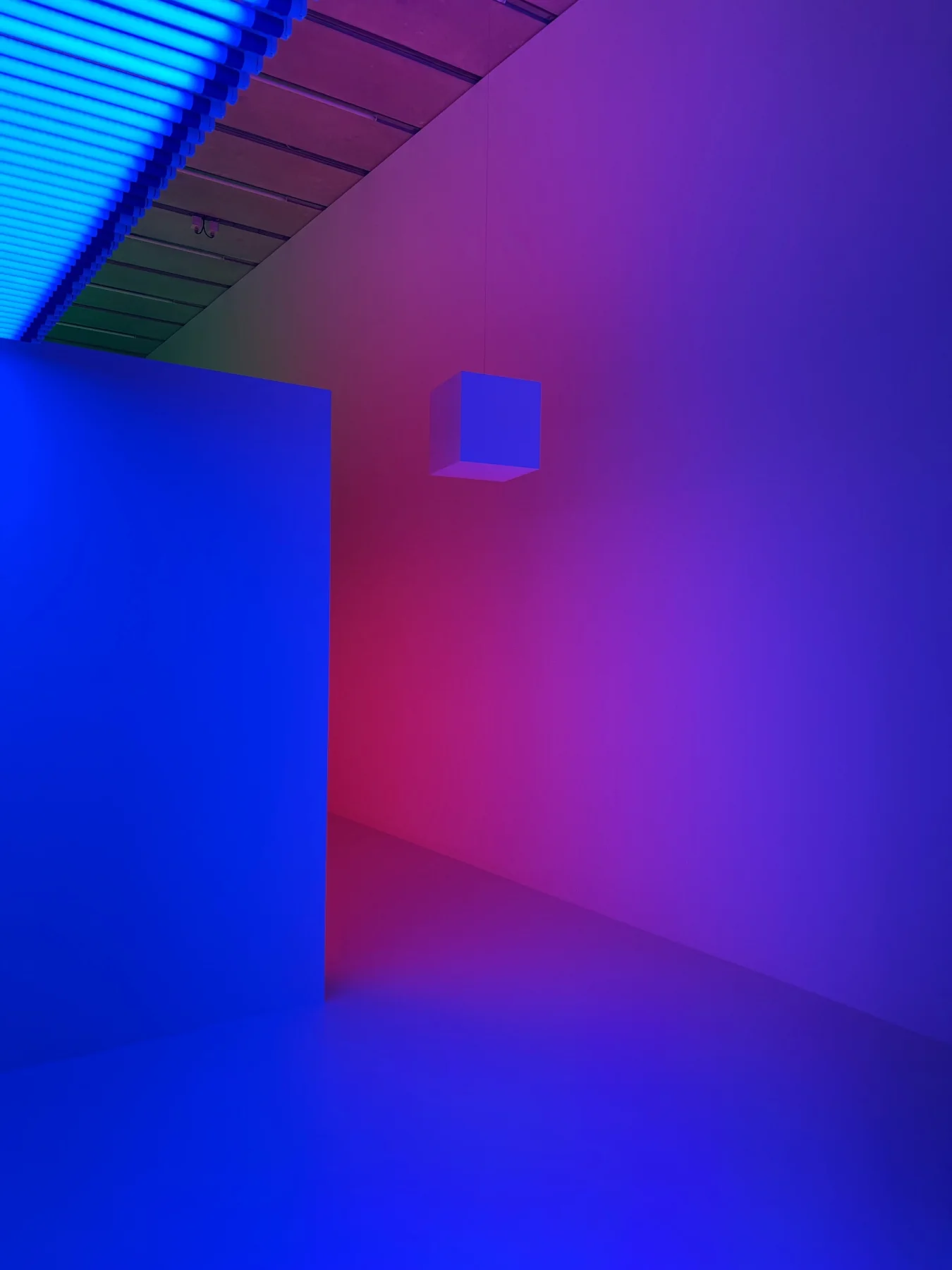
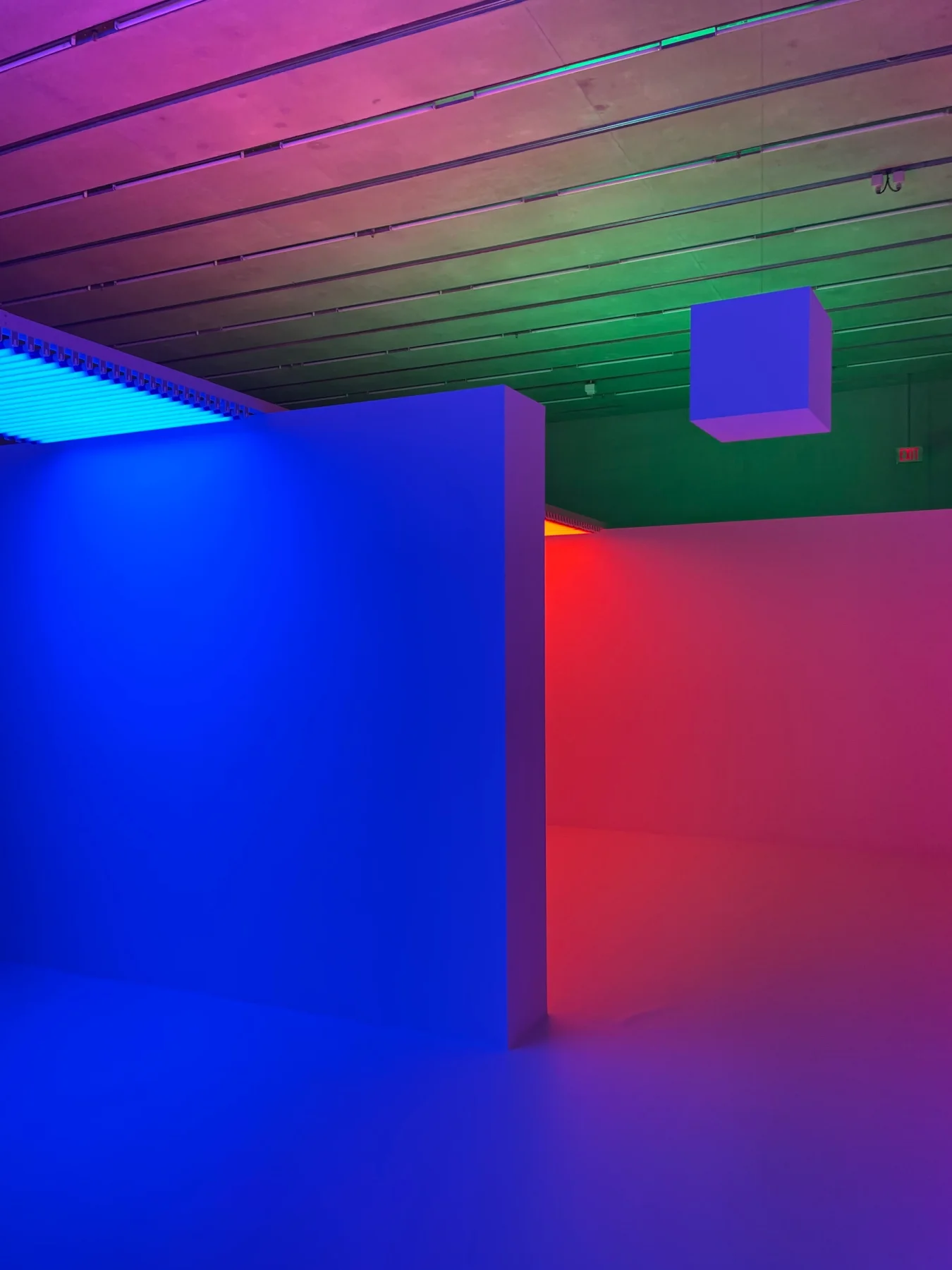
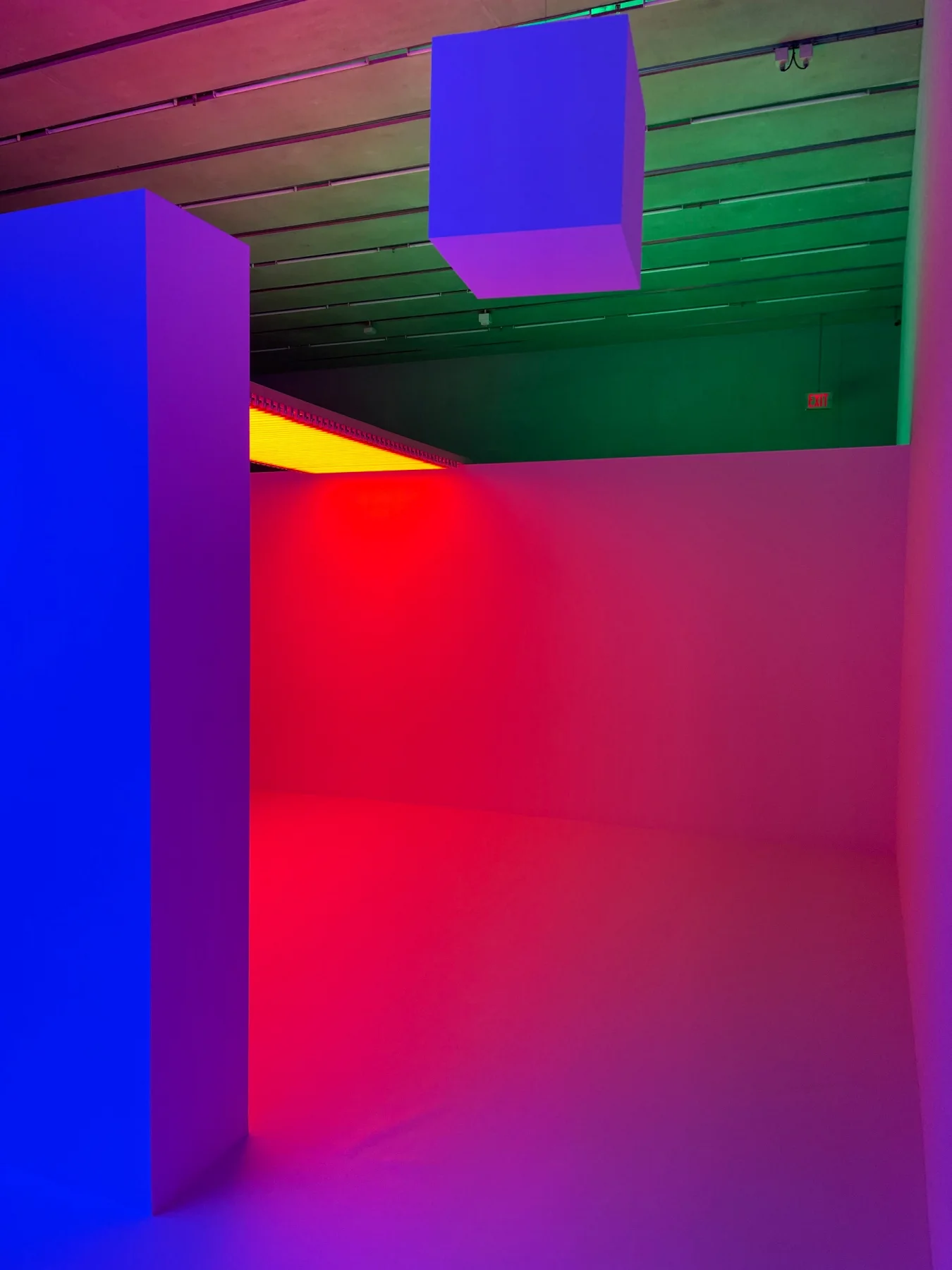
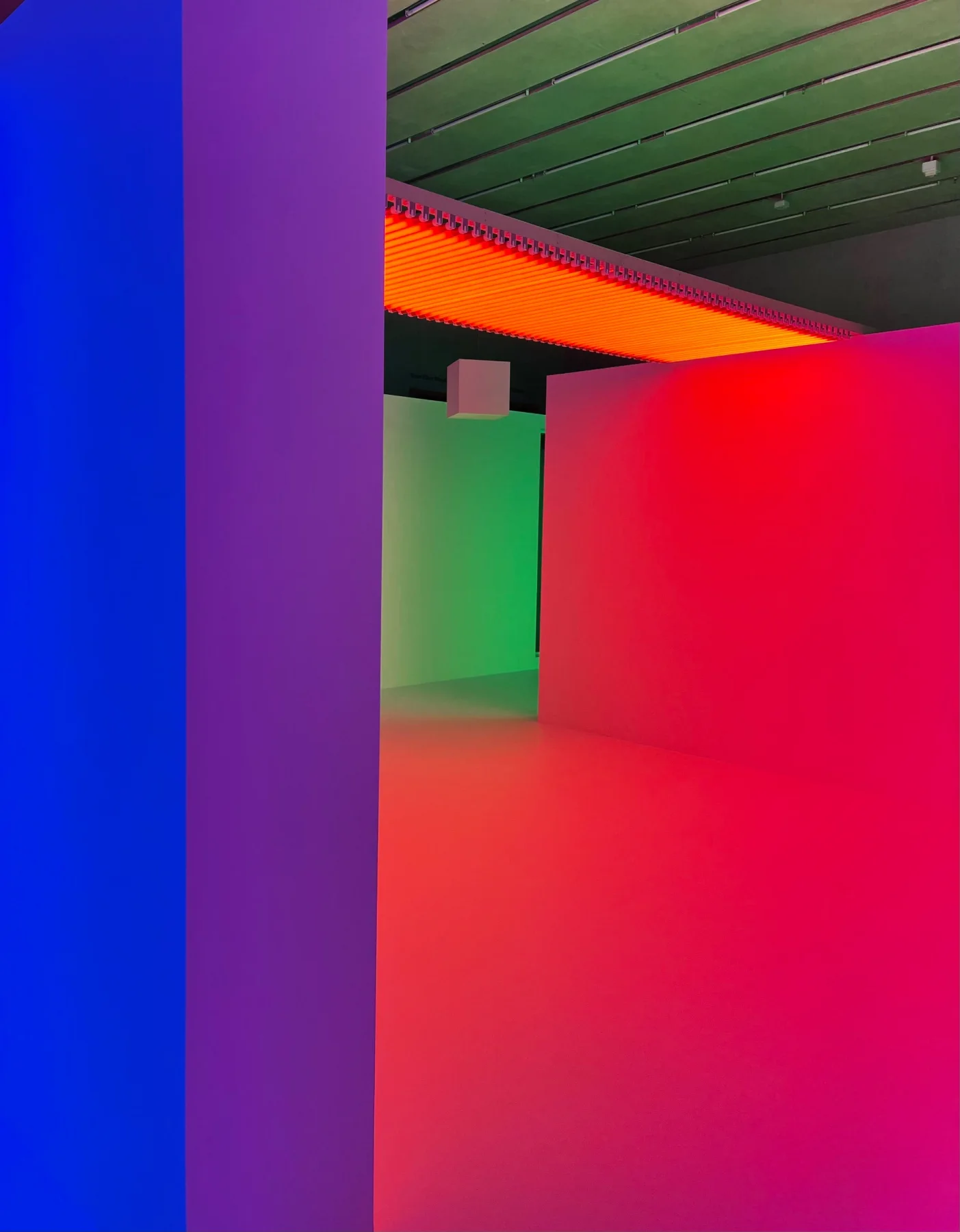
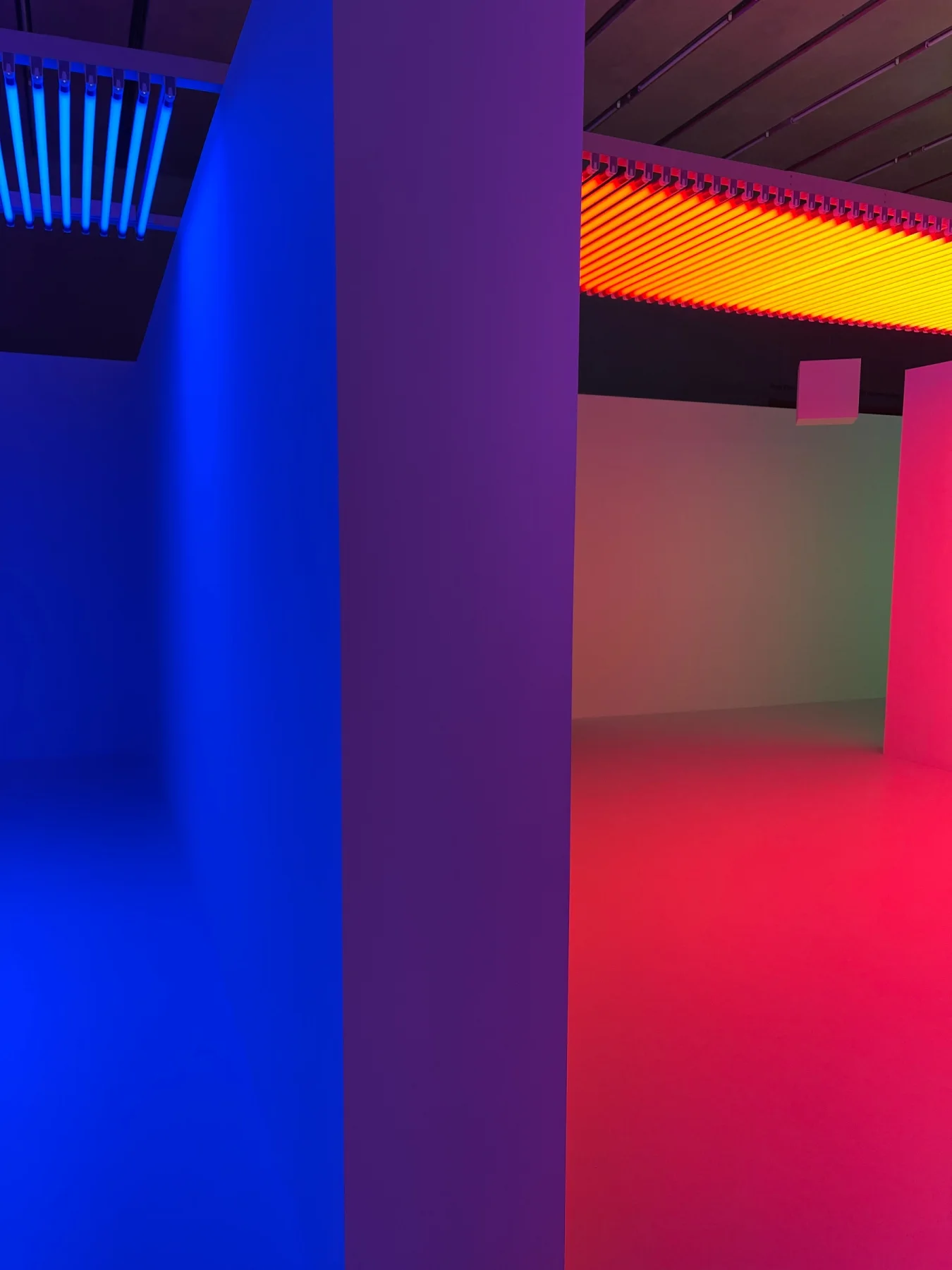
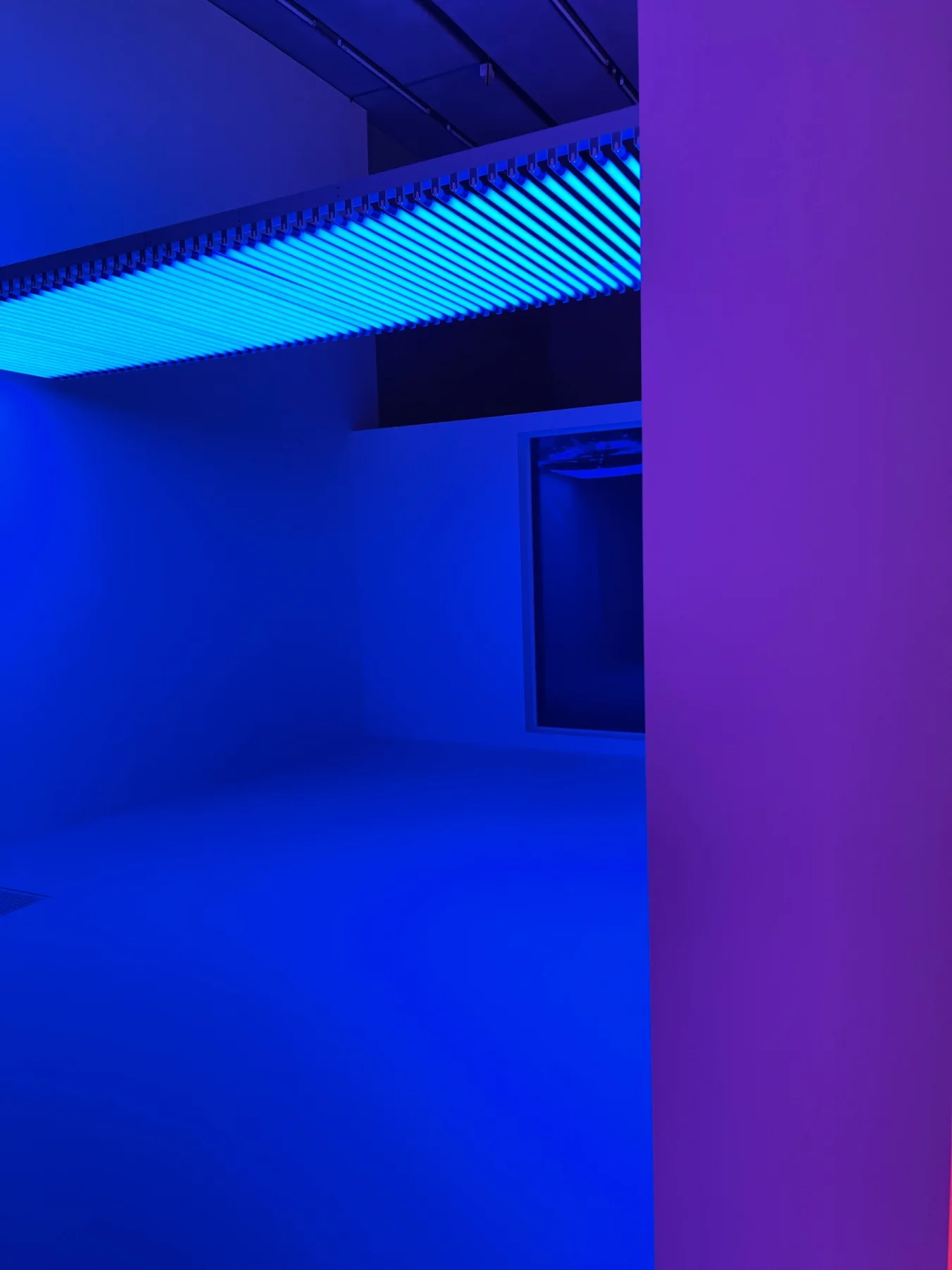
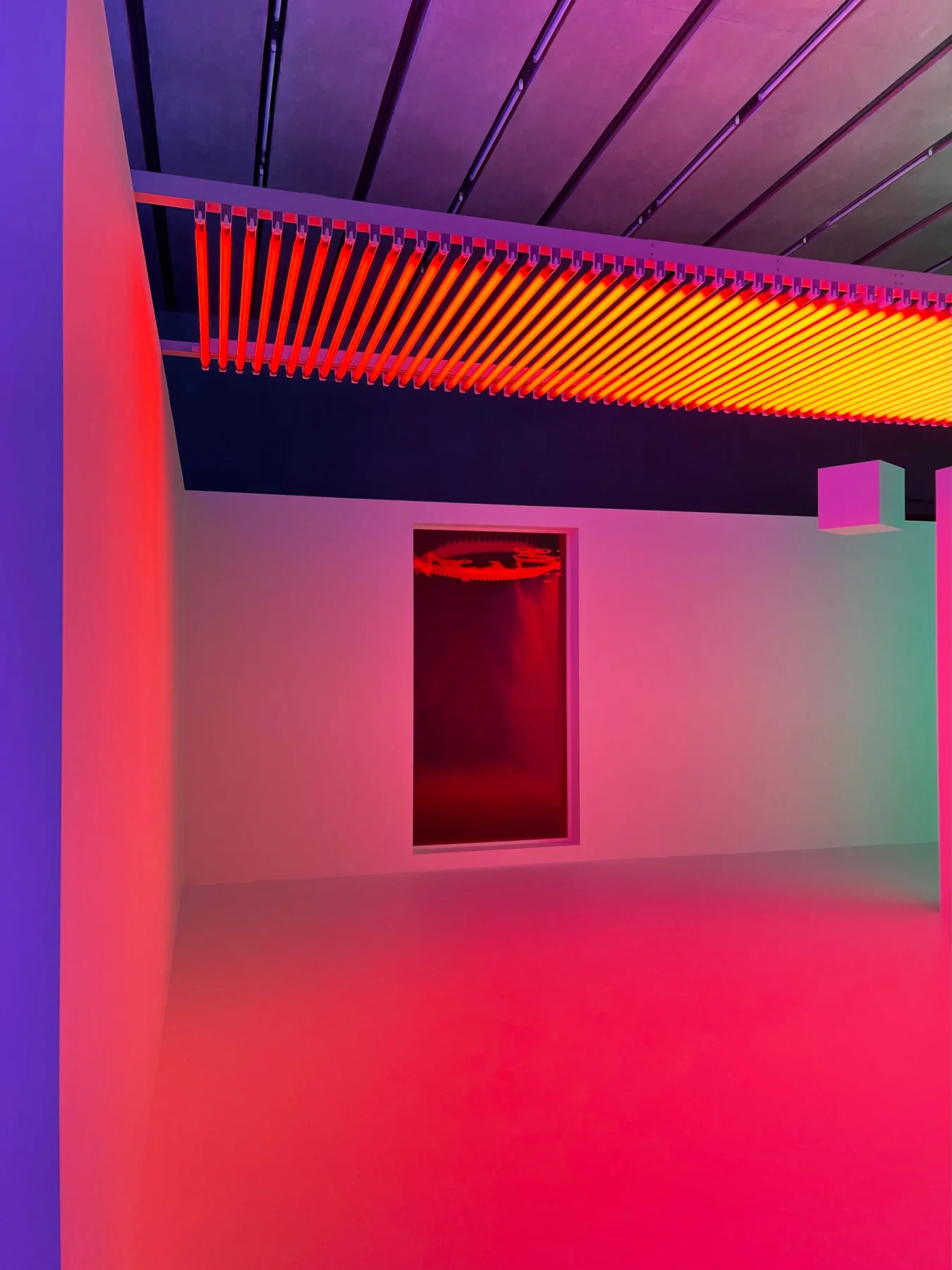
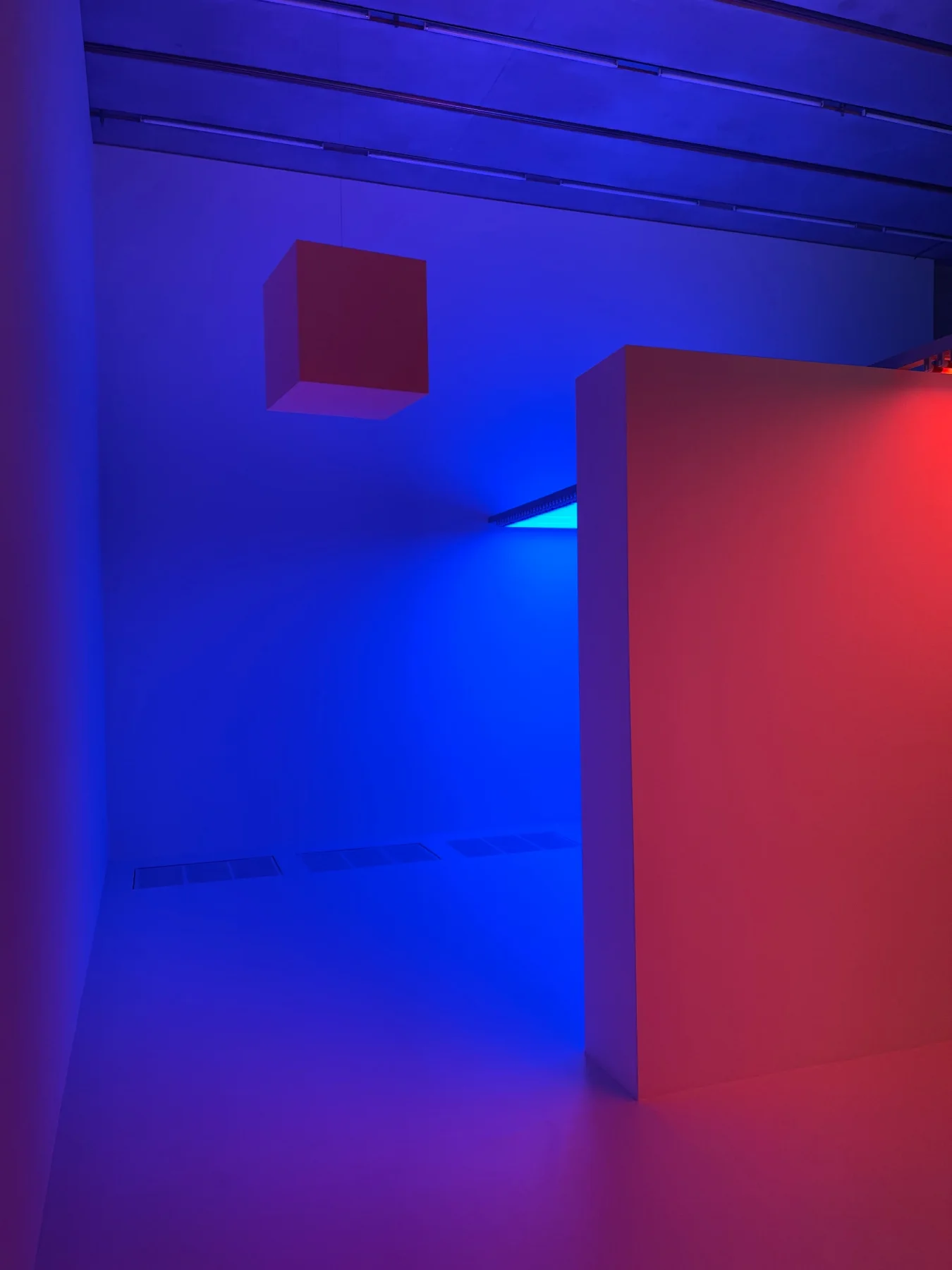
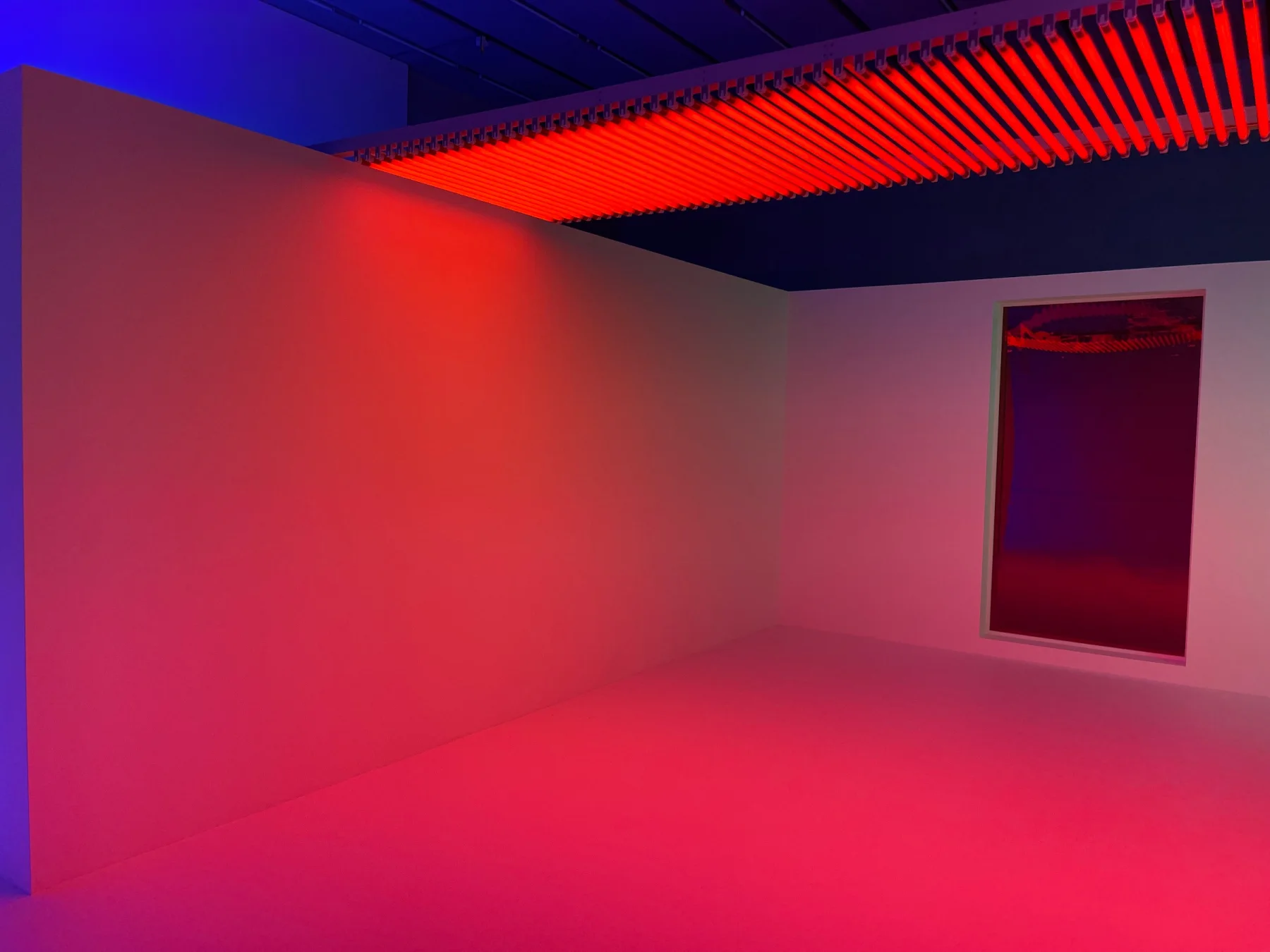
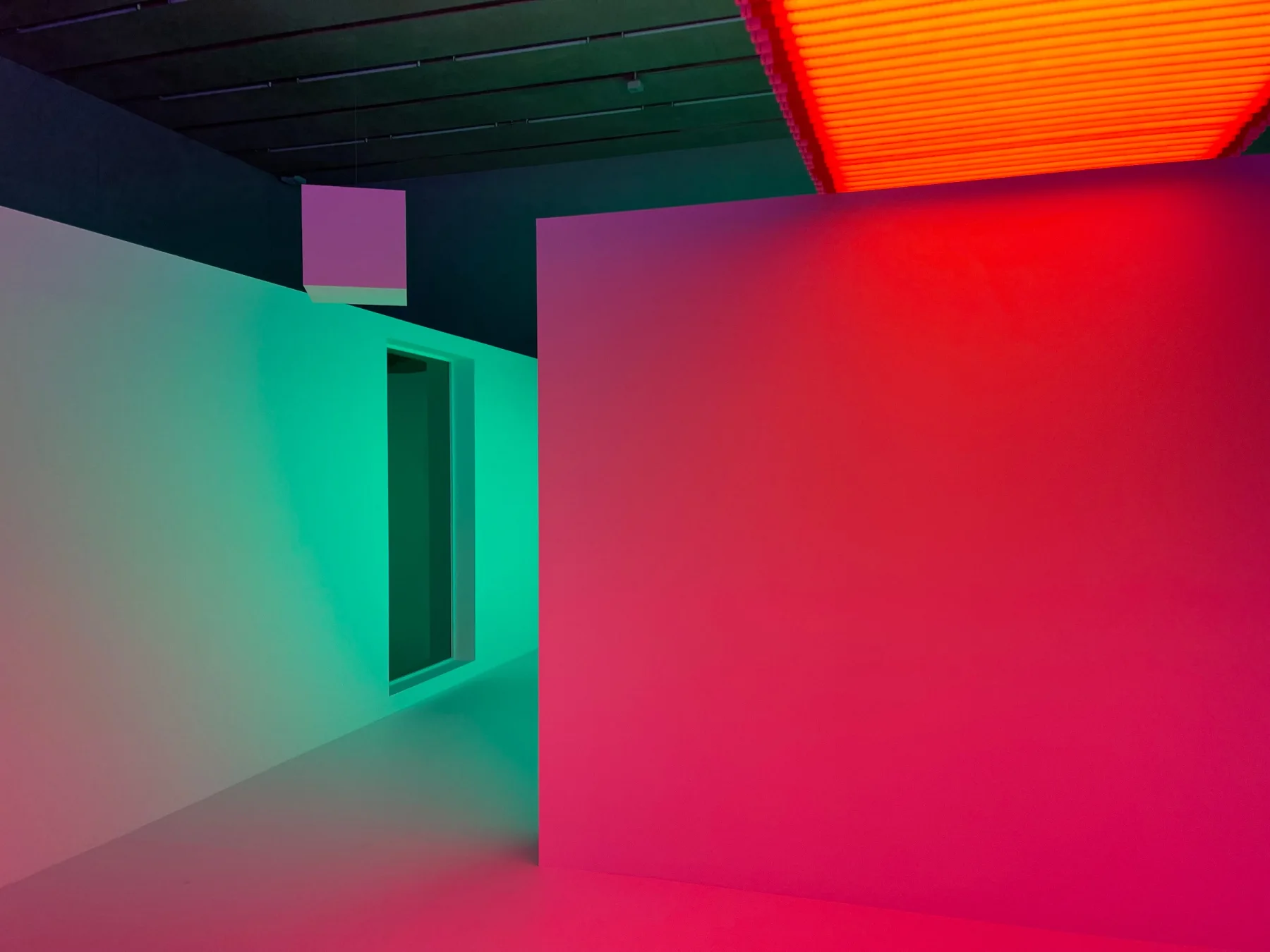
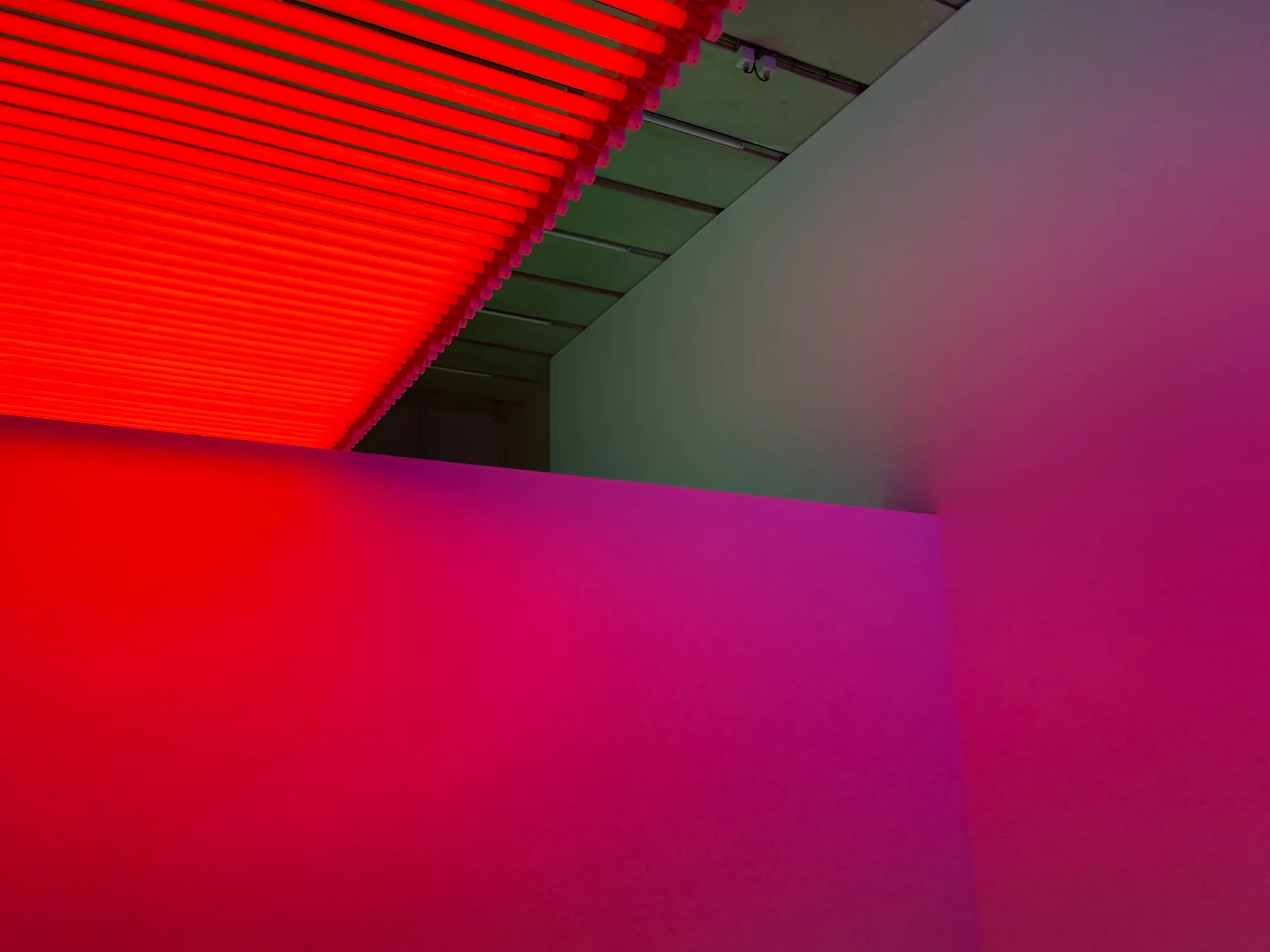
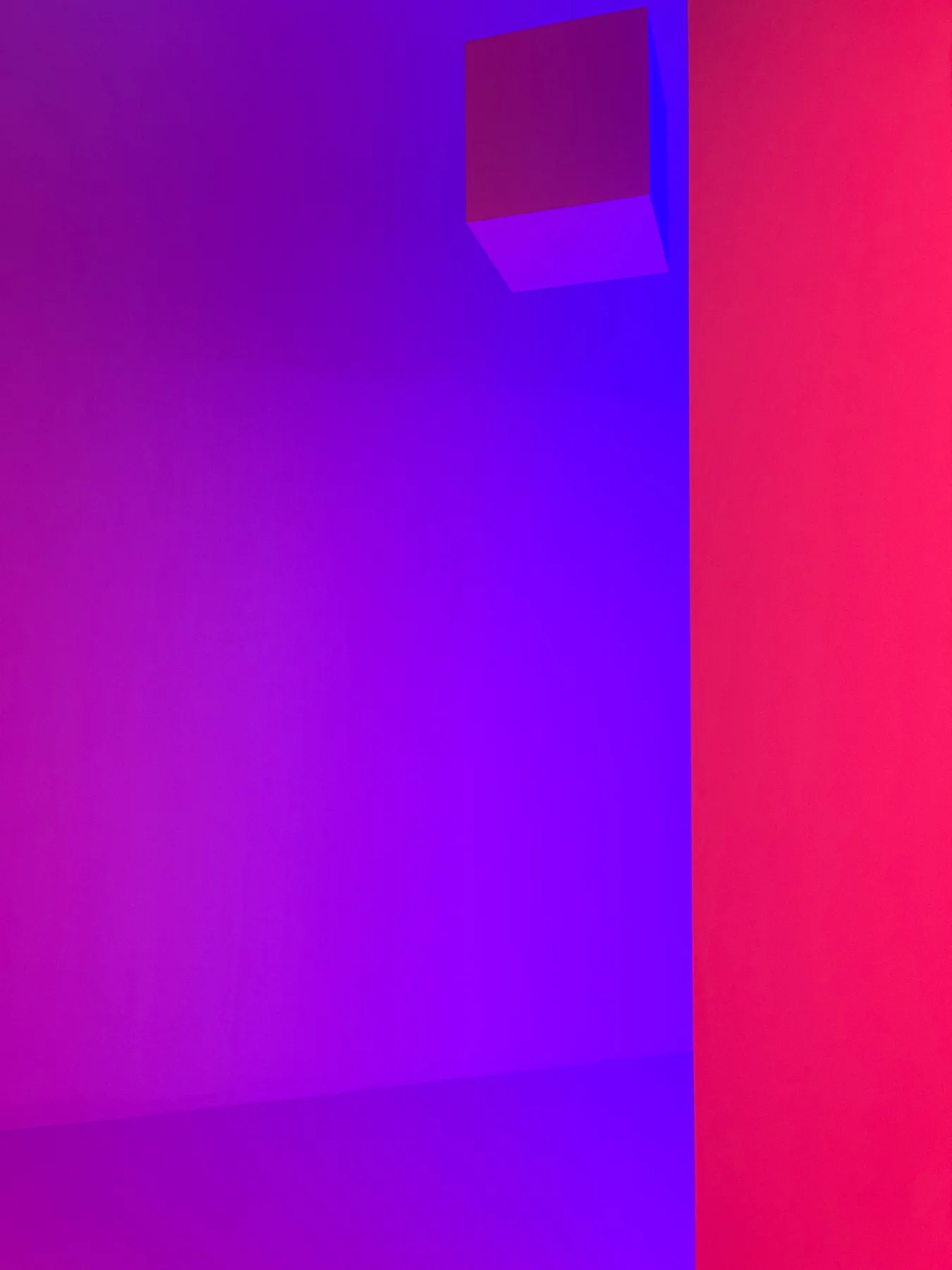
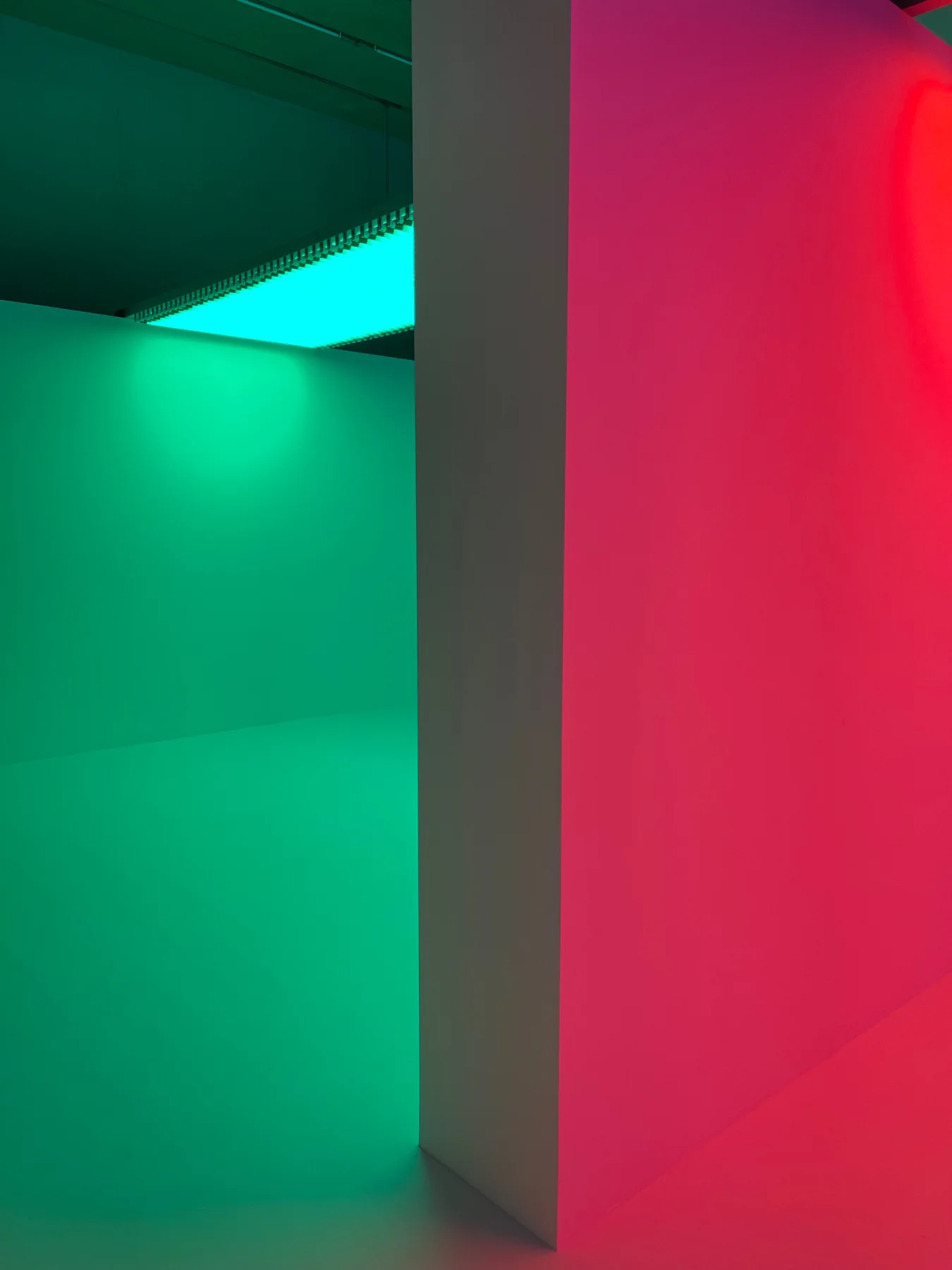
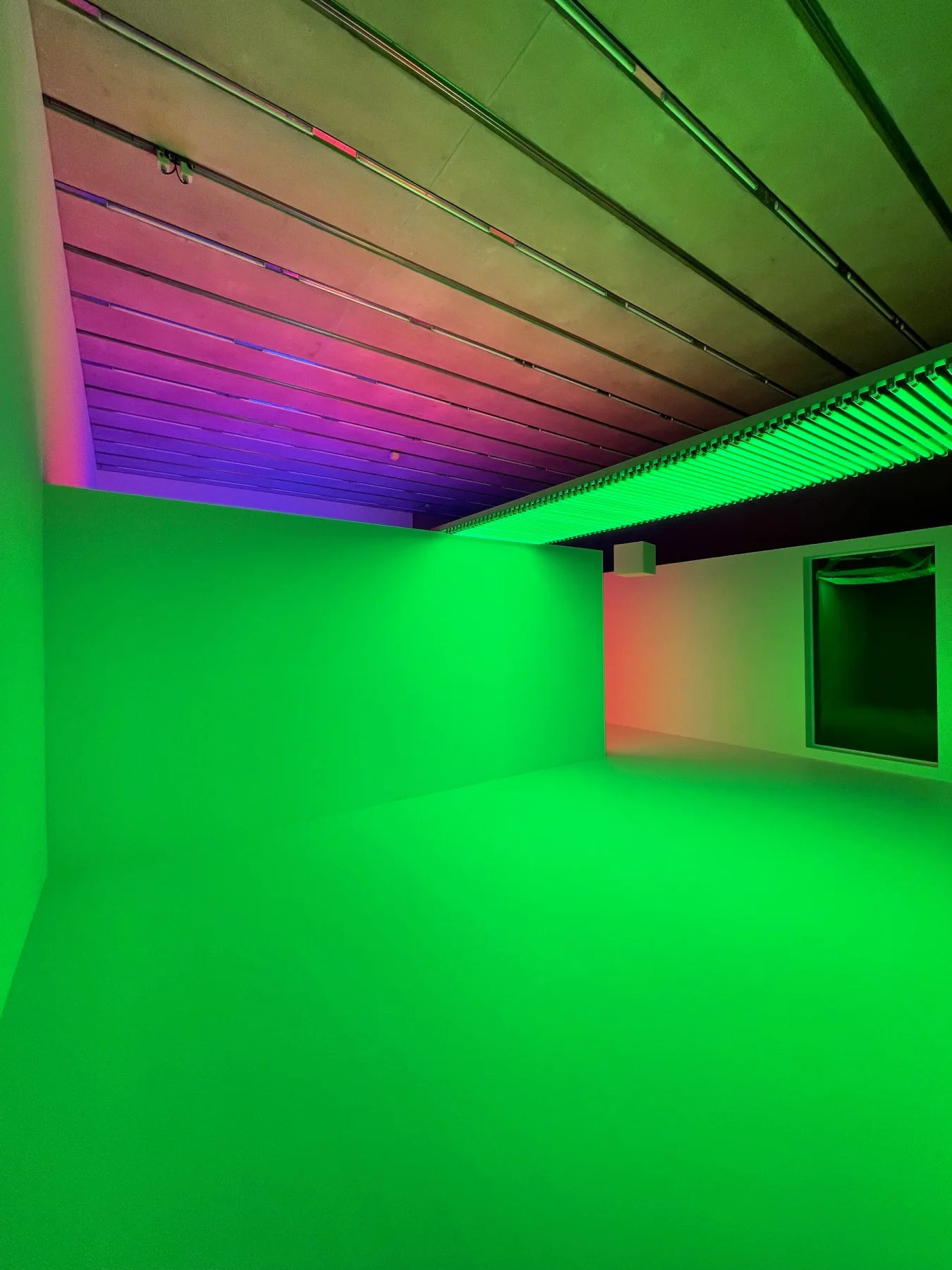
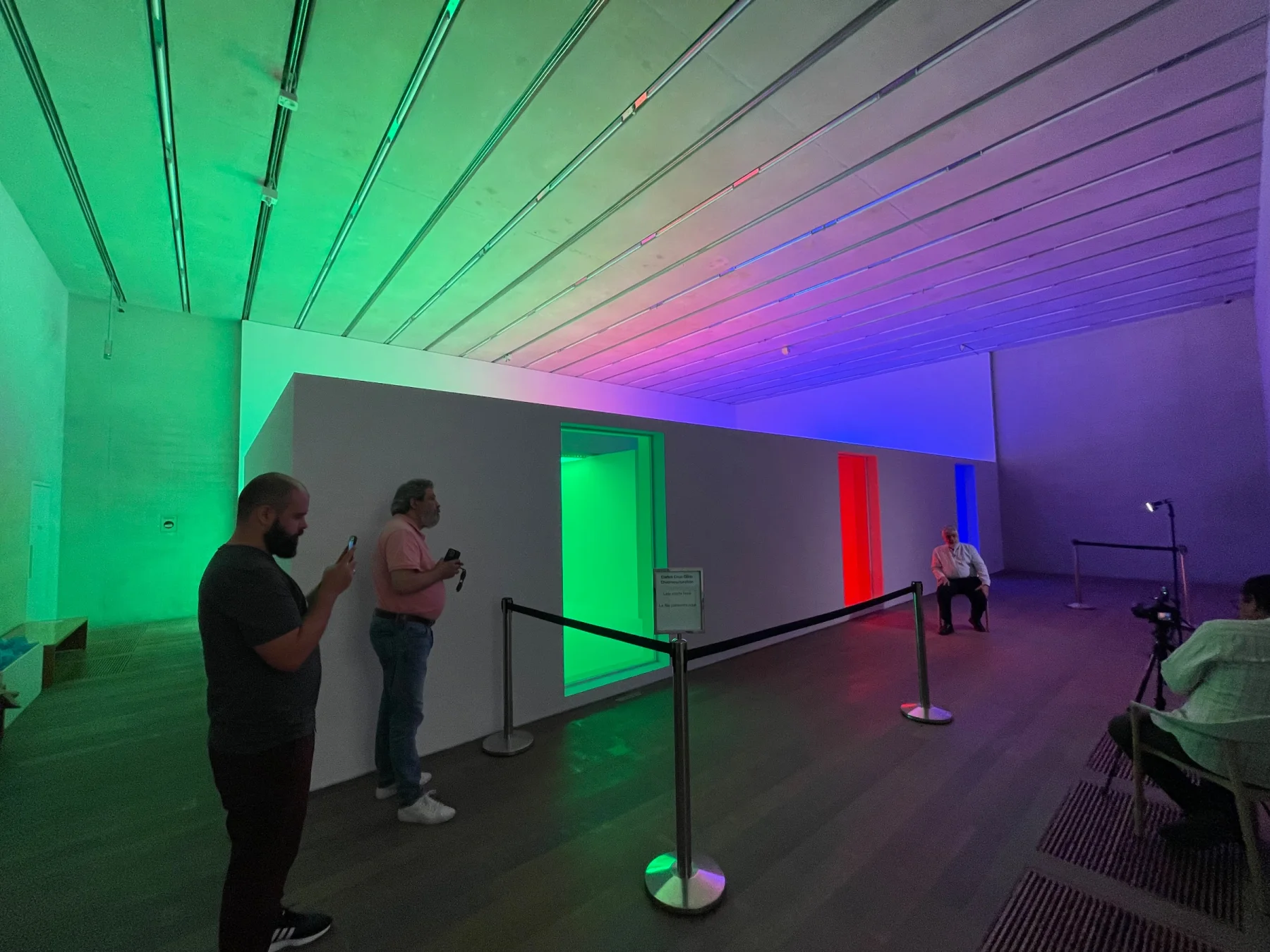
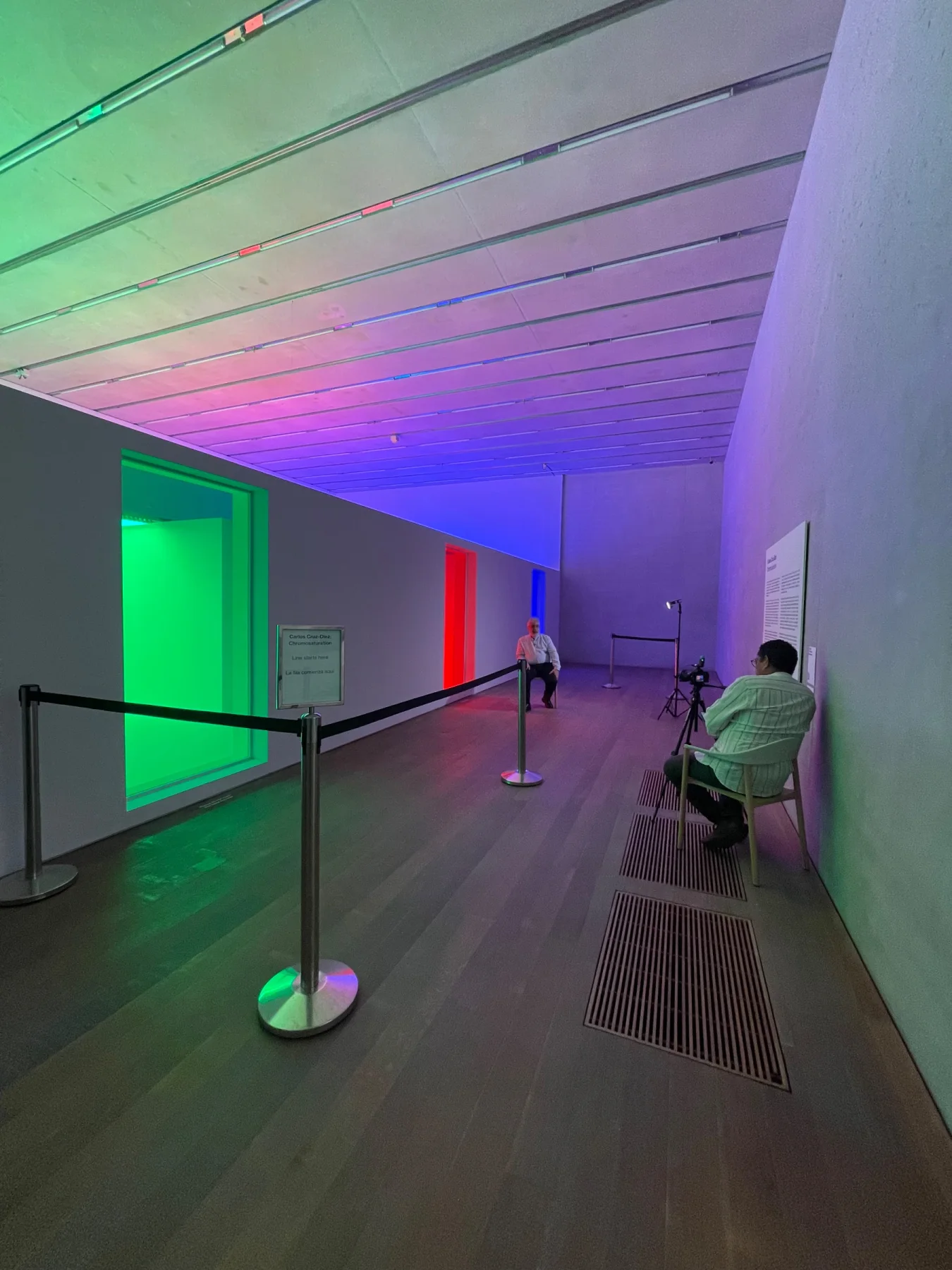
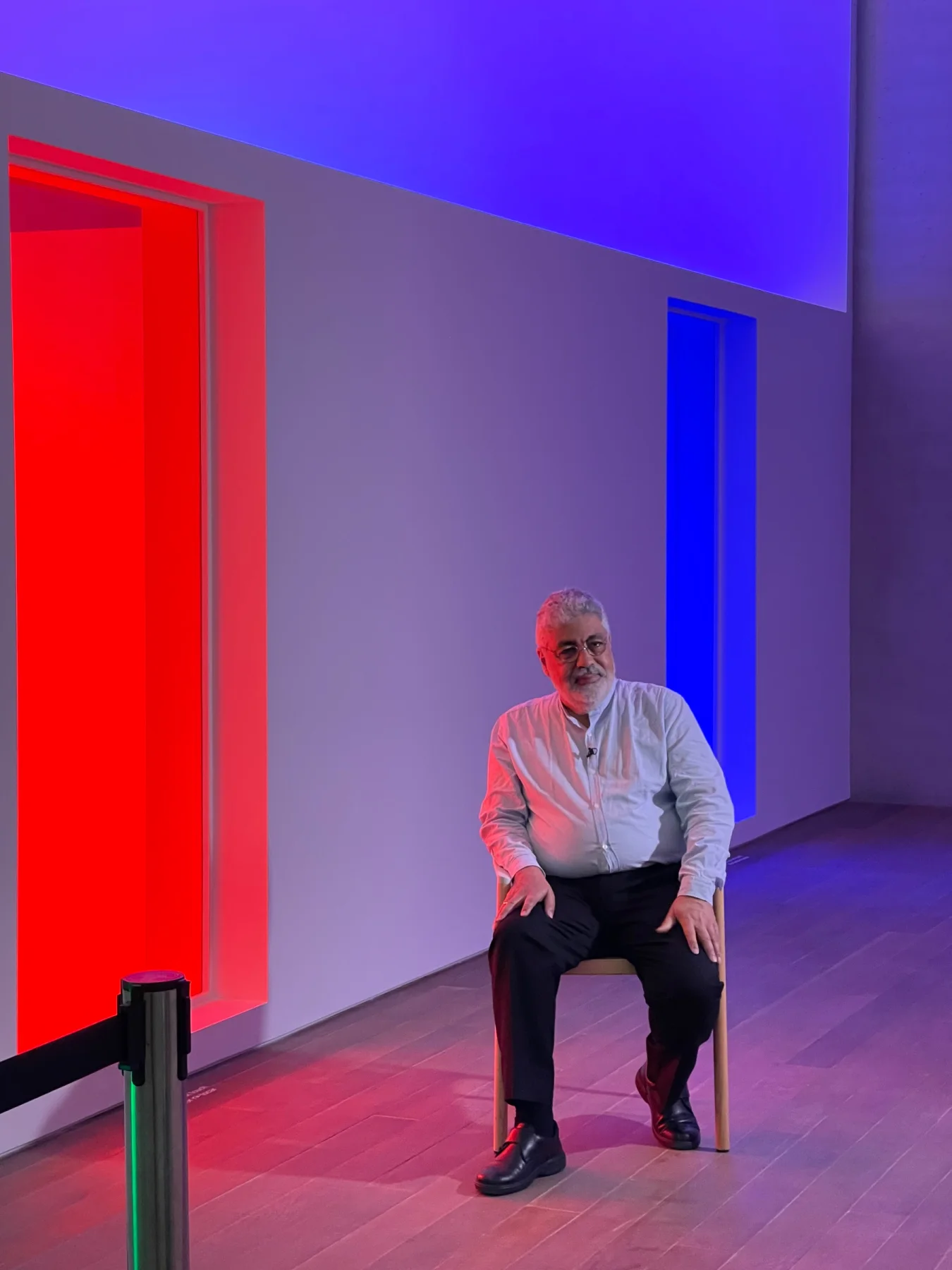
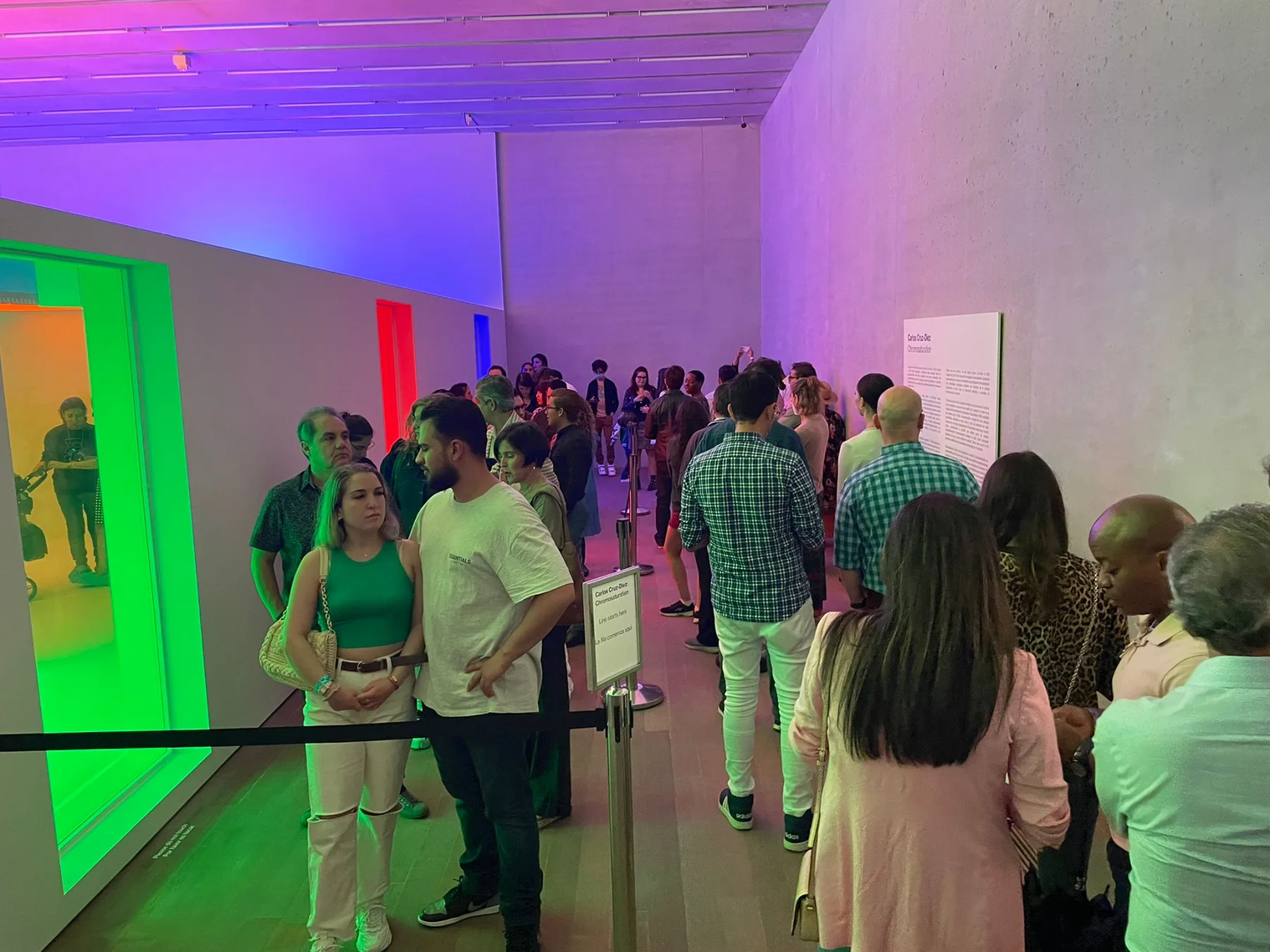
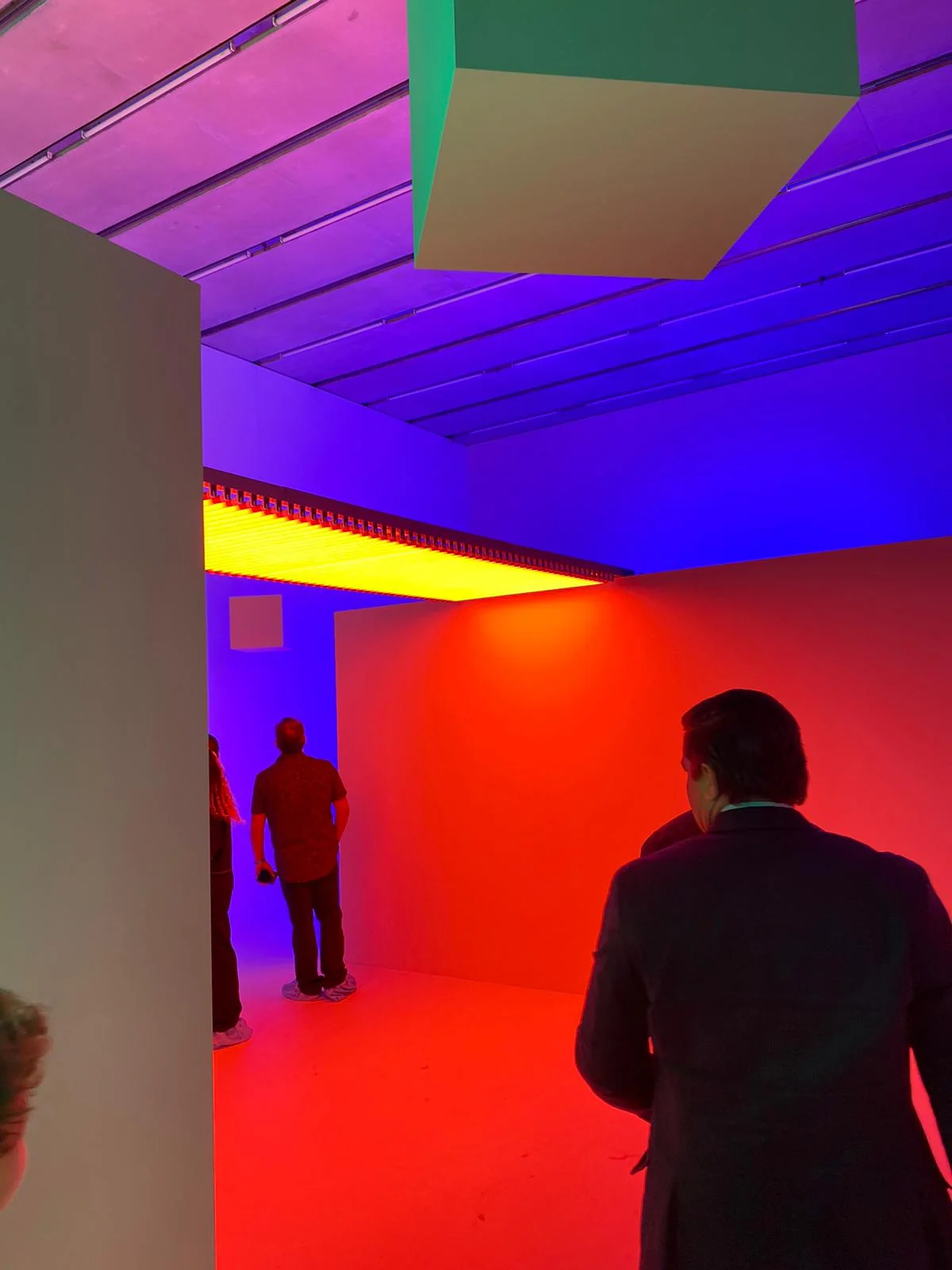
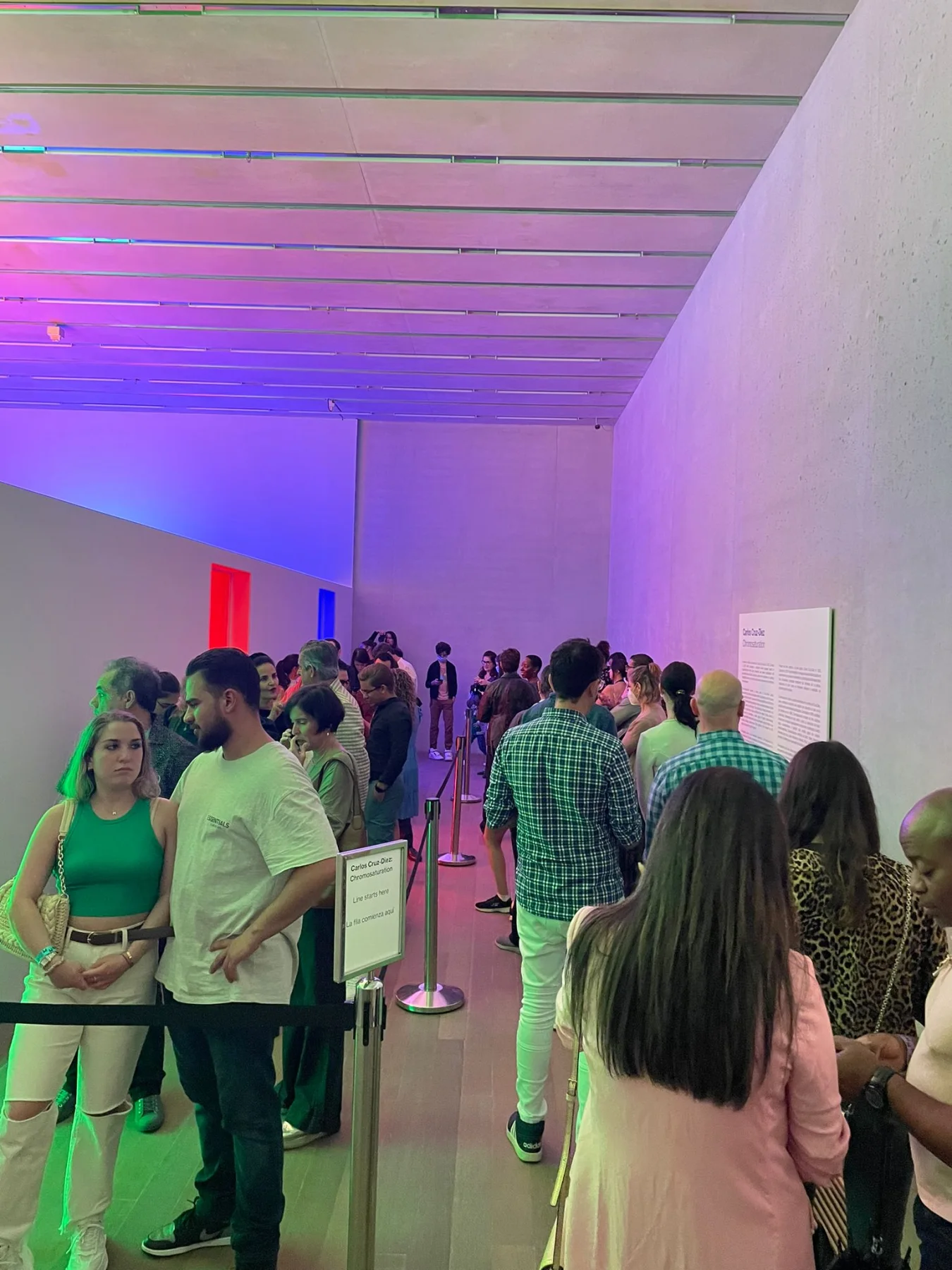
Chromosaturation is an immersive installation that reimagines color as a lived, bodily experience. Conceived in 1965, the work comprises three interconnected chambers, each illuminated in a single hue: red, green, or blue. Immersed in this monochrome environment, the viewer experiences a kind of retinal overload, confronting the limits of visual perception. The work underscores color as an inherent property of light––a physical, temporal phenomenon that unfolds in real time as the viewer moves through the space.
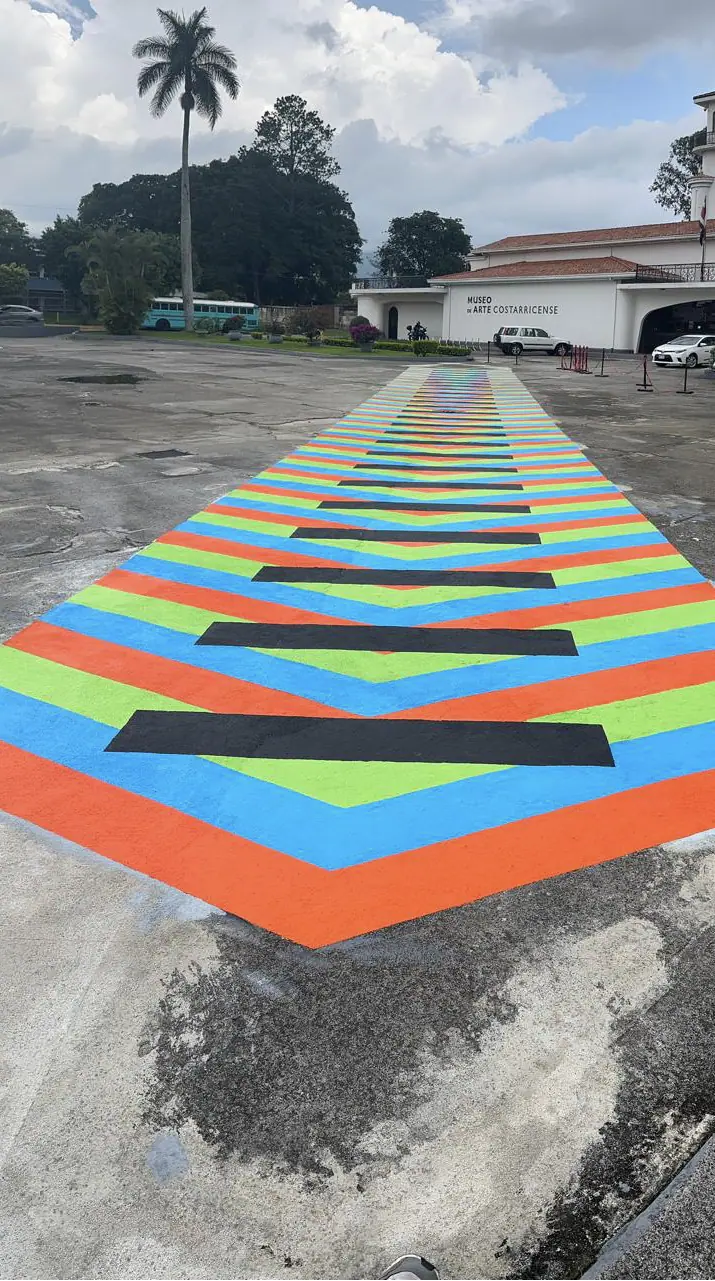
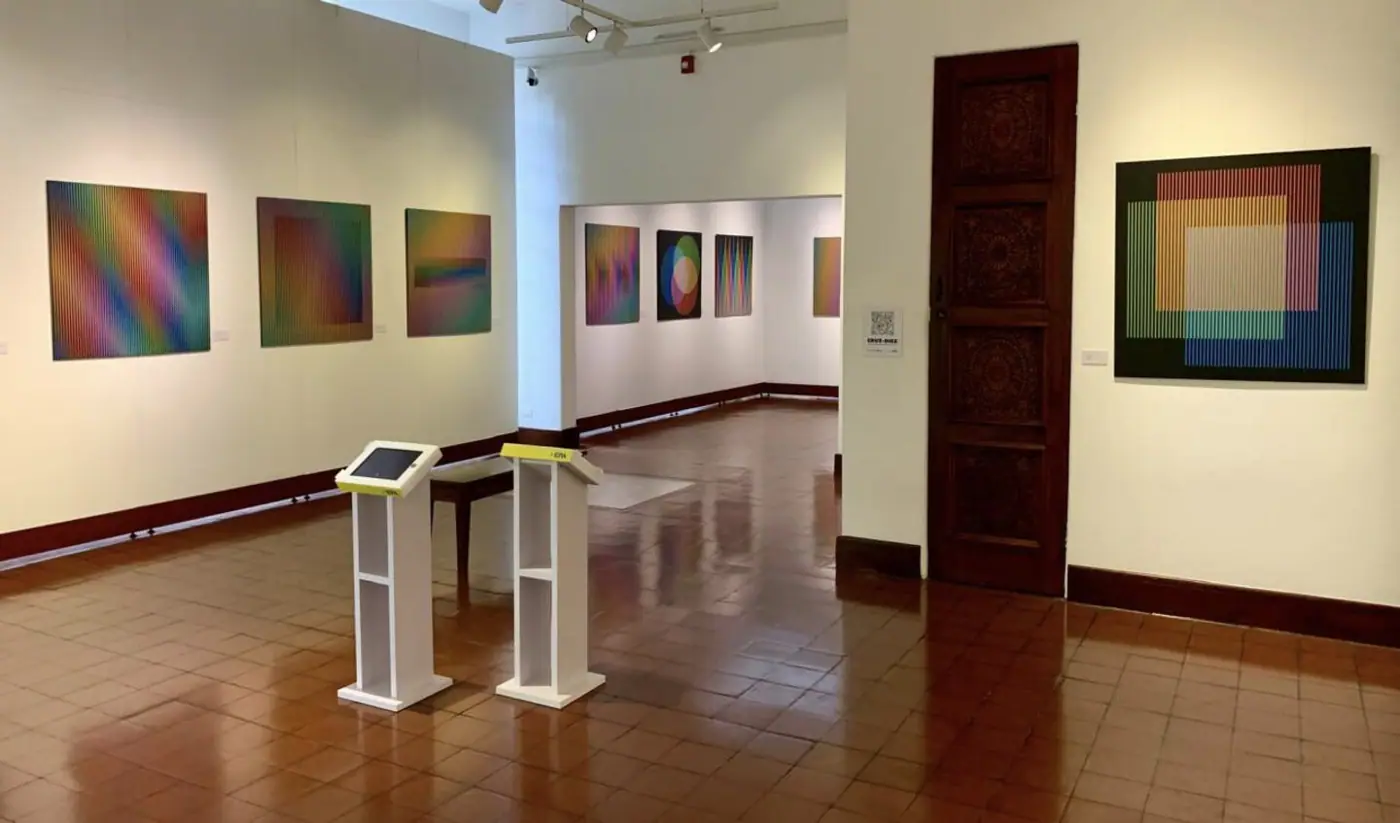
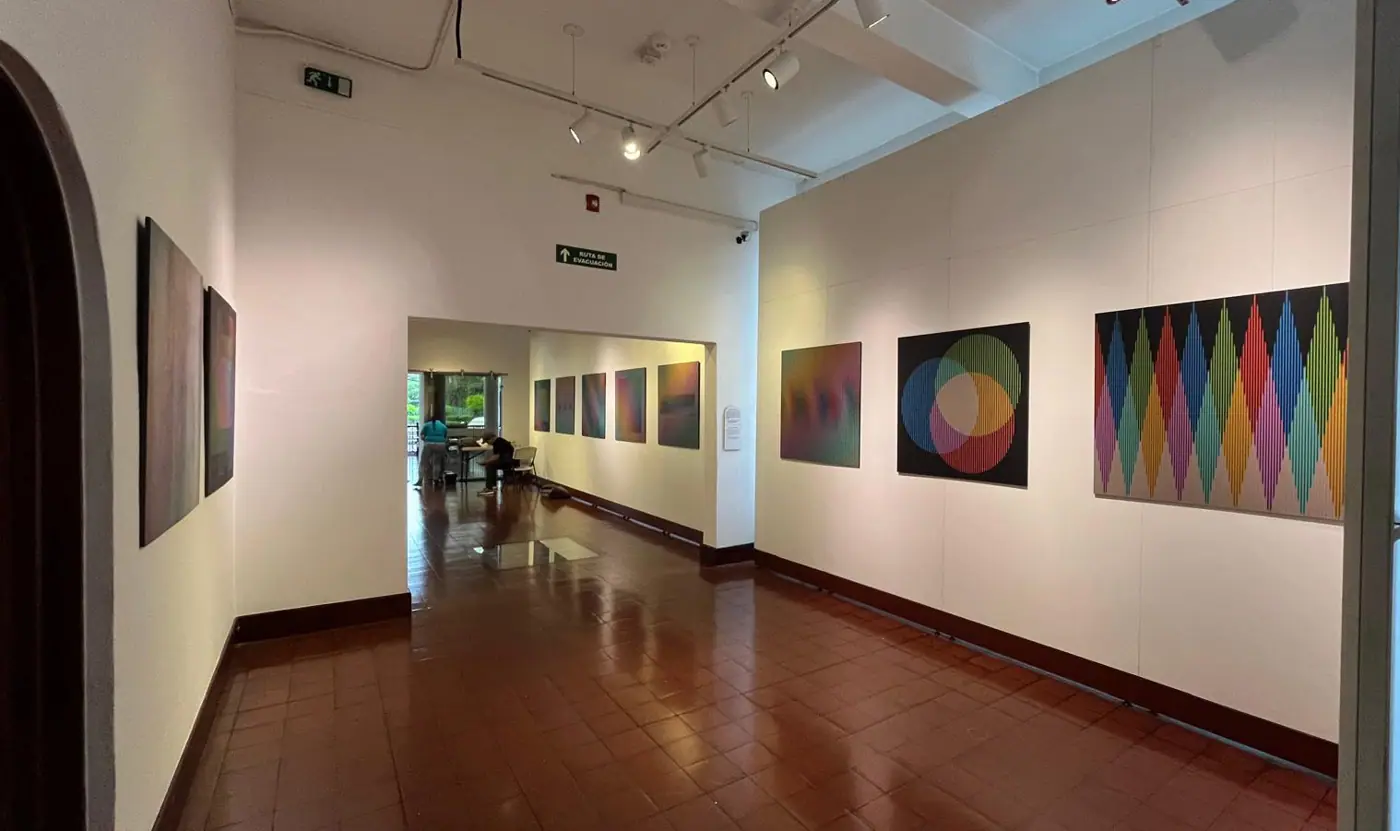
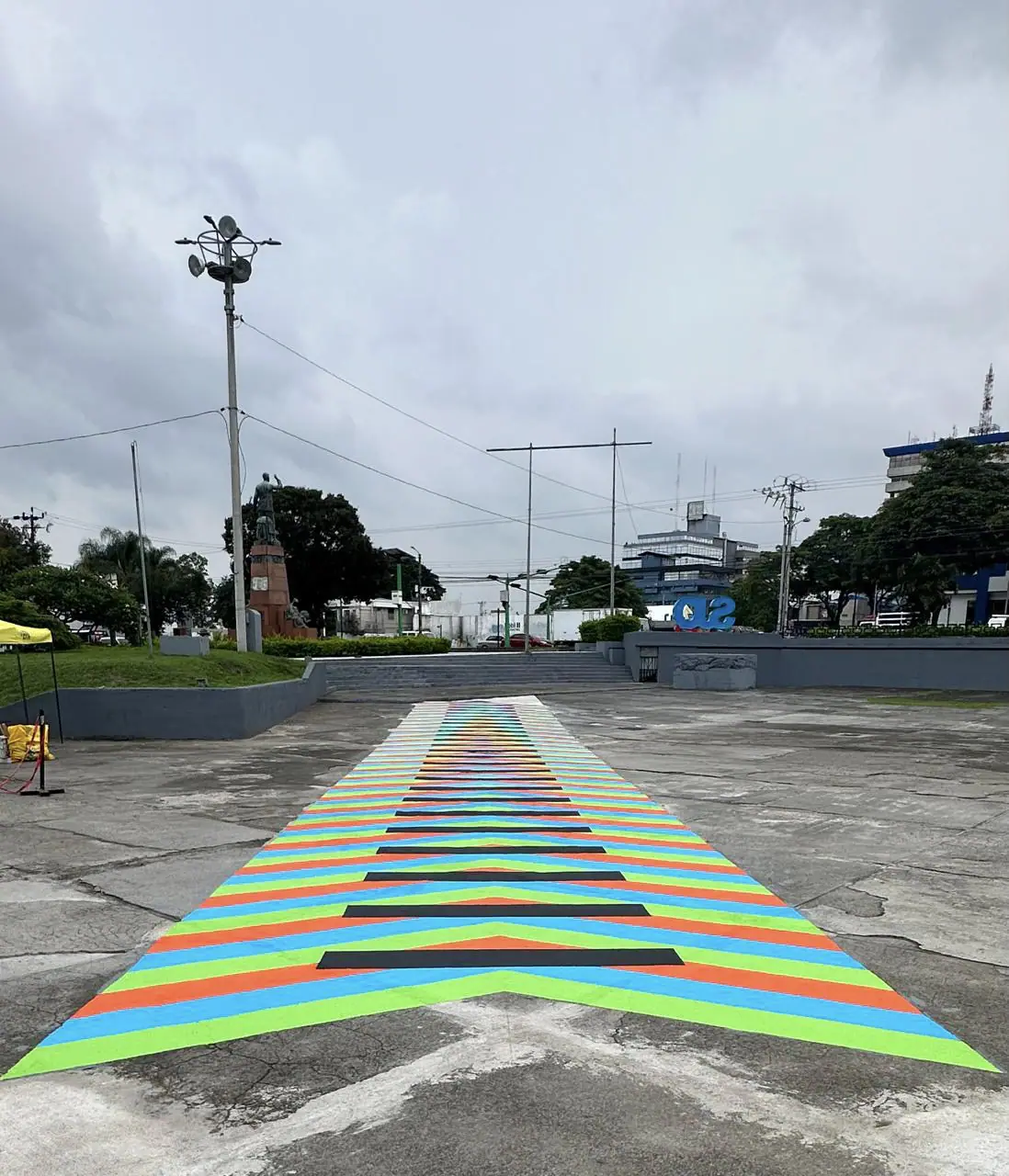
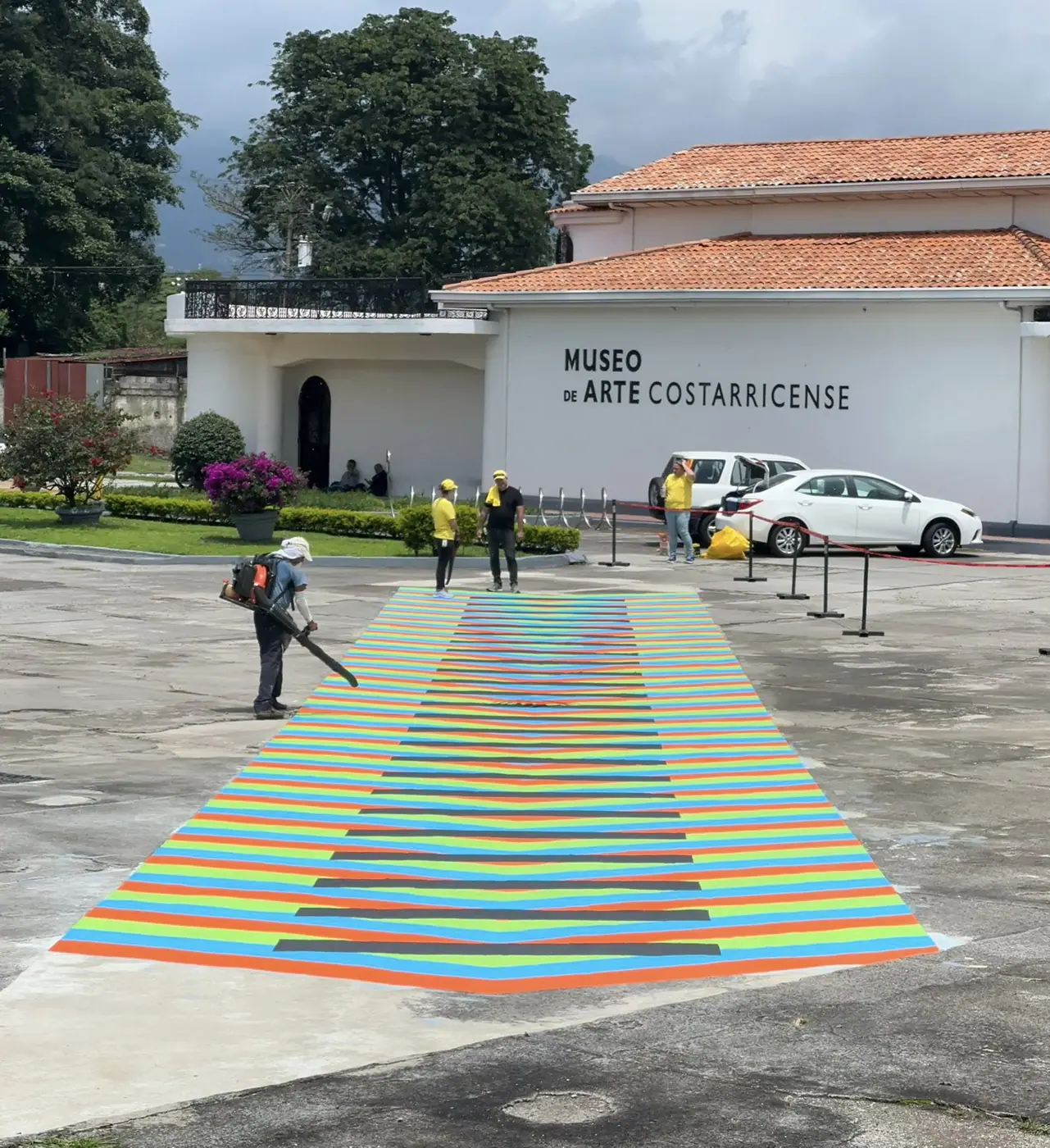
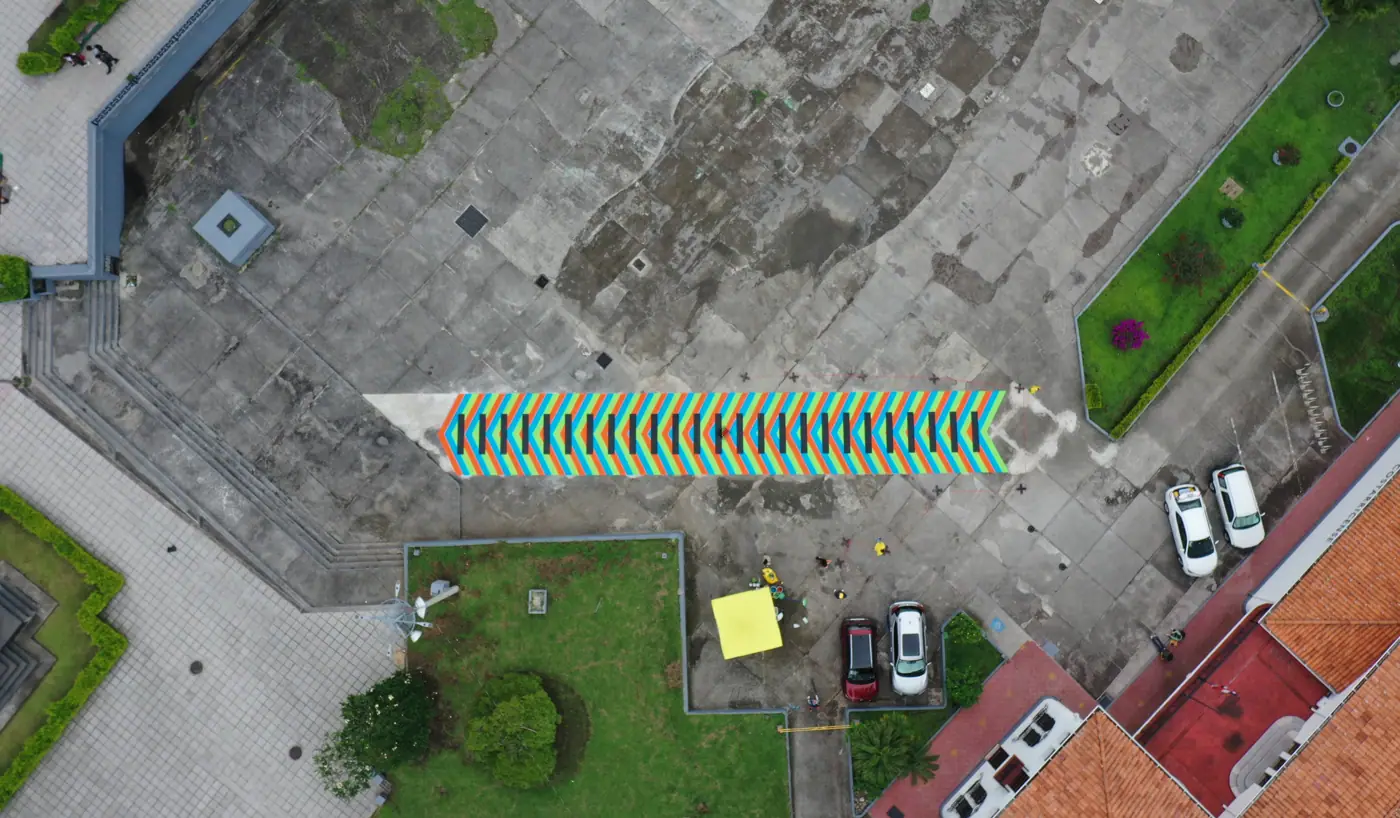
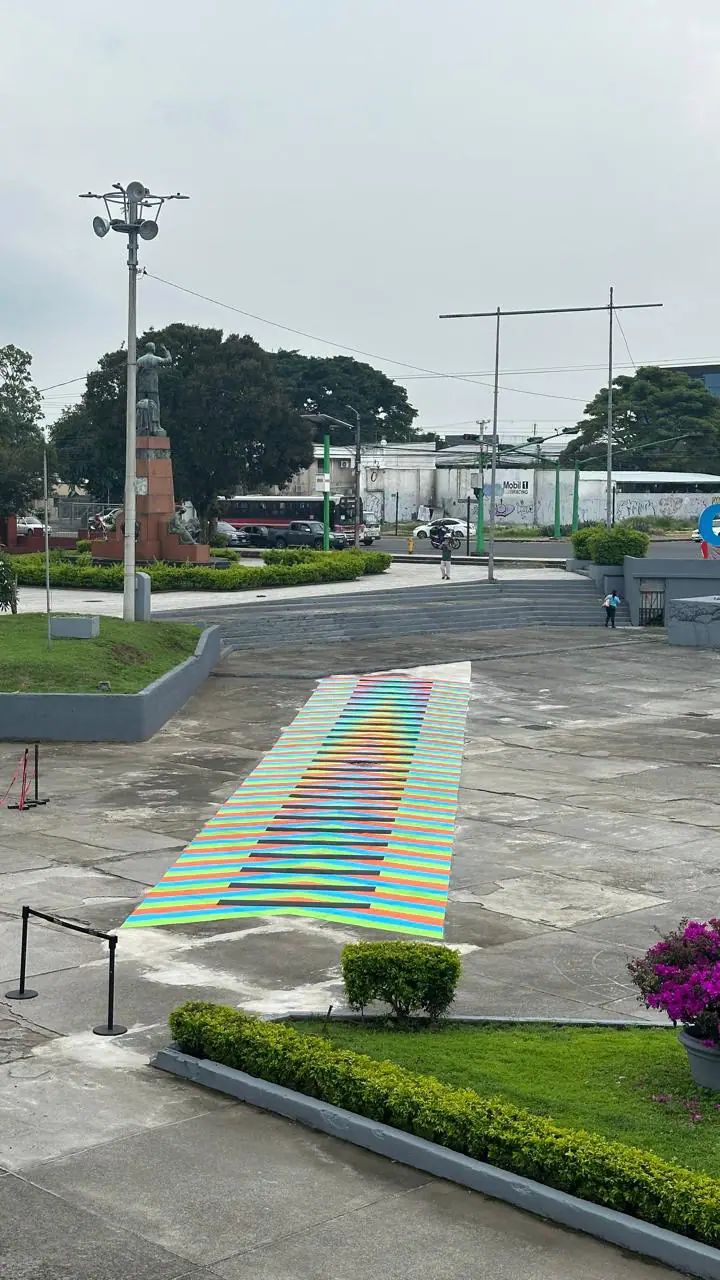
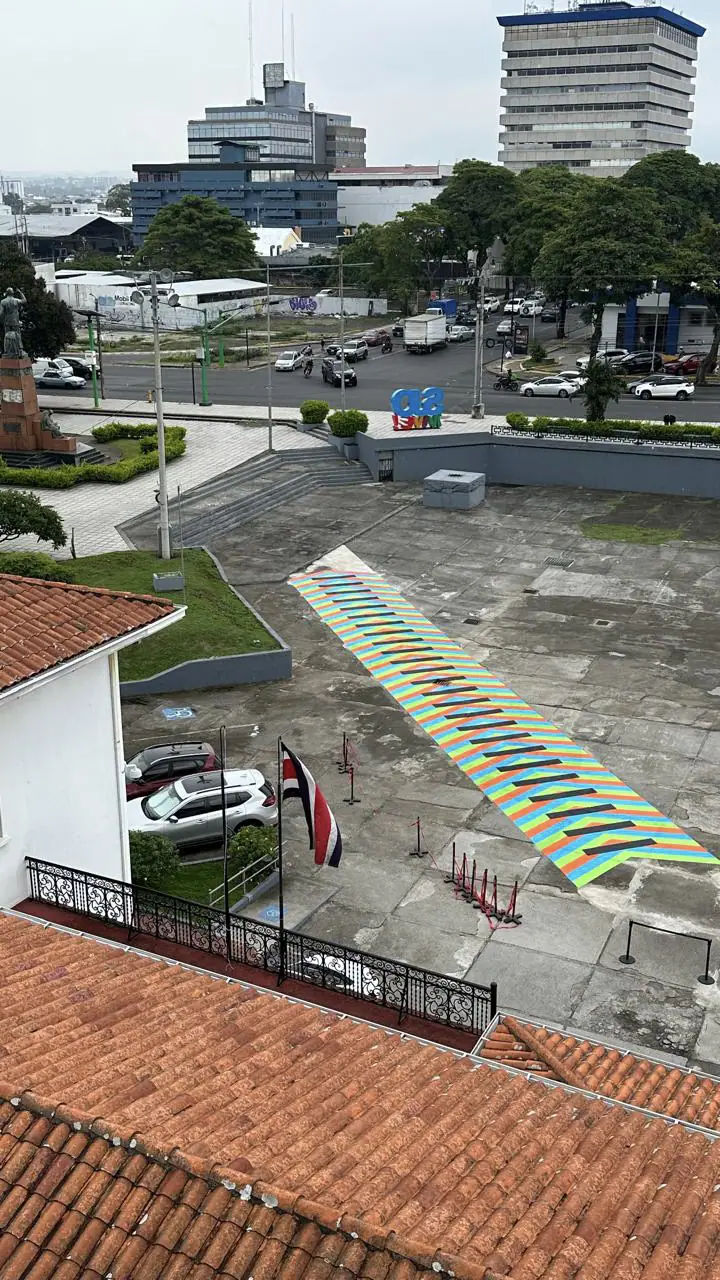
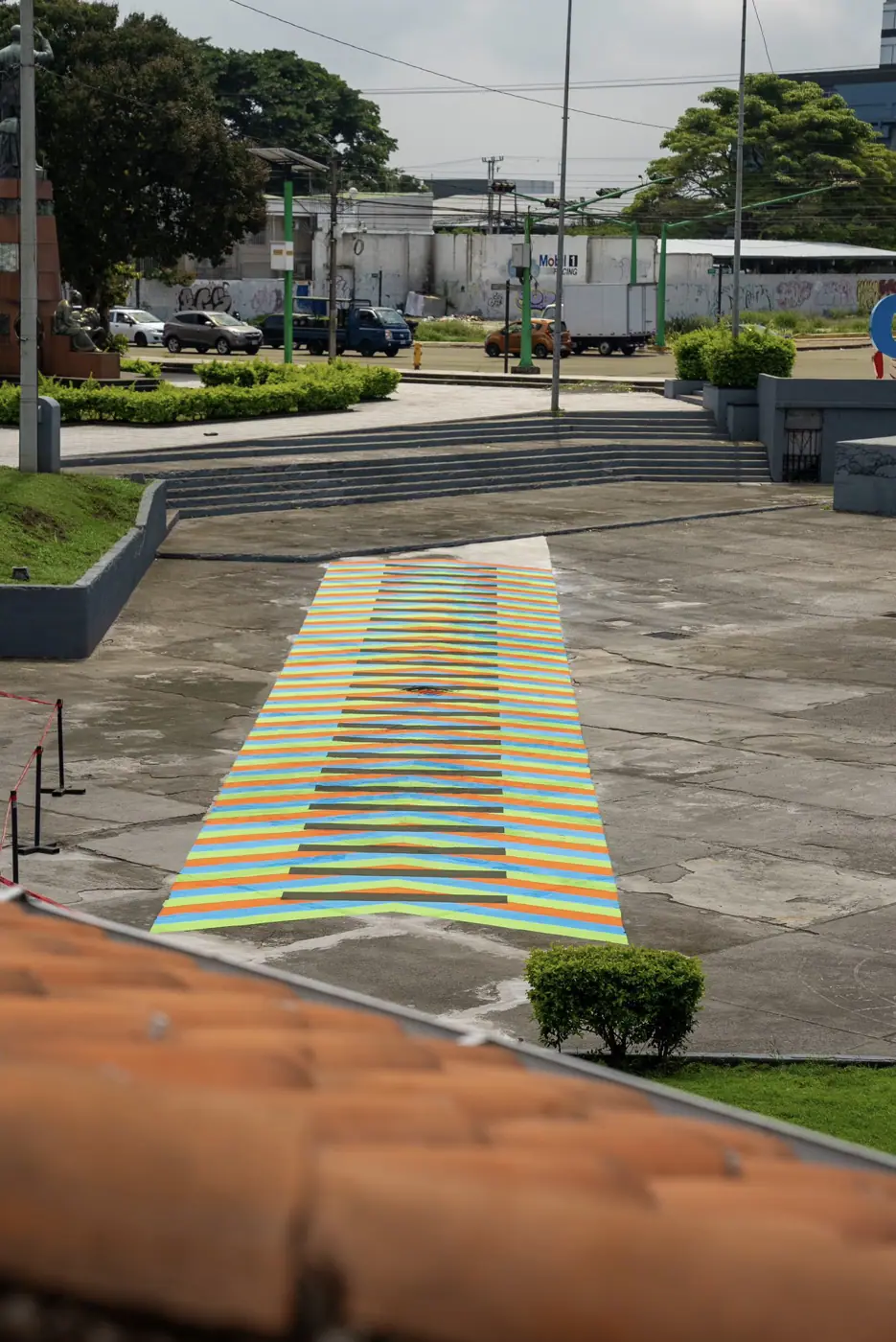
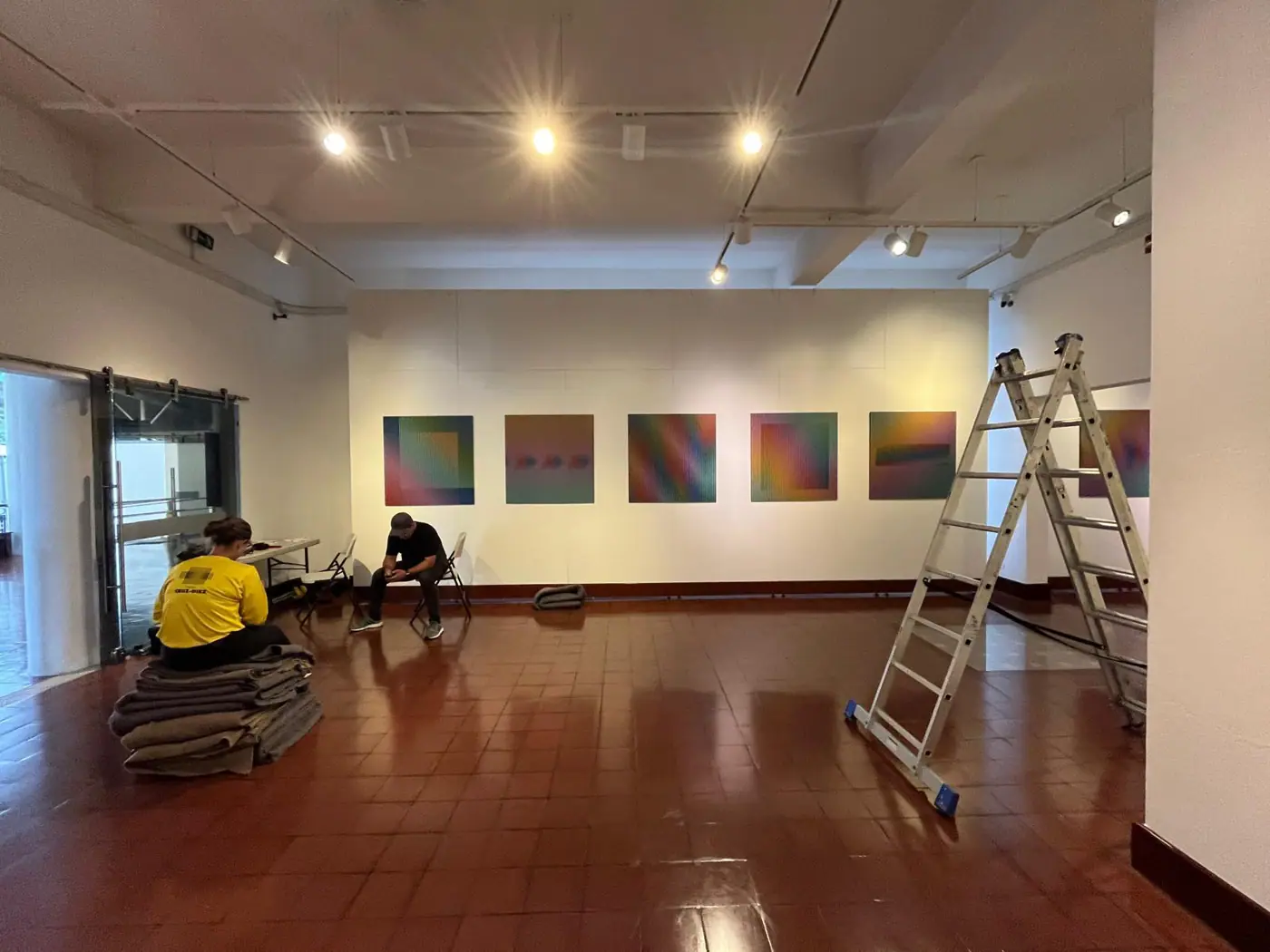
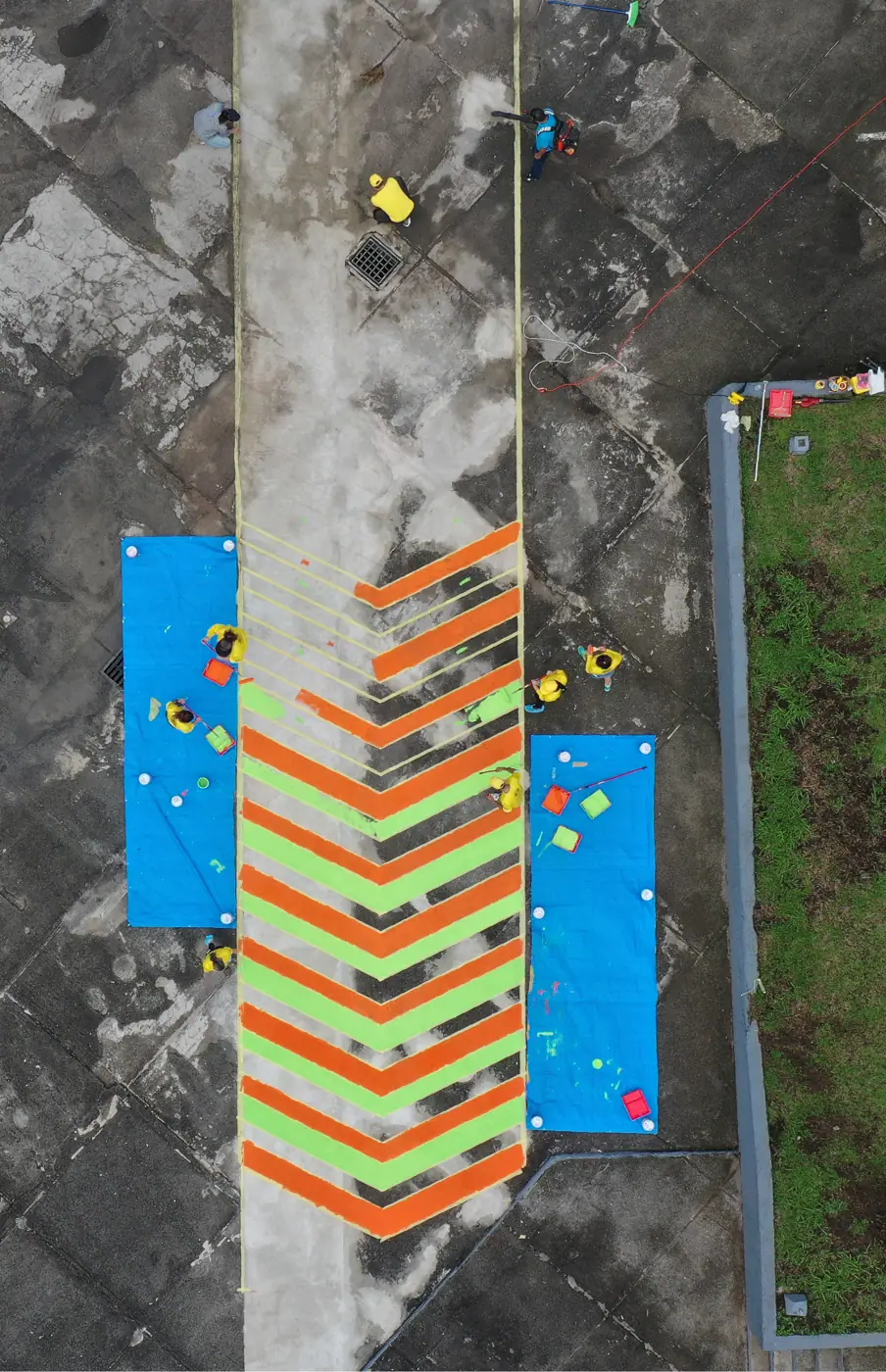
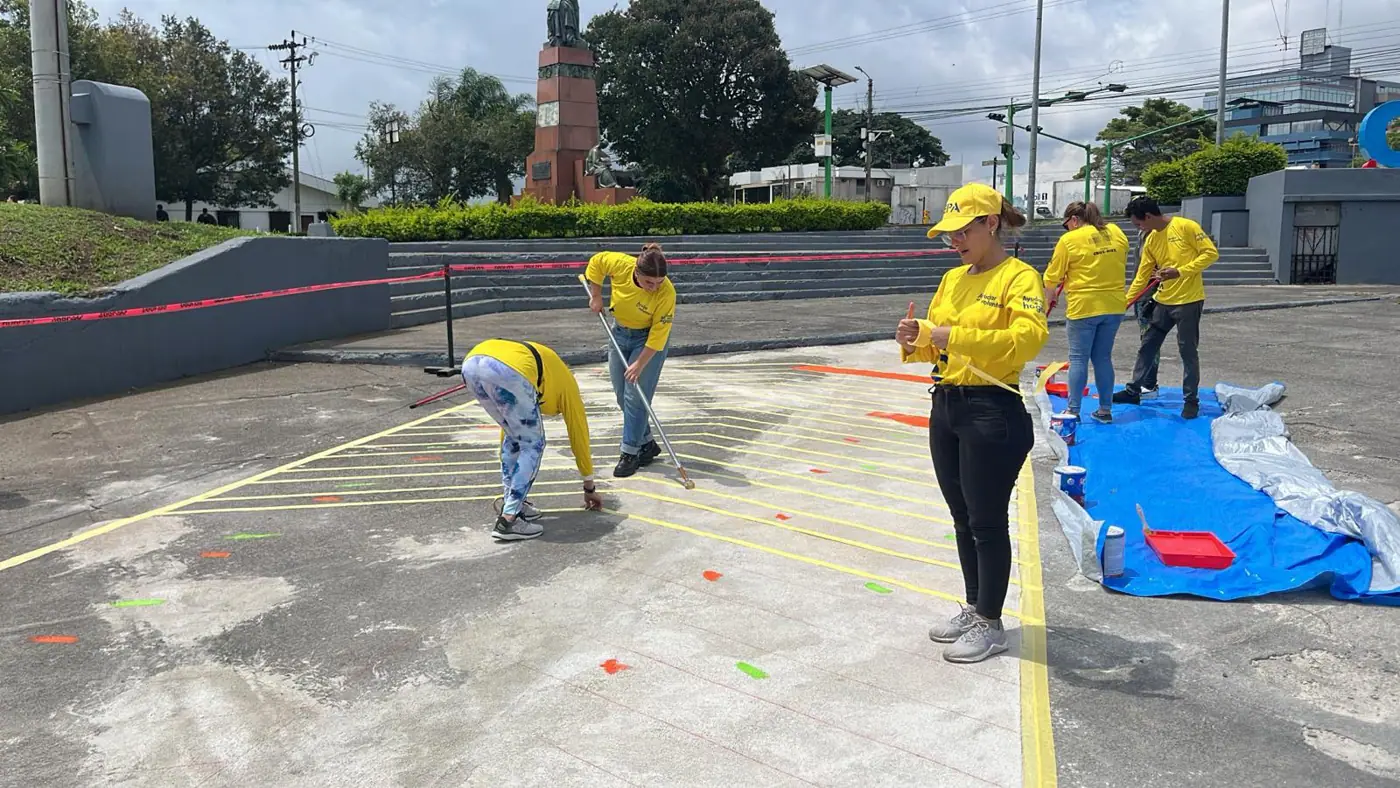
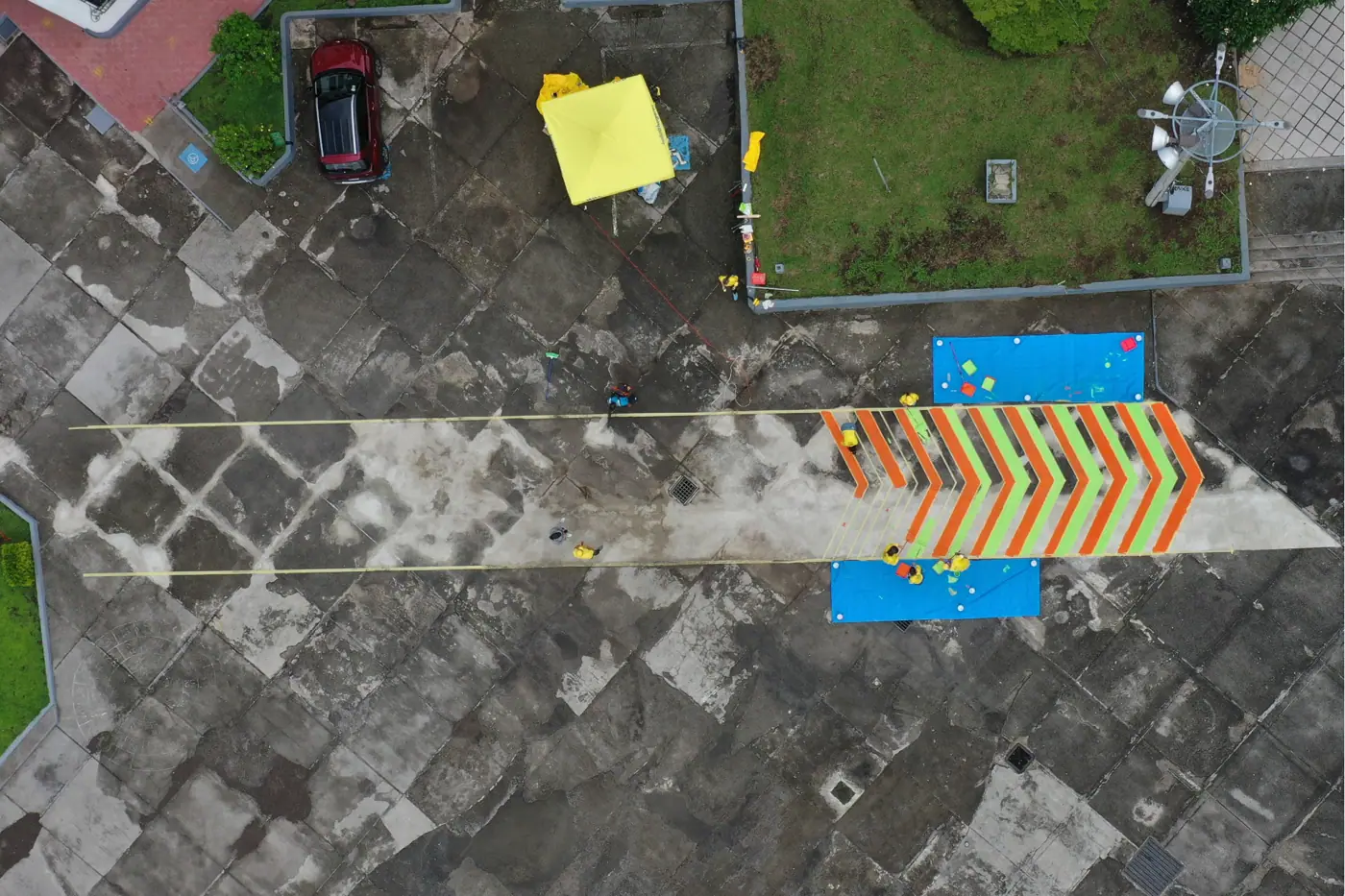
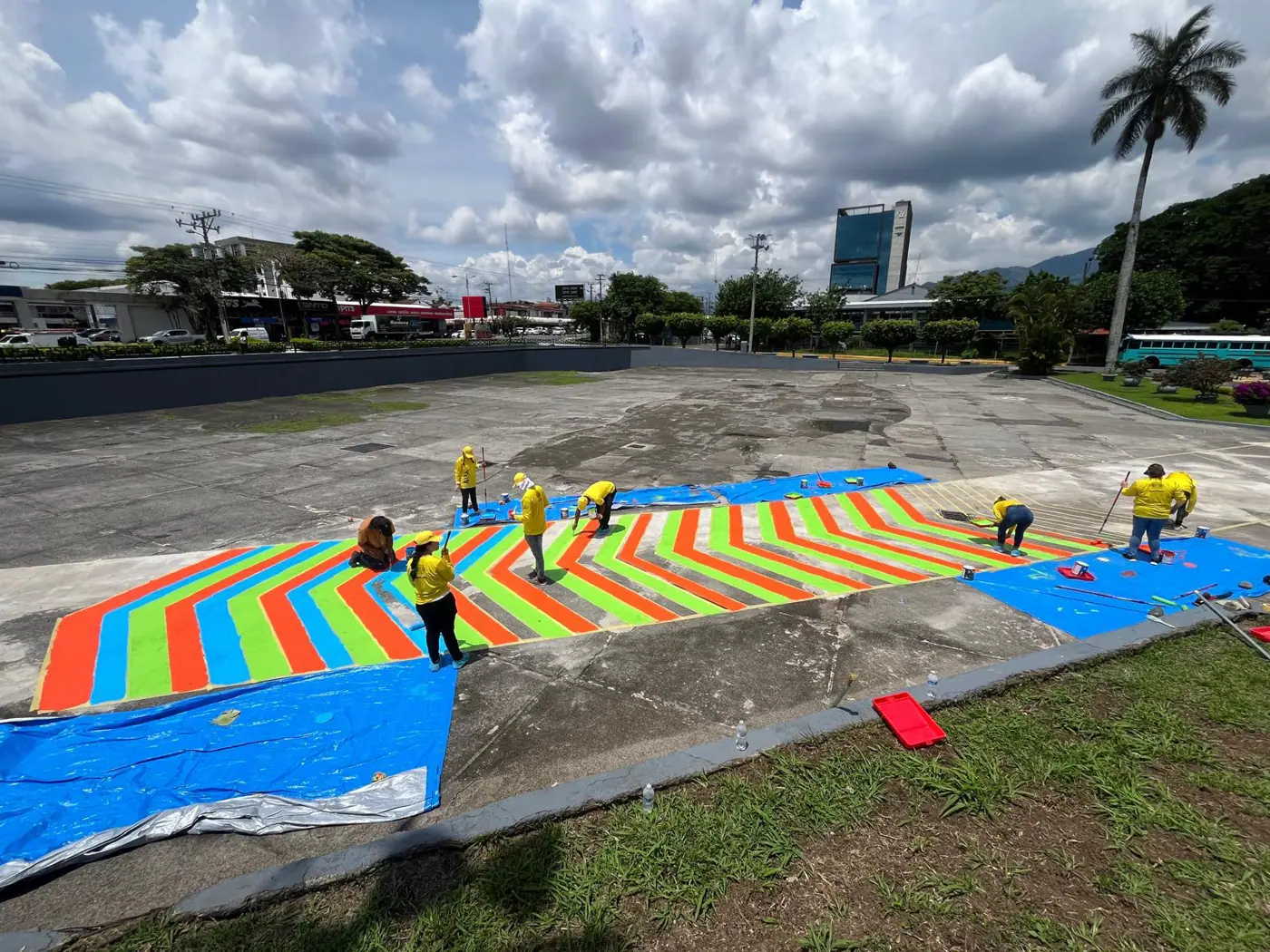
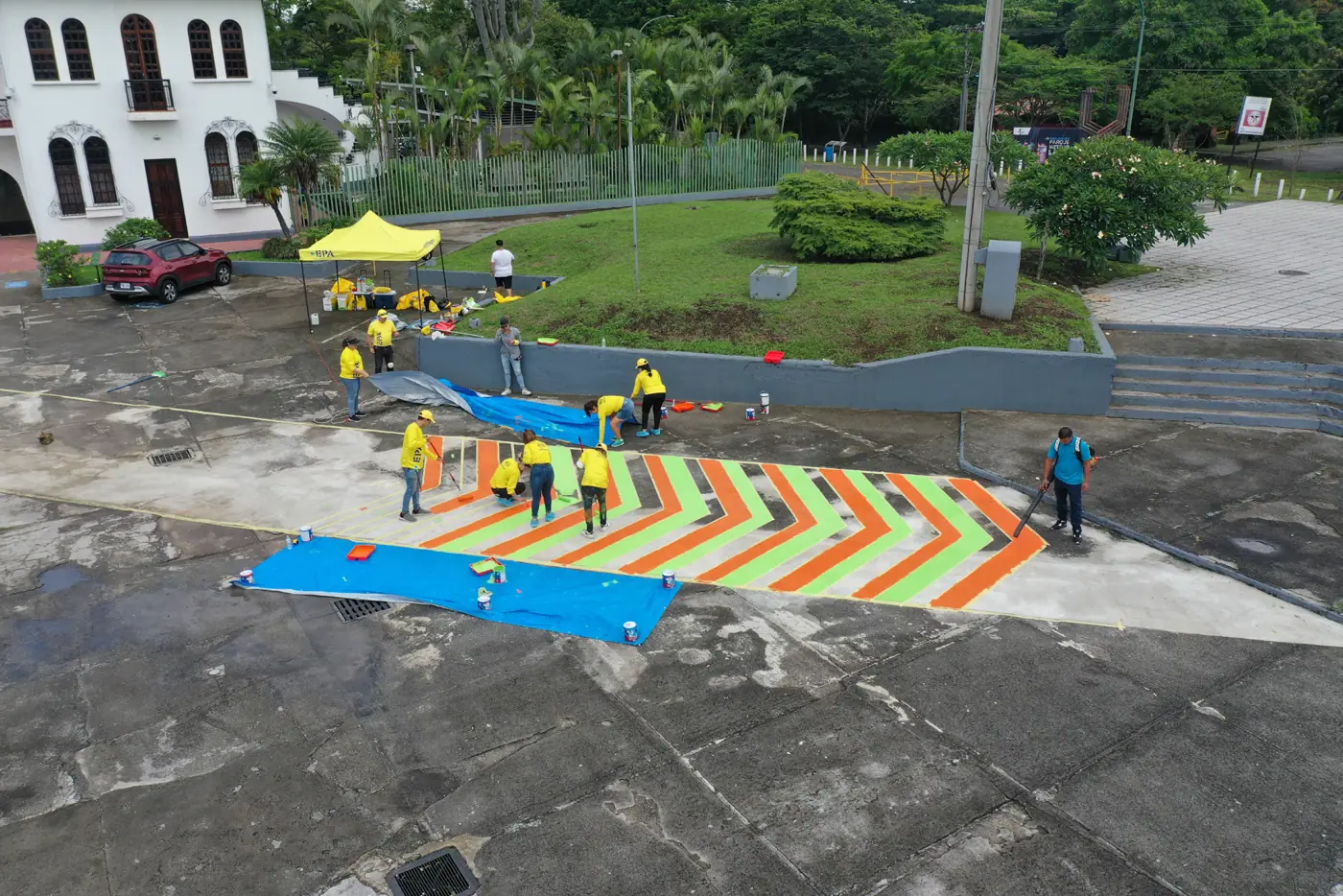
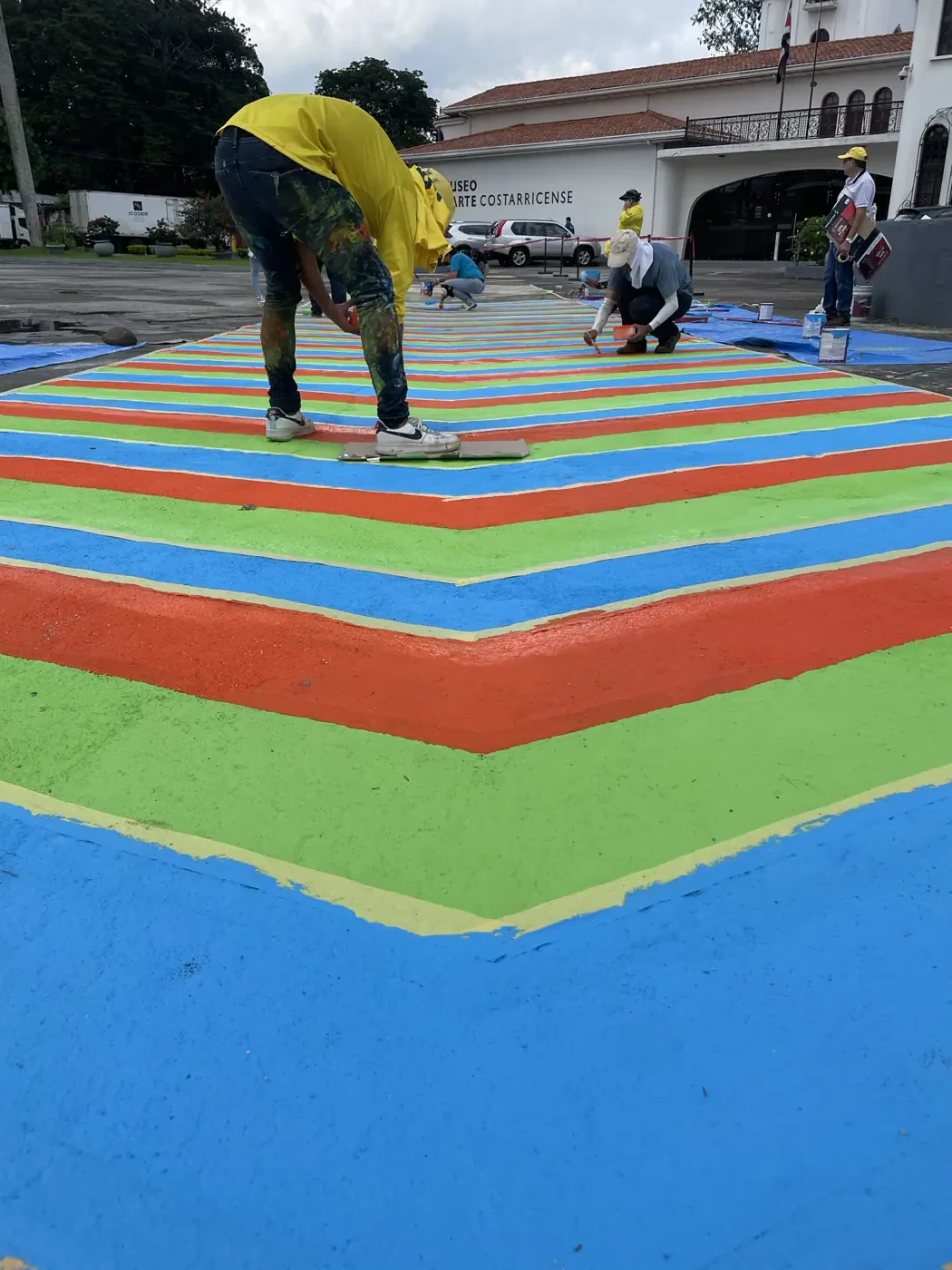
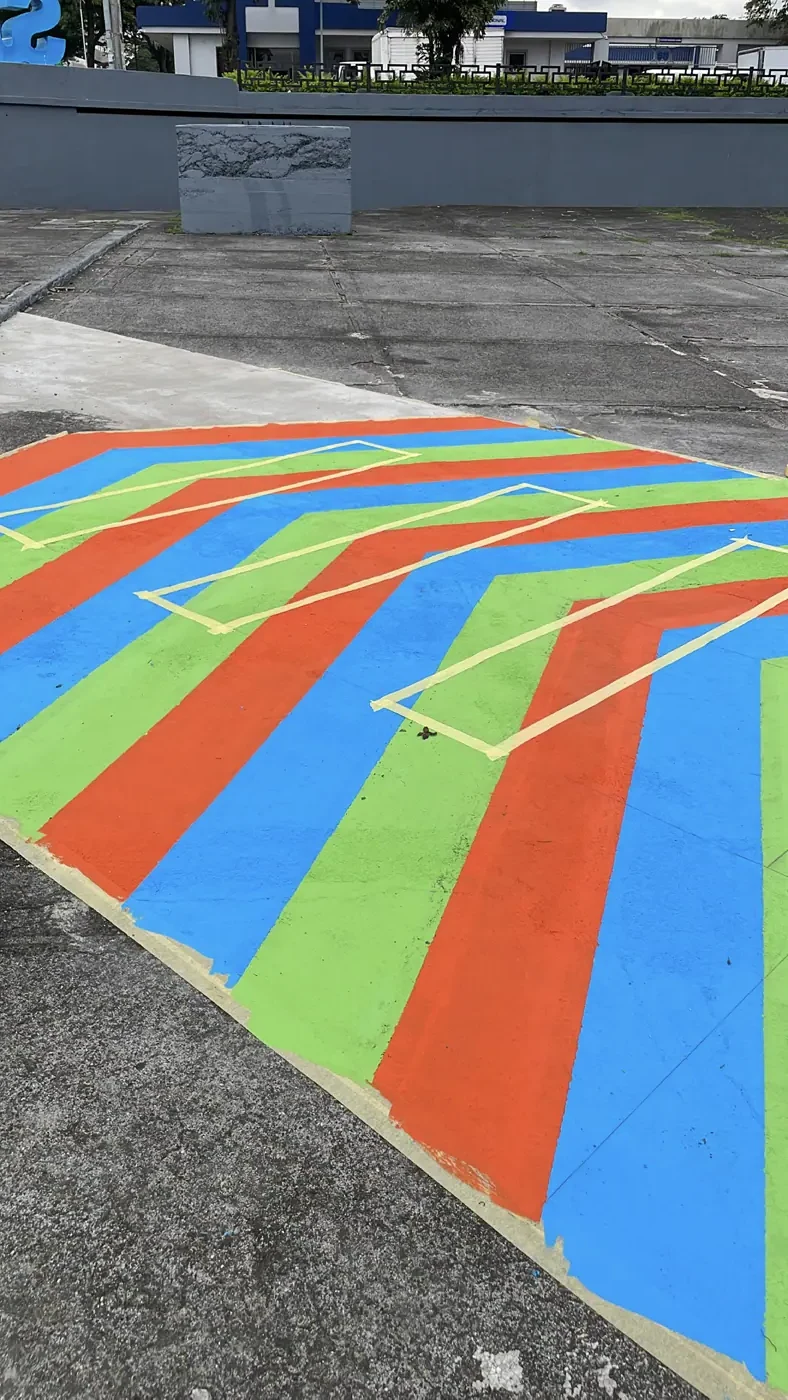
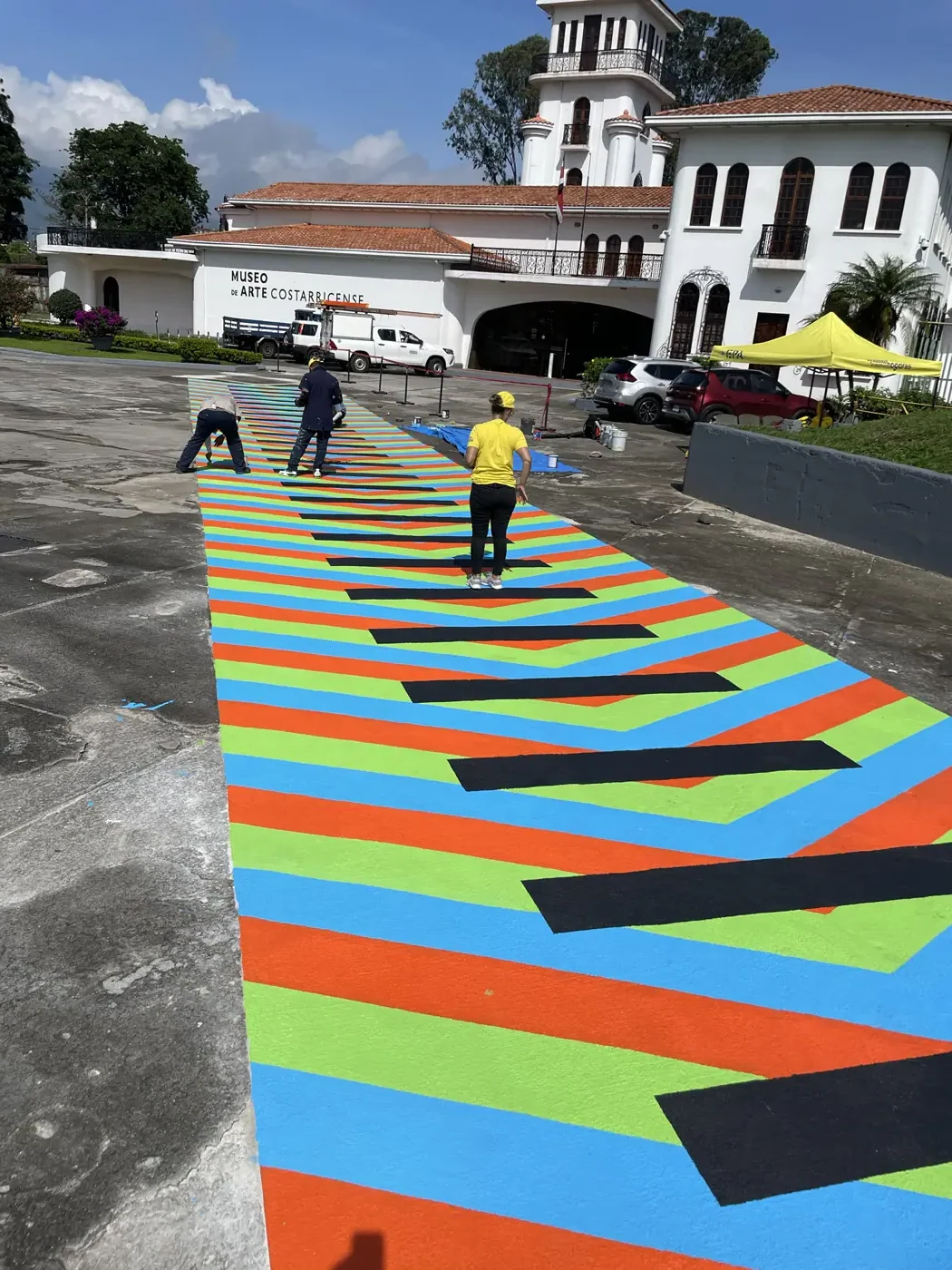
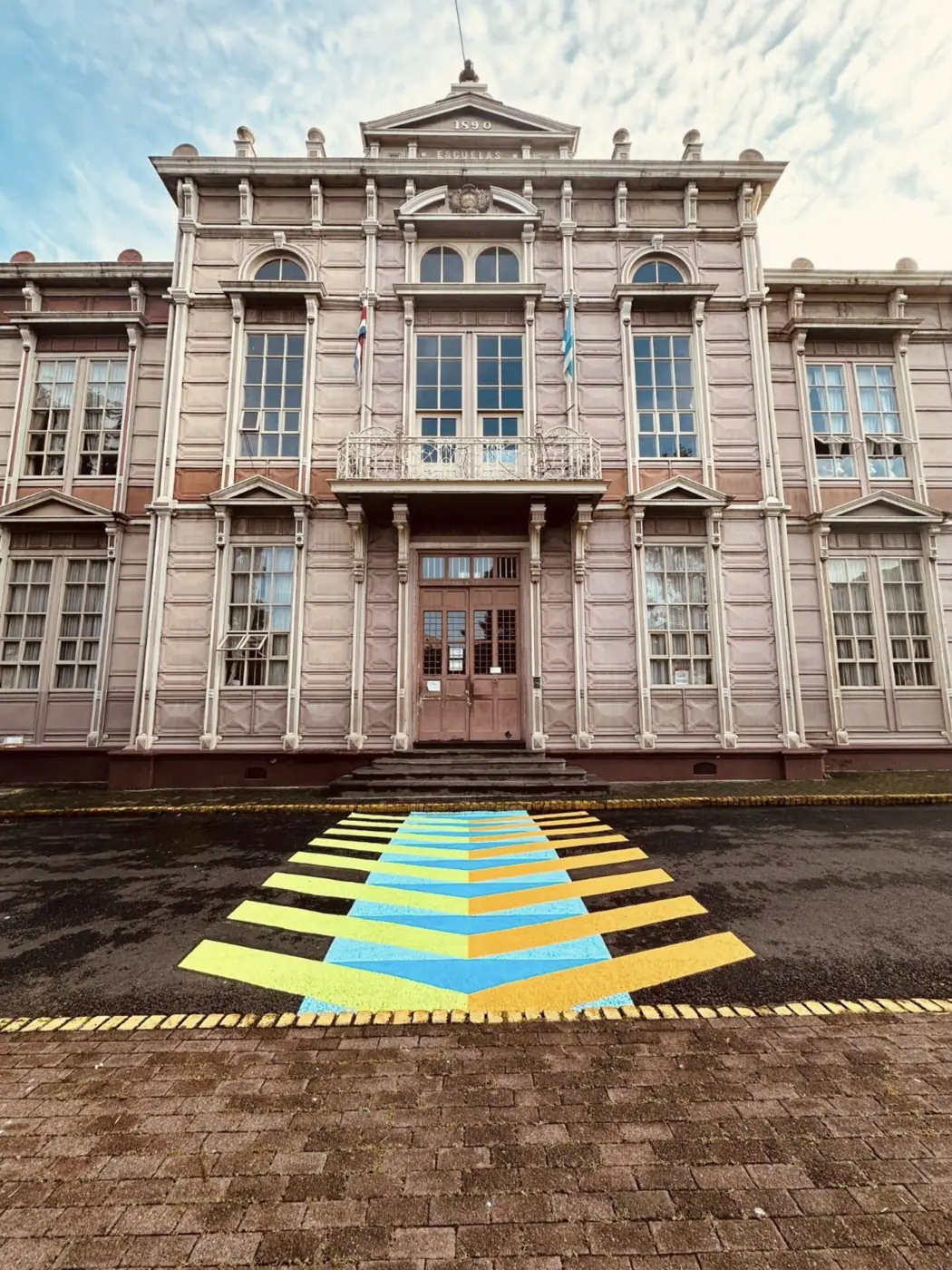
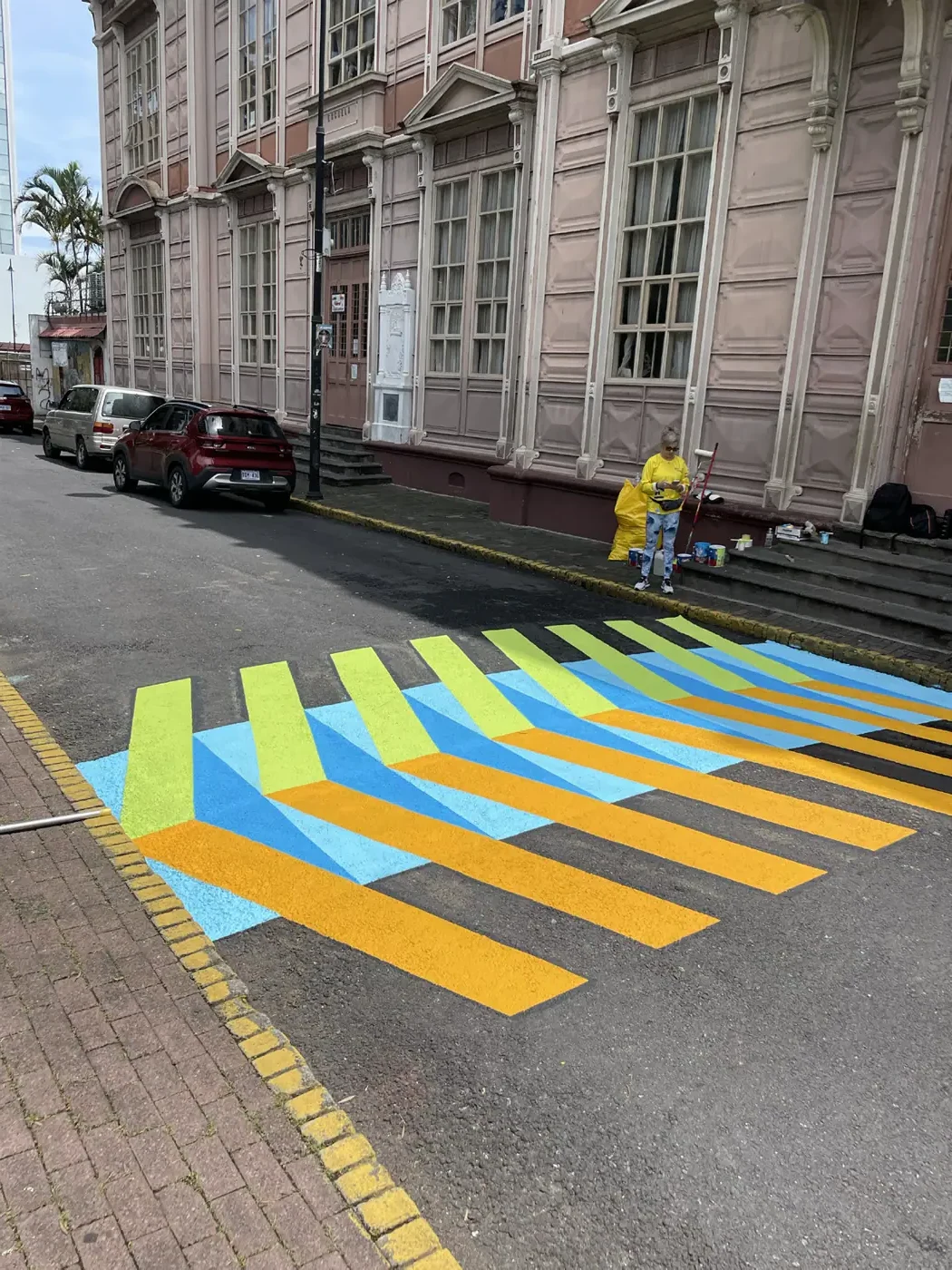
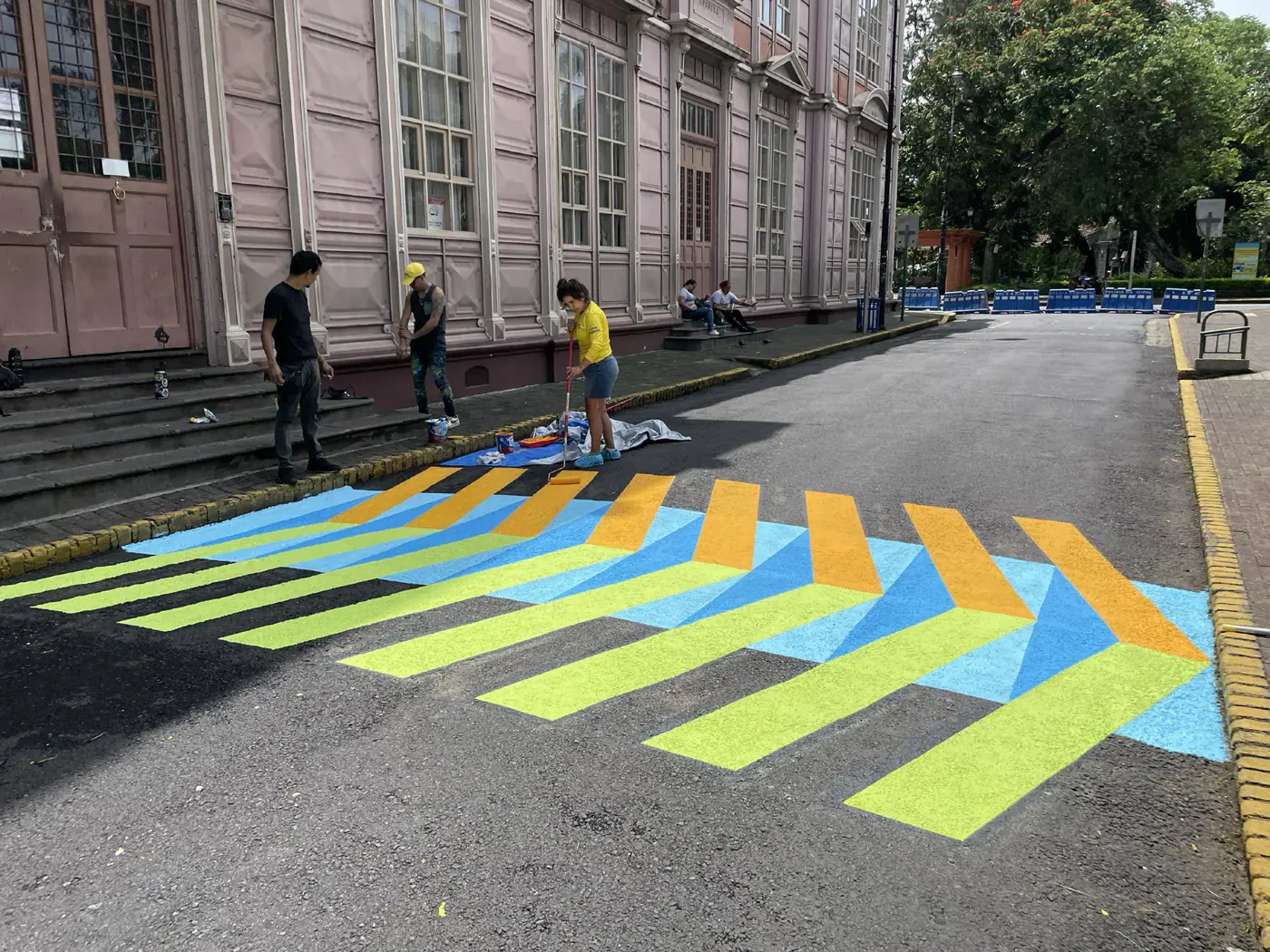
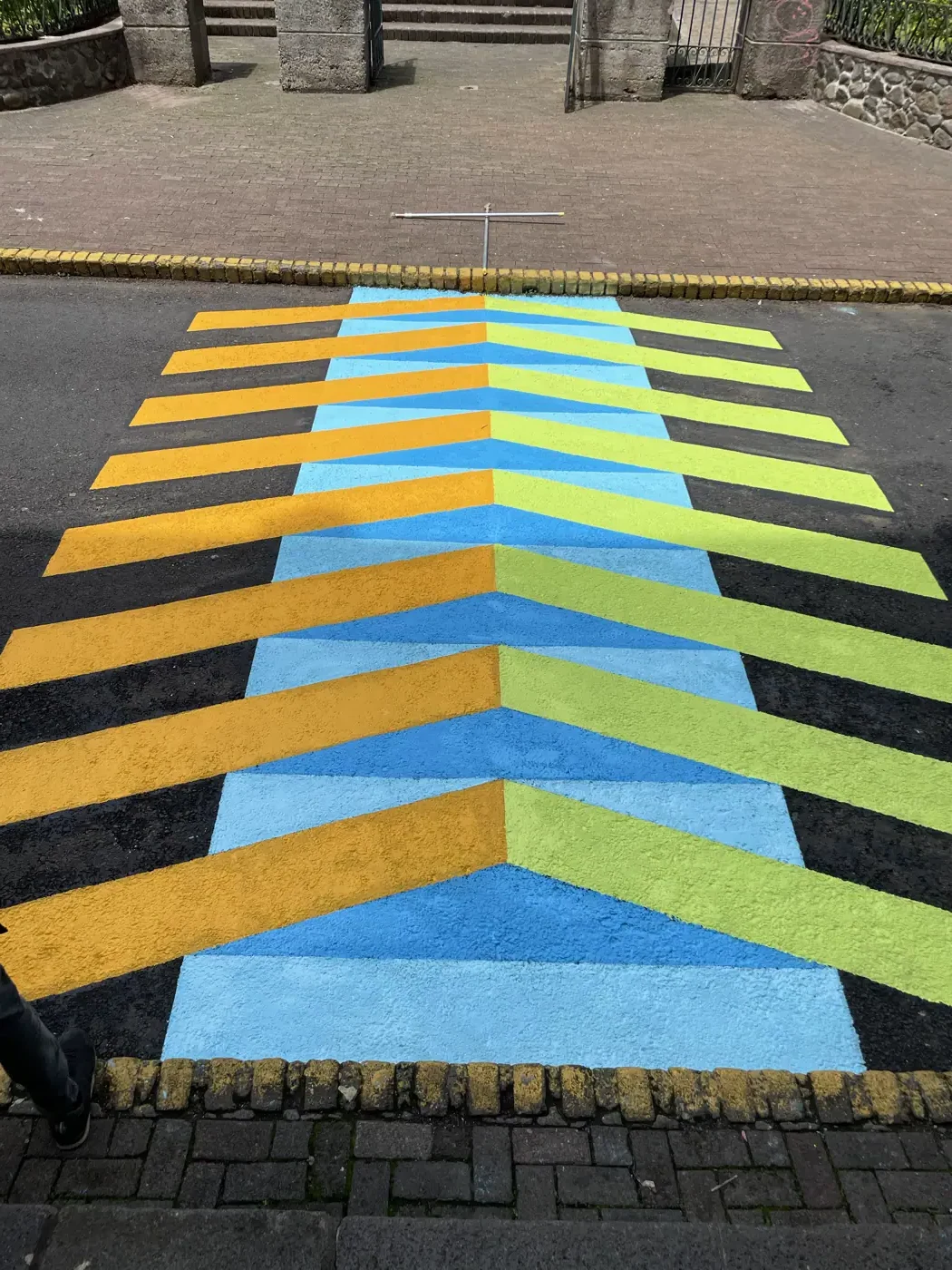
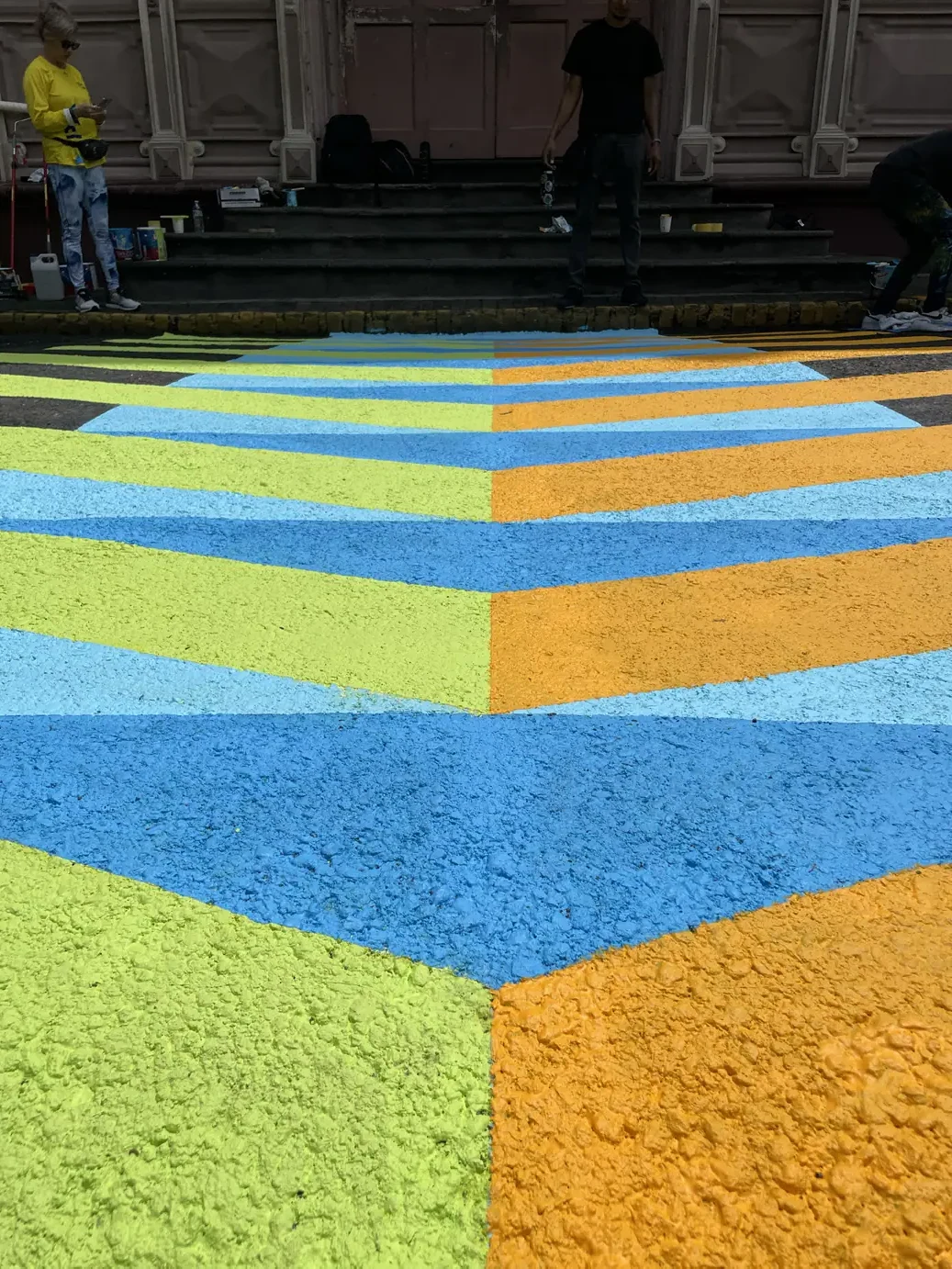
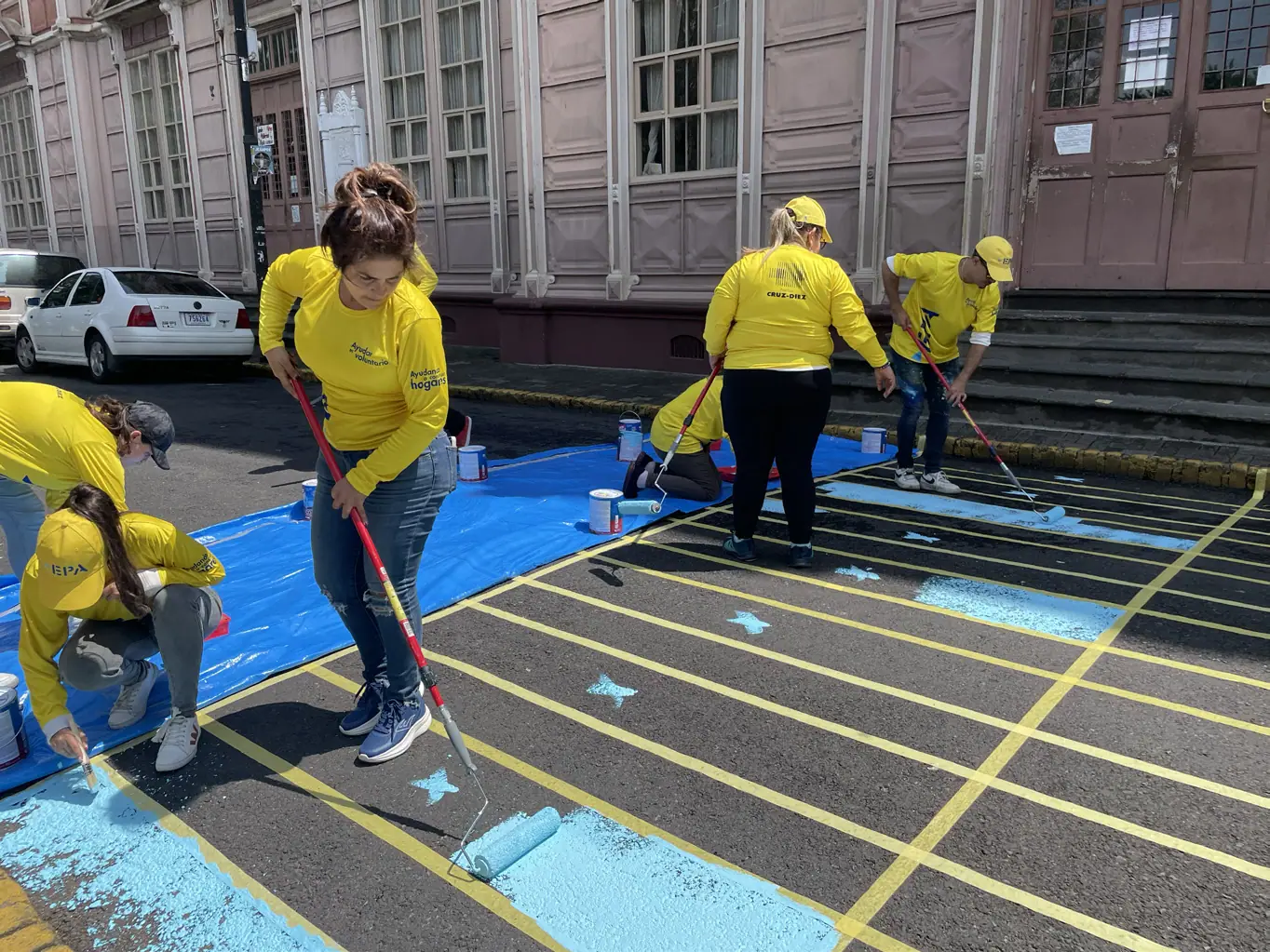
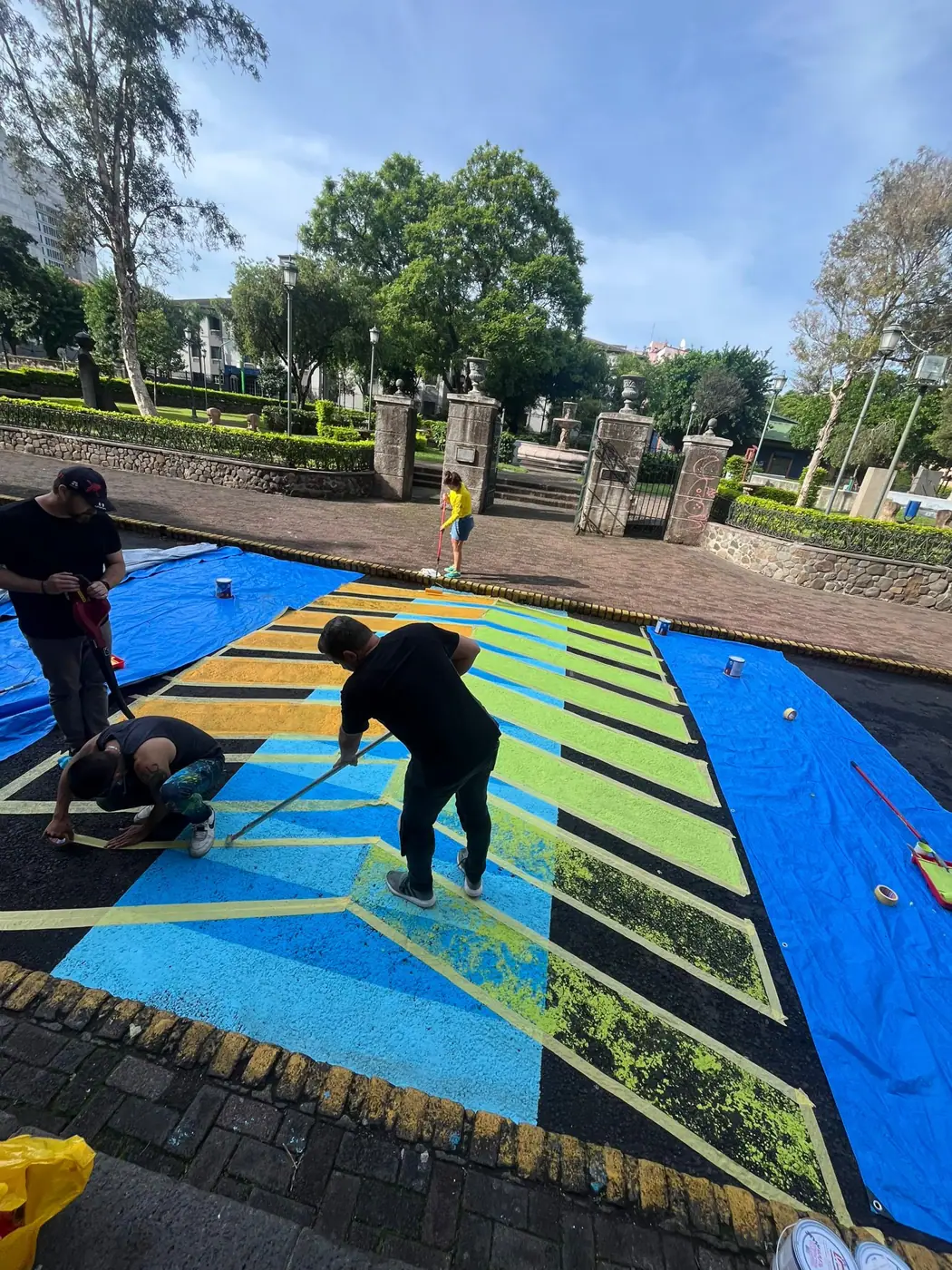
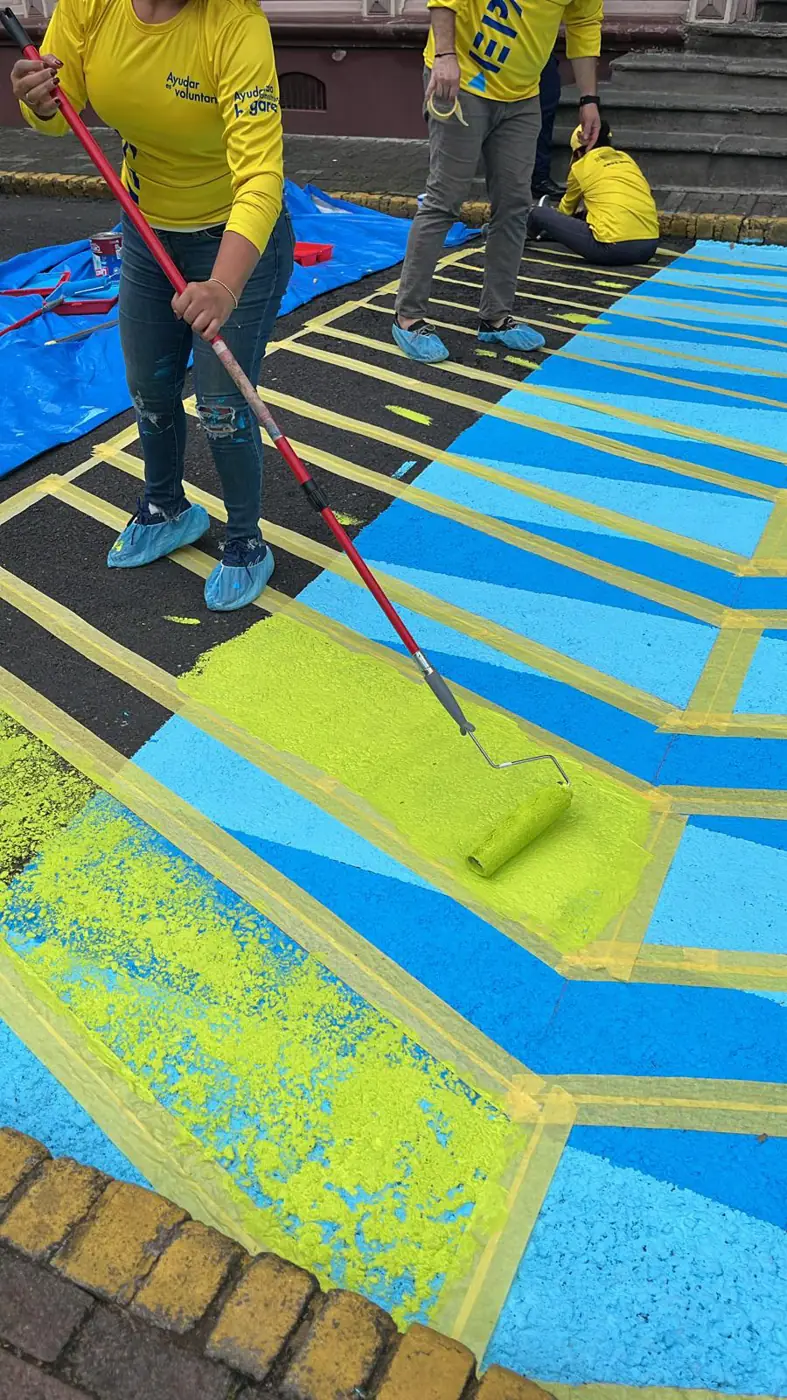
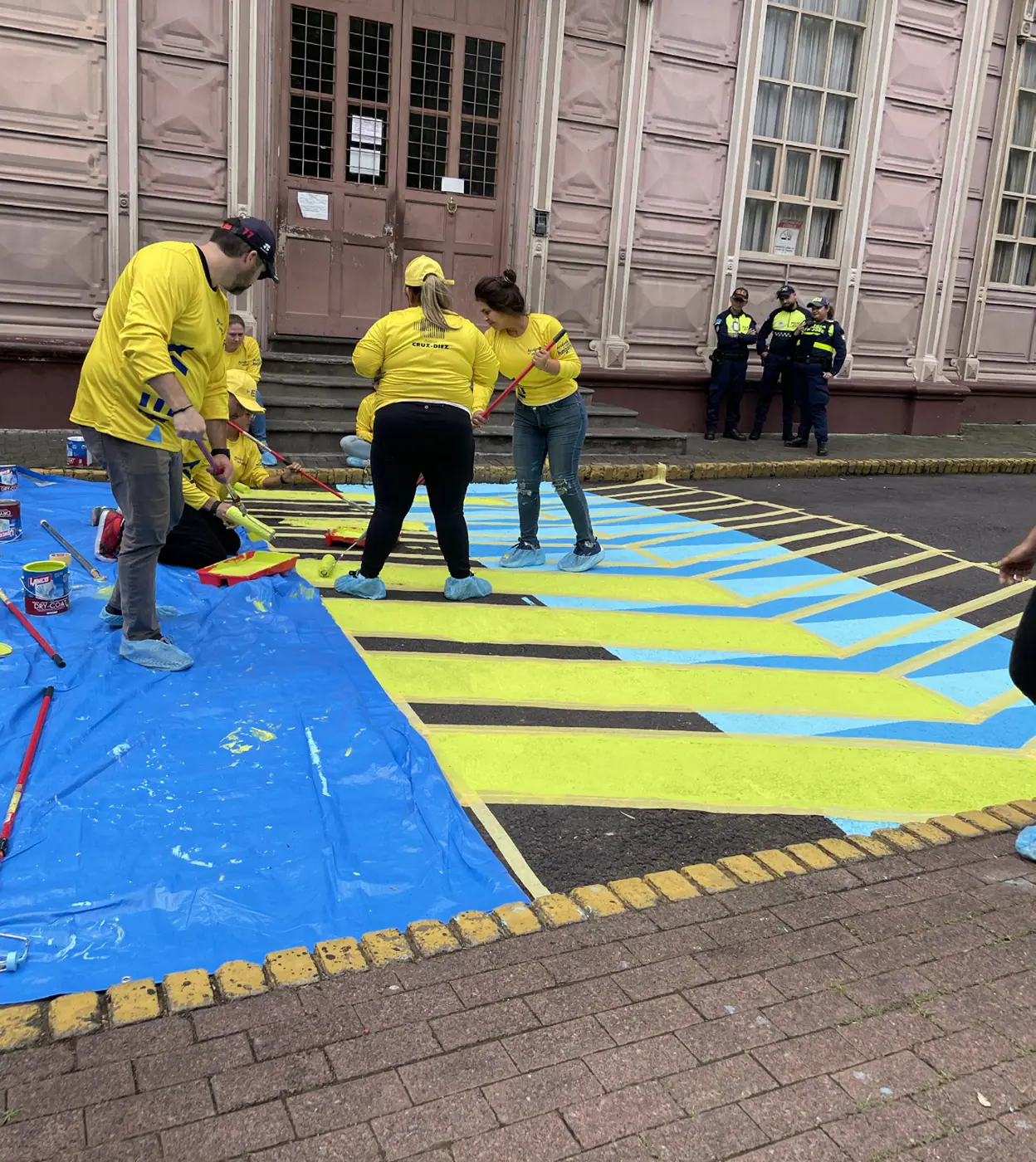
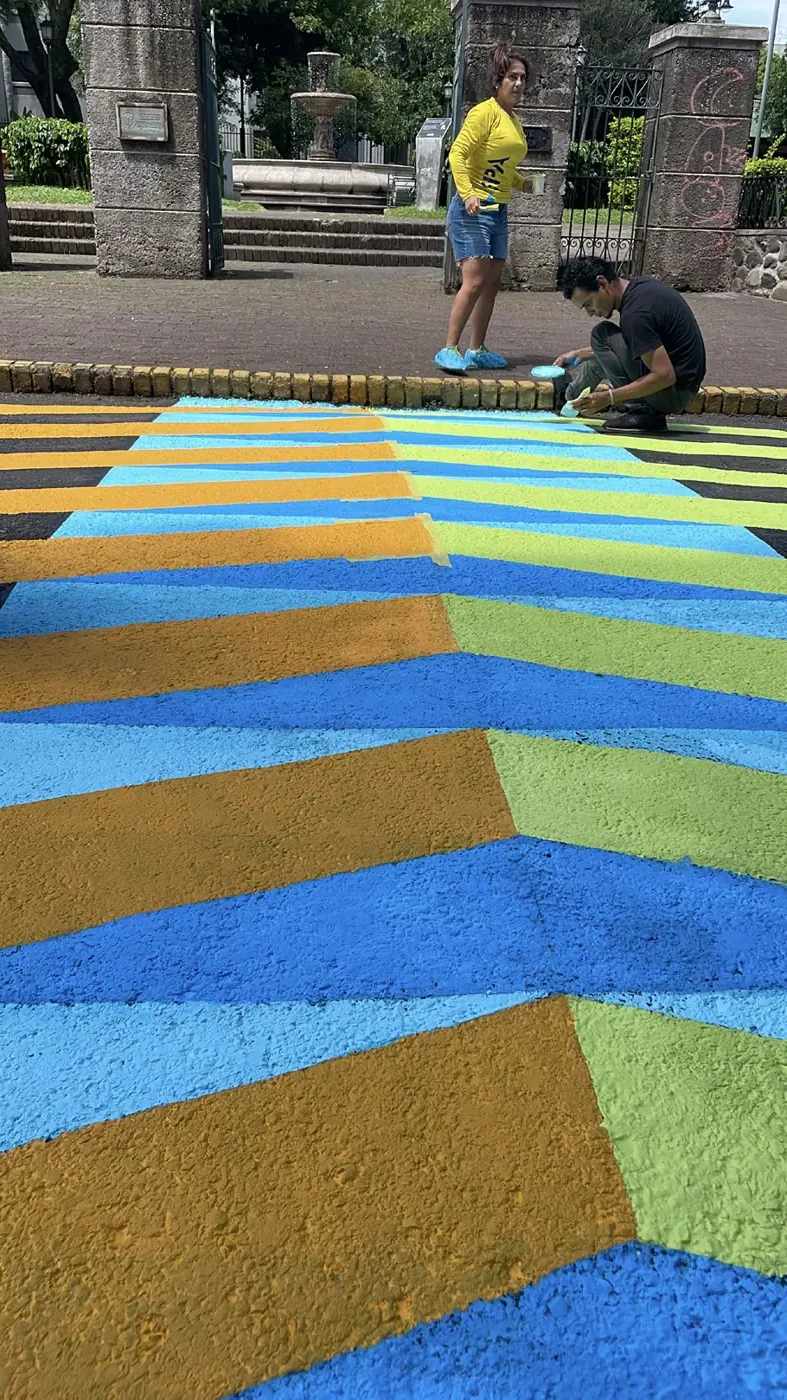
"RGB: the colors of the century", a thematic, educational and touring exhibition, allowing the public to experiment with the chromatic phenomena to which Carlos Cruz-Diez has devoted a life of research, with the inclusion of a crosswalk as a urban intervention to transform road infrastructure into a living kinectic canvas.
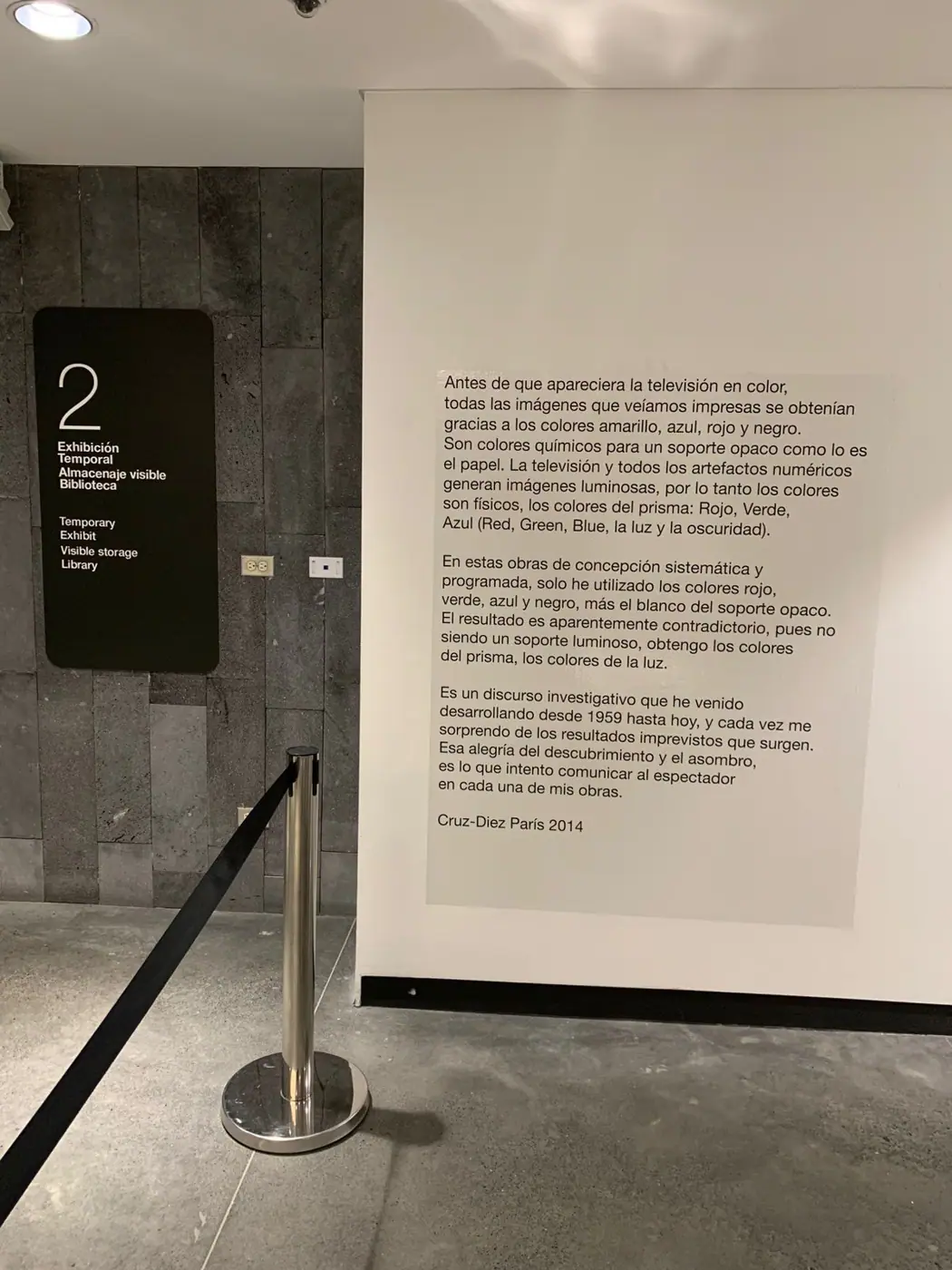
"Before the appearance of color television, printed images we perceived were obtained thanks to yellow, blue, red and black. These chemical colours were designed for an opaque medium, like paper. Television and all digital media produce luminous images and, as a result, they make visible physical colours, the colours of a prism: red, green, blue, light and its absence. In these systematically programmed works, I have used only red, green, blue and black, plus the white that is contribute by the opaque medium. The effect appears contradictory because I obtain, with a non-luminous medium, the colours of a prism, the colours of light. The unexpected results of this research, which I have been pursuing since 1959, continue to surprise me. I try to convey to the viewer, in each work, joy in the astonishment of discovery."
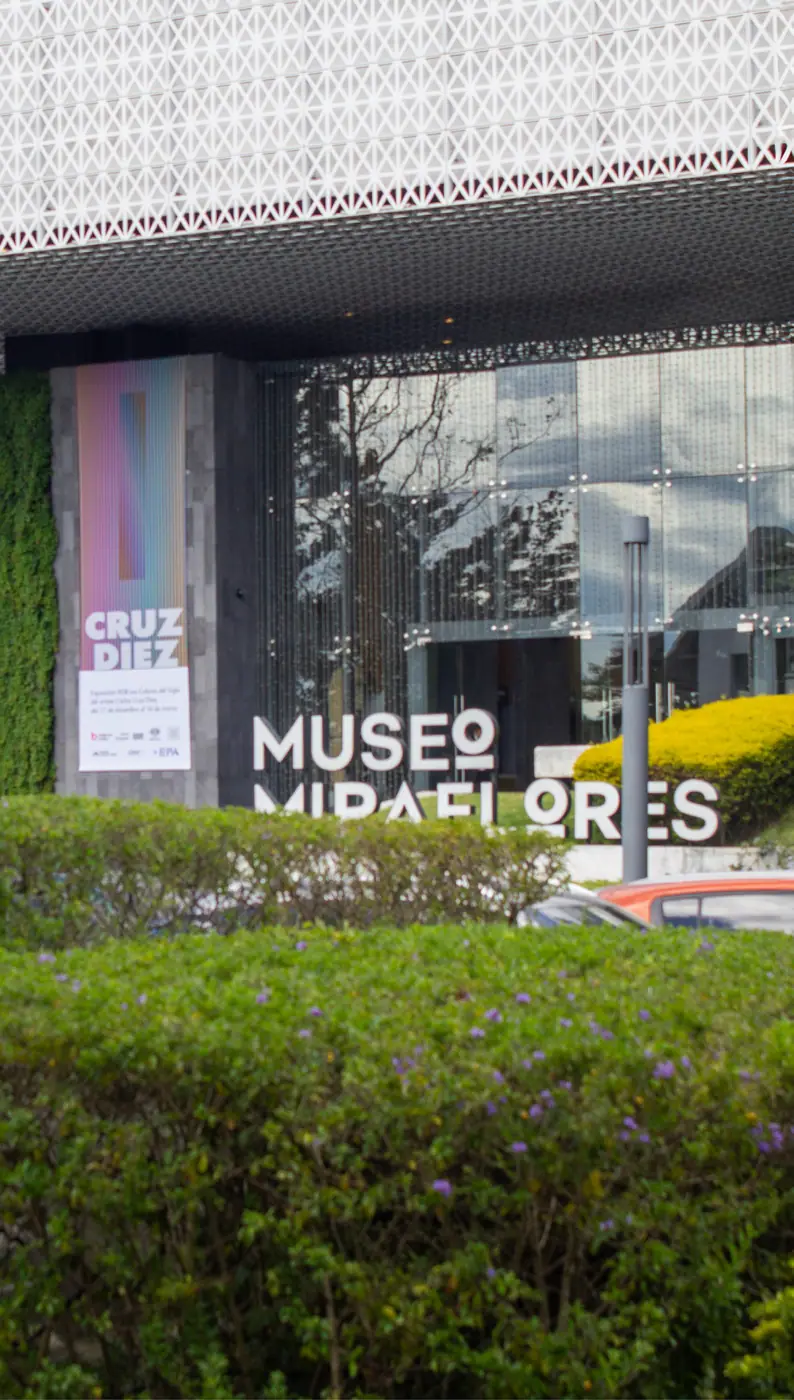
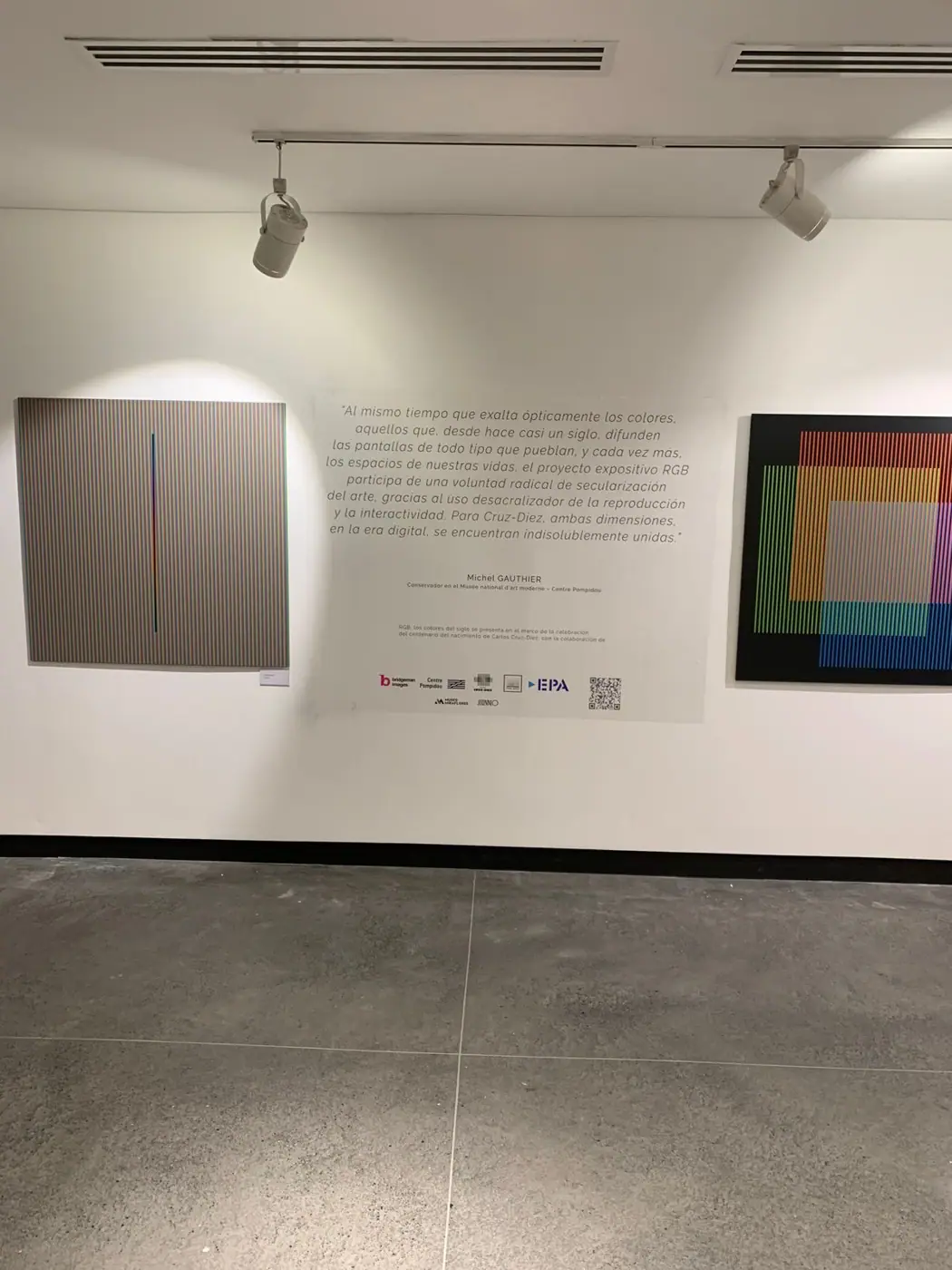
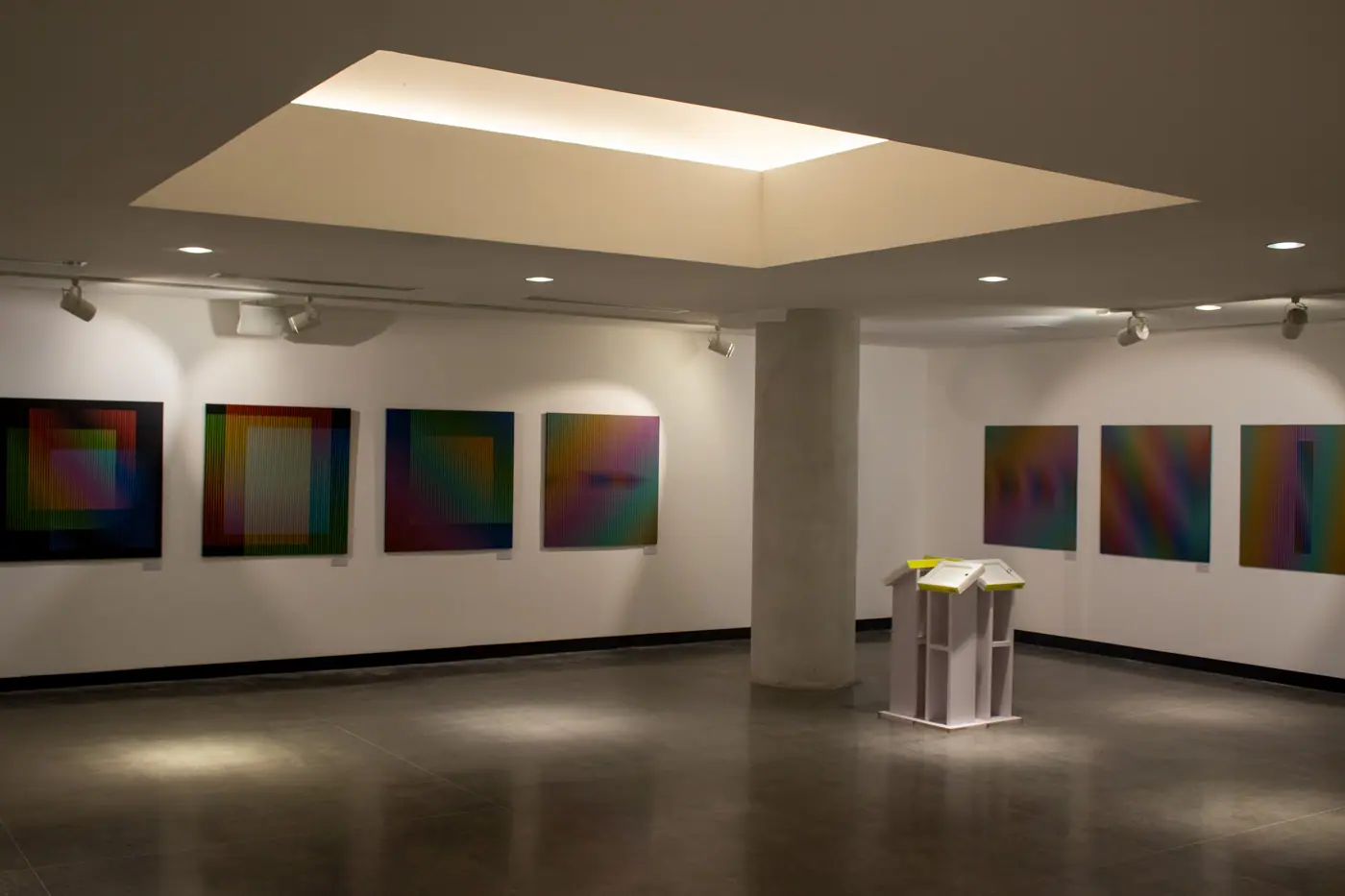
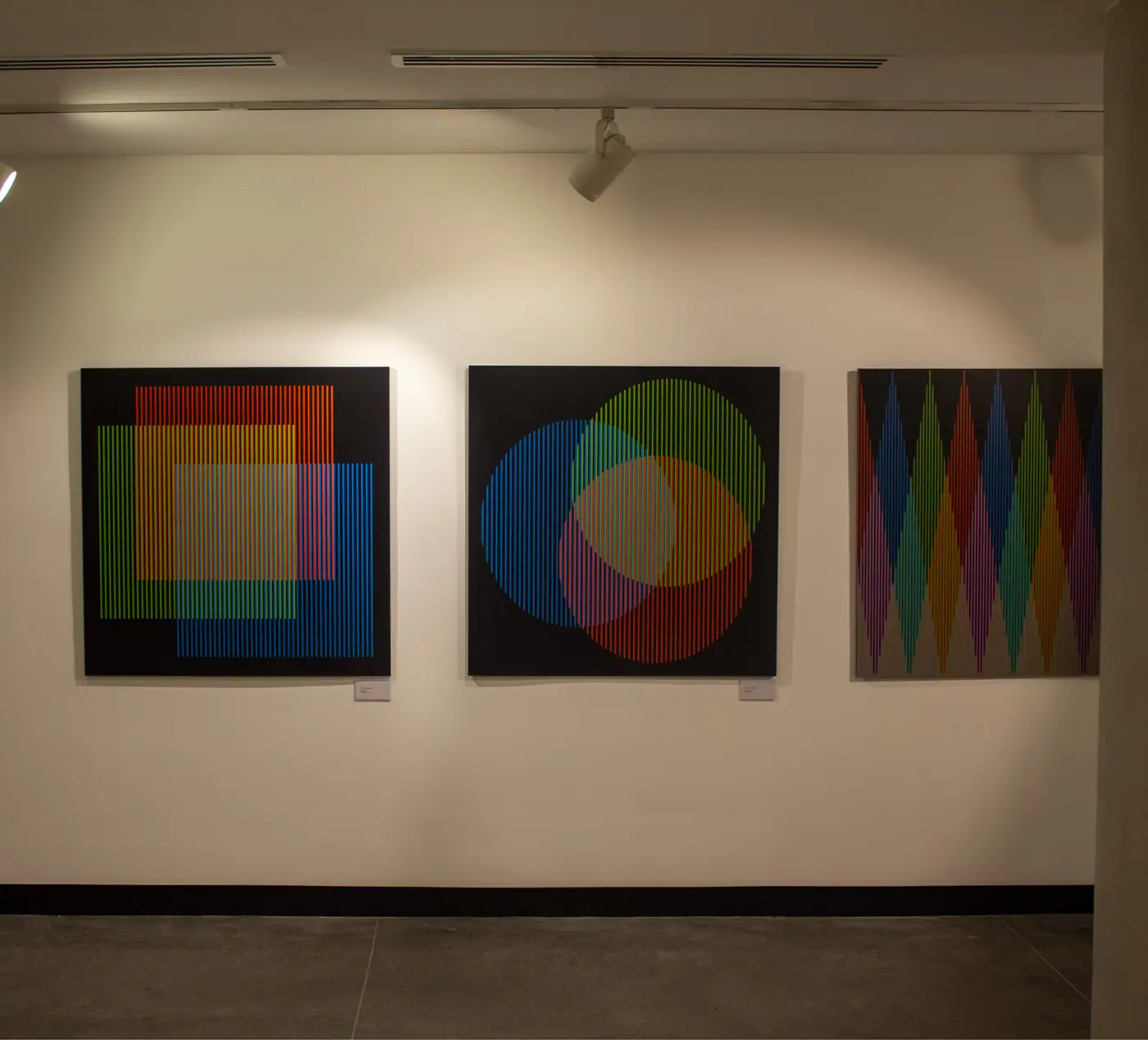
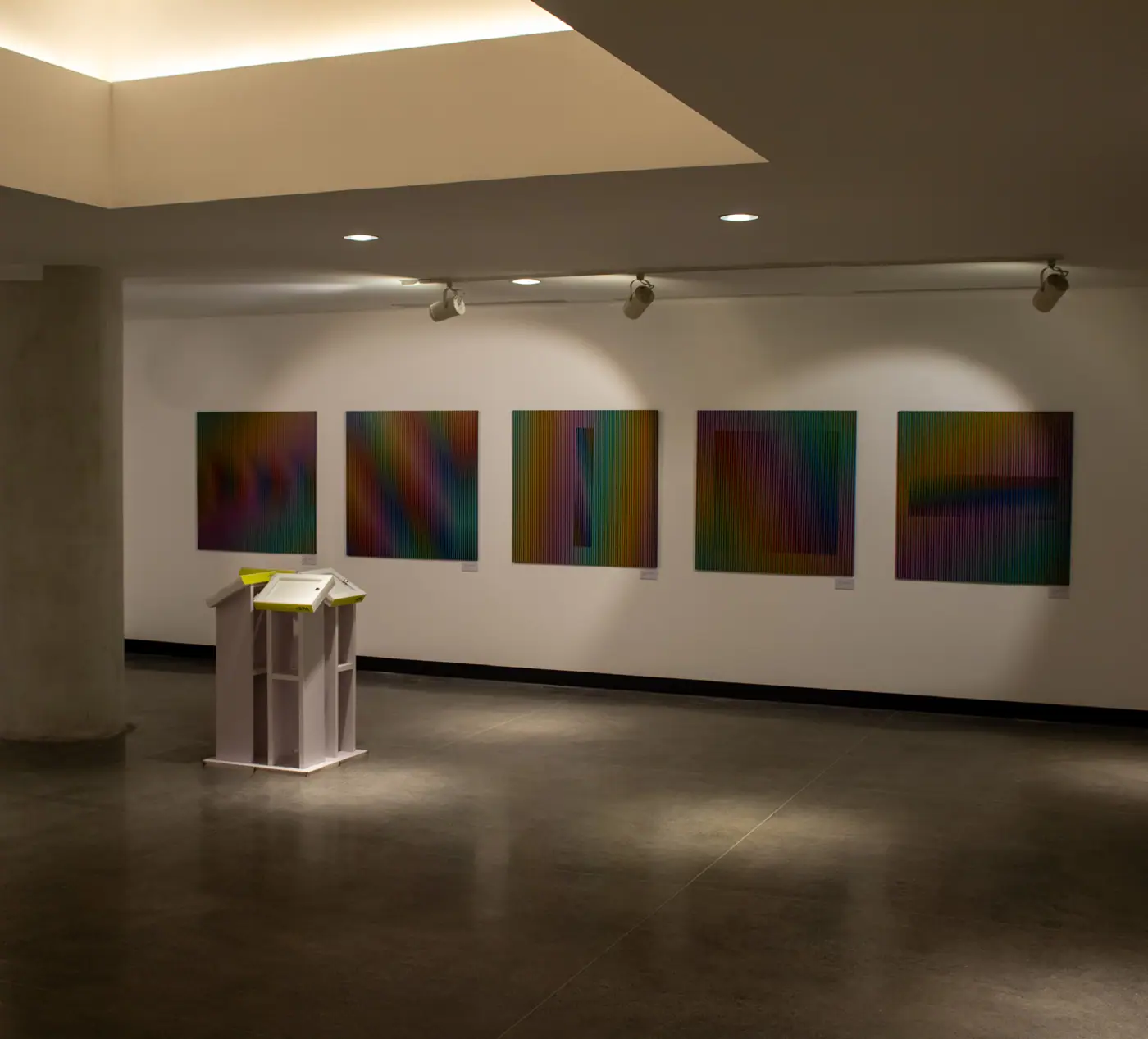
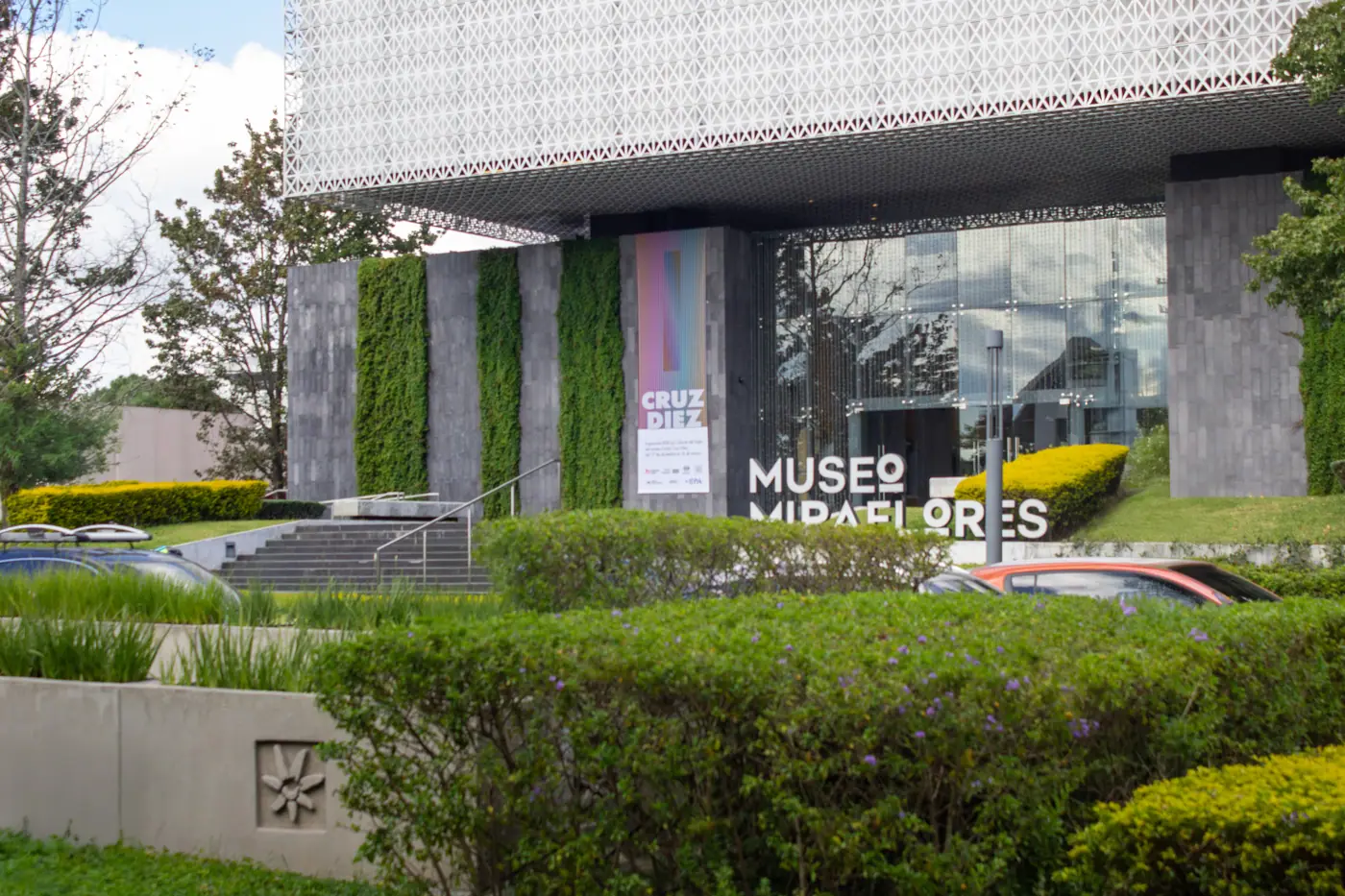
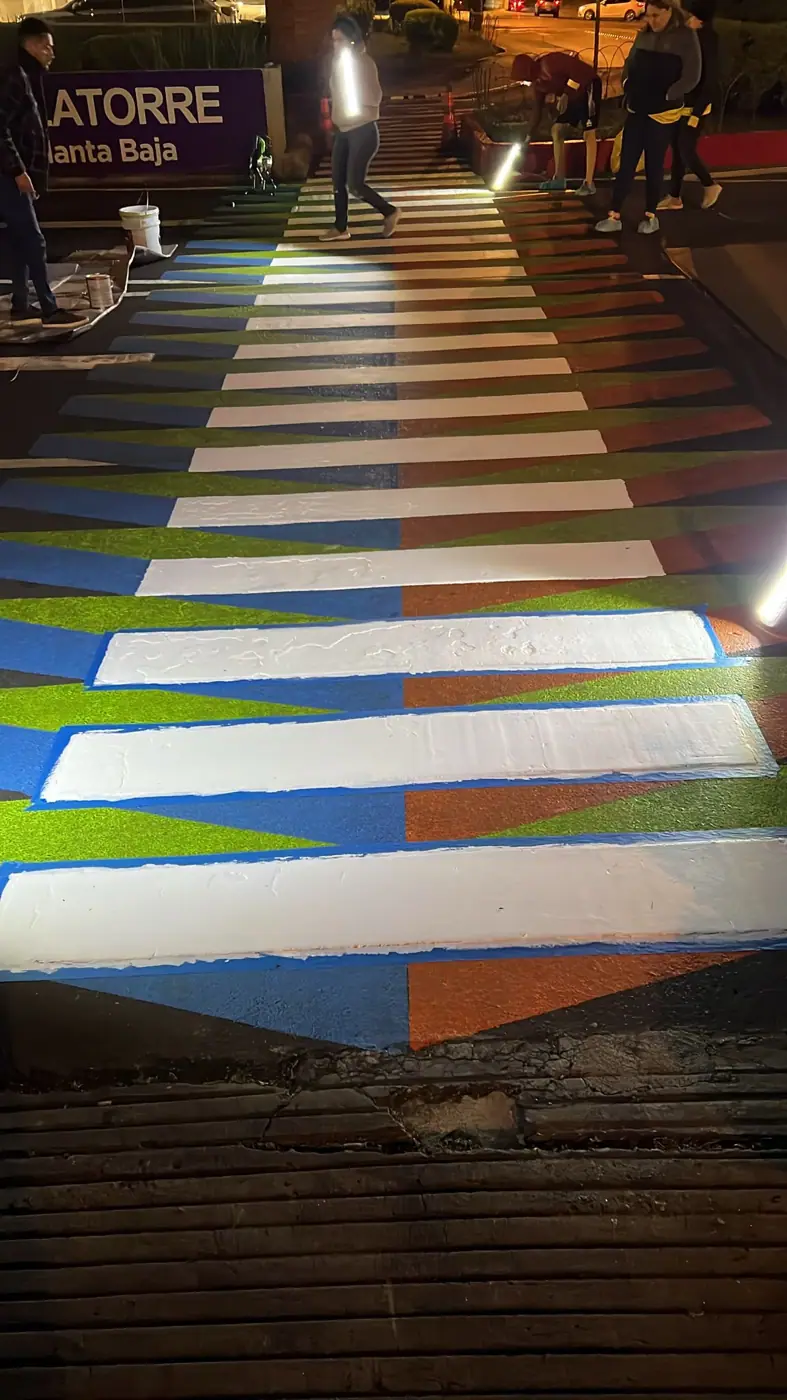
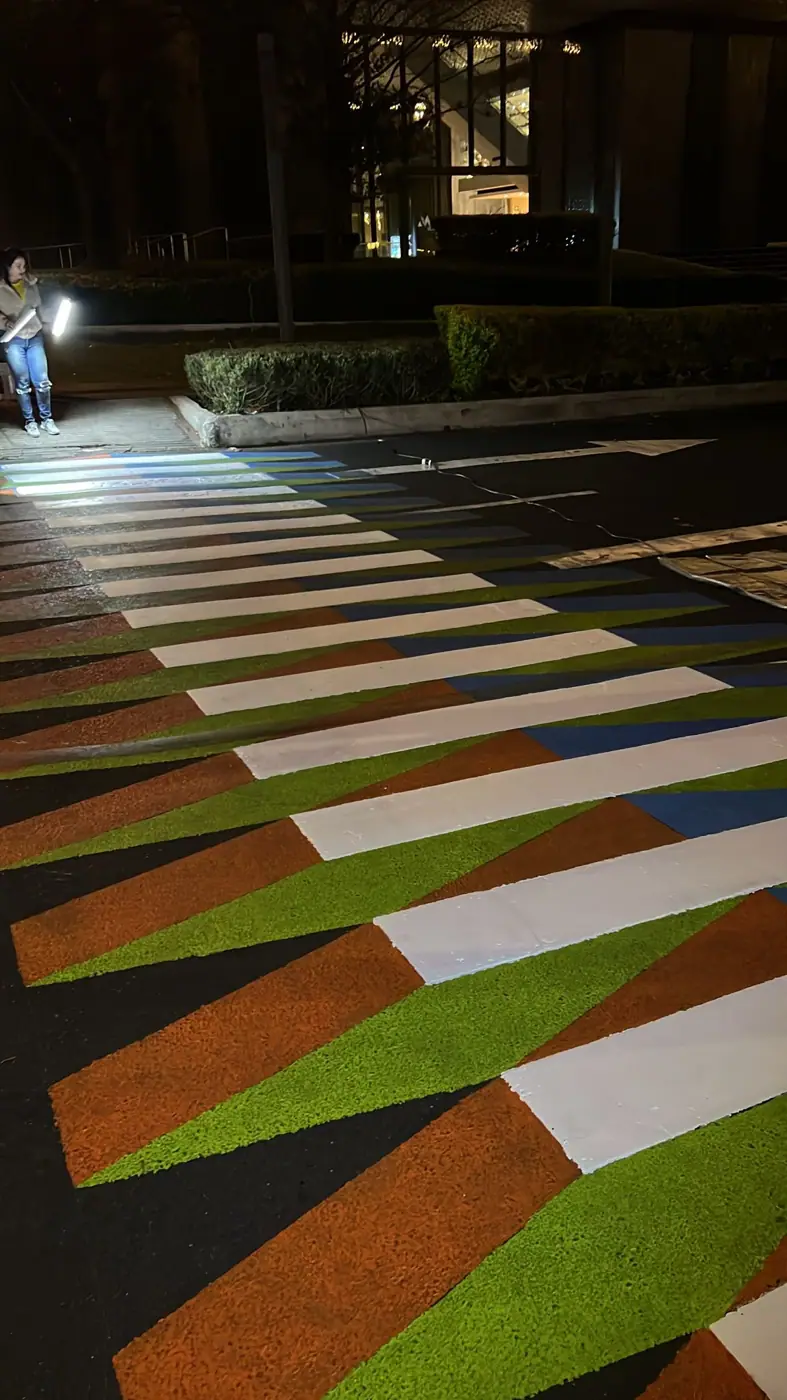
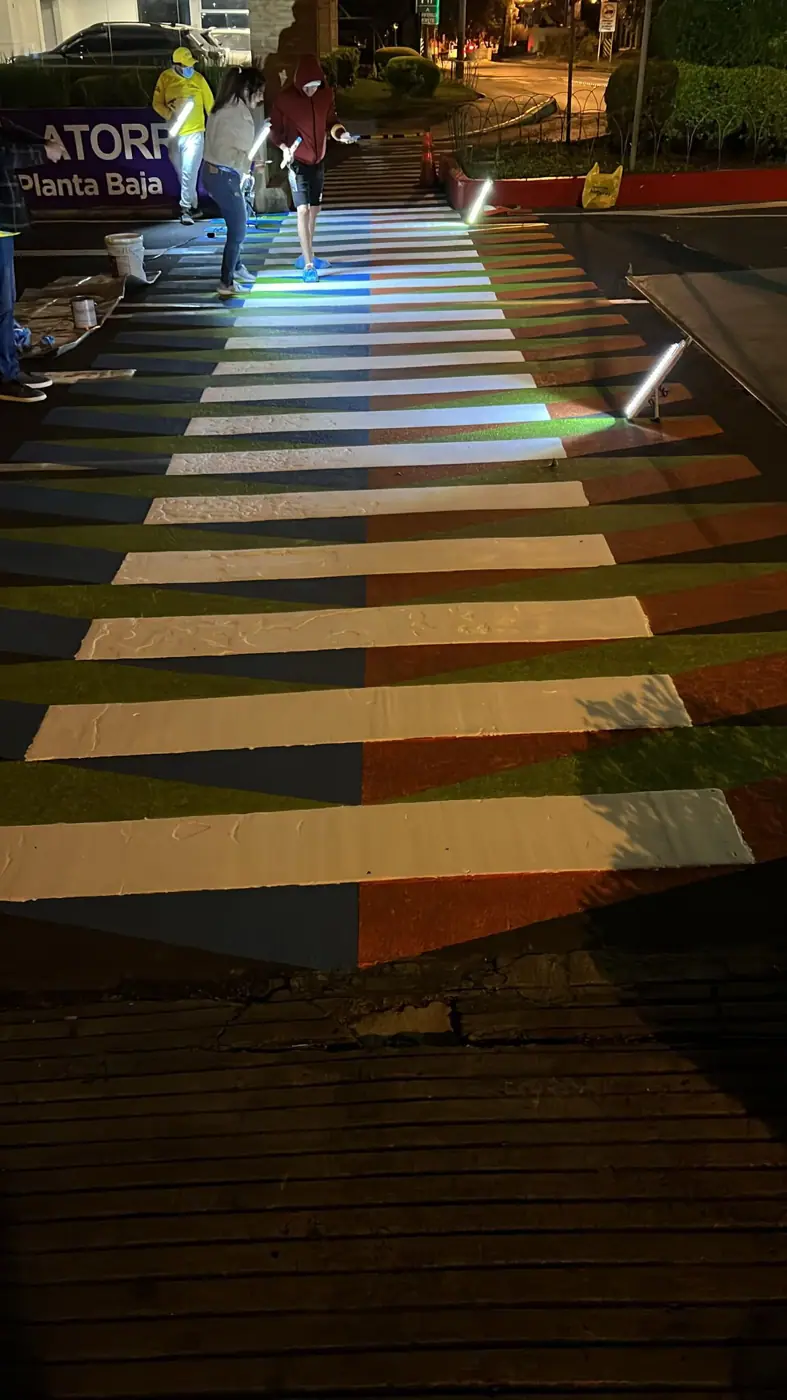
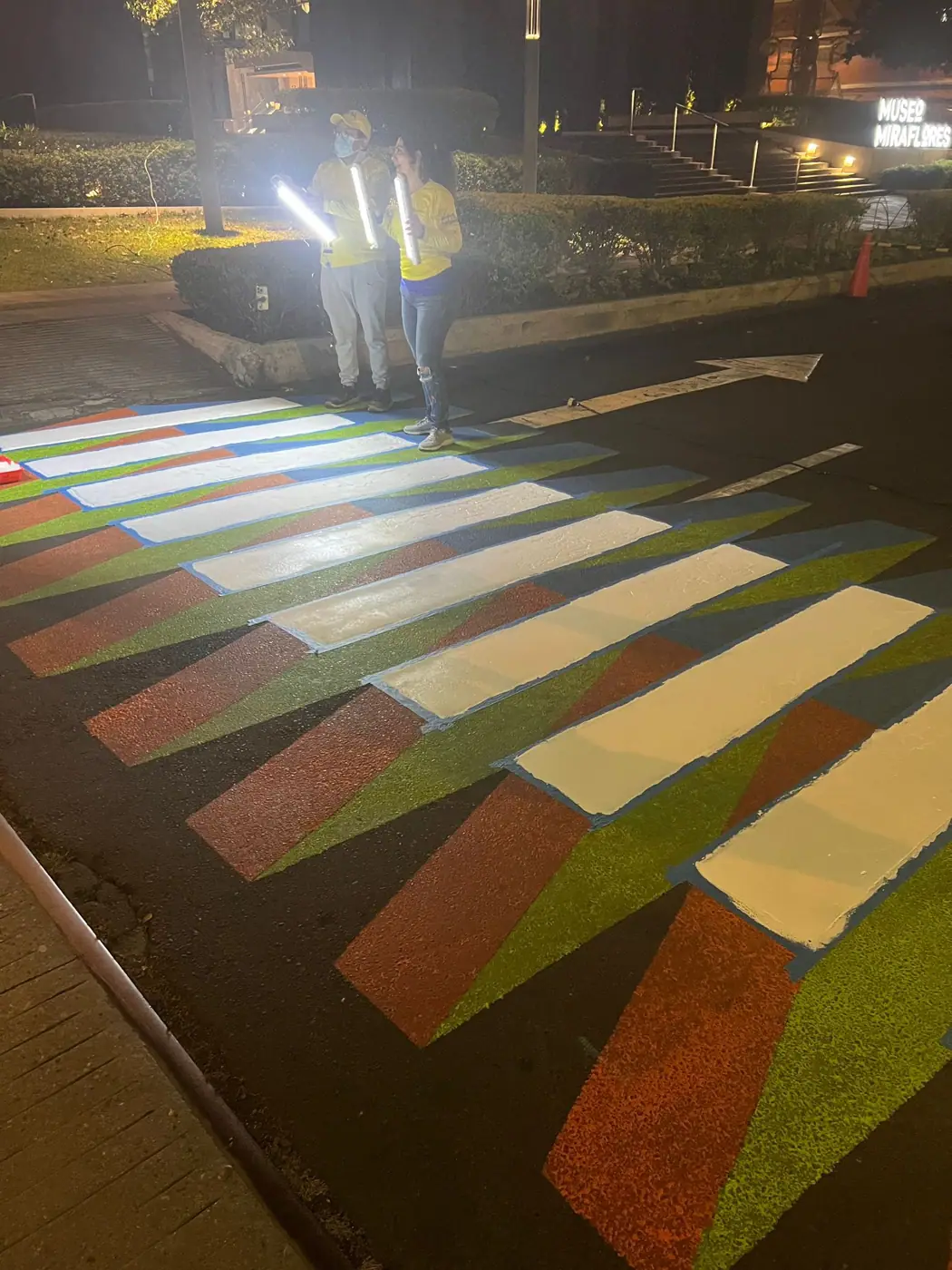
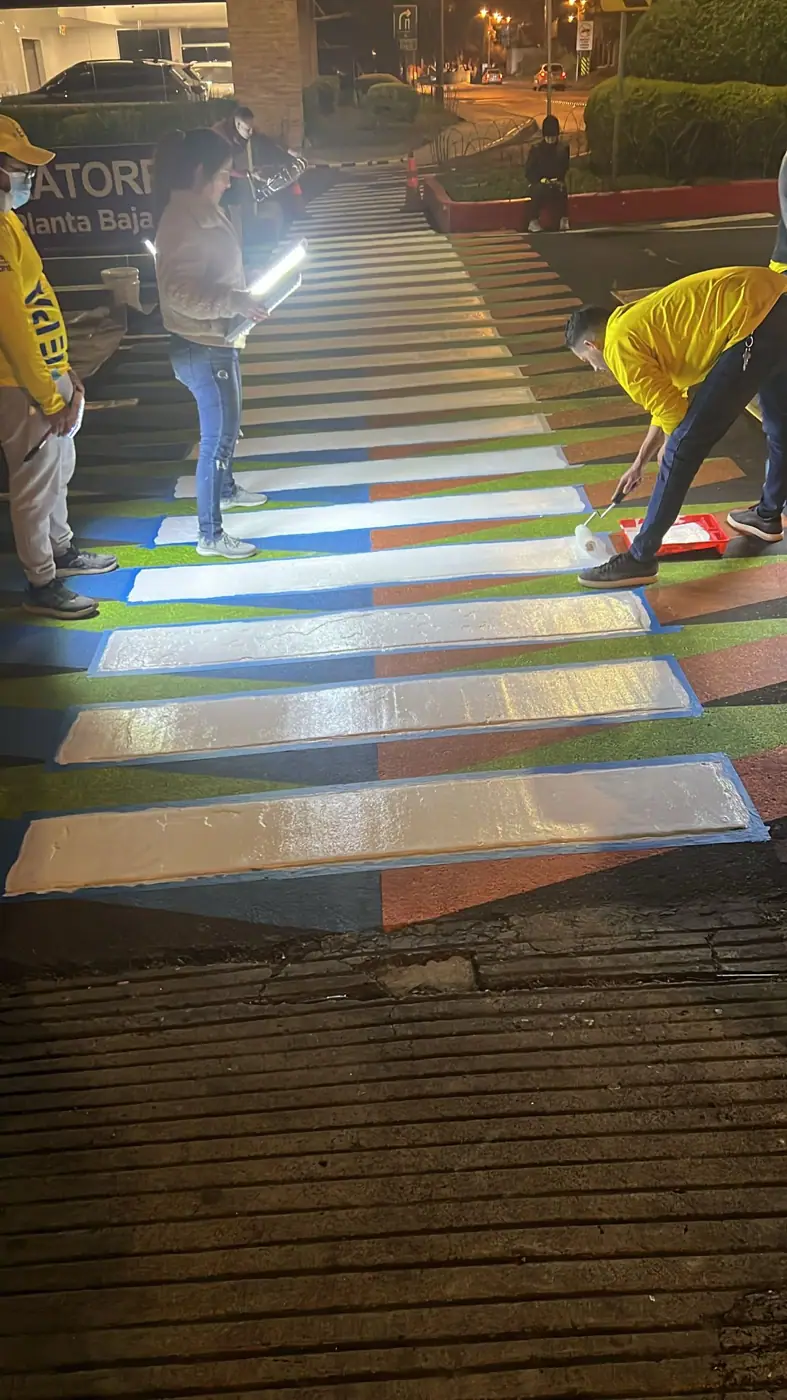
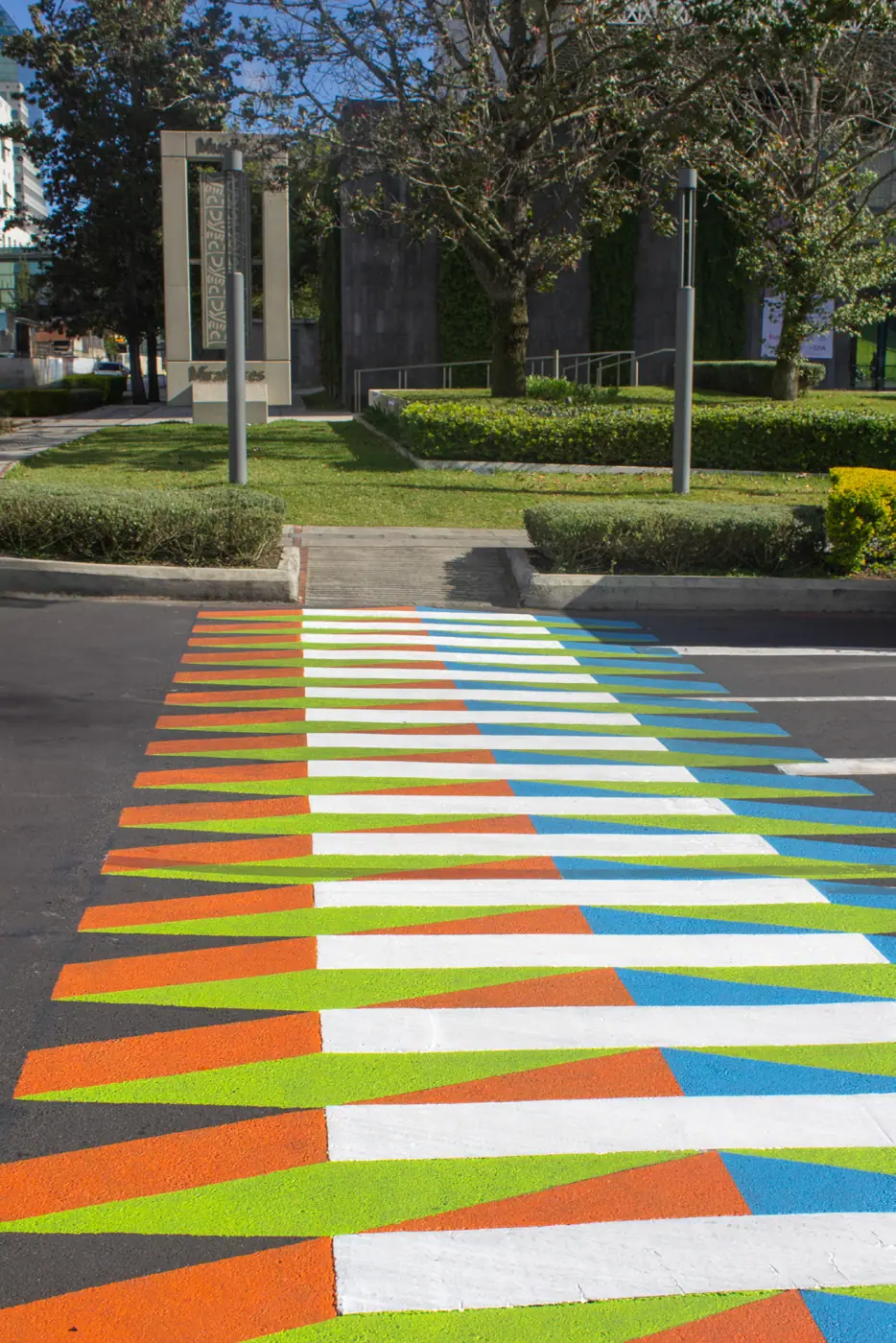
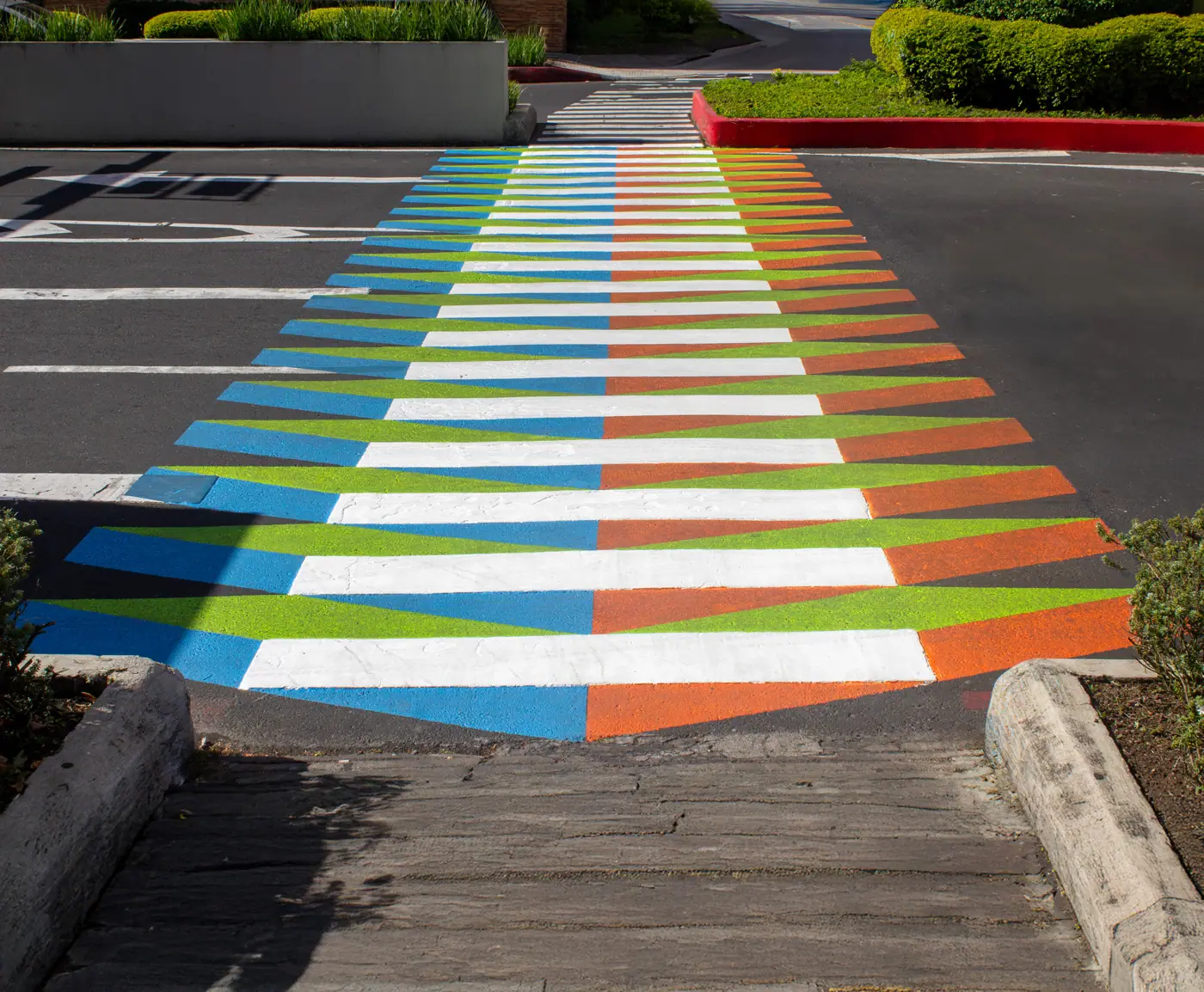
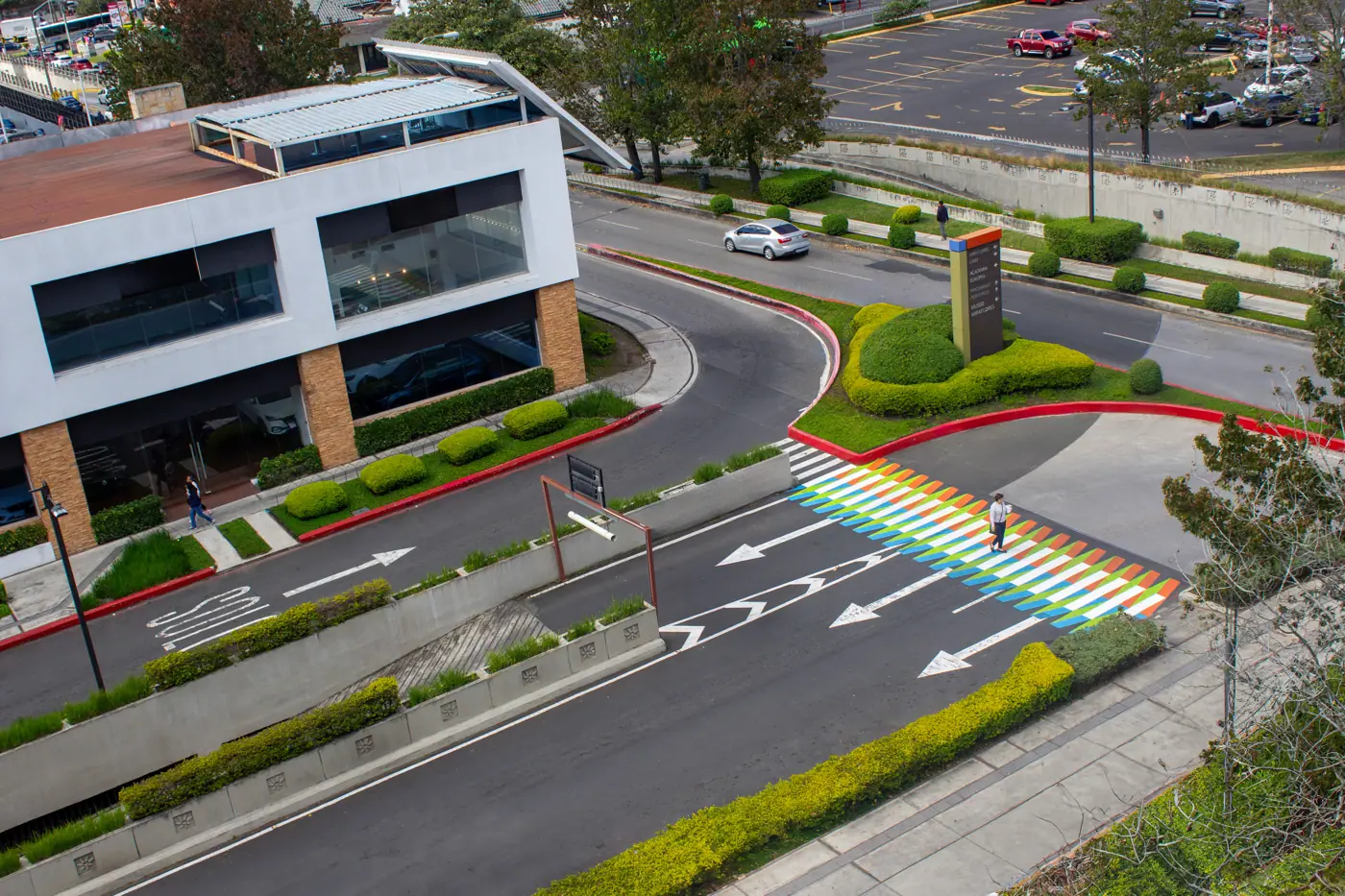
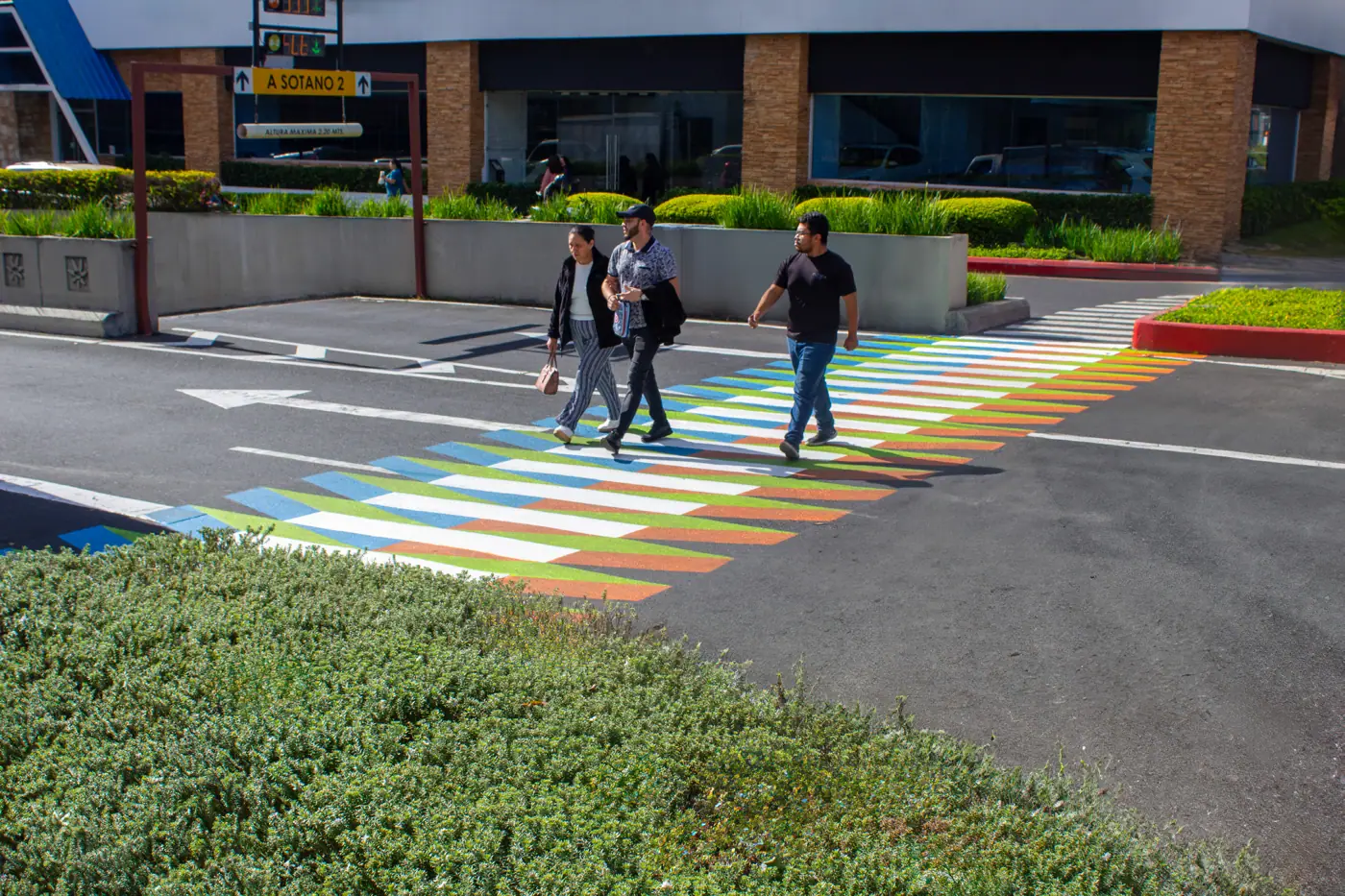
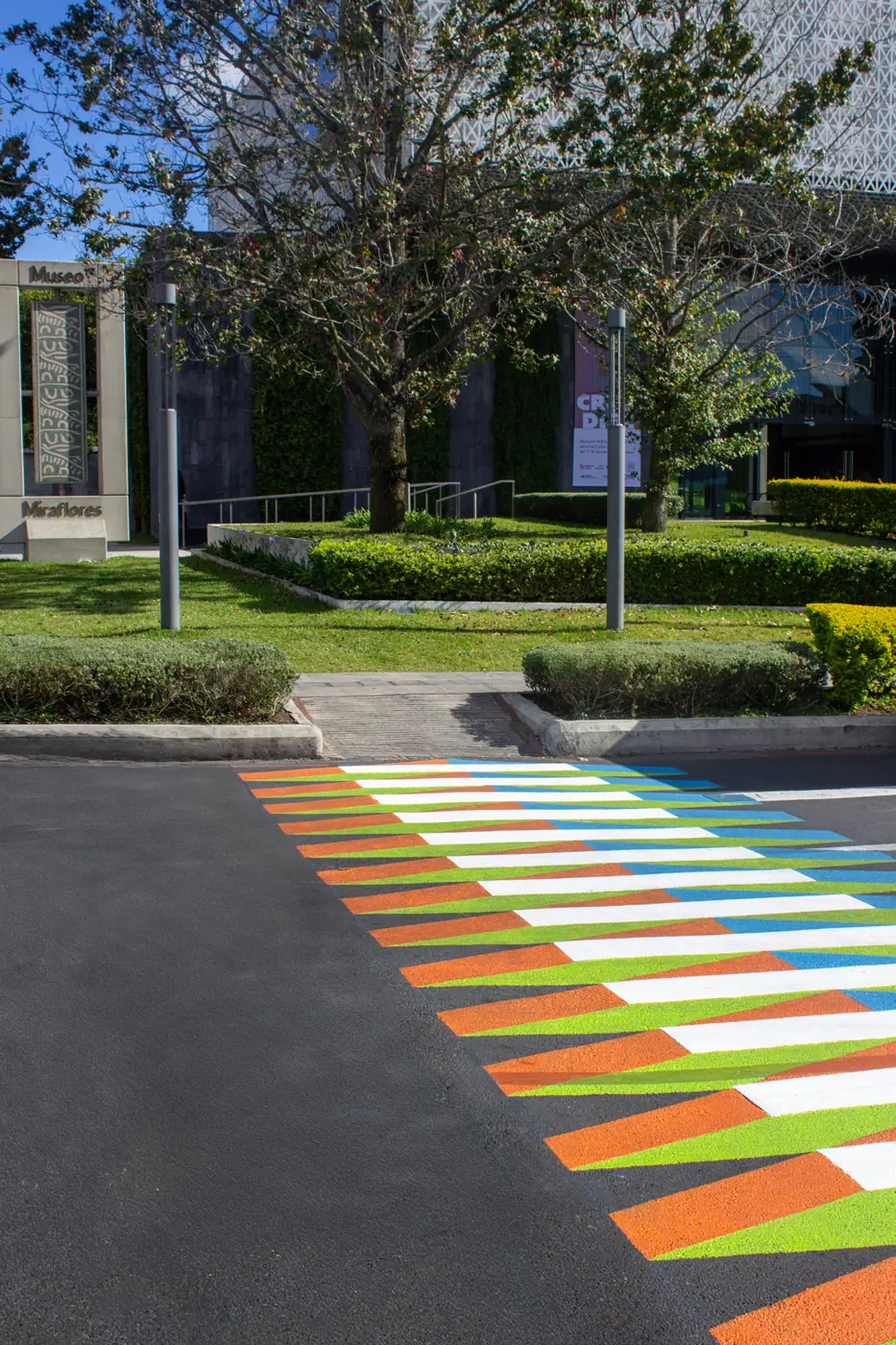
"RGB: the colors of the century", a thematic, educational and touring exhibition, allowing the public to experiment with the chromatic phenomena to which Carlos Cruz-Diez has devoted a life of research, with the inclusion of a crosswalk as a urban intervention to transform road infrastructure into a living kinectic canvas.
"Before the appearance of color television, printed images we perceived were obtained thanks to yellow, blue, red and black. These chemical colours were designed for an opaque medium, like paper. Television and all digital media produce luminous images and, as a result, they make visible physical colours, the colours of a prism: red, green, blue, light and its absence. In these systematically programmed works, I have used only red, green, blue and black, plus the white that is contribute by the opaque medium. The effect appears contradictory because I obtain, with a non-luminous medium, the colours of a prism, the colours of light. The unexpected results of this research, which I have been pursuing since 1959, continue to surprise me. I try to convey to the viewer, in each work, joy in the astonishment of discovery."
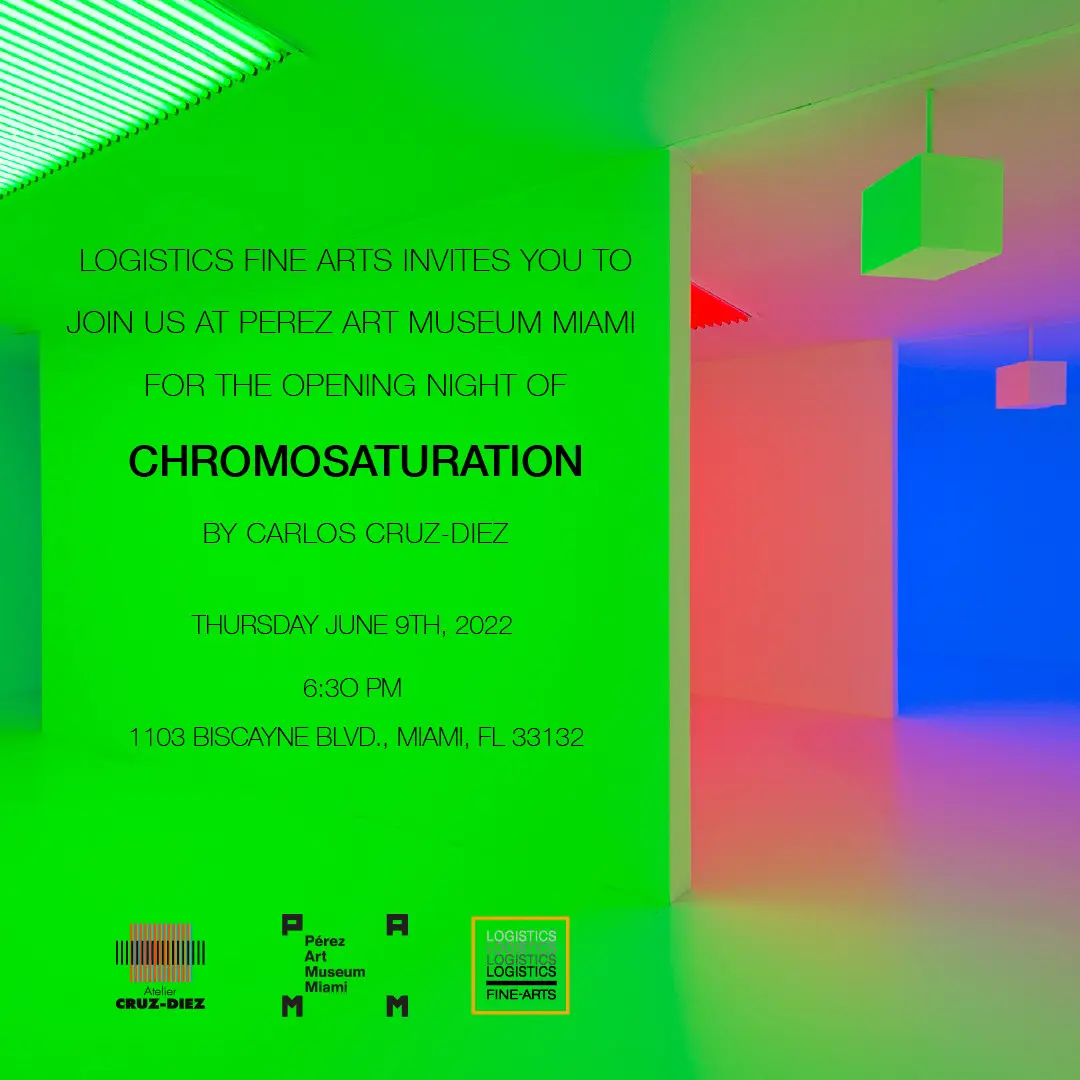
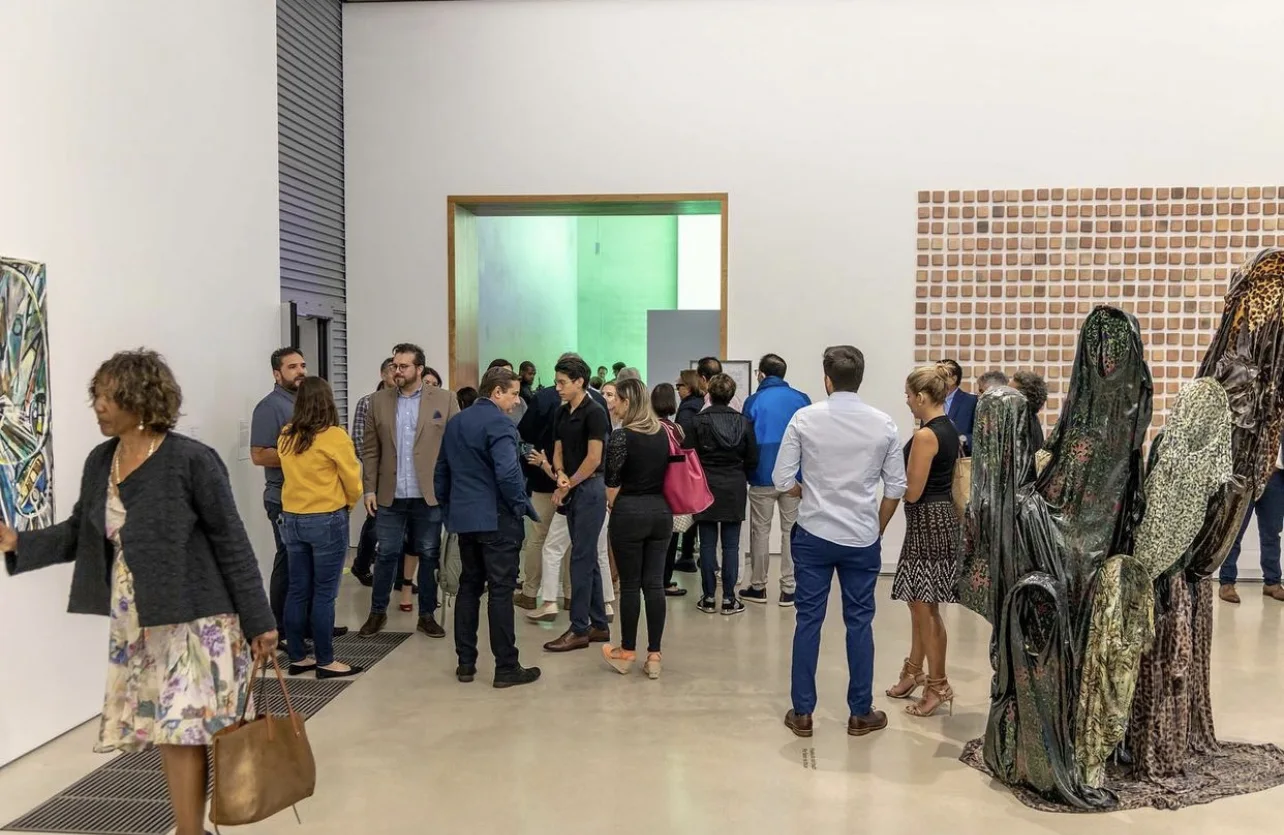
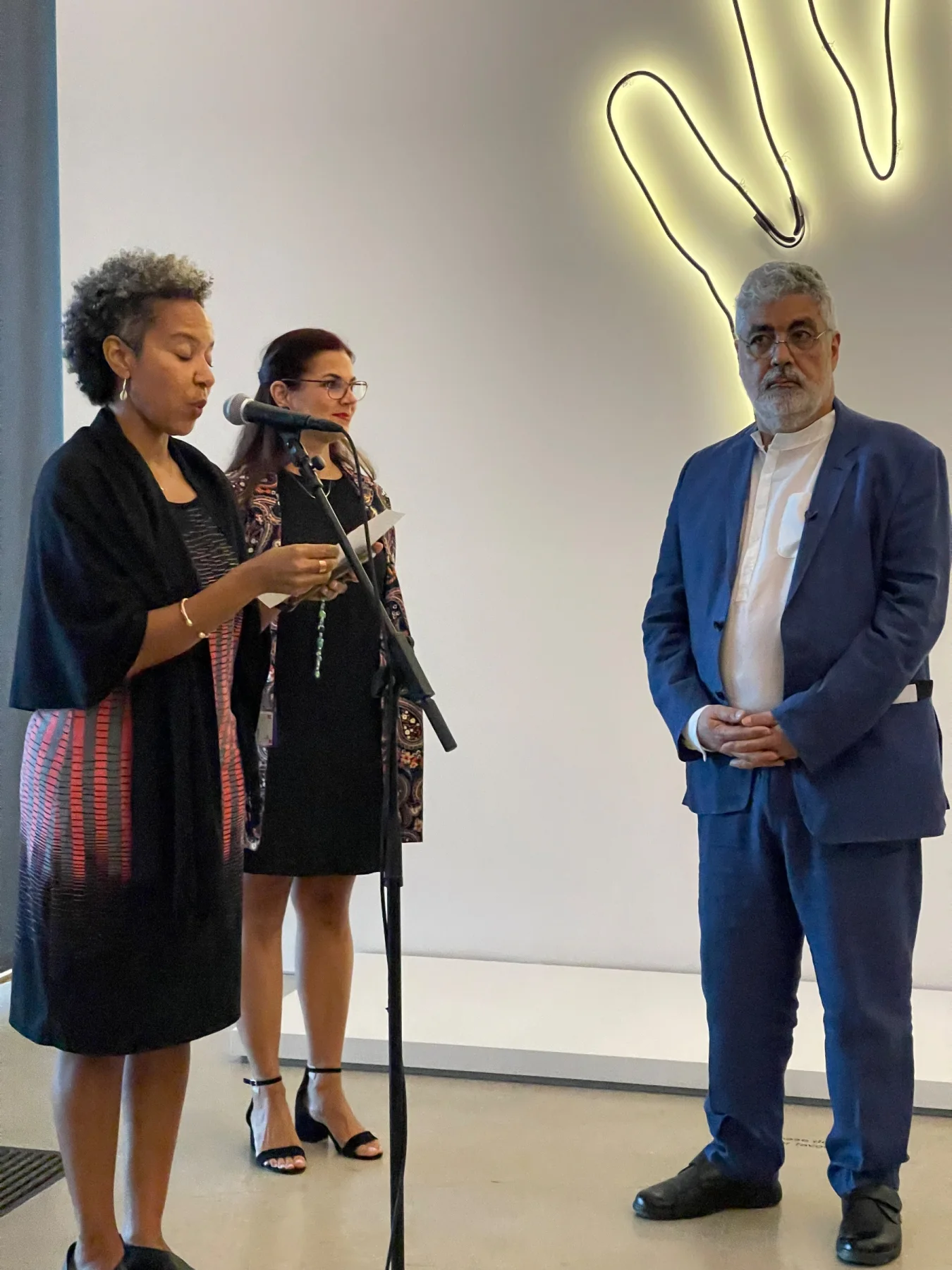
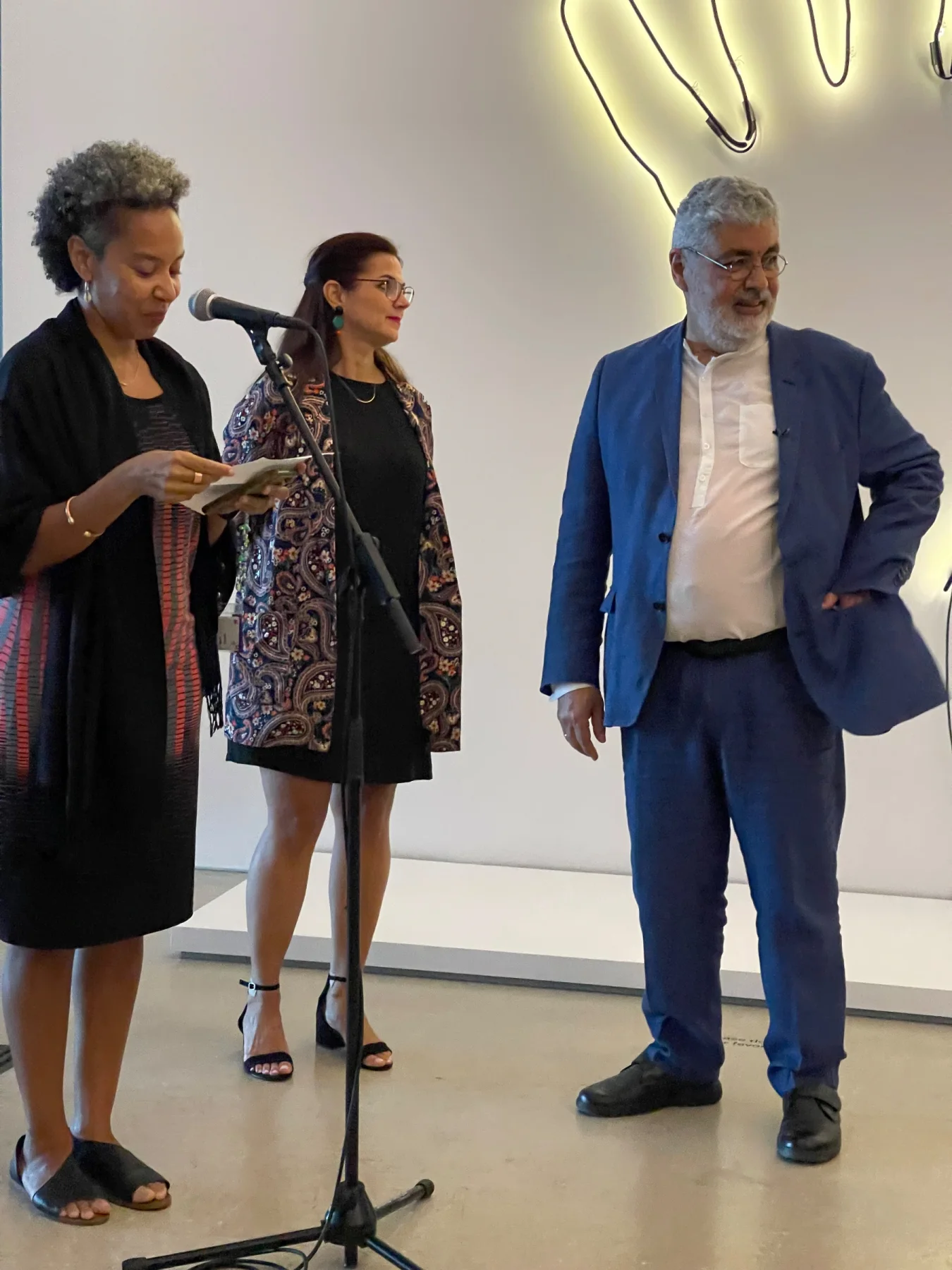
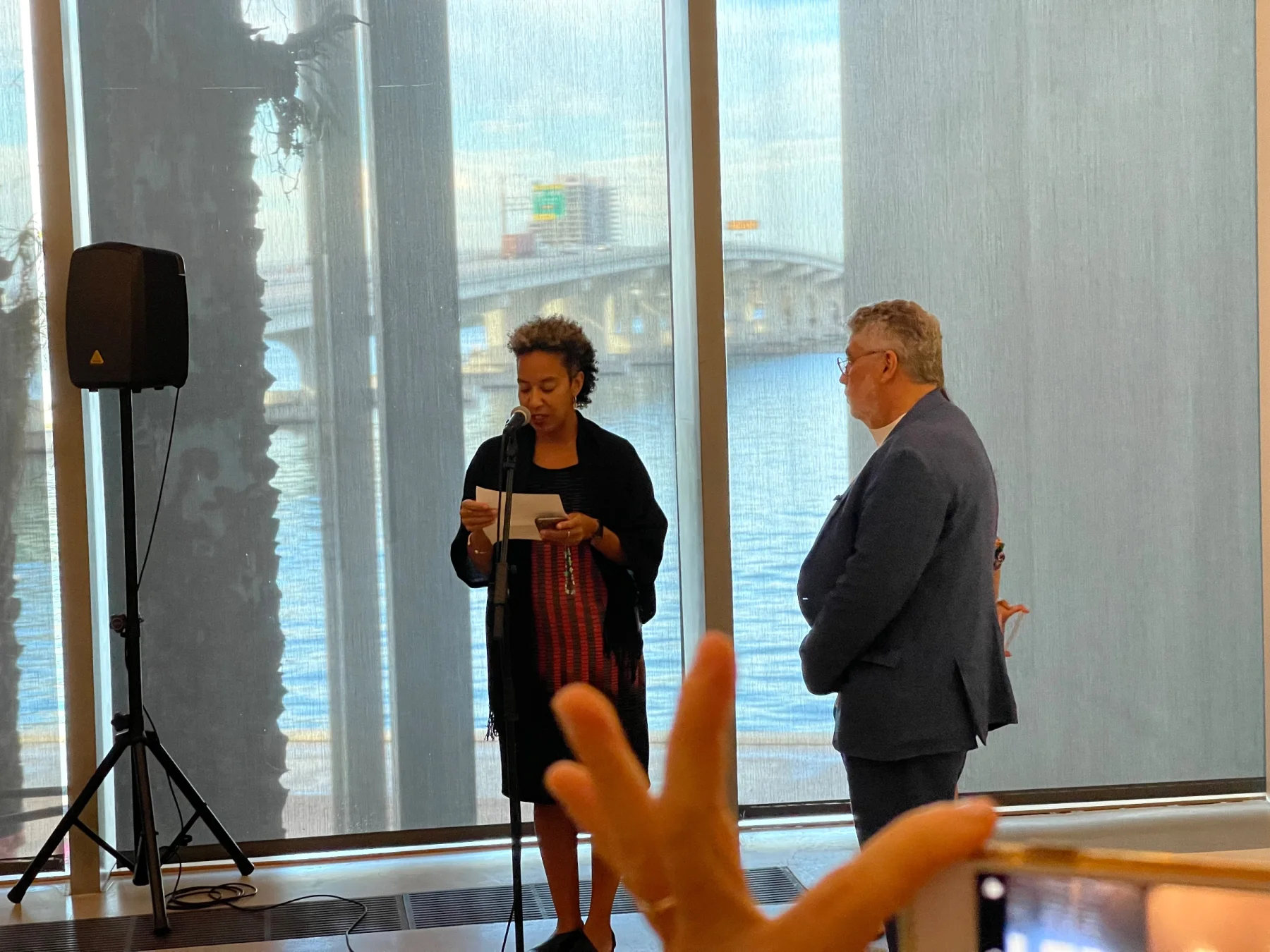
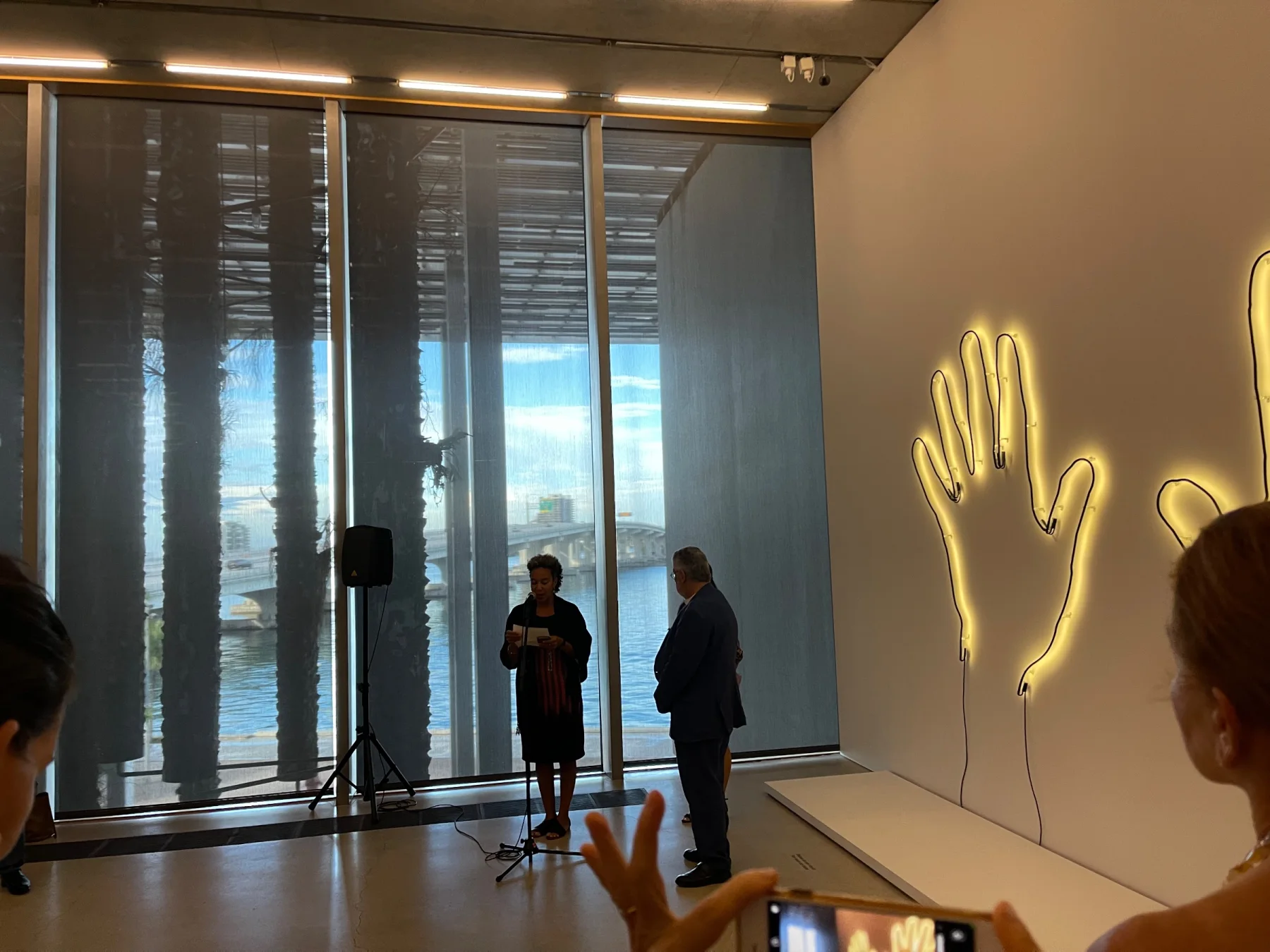
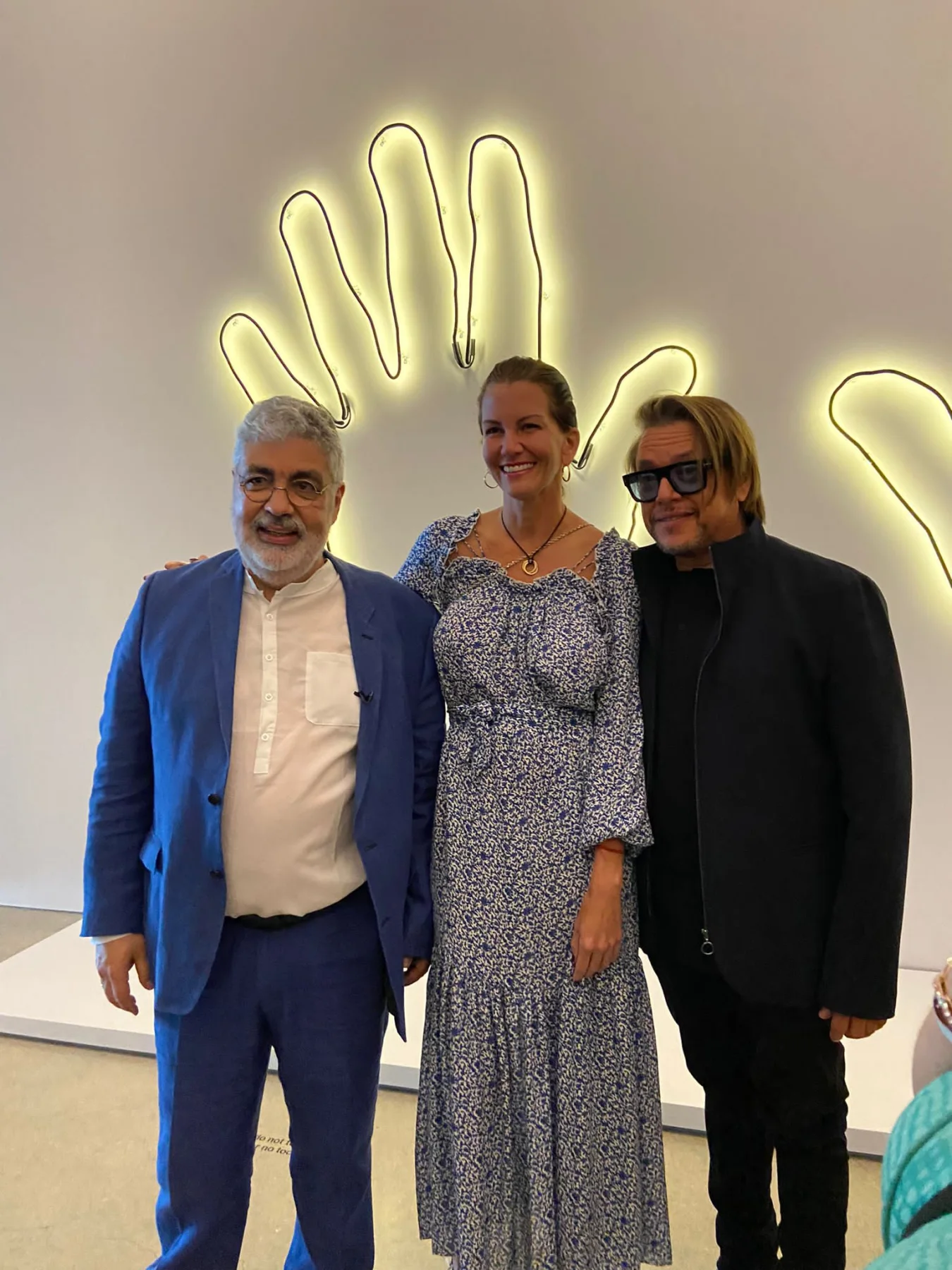
We invite you to join us at the Pérez Art Museum Miami for the opening night of Chromosaturation, by Carlos Cruz-Diez.
6:30pm · 1103 Biscayne Blvd., Miami, FL 33132
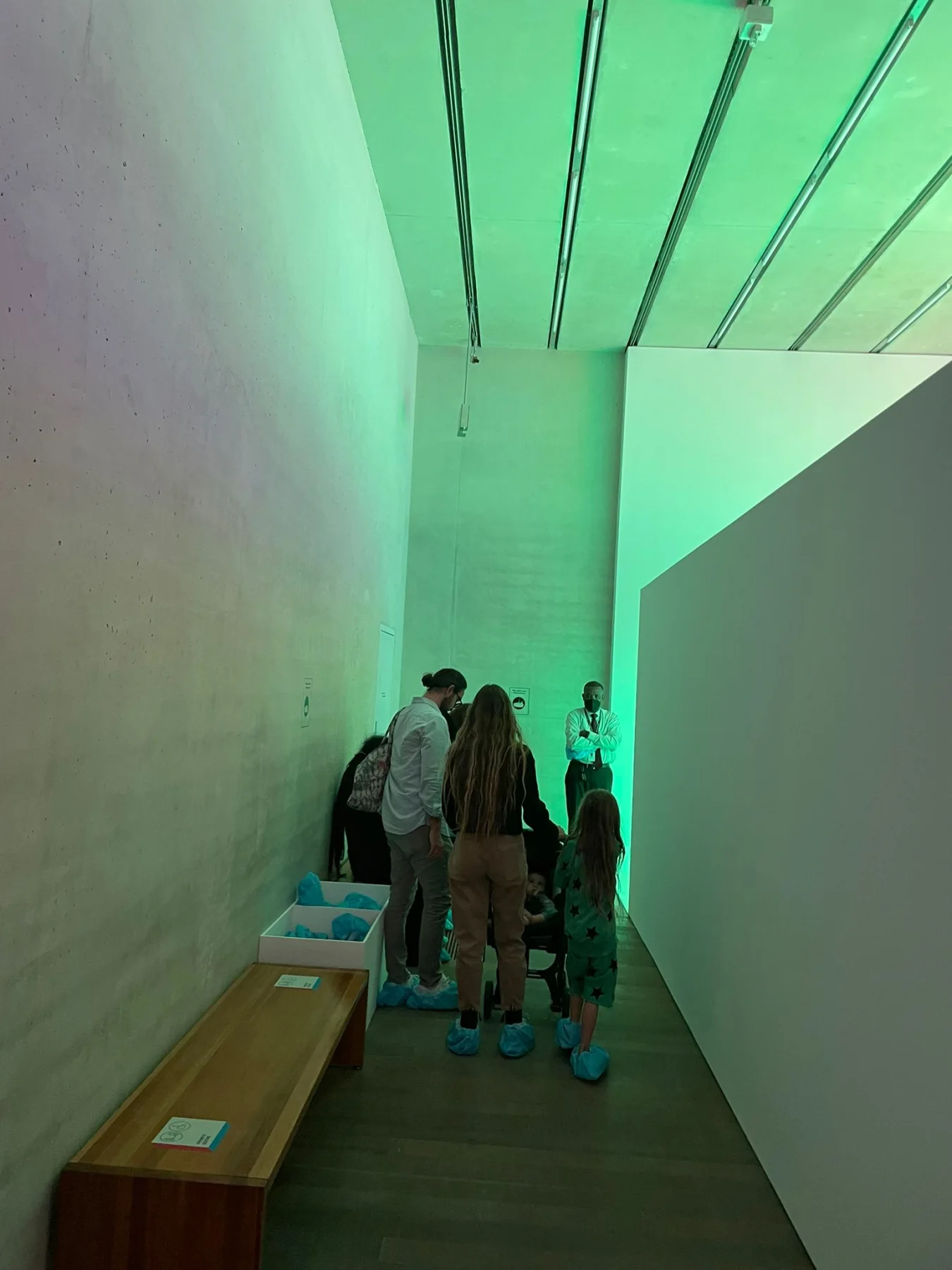
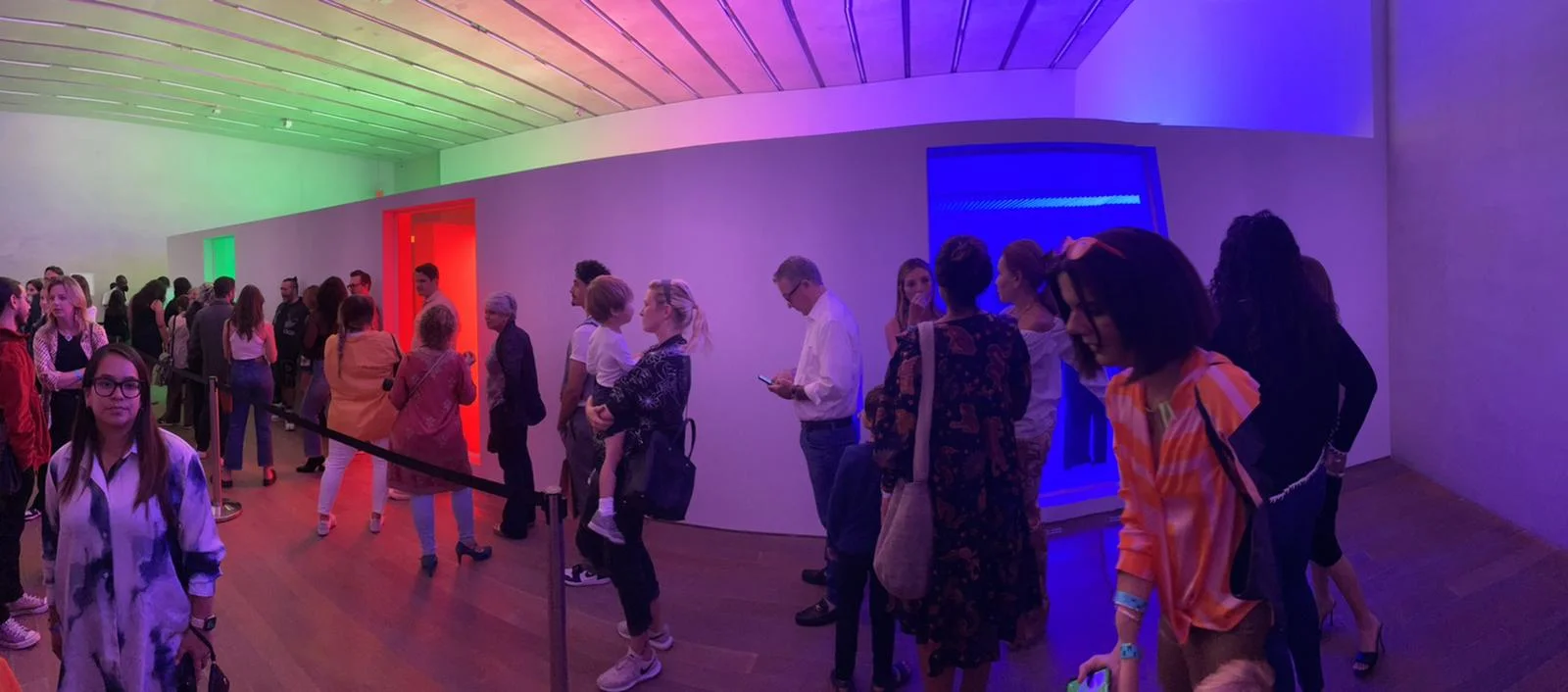
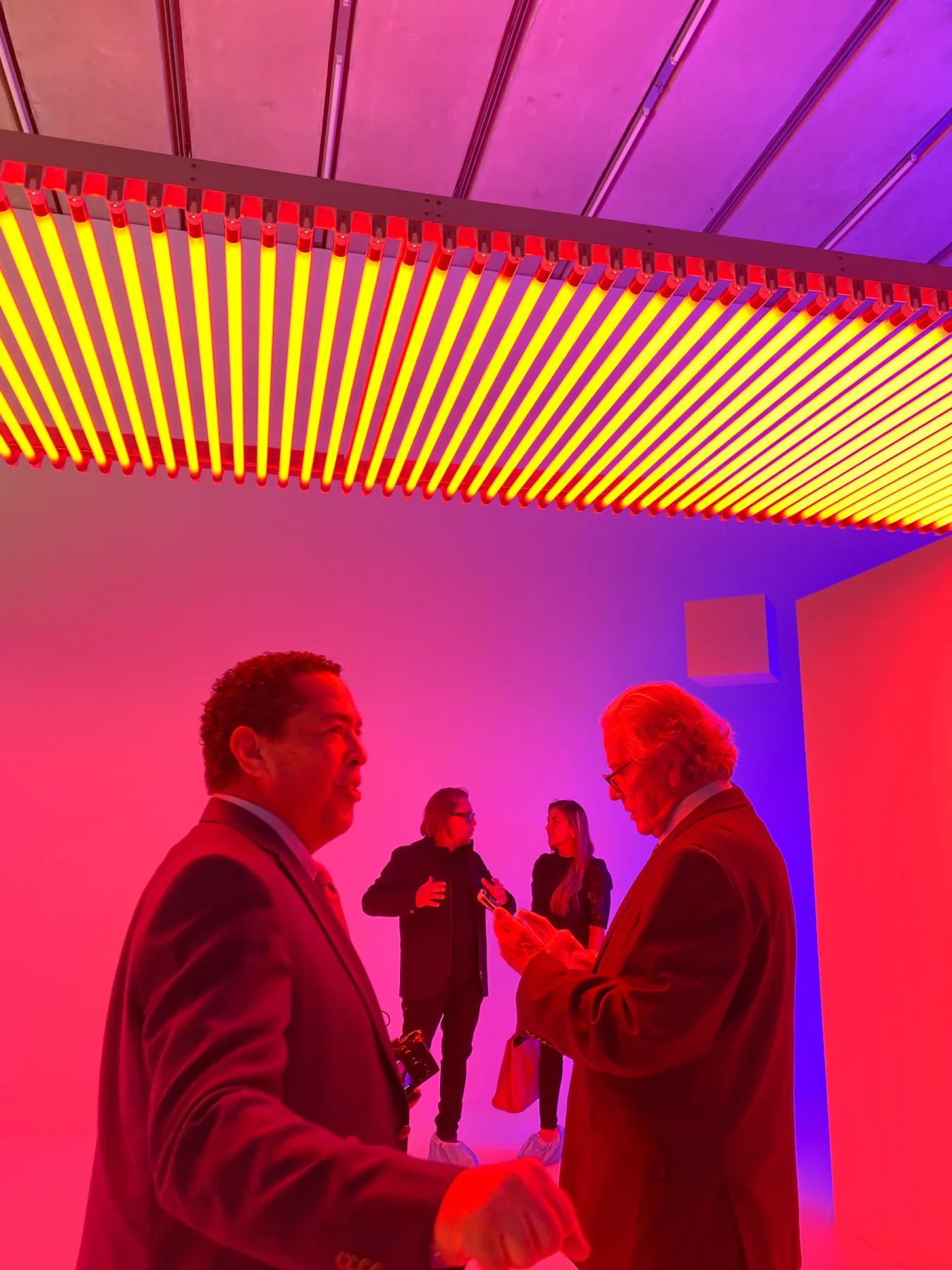
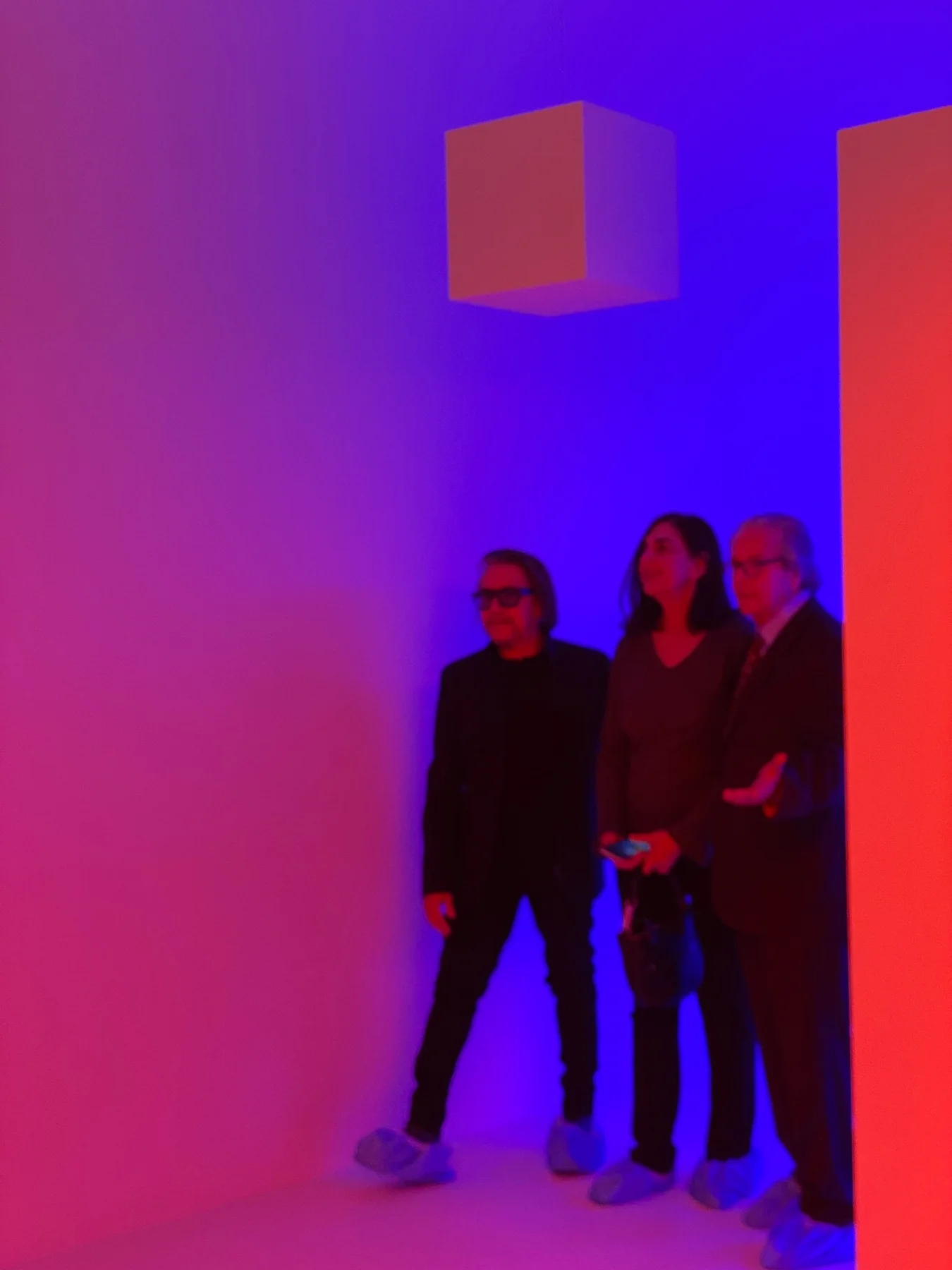
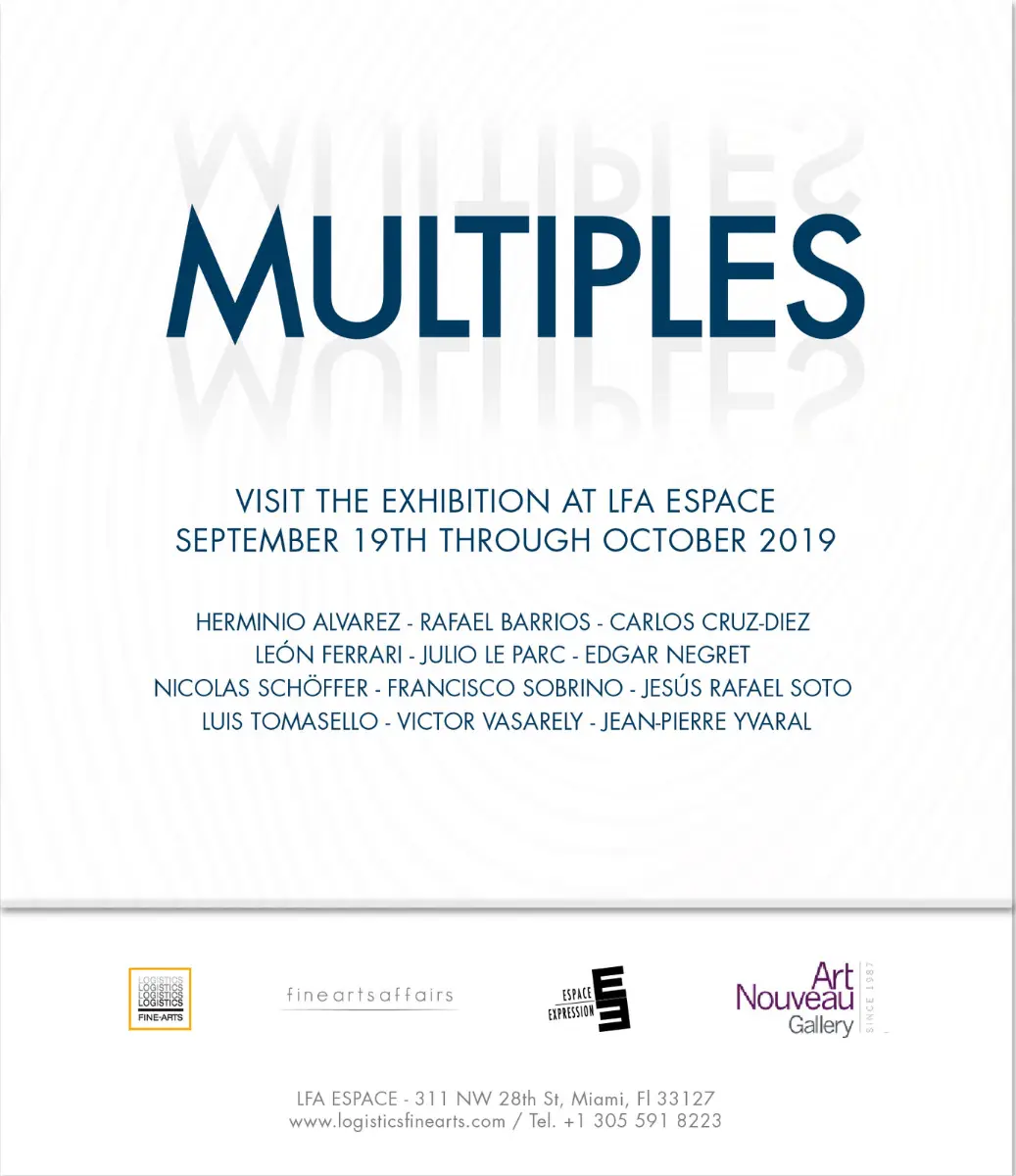
Visit LFA Espace and enjoy the exhibition Multiples, from September 19th through October 2019.
Featuring Herminio Alvarez, Rafael Barrios, Carlos Cruz-Diez, León Ferrari, Julio Le Parc, Edgar Negret, Nicolas Schöffer, Francisco Sobrino, Jesús Rafael Soto, Luis Tomasello, Victor Vasarely and Jean-Pierre Yvaral.
Together with Fine Arts Affairs, Espace Expression and Art Nouveau Gallery.
LFA Espace · 311 NW 28th St, Miami, FL 33127 · Tel. +1 305 591 8223
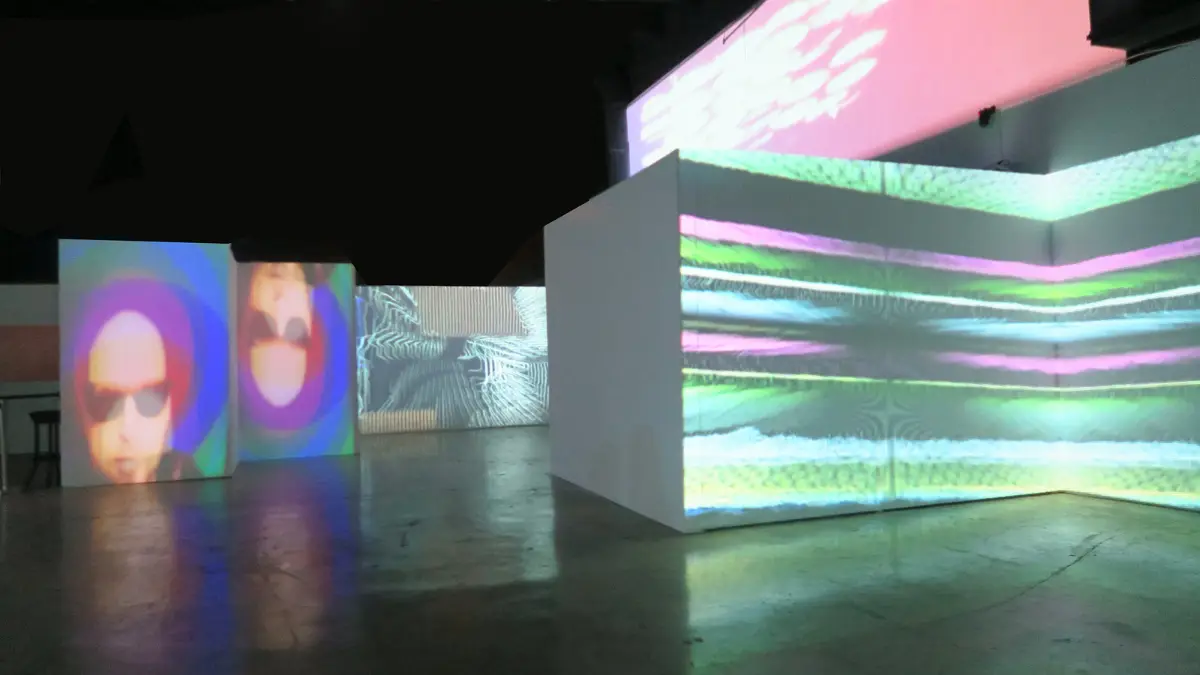
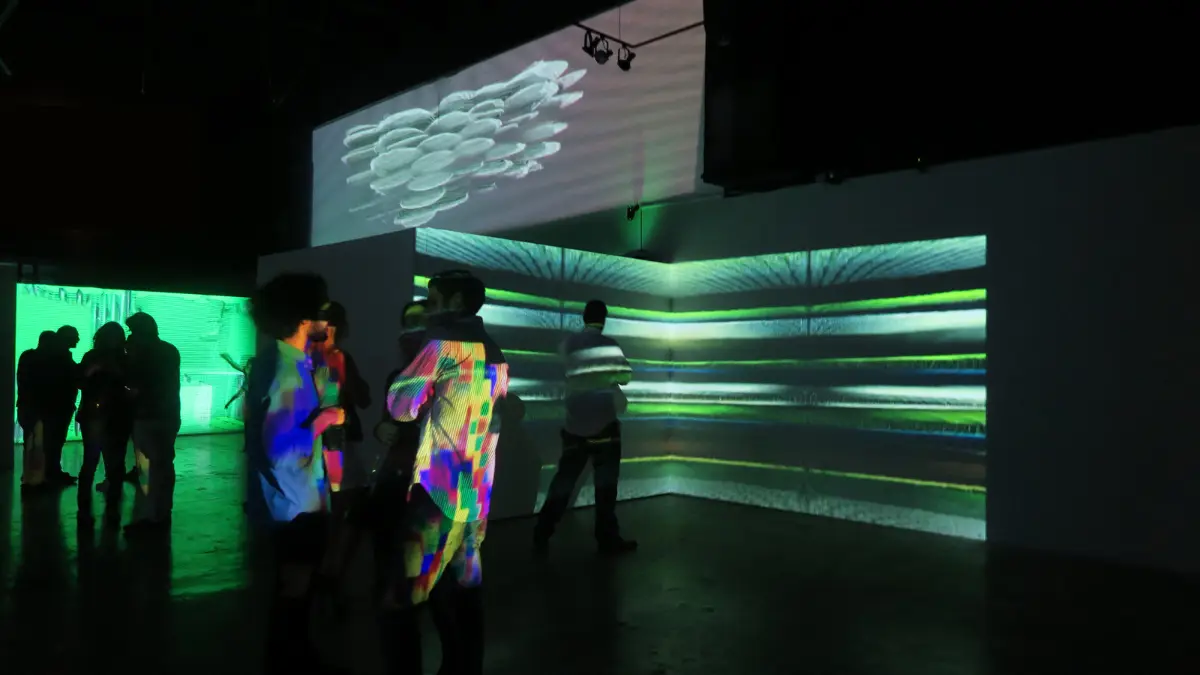
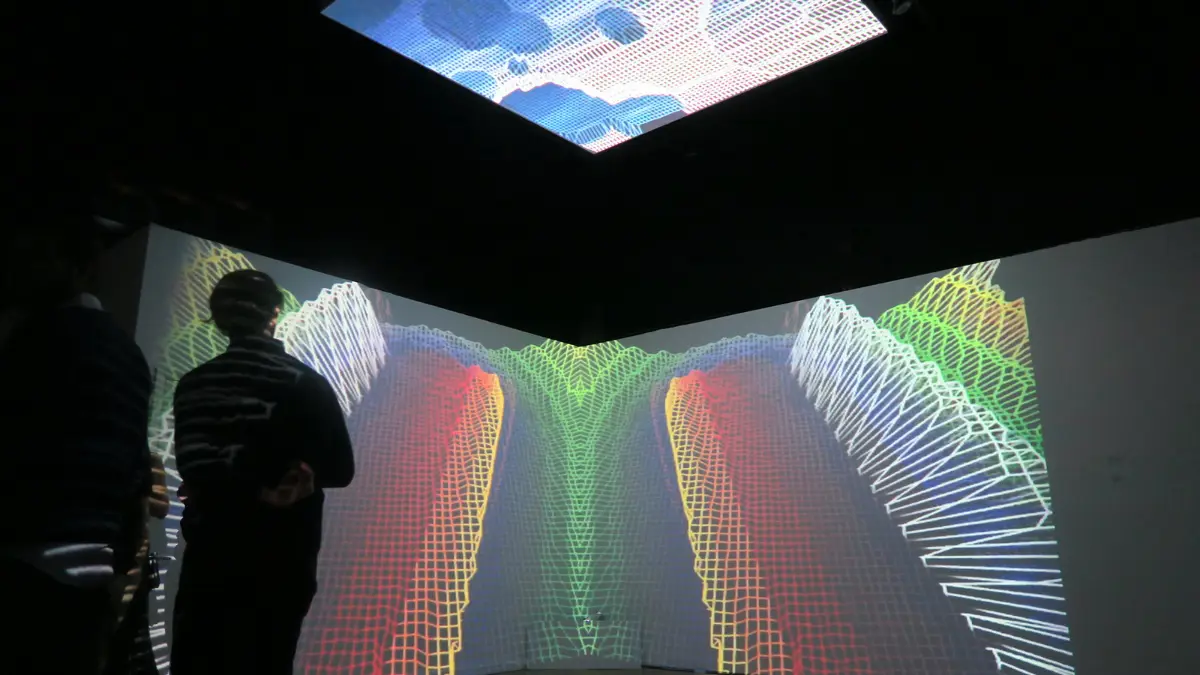
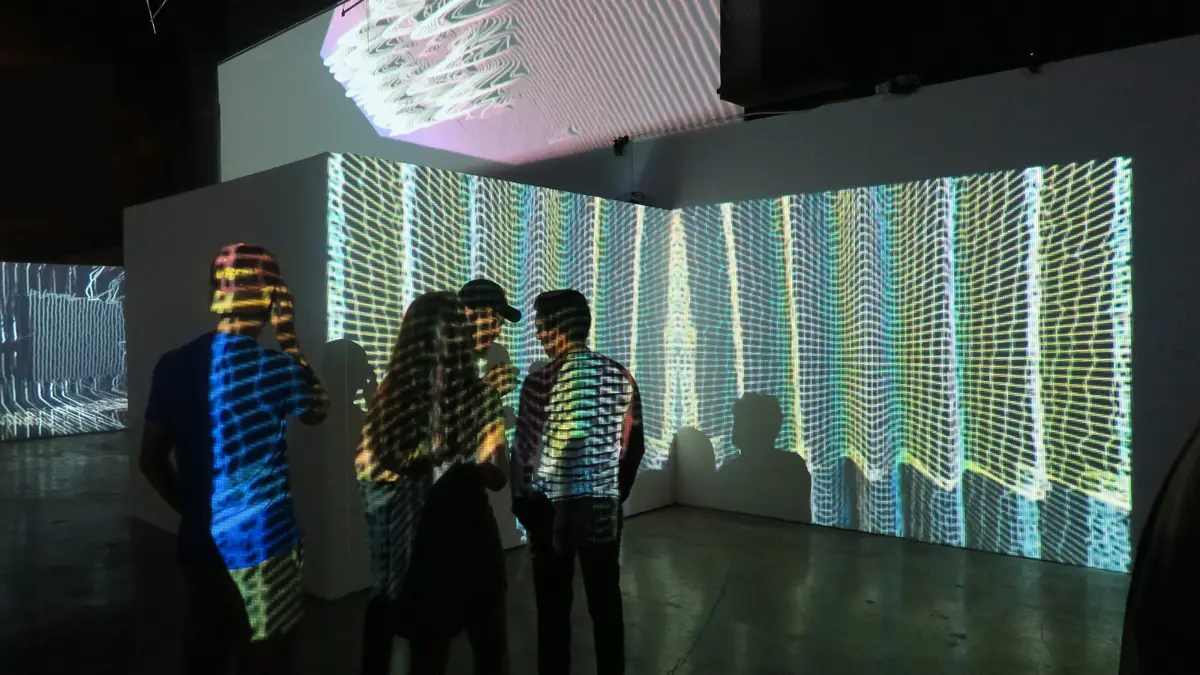
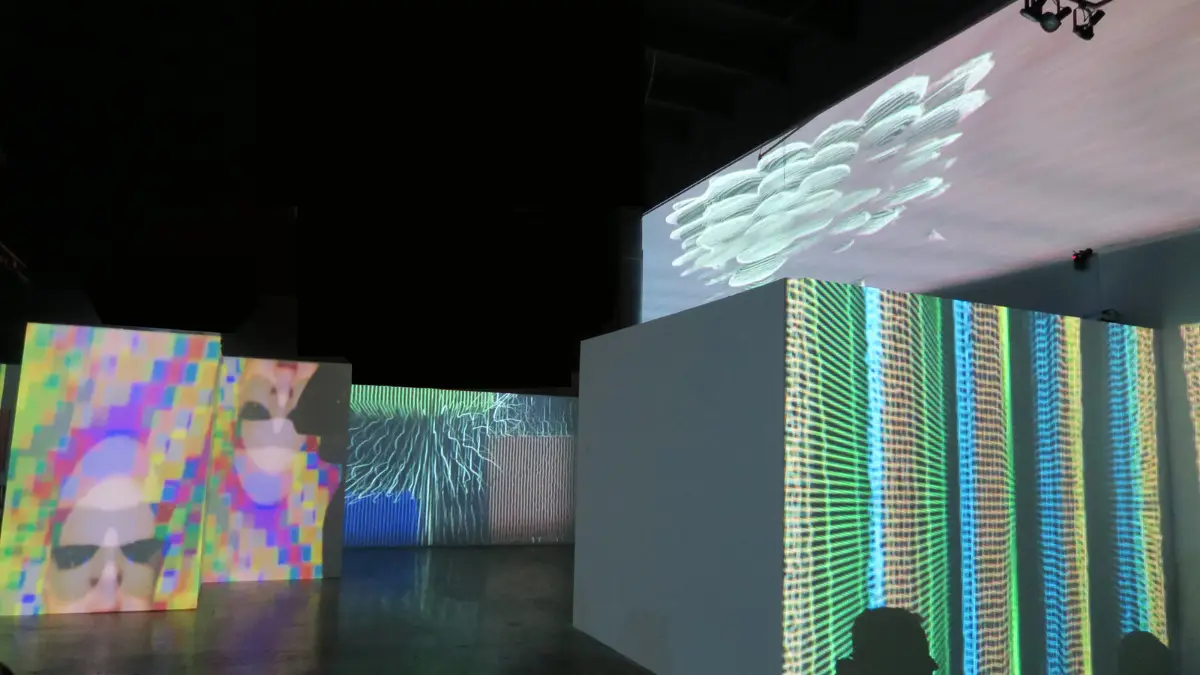
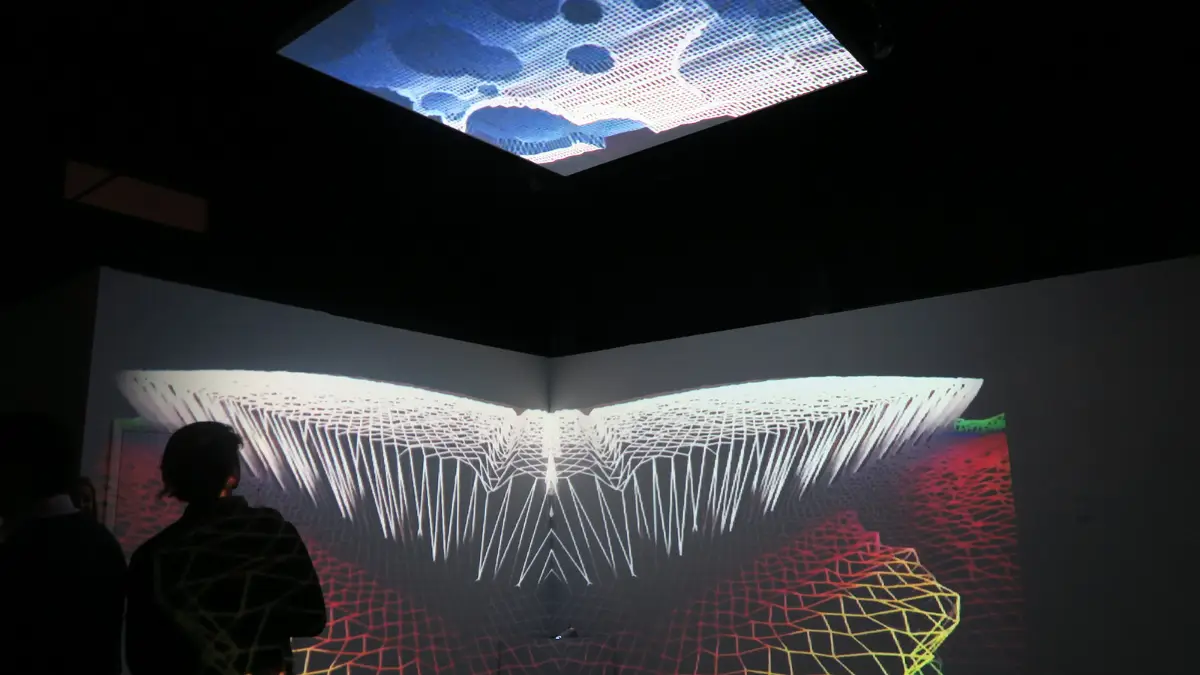
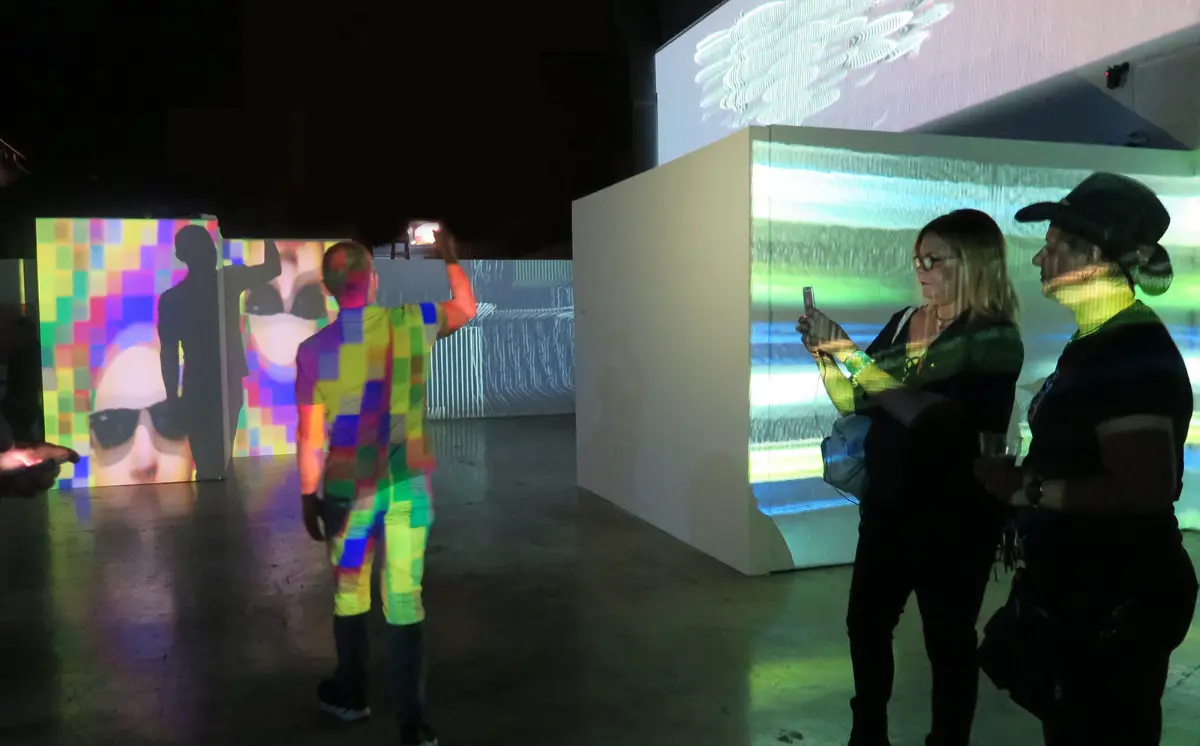
We cordially invite you to visit the exhibition My View, by artists Adriana Santiago, Carolina Muñoz and Muu Blanco.
LFA Espace · 311 NW 28th St, Miami, FL 33127 · Tel. +1 305 591 8223
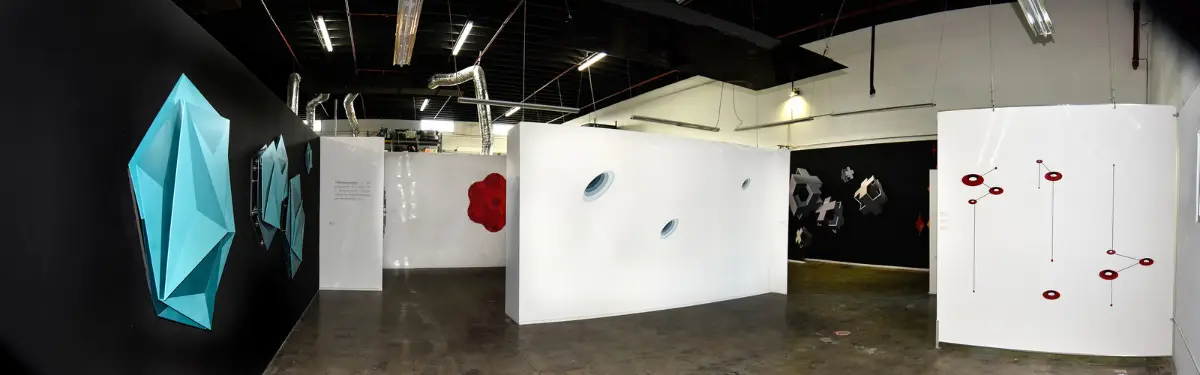
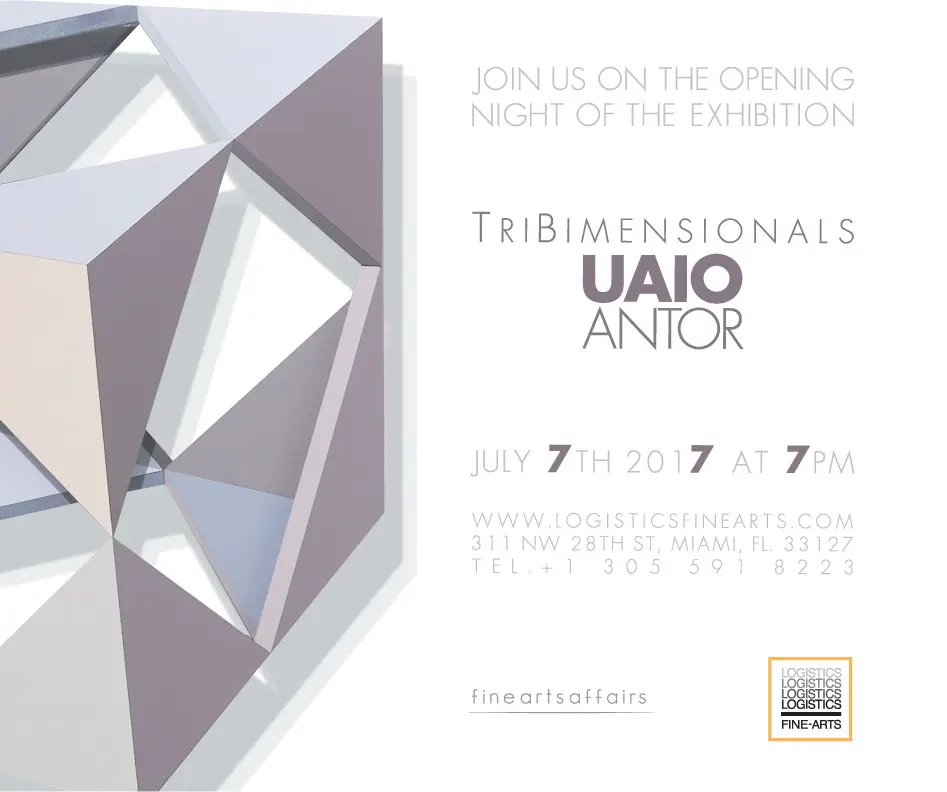
Visit LFA Espace and enjoy the exhibition TriBimensionals, by artist UAIO Antor.
Monday – Friday, 10:00am – 6:00pm
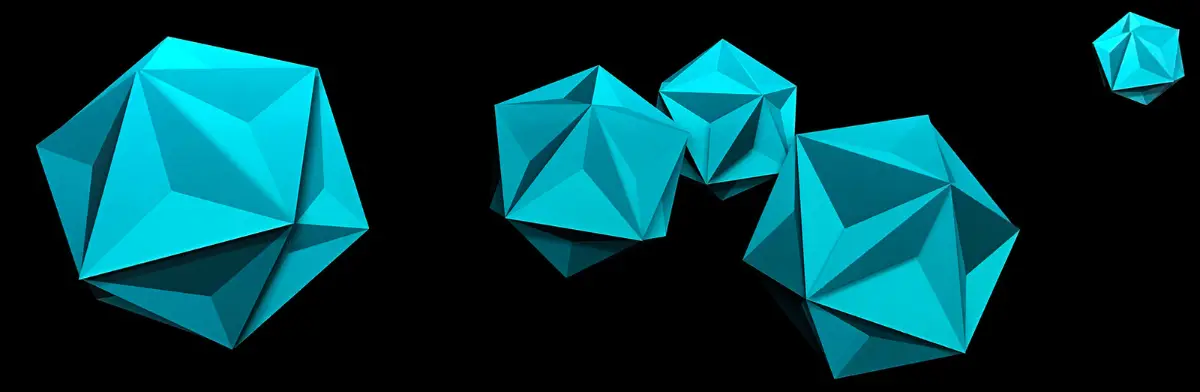
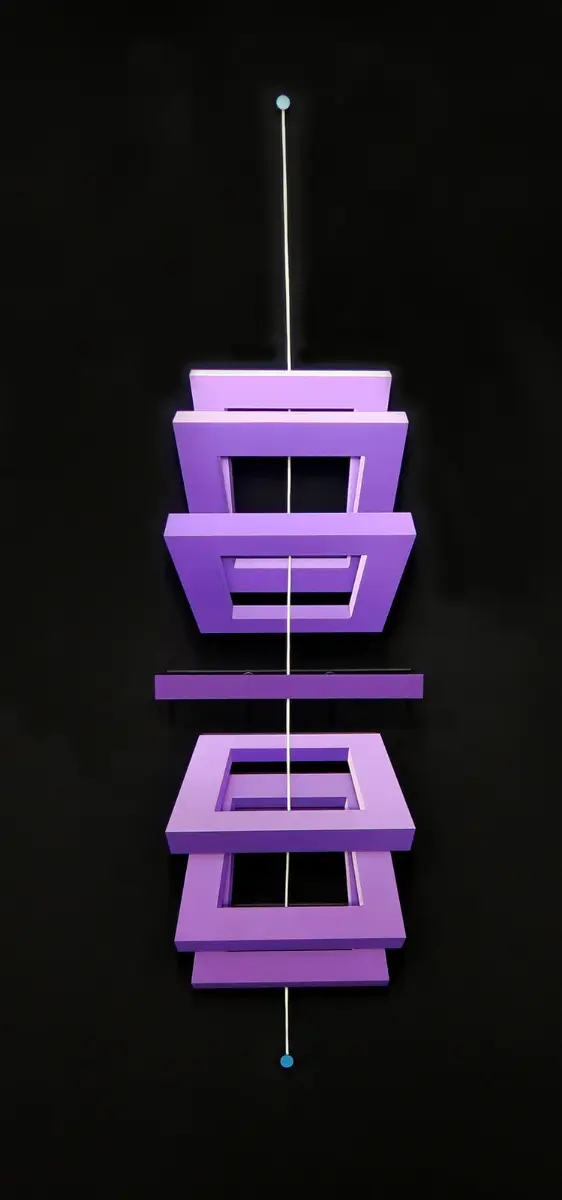
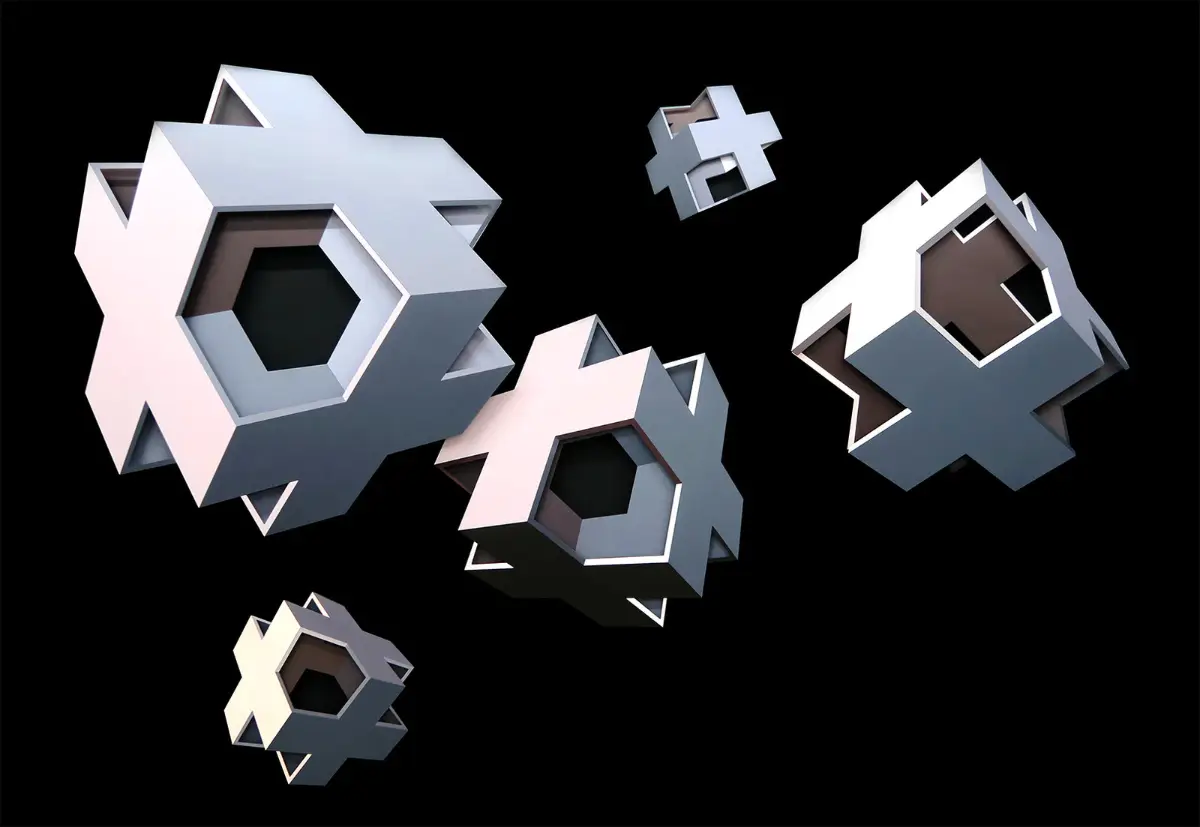
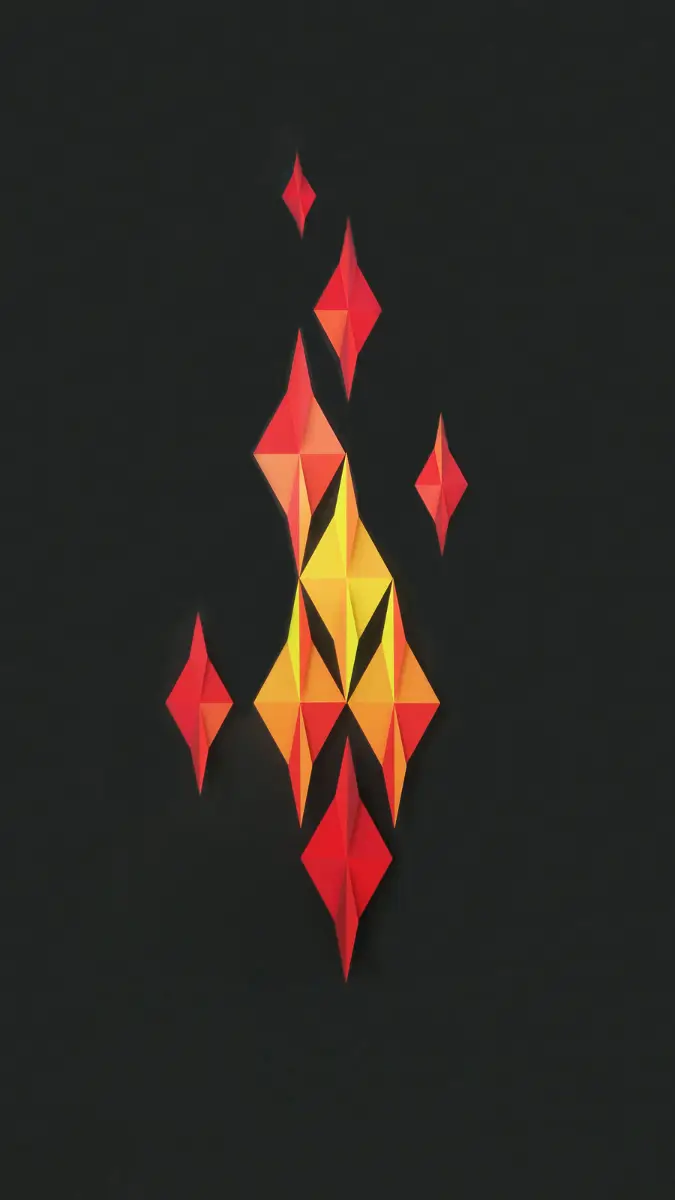
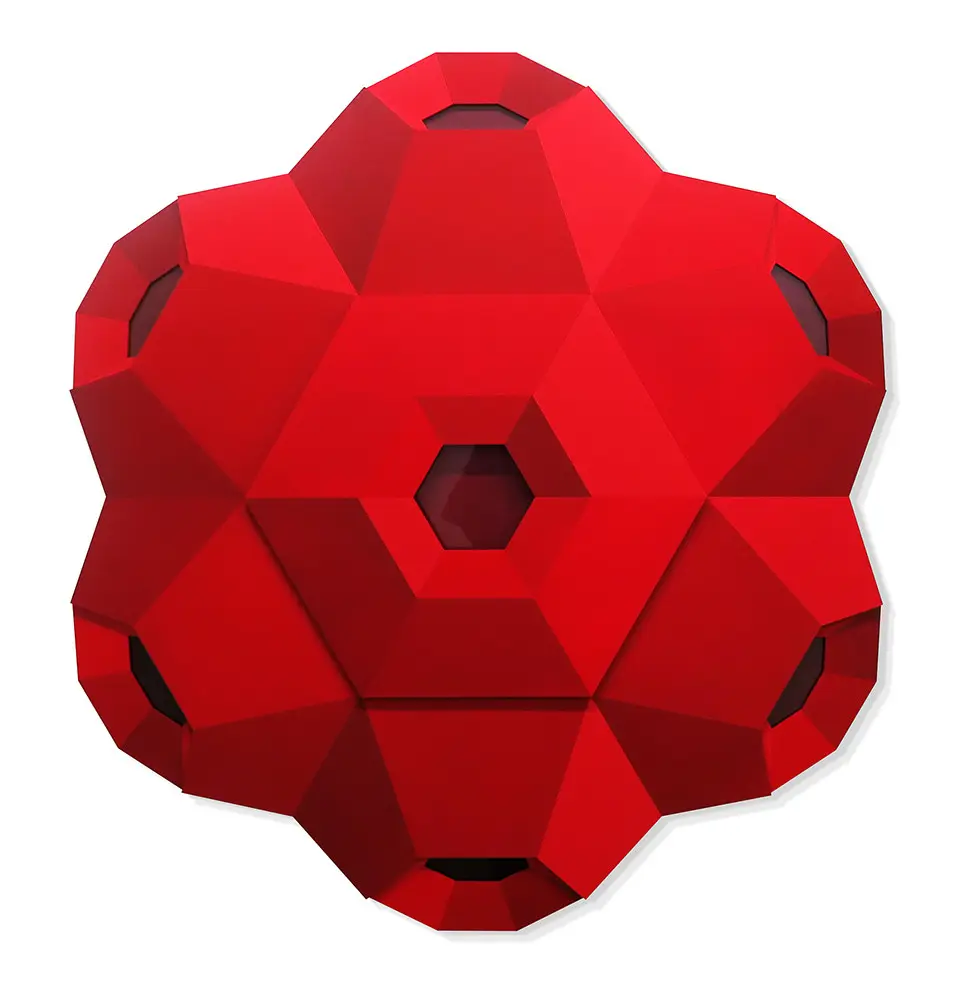
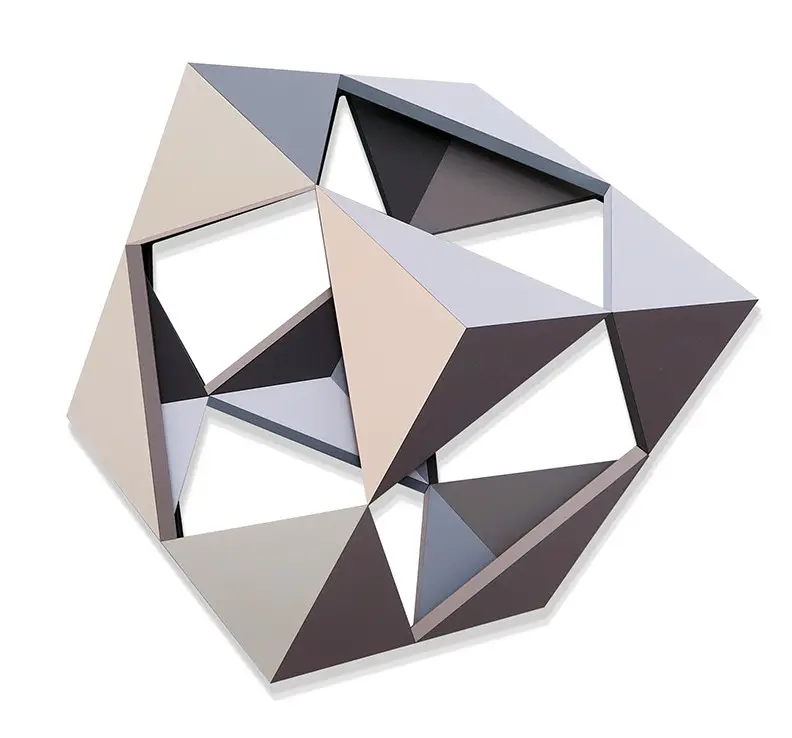
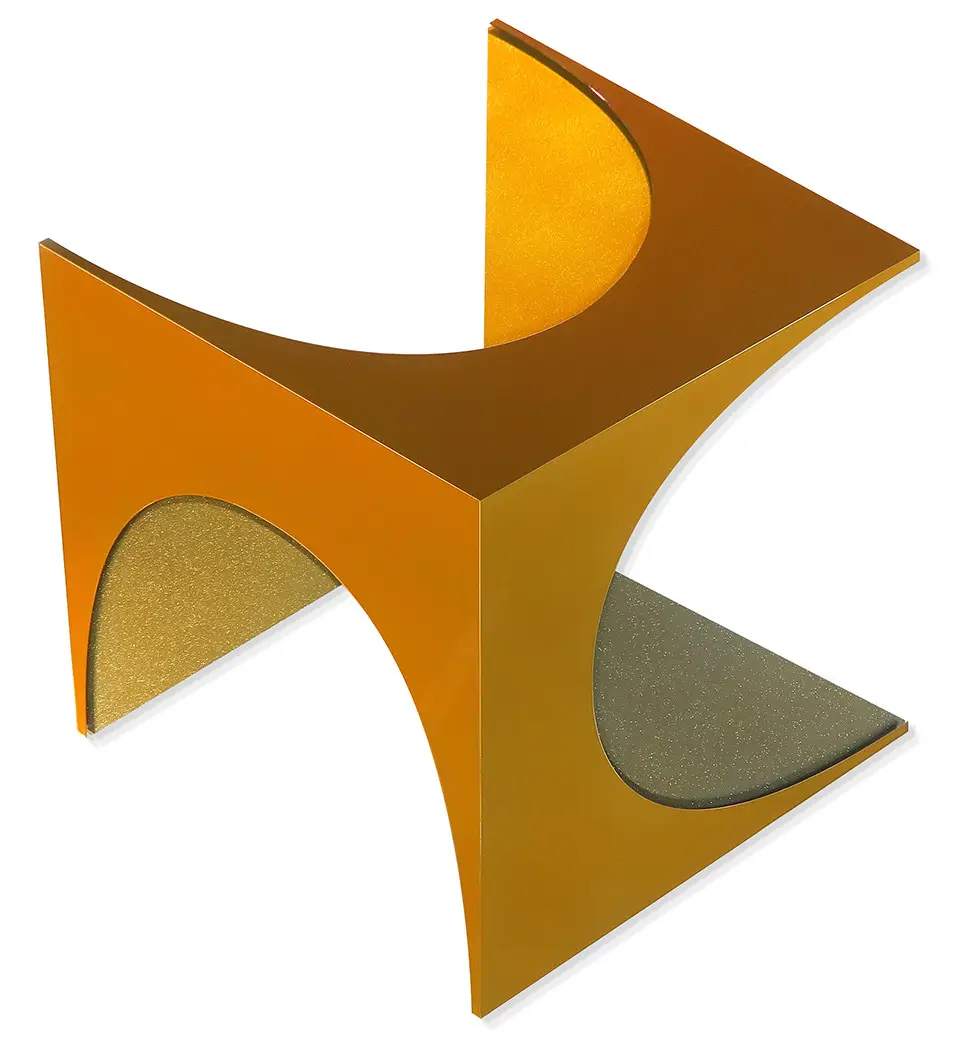
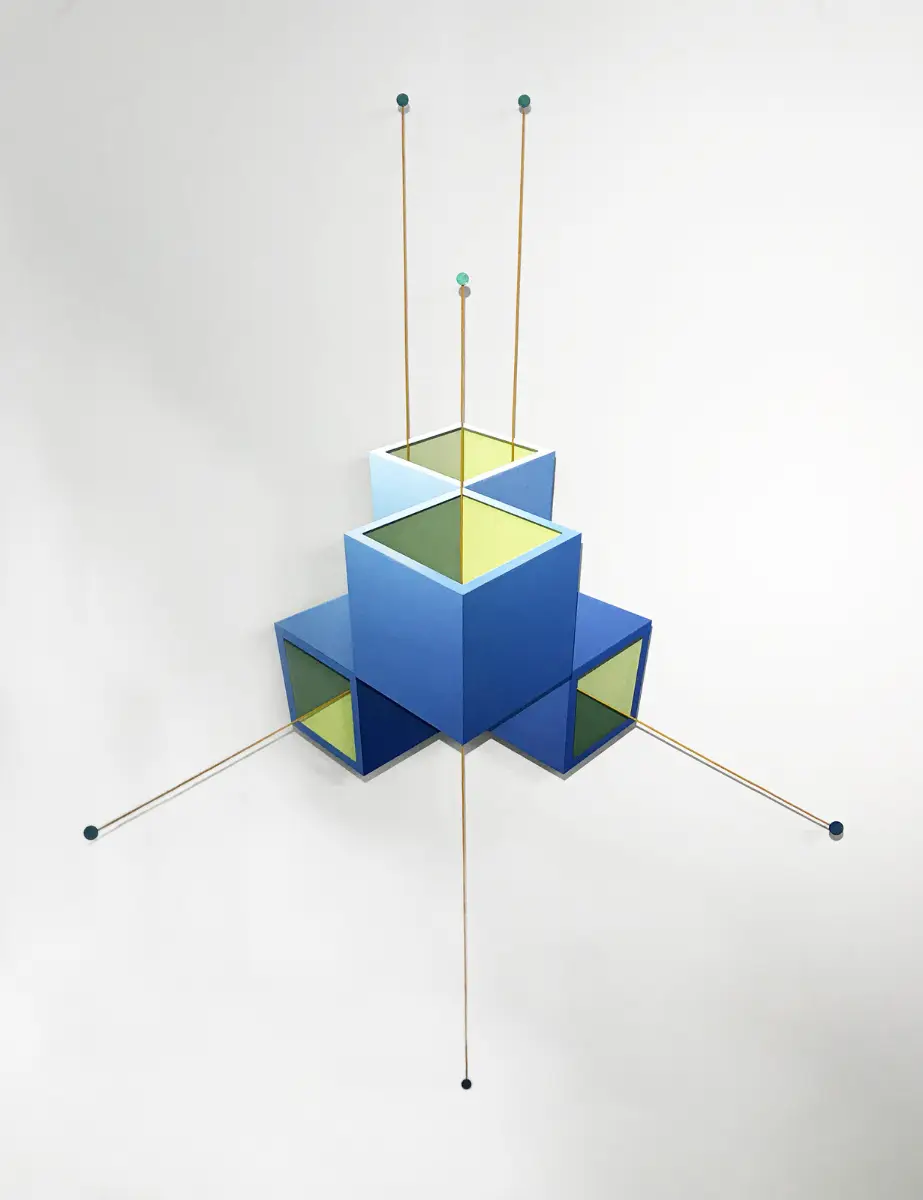
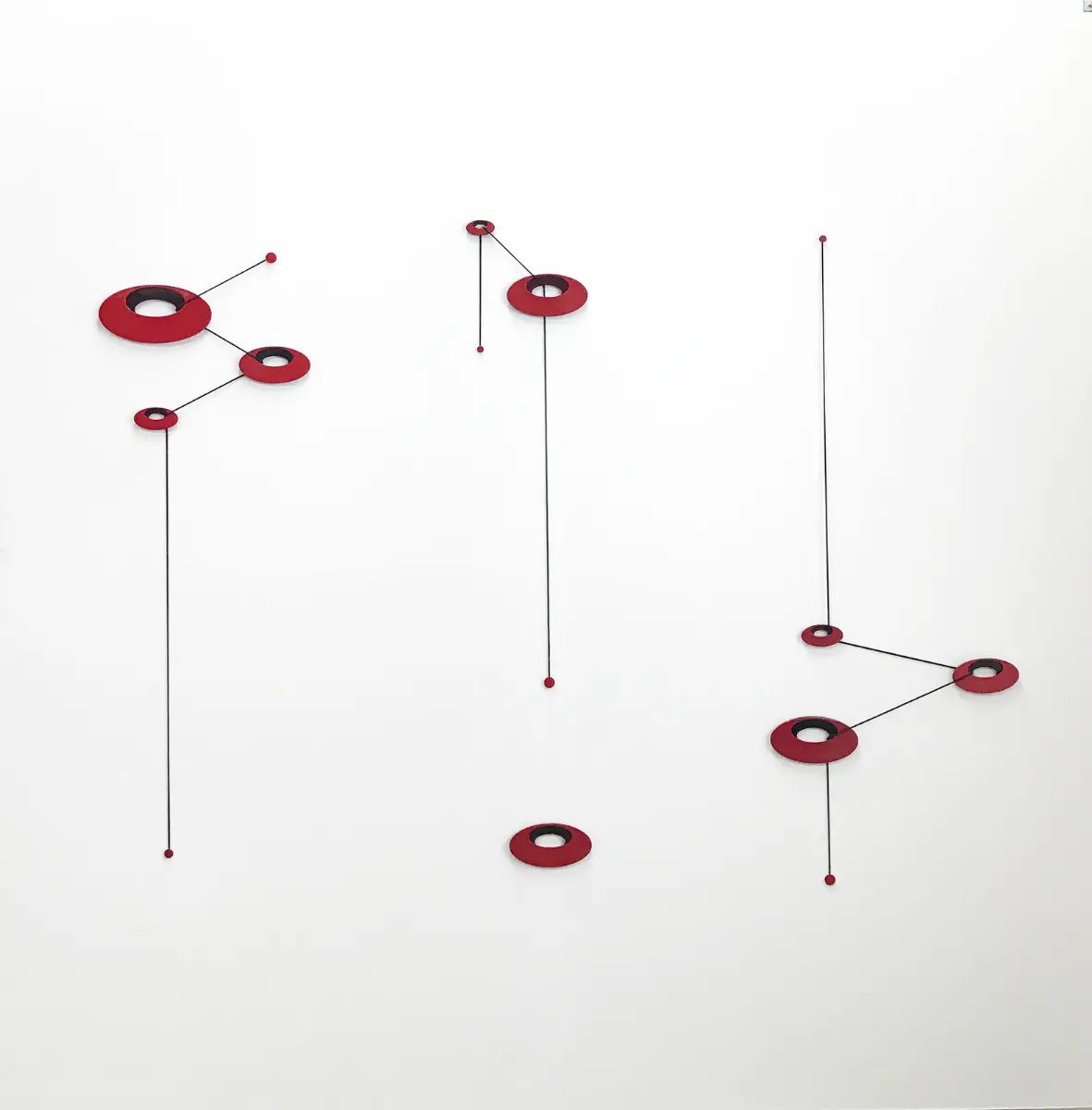
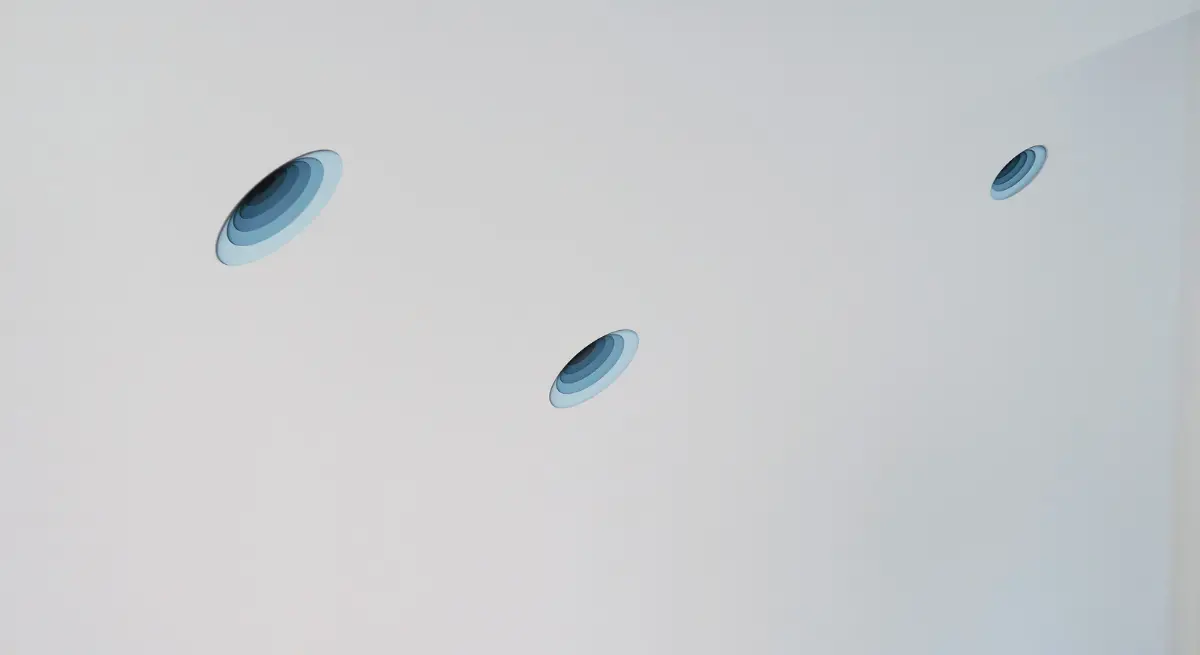
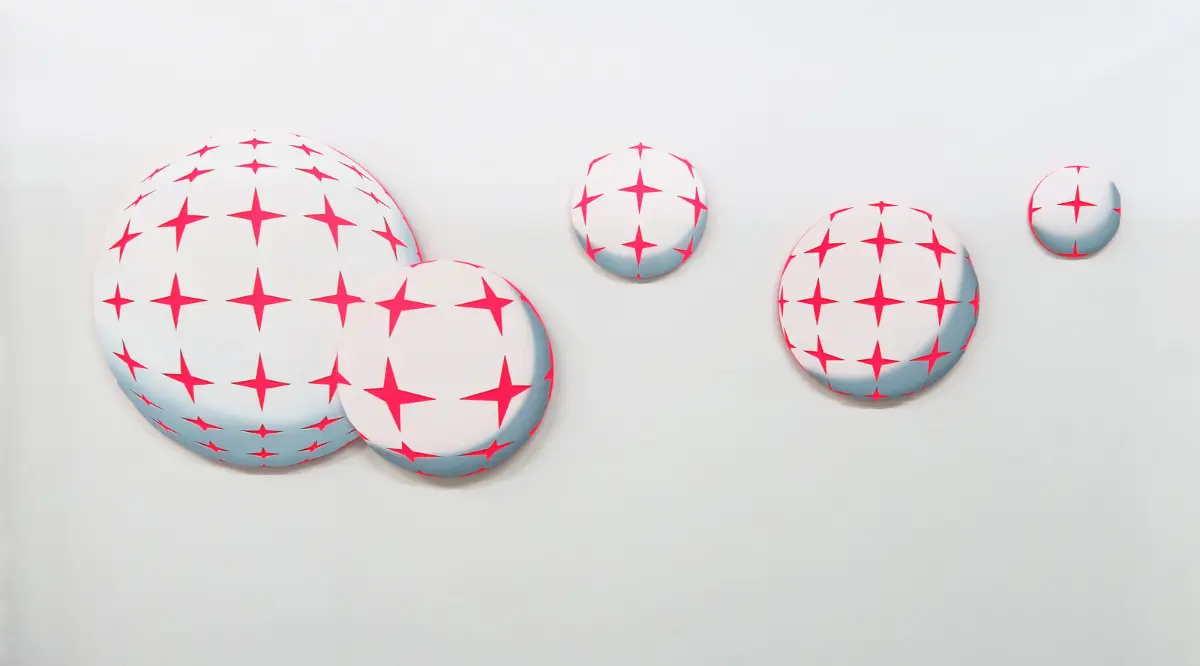
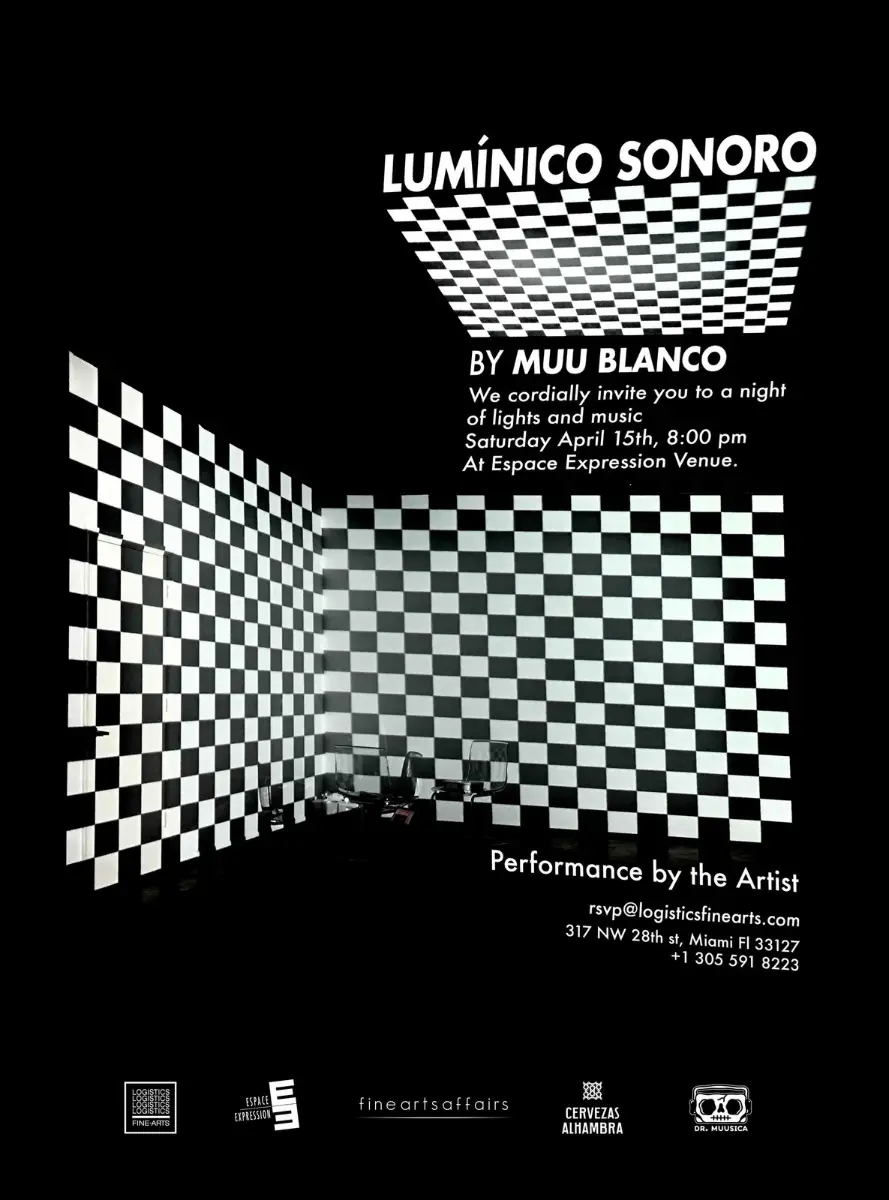
These are complicated times, there is no clear route to follow. Therefore, it is up to the viewer to detect any of the possible paths where the idea of geometric structure becomes a excuse to talk about heterogeneity and the multiple sensory possibilities (visual and sound experiences).
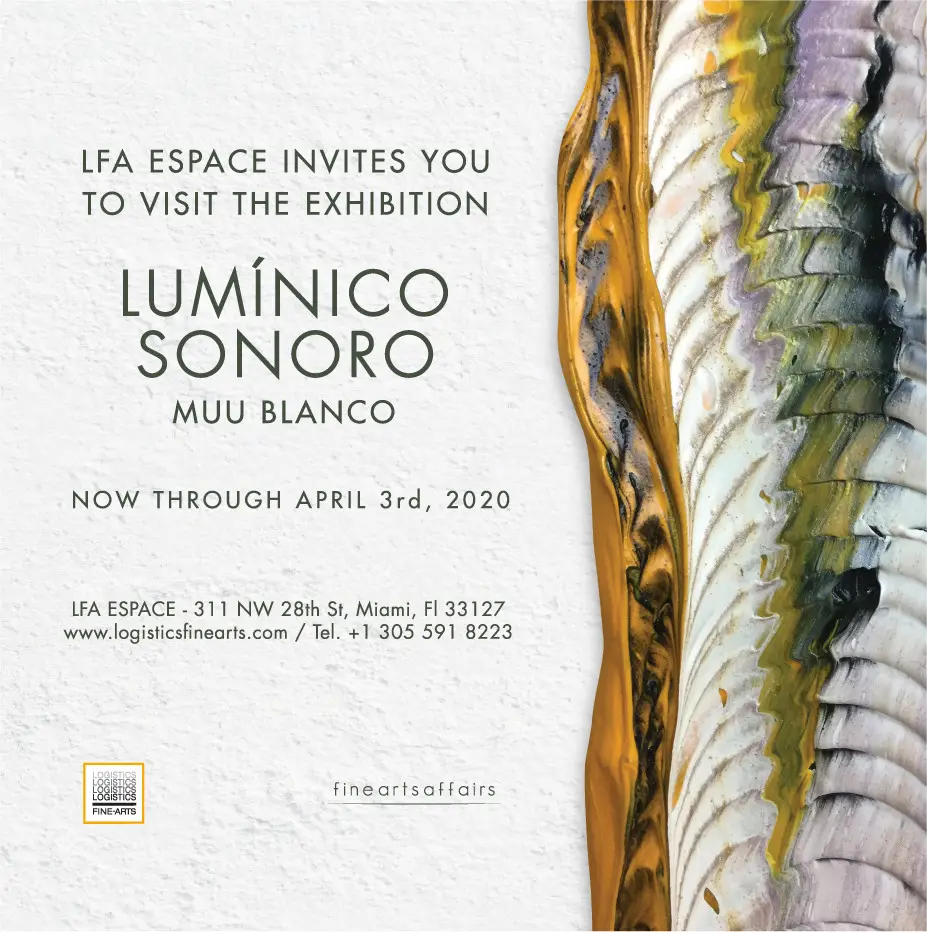
These are complicated times, there is no clear route to follow. Therefore, it is up to the viewer to detect any of the possible paths where the idea of geometric structure becomes a excuse to talk about heterogeneity and the multiple sensory possibilities (visual and sound experiences).
The way in which each of us negotiates these dissonances is what gives meaning to reality, both the visible and invisible. In the end, art as a symbolic exchange is based in a moment of simultaneity, of multiple acts that converge, in this case they can be experienced from different creative points of view, from the experience that persists in the search for abstract aesthetics referring to language; Either within the natural environment (that forms the idea of landscape) or that which has been constructed by man (also another form of landscape). The possibility of a dialogue always remains, is always present, art is the language that comes pierced by the power of the definitions that its made up of.
Muu Blanco — Miami, Florida 03/24/2016
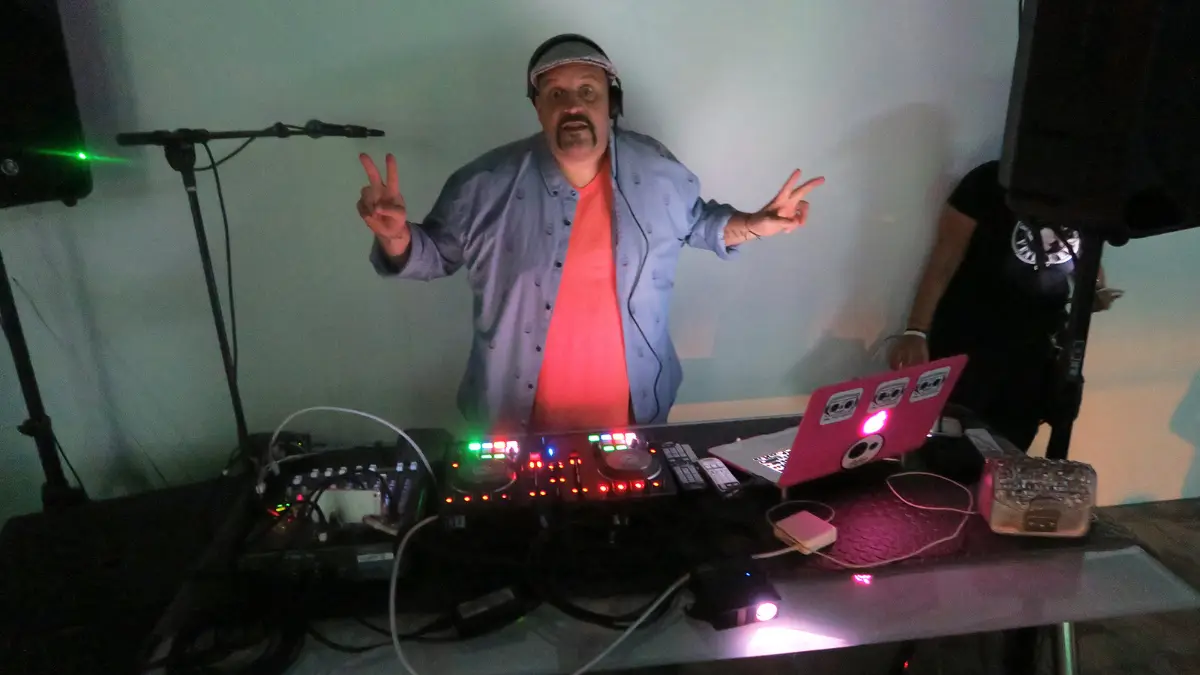
Special thanks to: @mikihumo, mapping advisor for this installation · Arts Connection Foundation, sponsor artist "muublanco" 2014 – 2018
Estos son tiempos complicados en los que no hay un camino claro a seguir. Por lo tanto, corresponde al espectador detectar cualquiera de los posibles senderos donde la idea de la estructura geométrica se convierta en un pretexto para hablar de la heterogeneidad y de las múltiples posibilidades sensoriales (experiencias visuales y sonoras).
La forma en la que cada uno de nosotros negociamos estas disonancias es la que otorga sentido a lo real, tanto a lo visible como a lo invisible. Al final, el arte como intercambio simbólico se basa en un momento de simultaneidad, de actos múltiples que confluyen, en este caso pueden ser experimentados desde los diferentes puntos de vista del devenir creativo, desde la experiencia que persiste en la búsqueda de estéticas abstractas, en tanto lenguaje; ya sea dentro del entorno propiamente natural (que conforma la idea de paisaje) o aquel que ha sido construido por el hombre (también otra forma de paisaje). La posibilidad de un diálogo siempre permanece, es siempre latente, el arte es el lenguaje que sobreviene atravesado por la potencia de los significados que lo conforman.
Muu Blanco — Miami, Florida 03/24/2016
Agradecimiento a: @mikihumo, mapping advisor for this installation · Arts Connection Foundation, sponsor artist "muublanco" 2014 – 2018
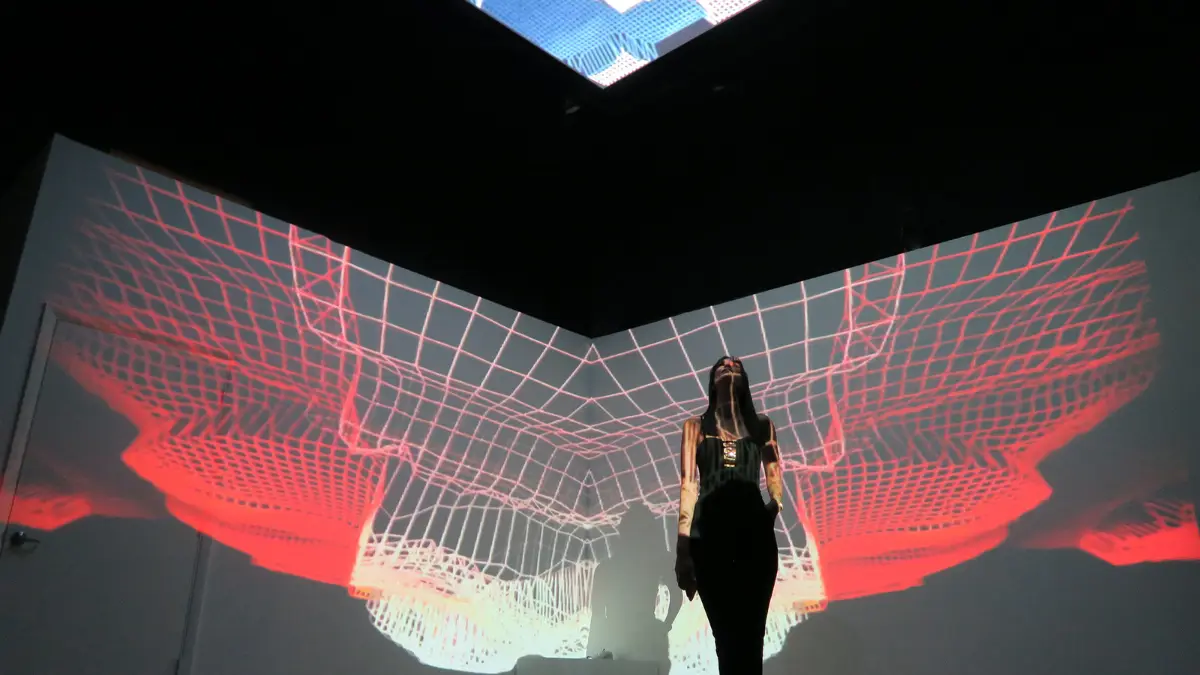
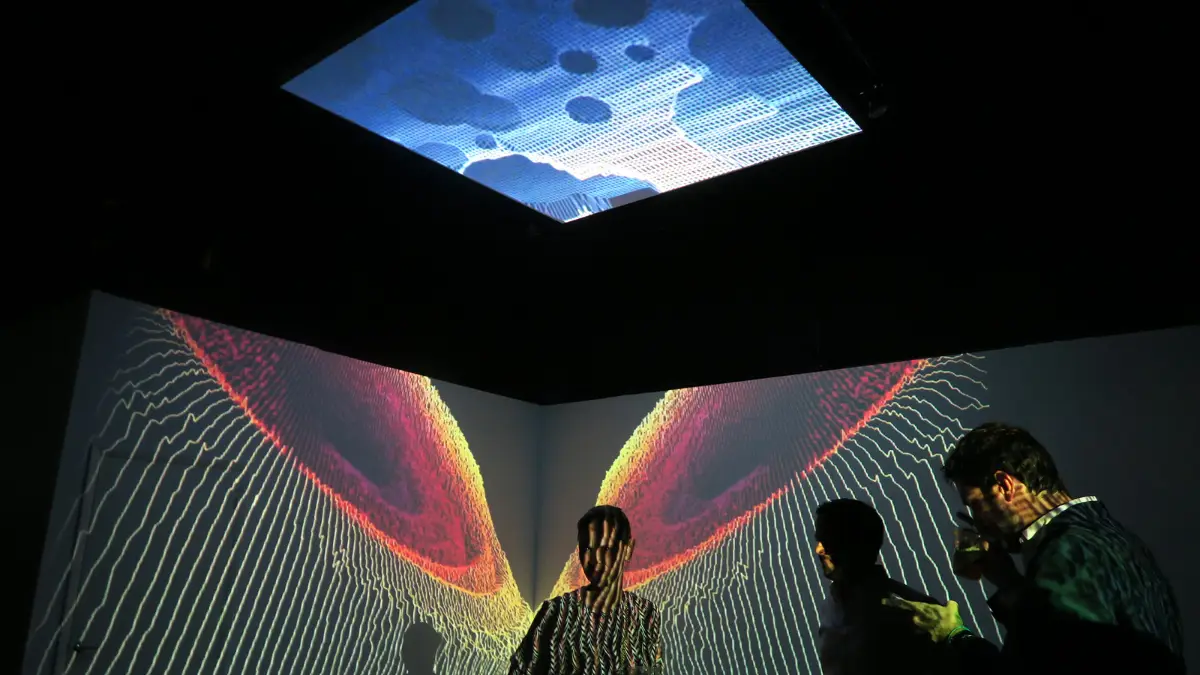
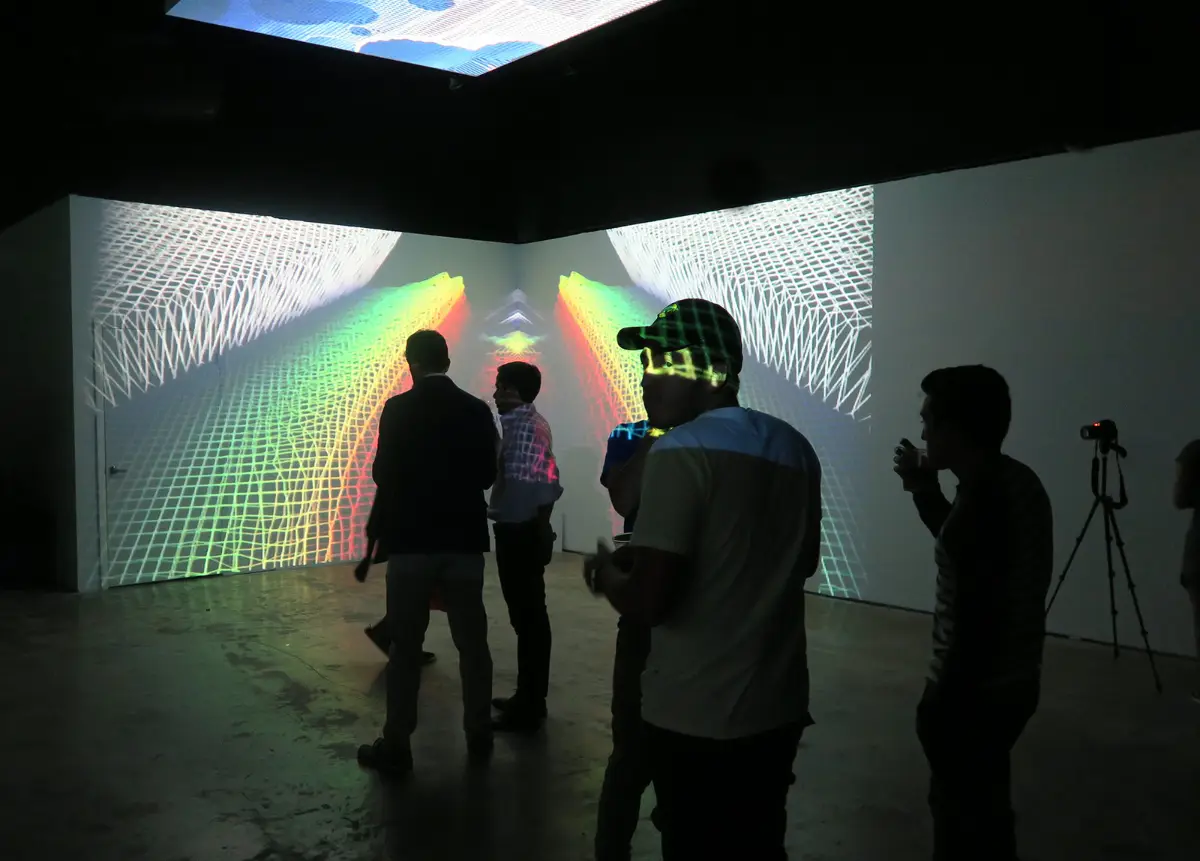
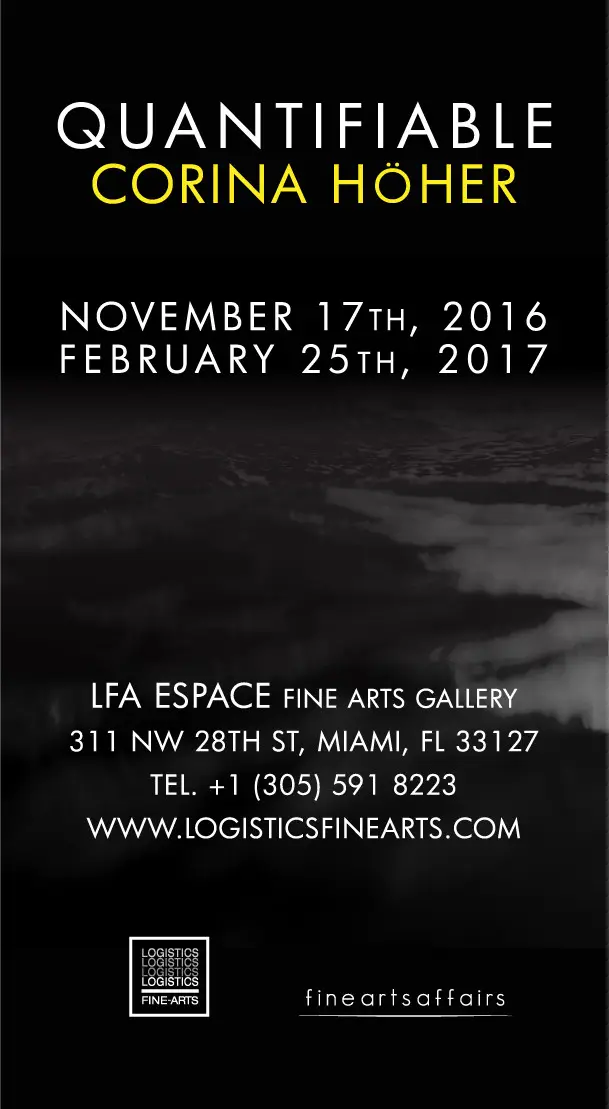
We invite you to visit our current exhibition Quantifiable. Featuring Venezuelan artist: Corina Höher.
“There is more to our reality than the mere data we perceive, a dimension of invisible matter, universal language full of messages that exist beyond the realm of our empirical sensitivity. Technology has assisted man's transition to discern unexplored perceptive territory, towards a new vision of the human experience” — Corina Höher
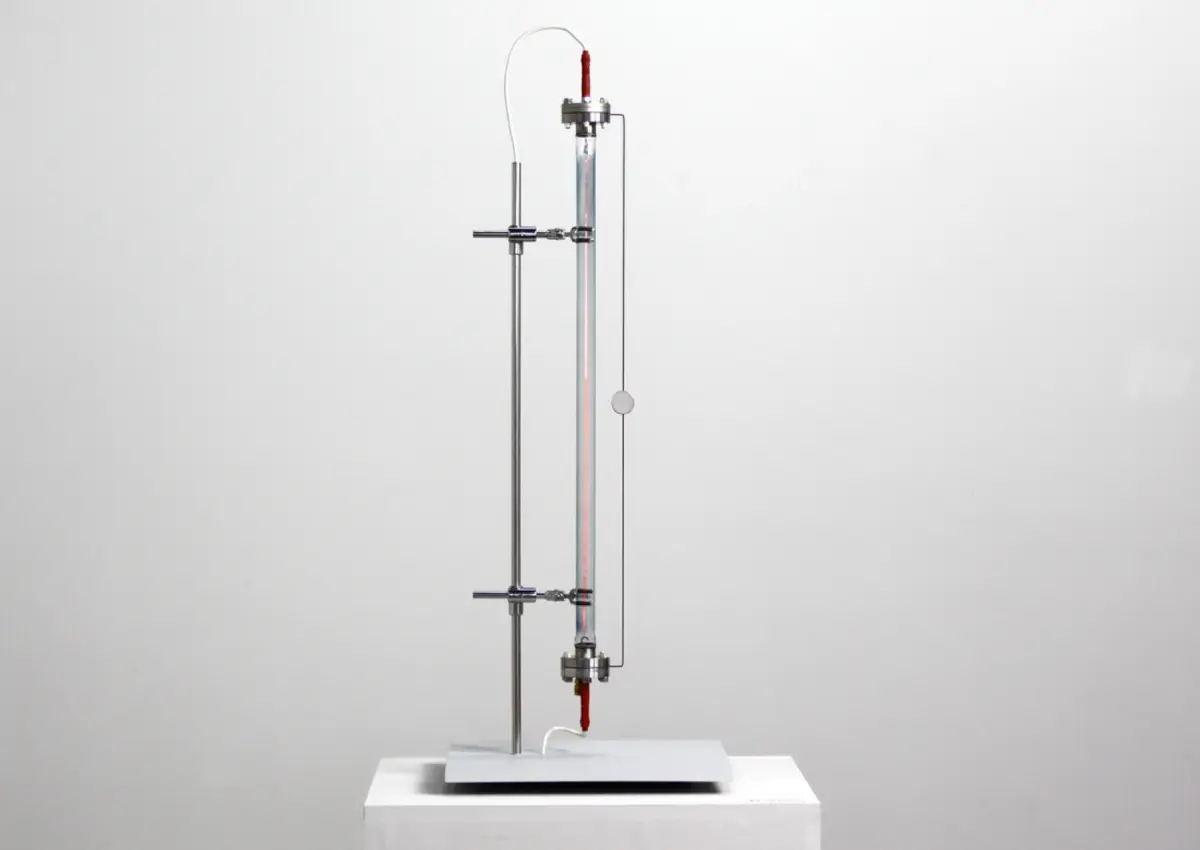
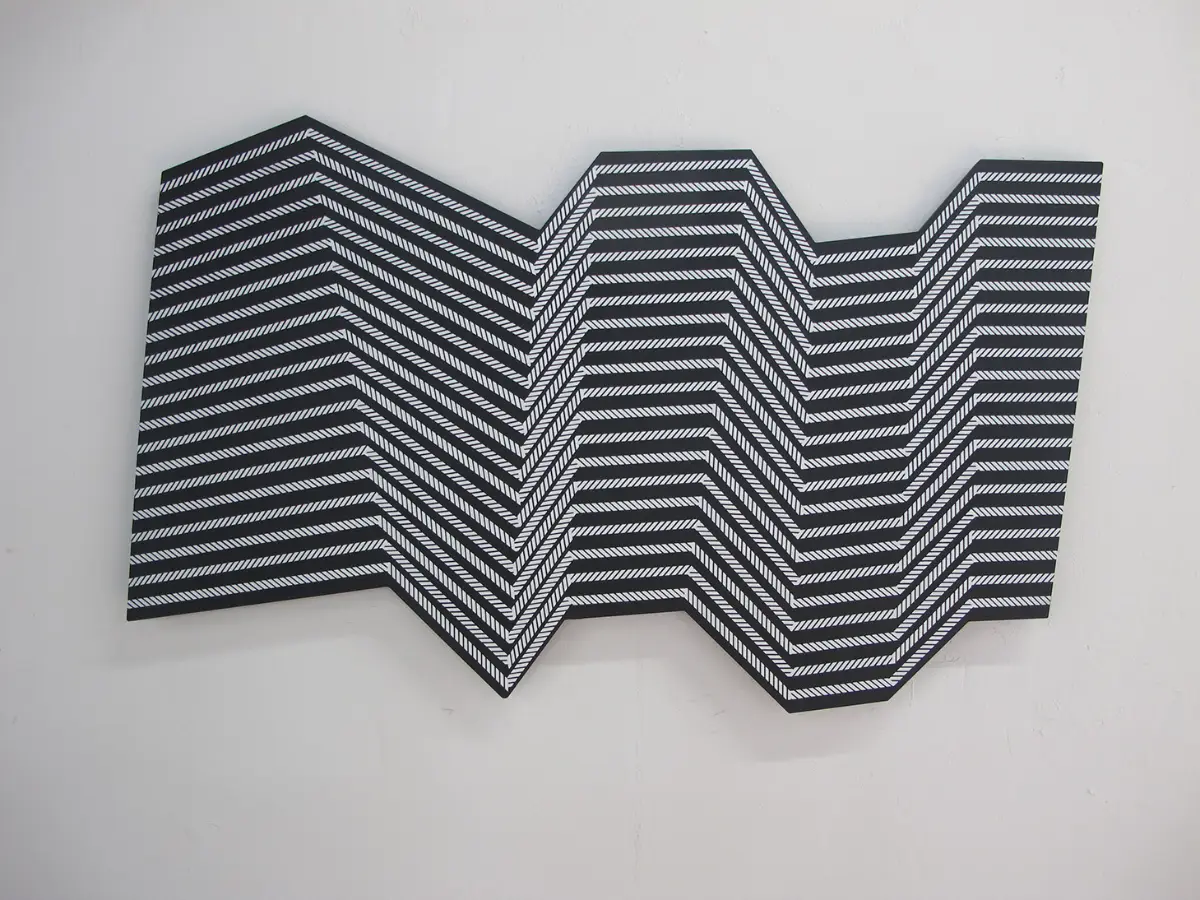
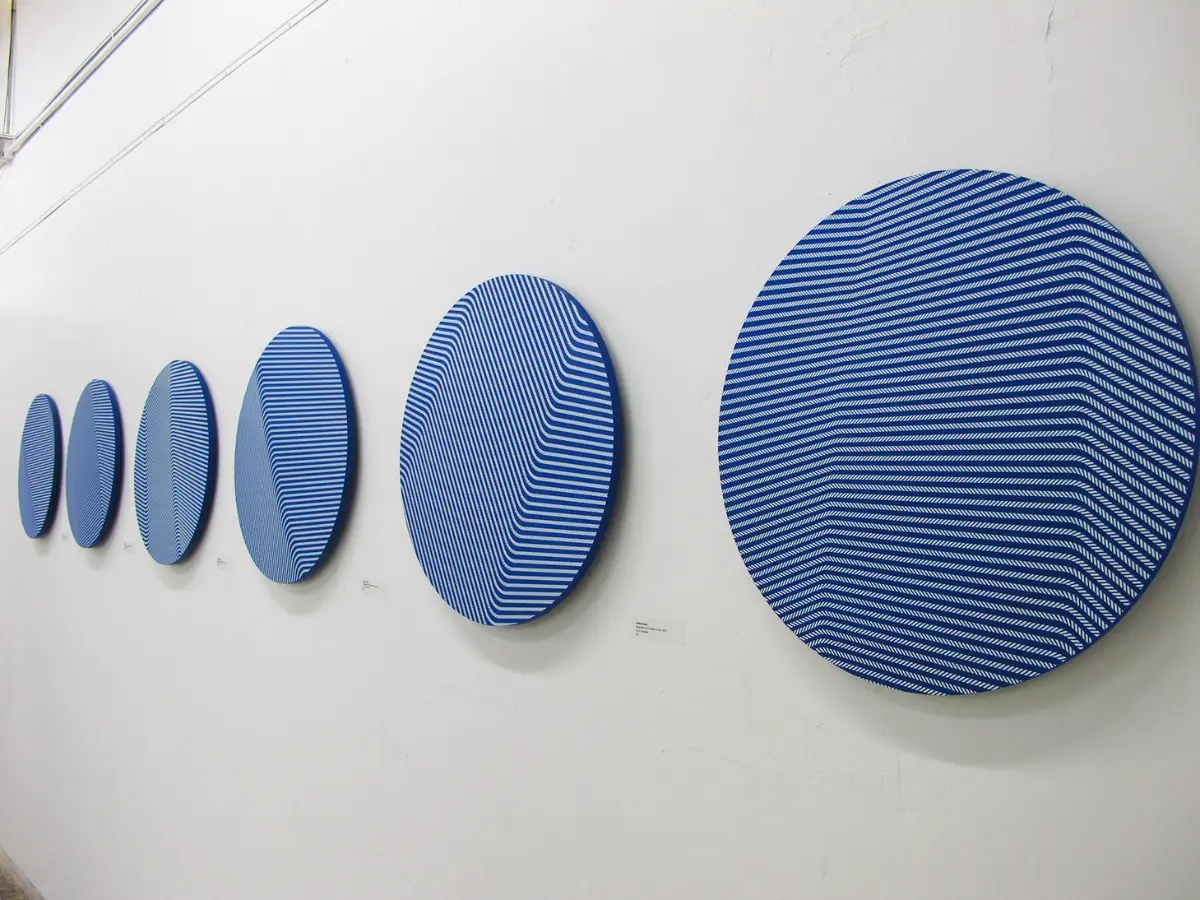
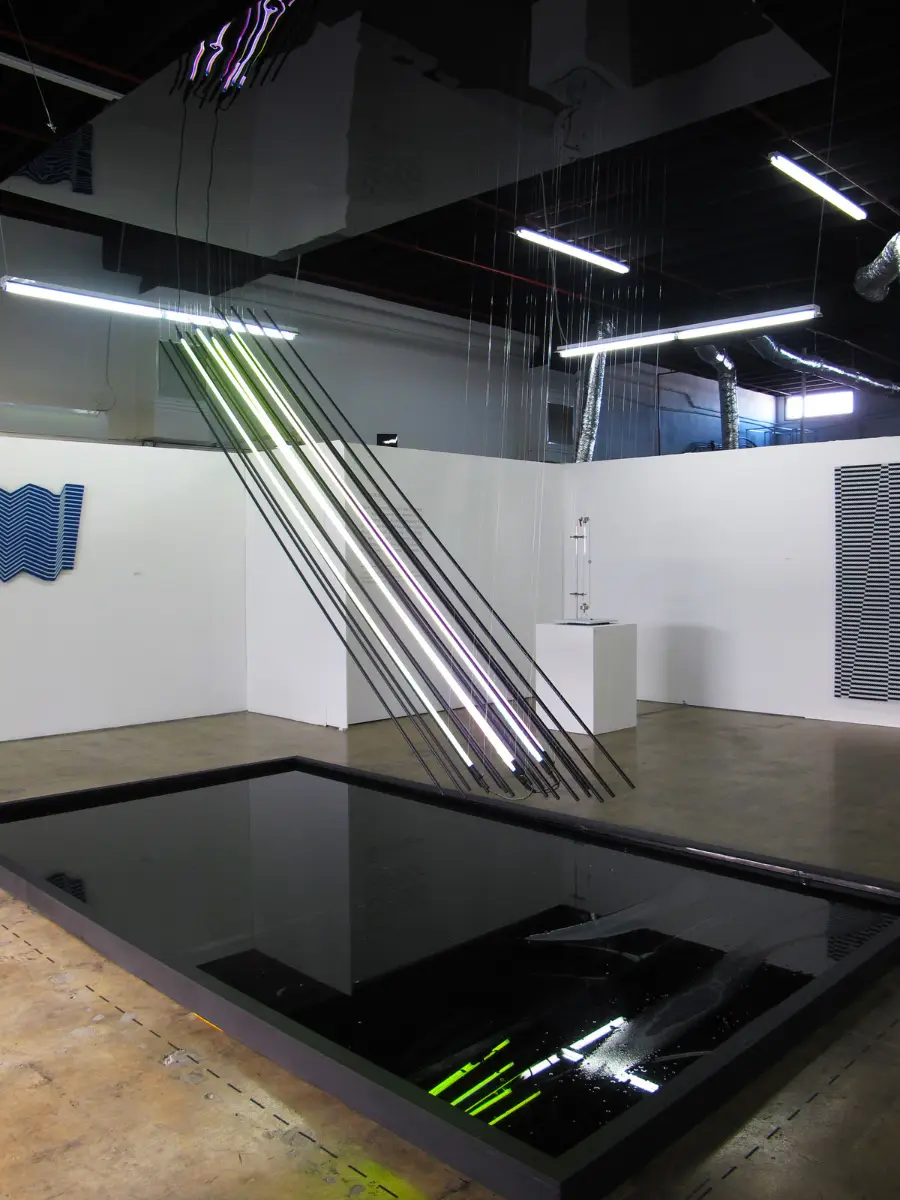
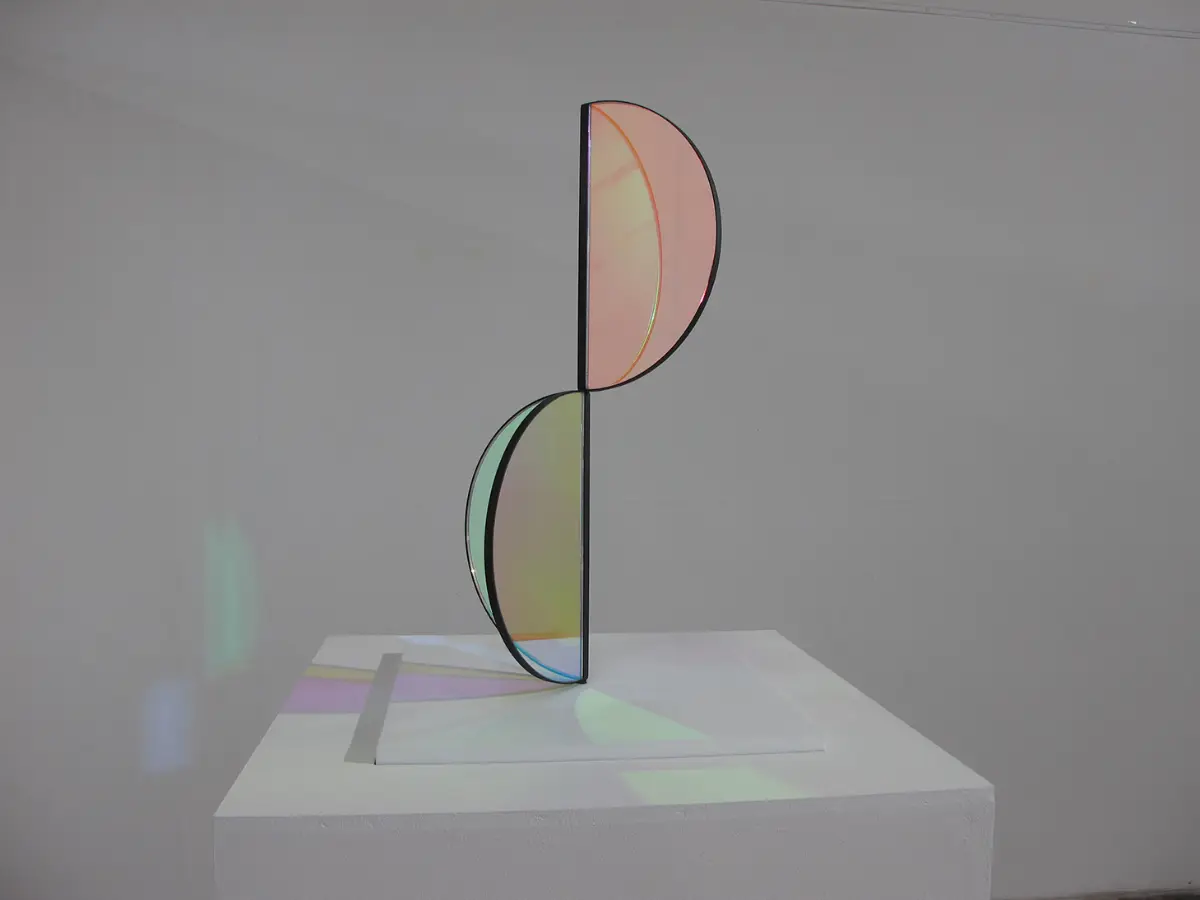
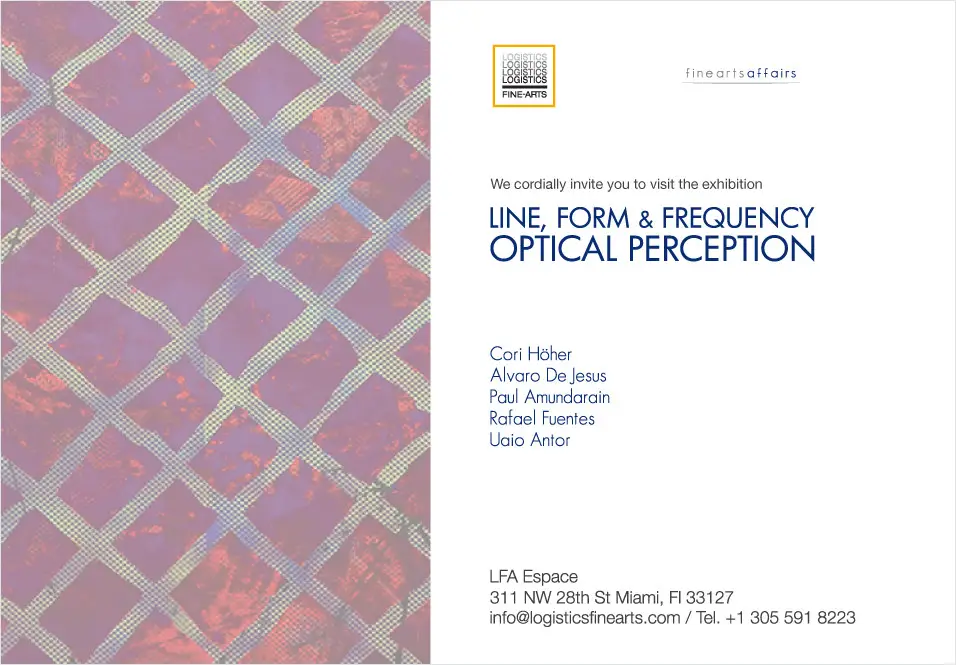
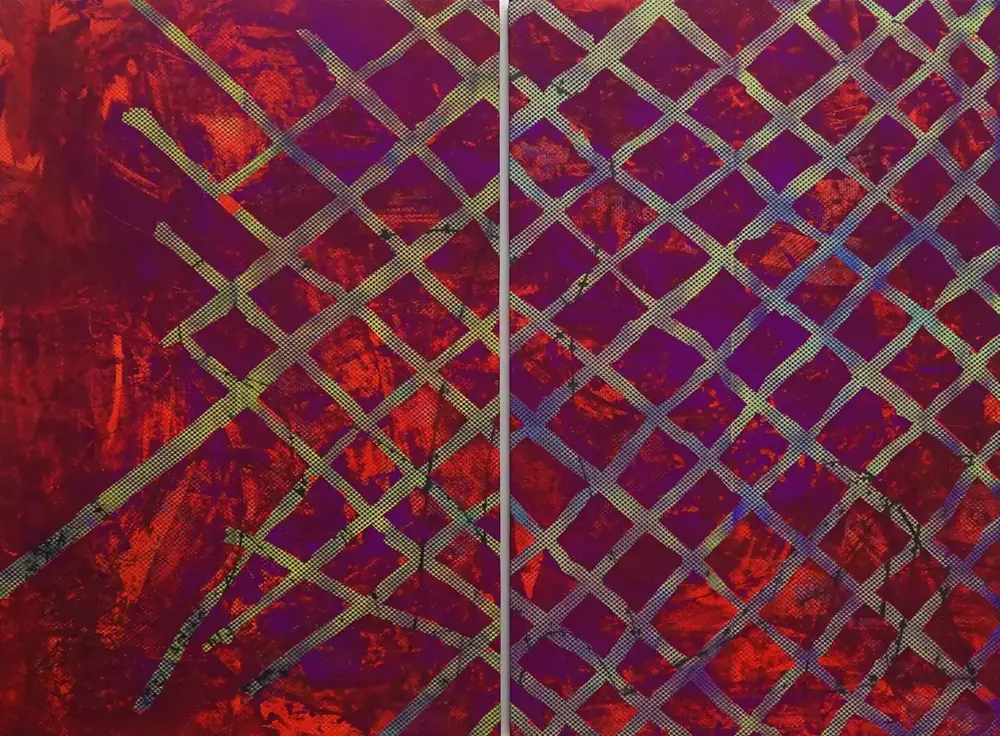
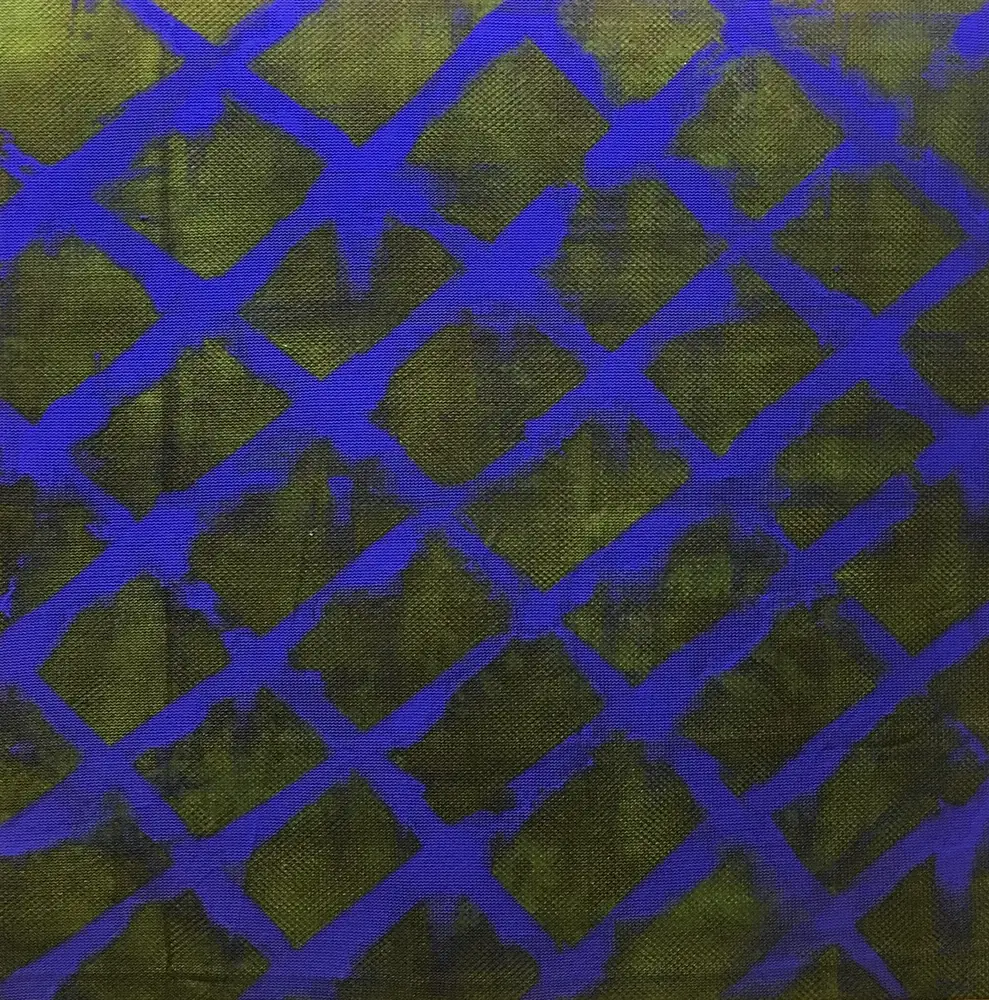
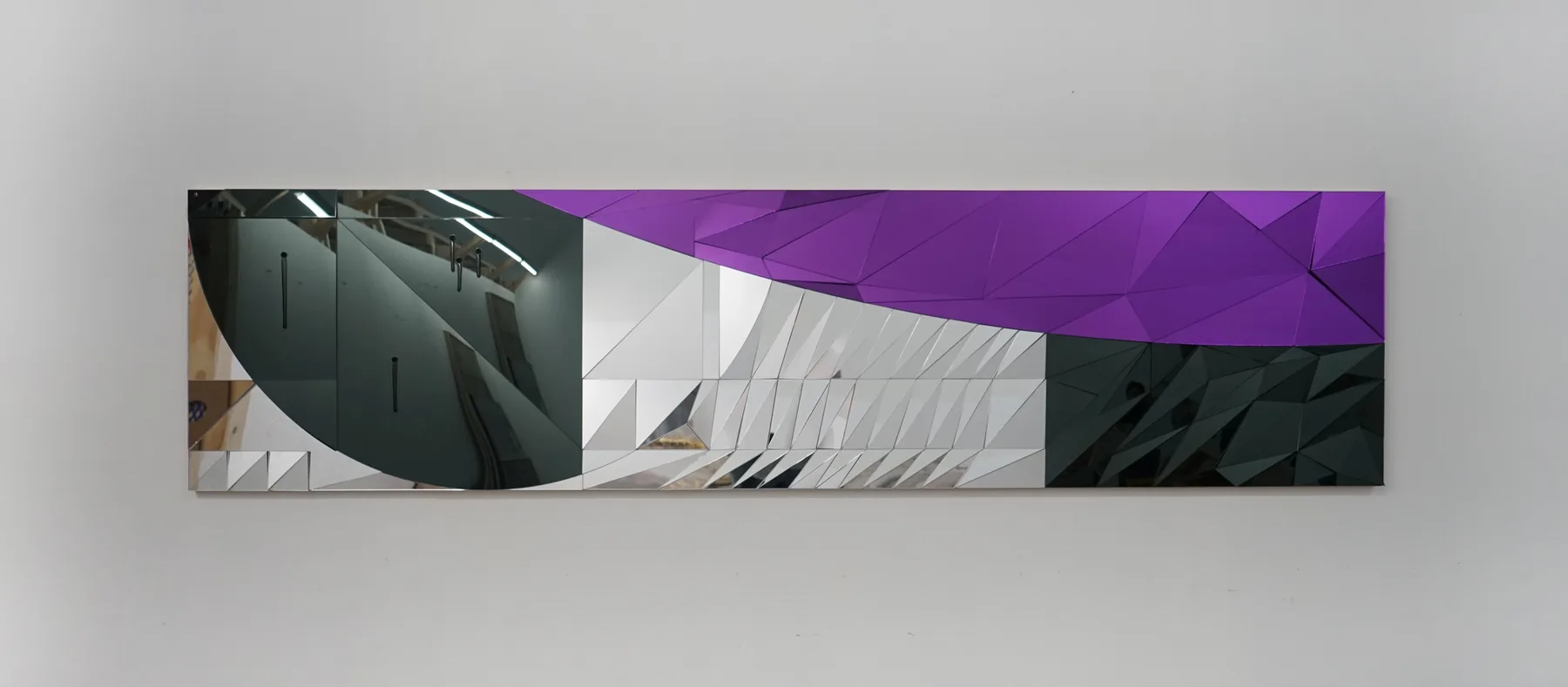
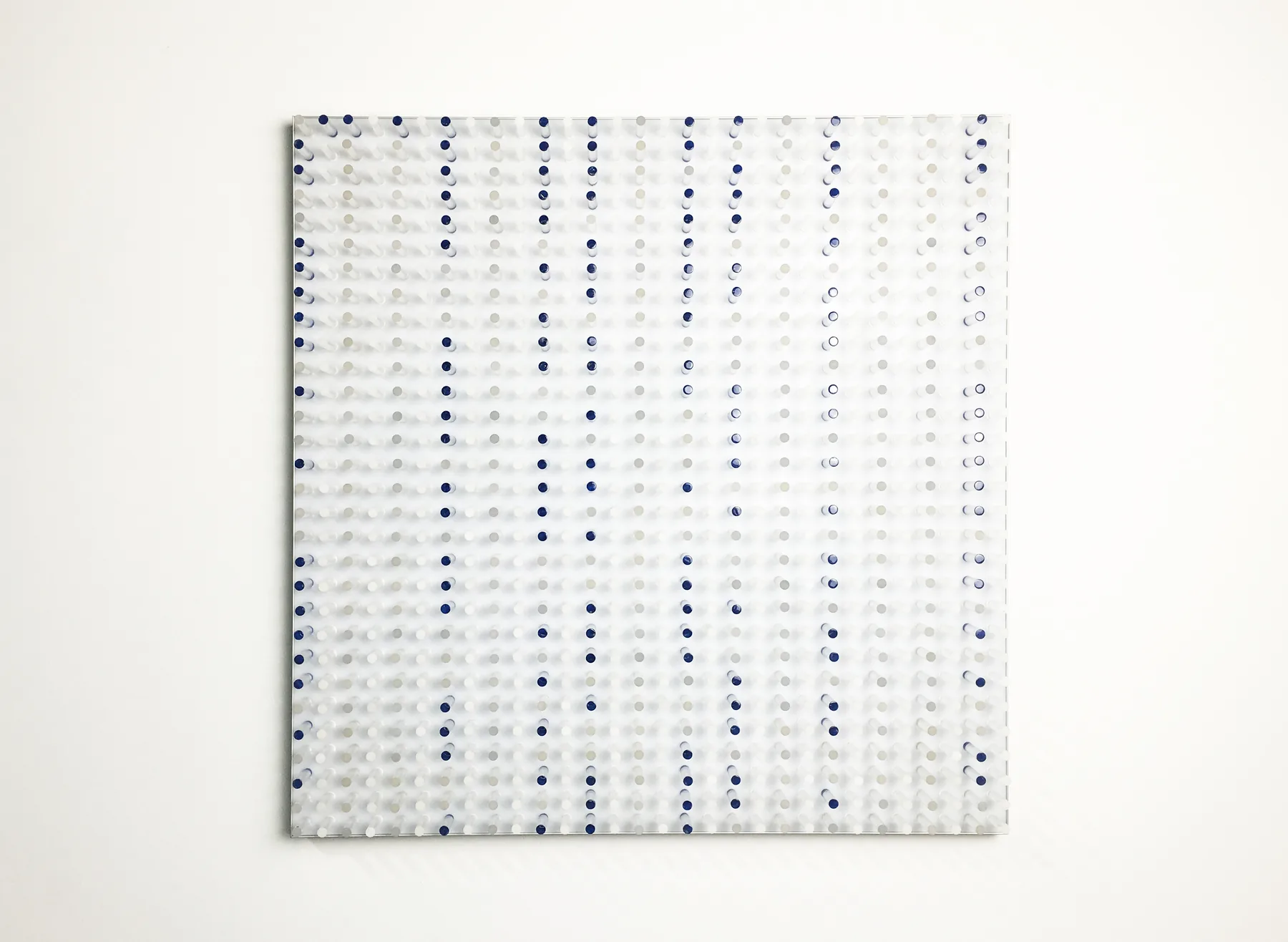
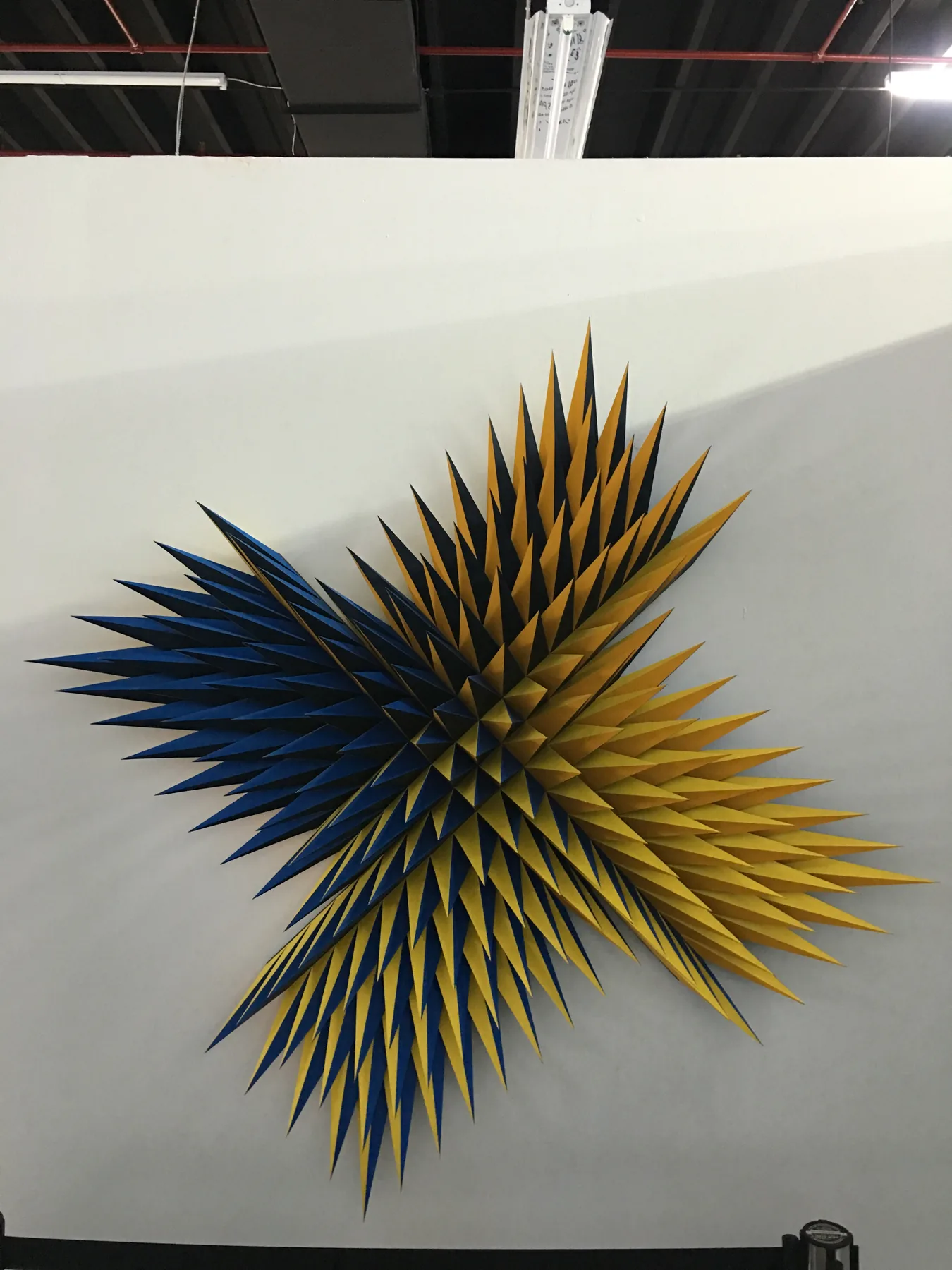
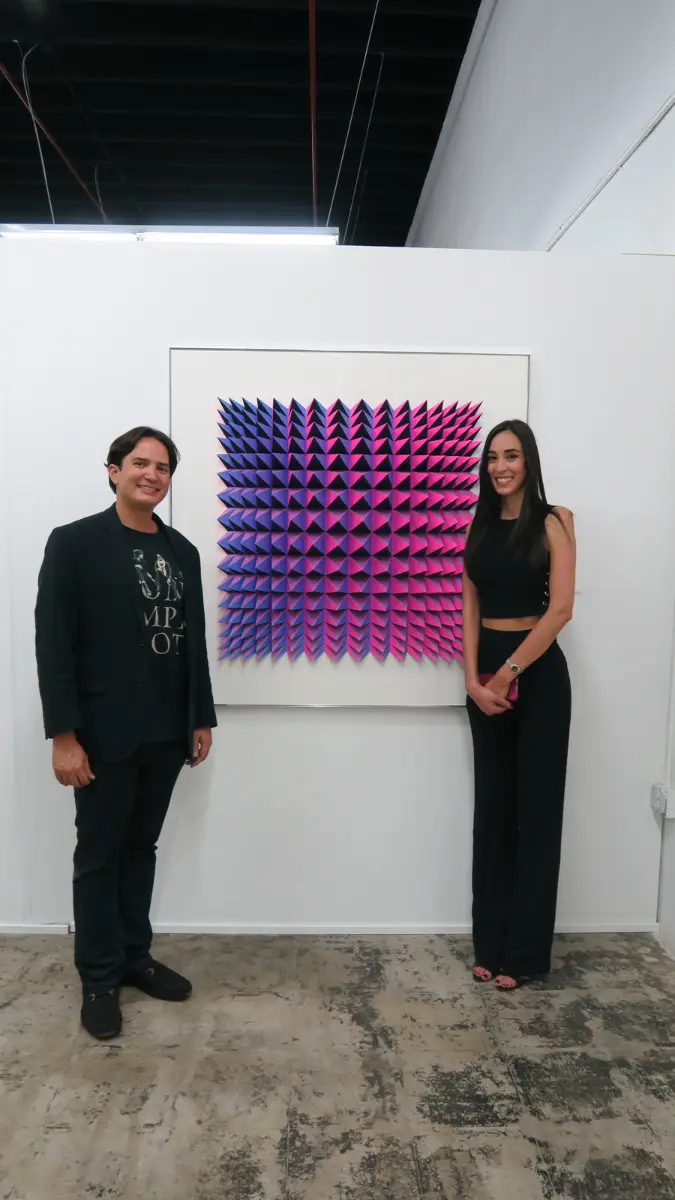
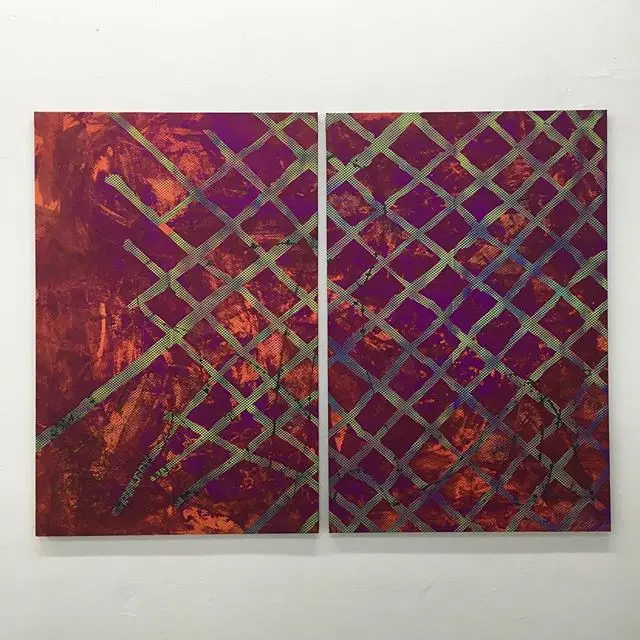
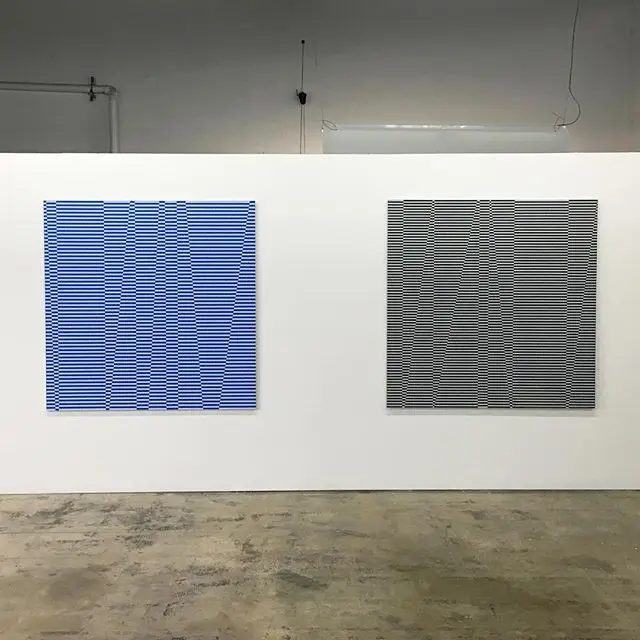
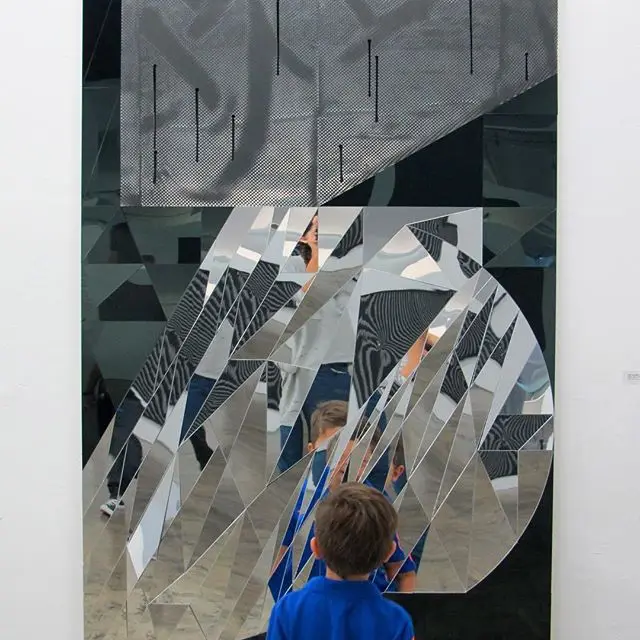
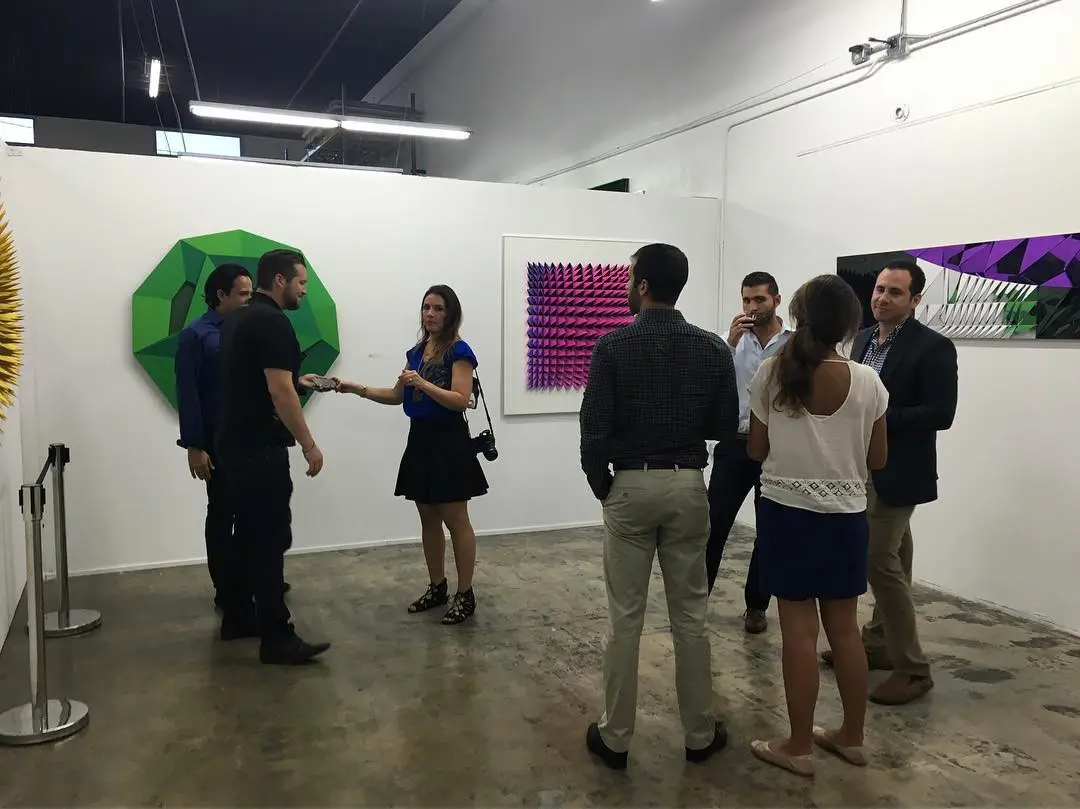
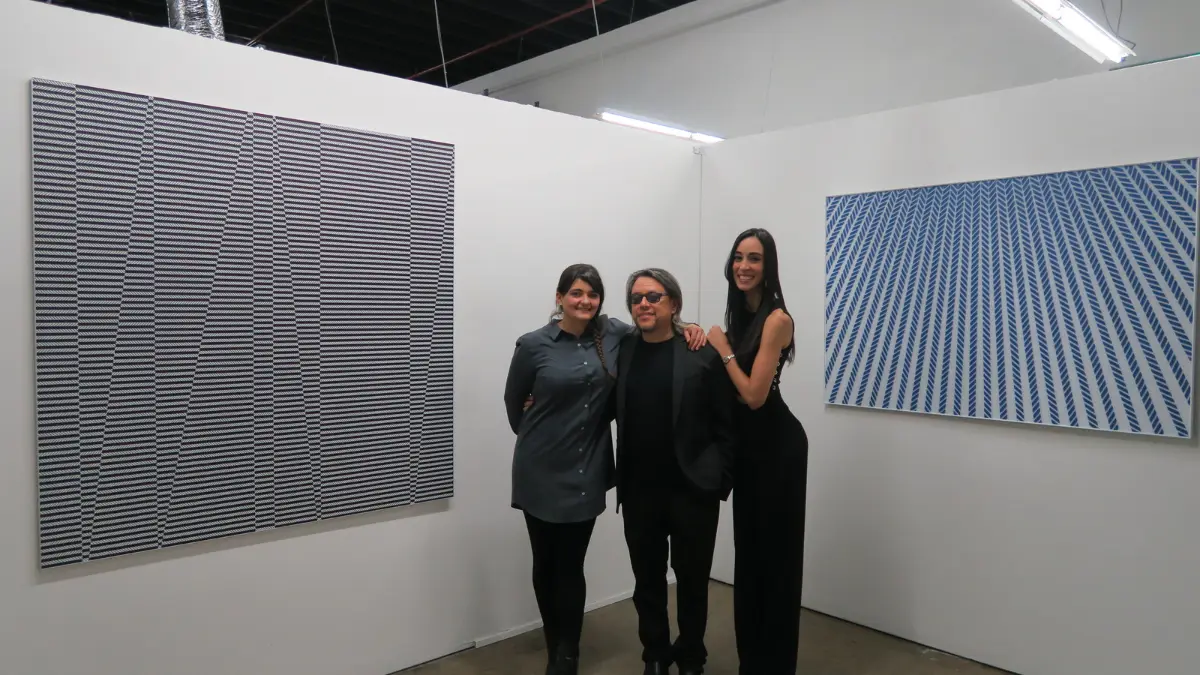
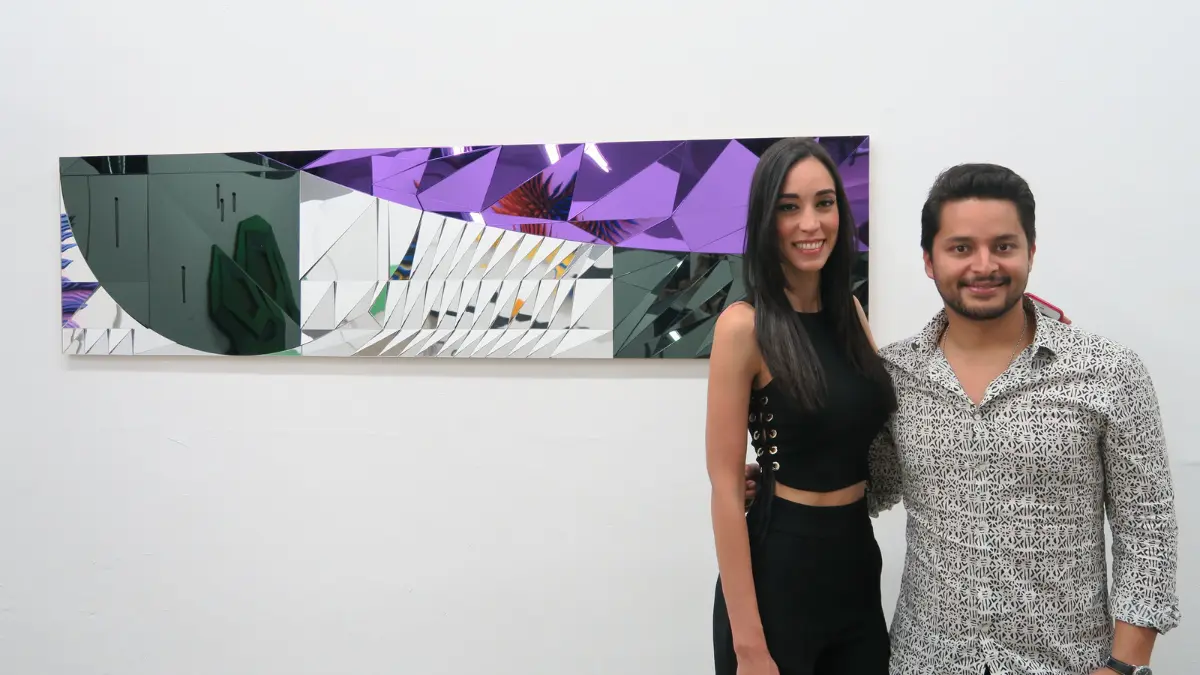
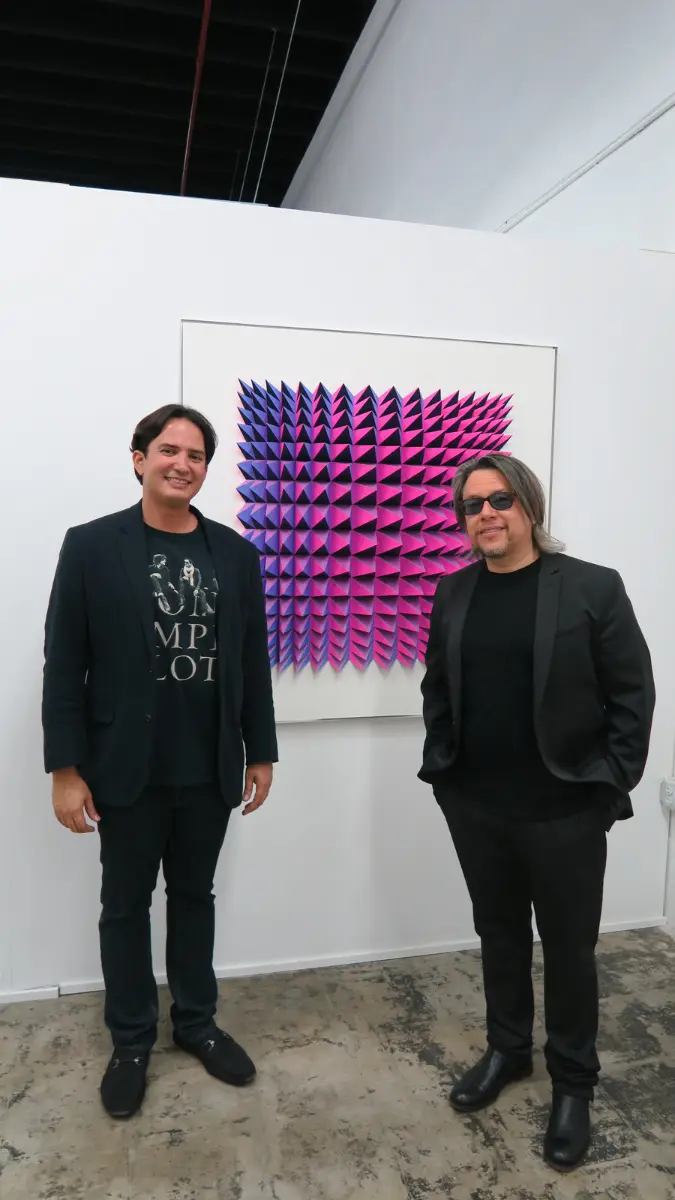
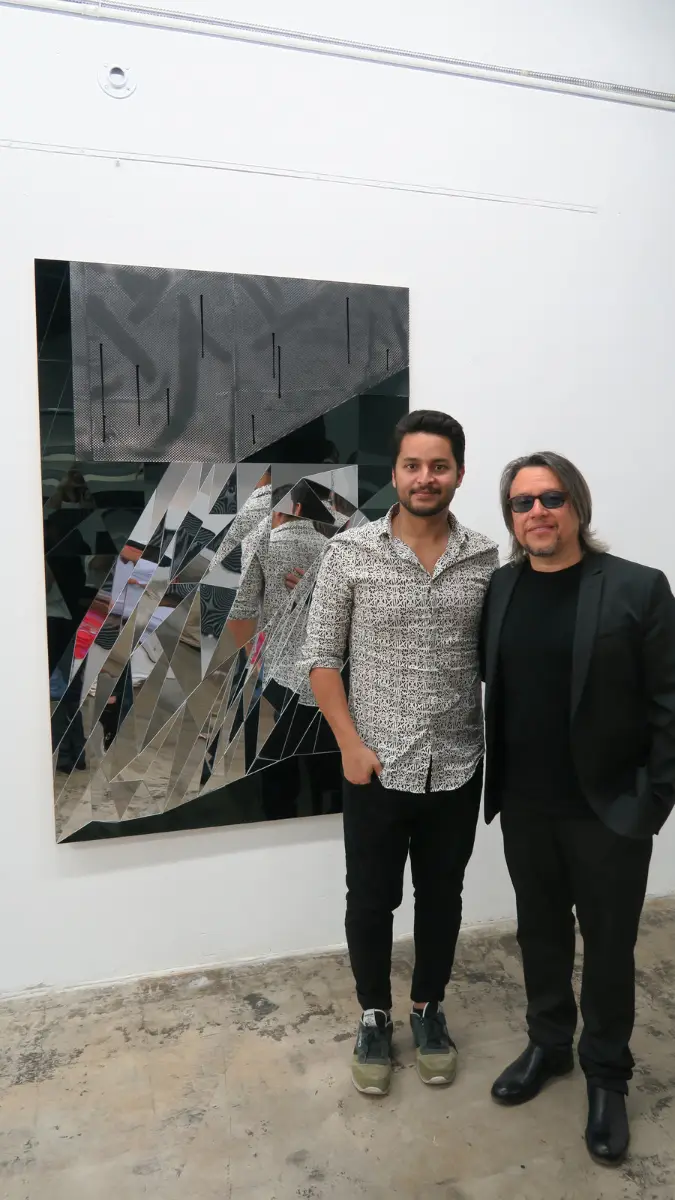
We presented Line, Form and Frequency, an optical perception, at LFA Espace in Miami in 2016, through Fine Arts Affairs. The exhibition brought together five Venezuelan artists of a new generation working from the legacy of kinetic and optical art: Corina Höher, Paul Amundarain, Alvaro De Jesus, UAIO Antor and Rafael Fuentes.
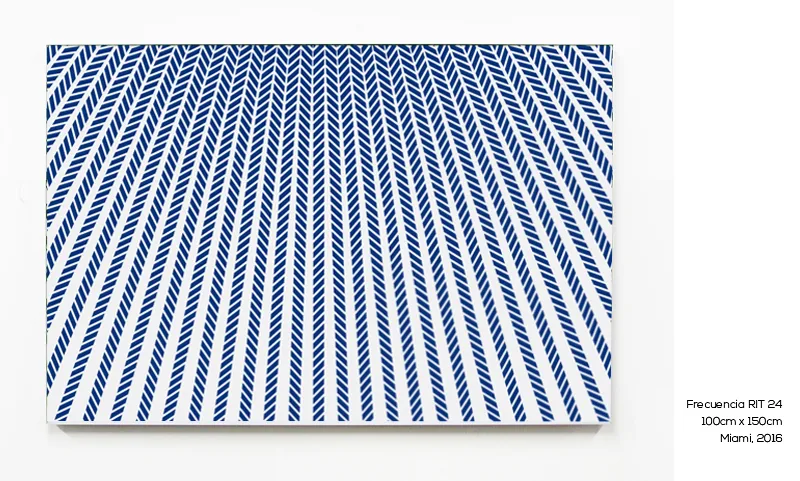
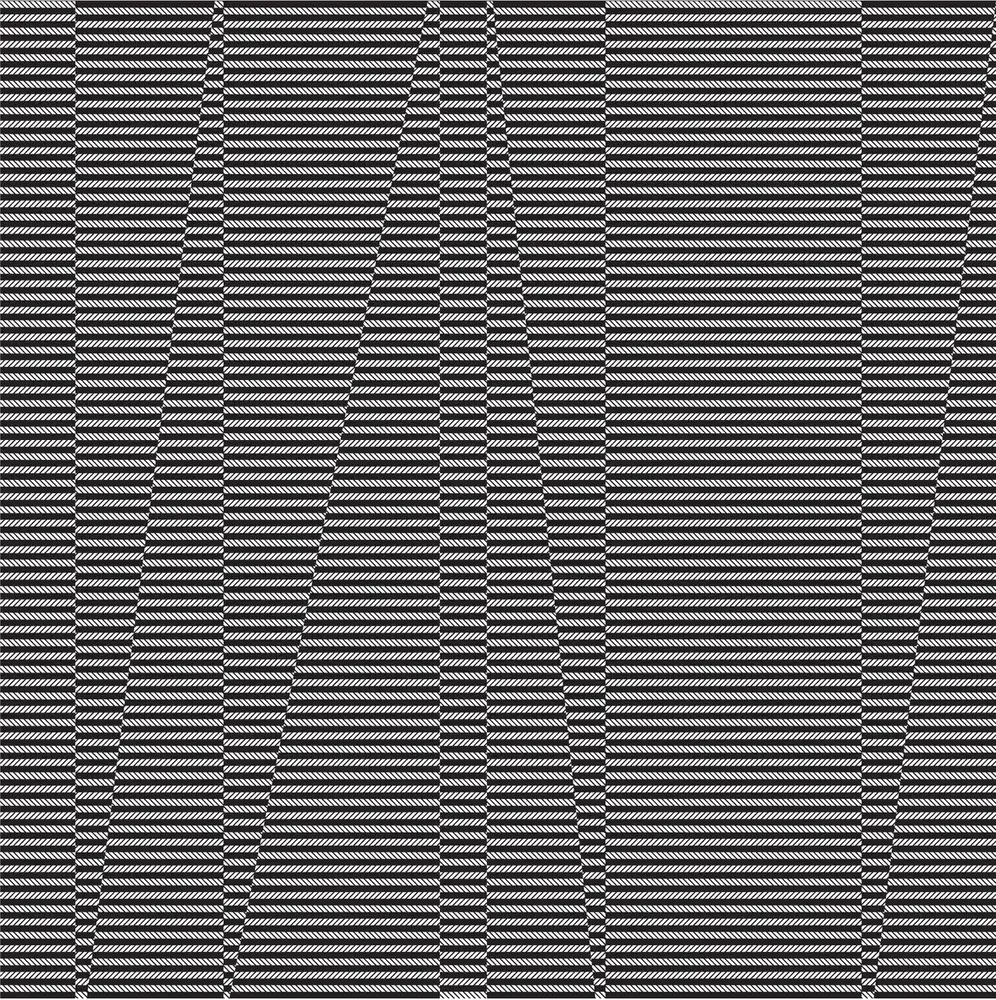
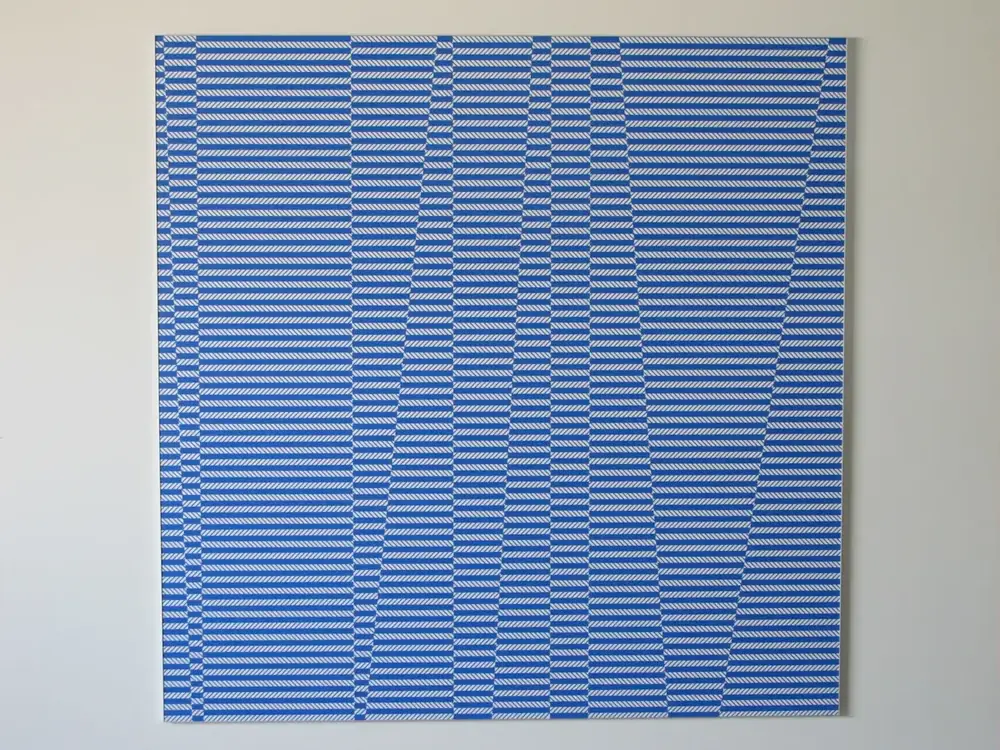
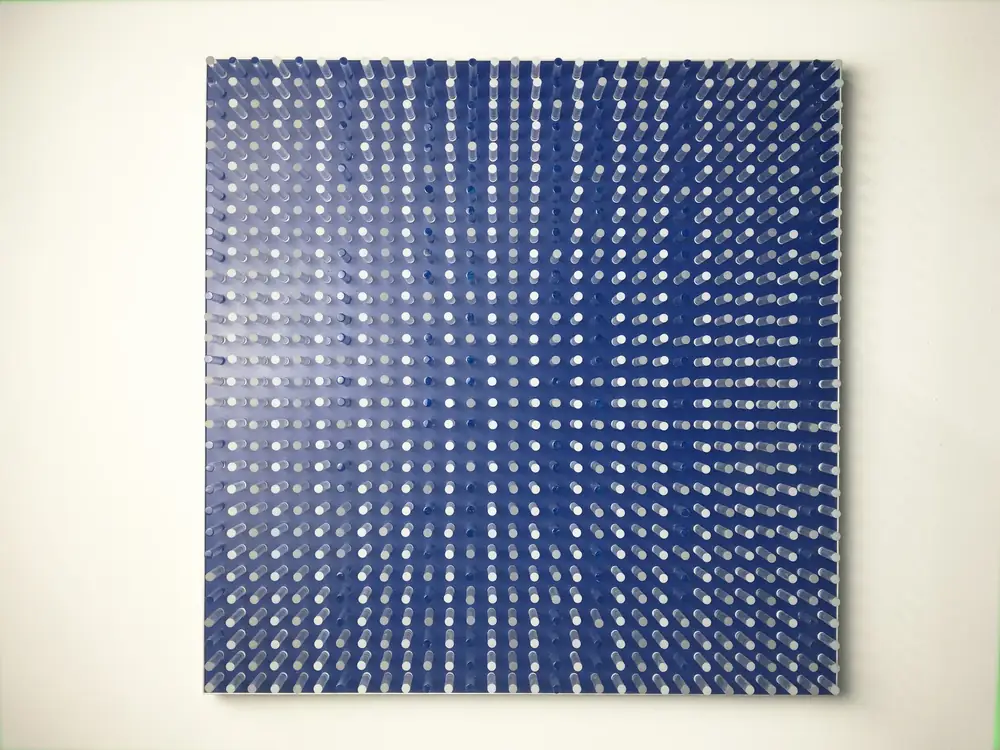
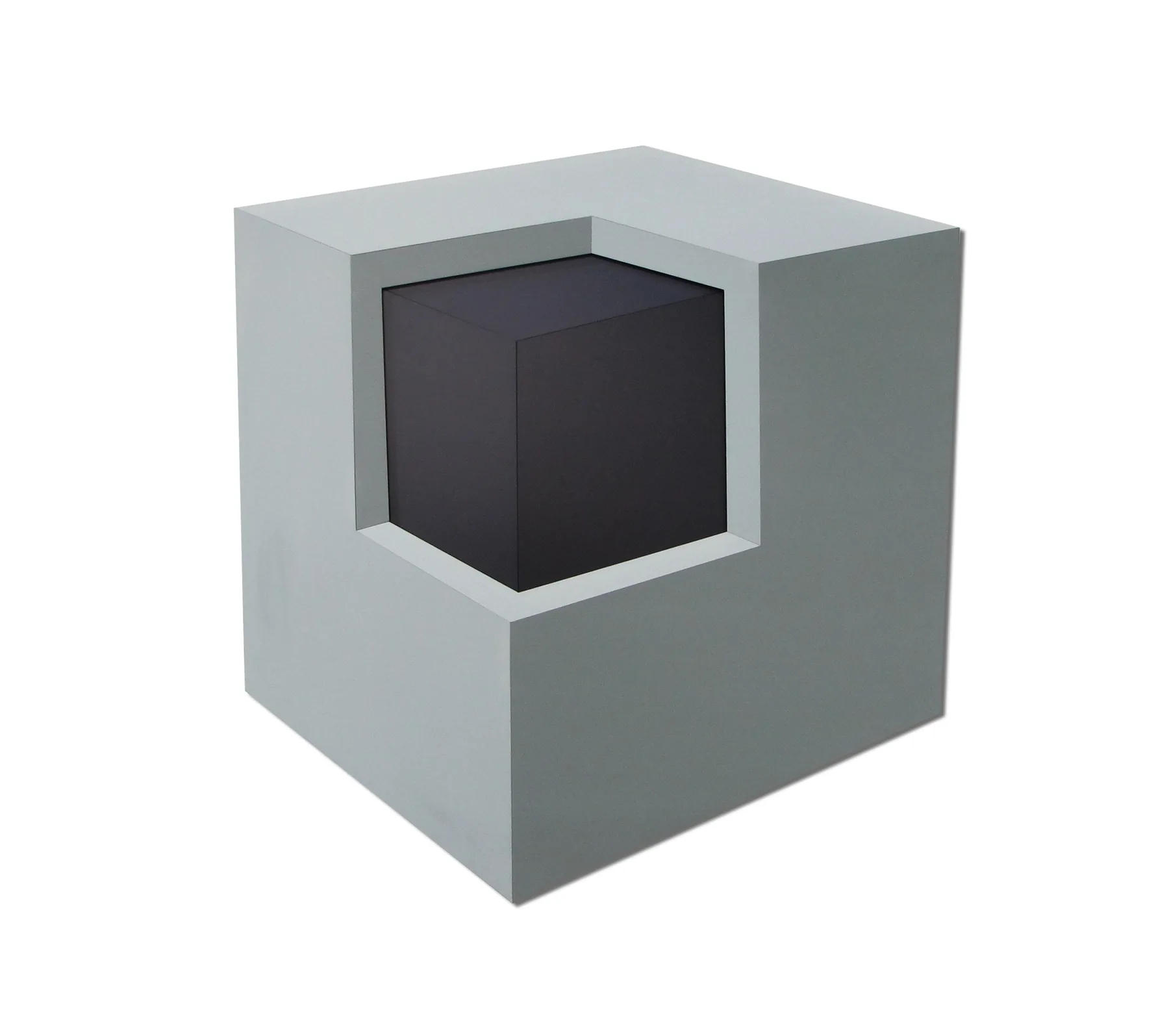
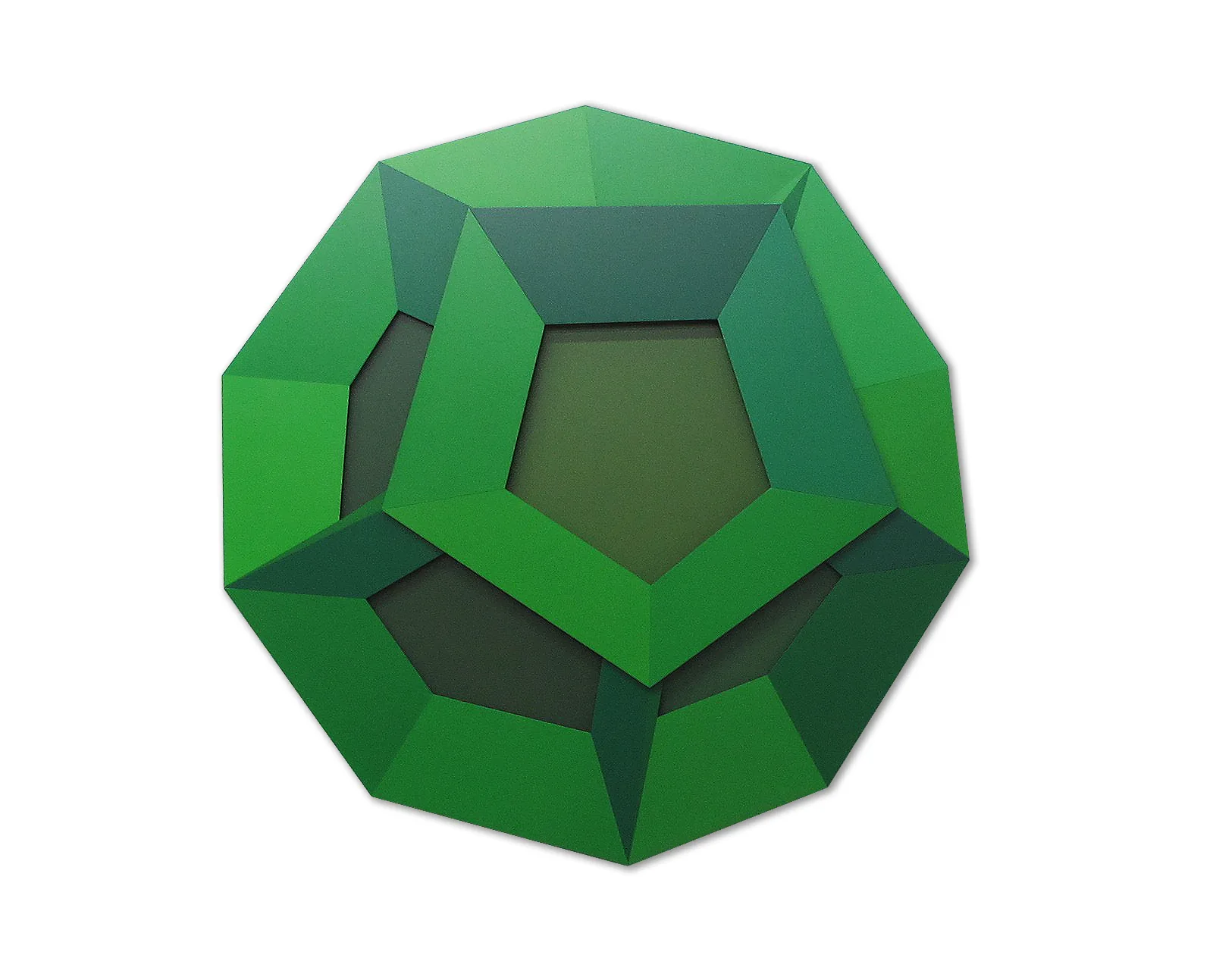
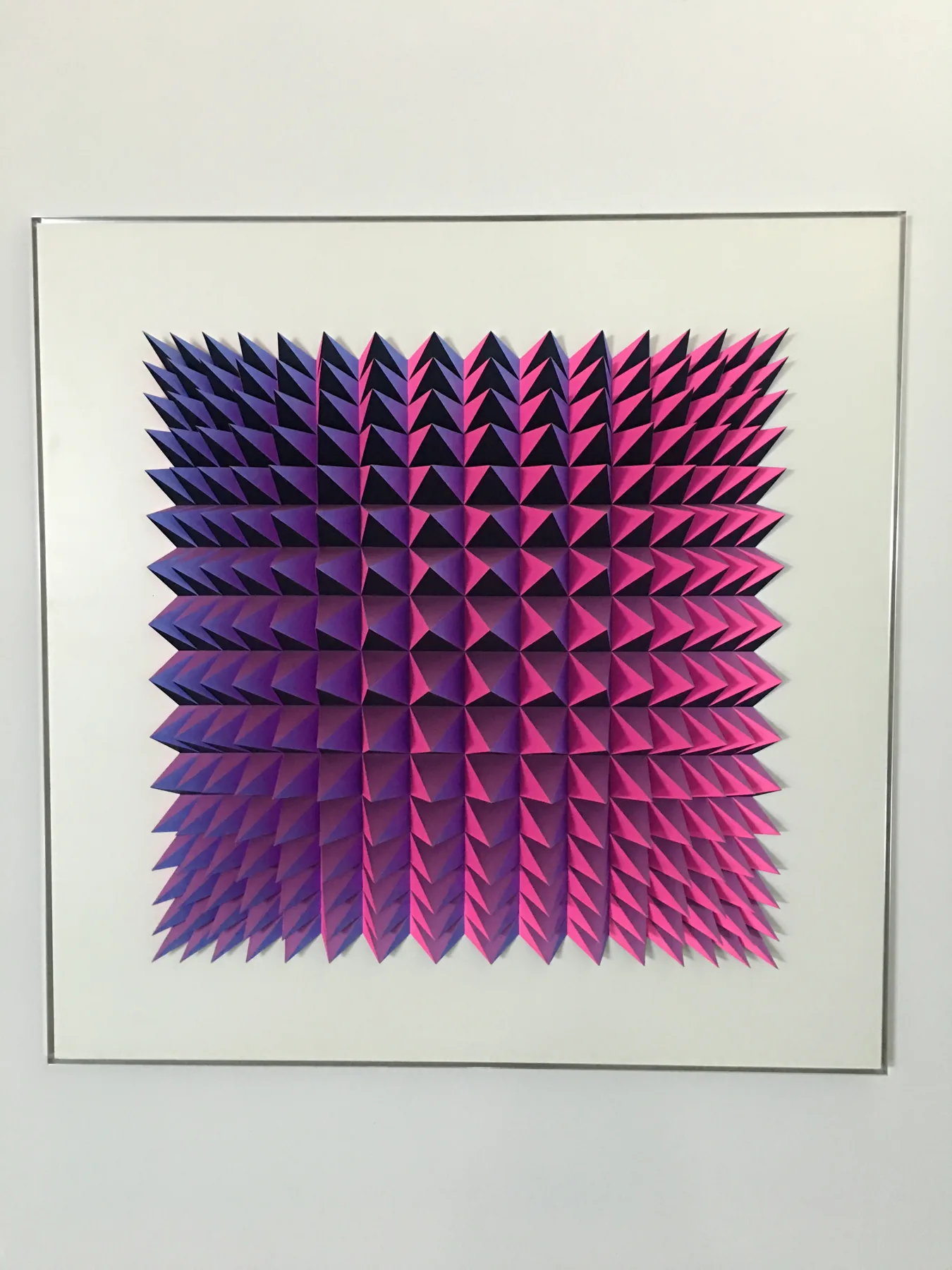
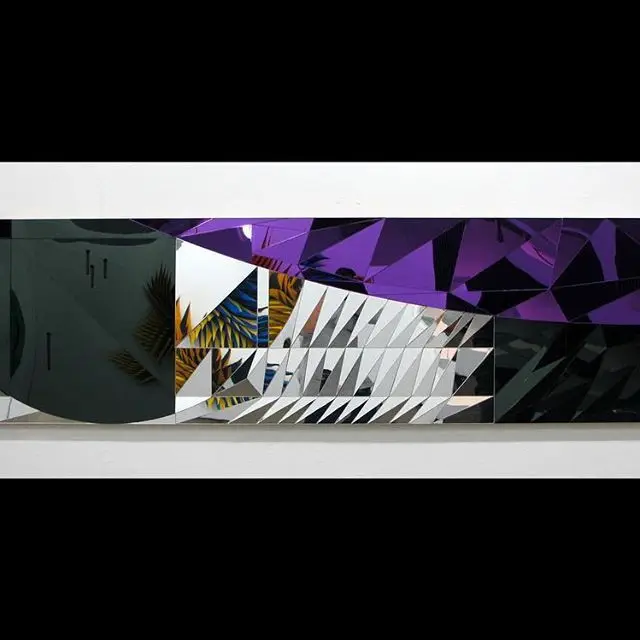
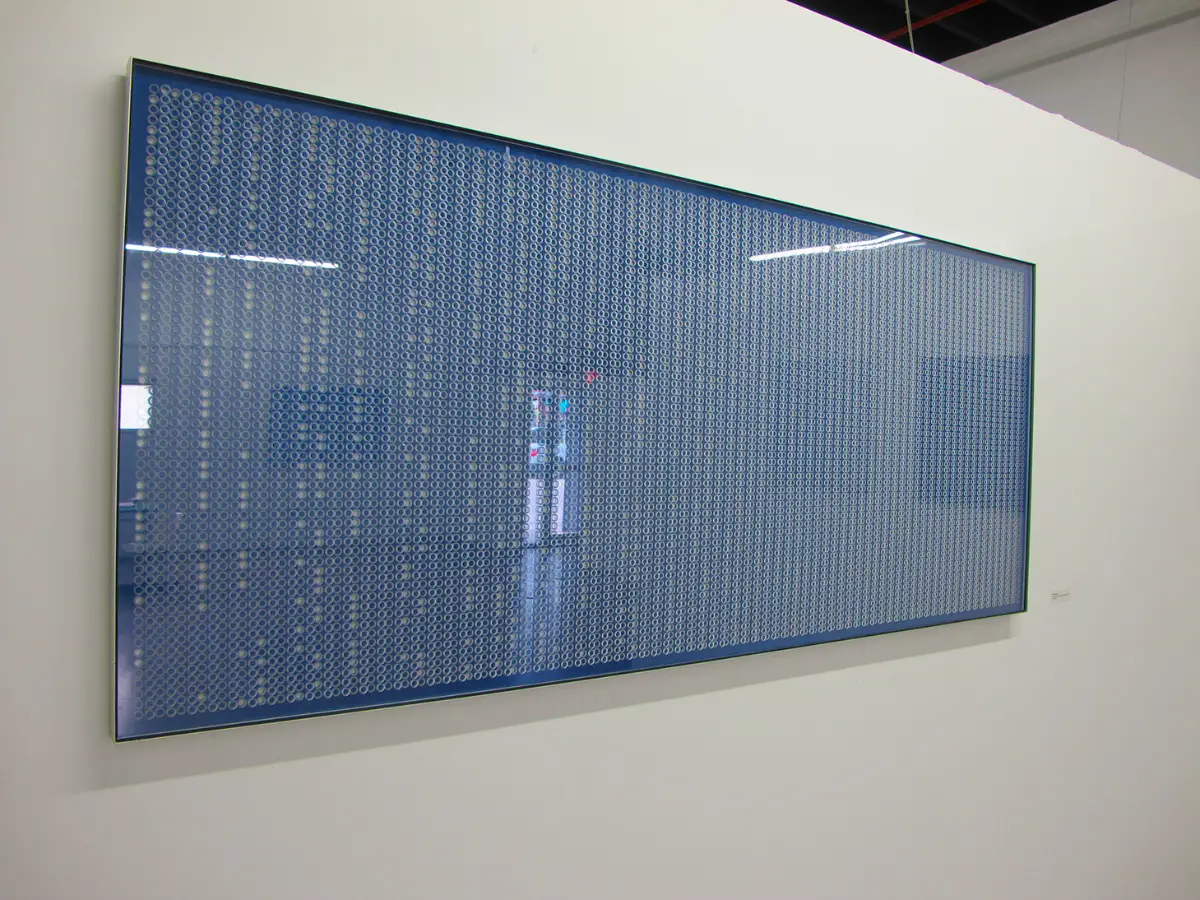
Line, form and frequency are the tools each of them uses to act on perception: vibrating fields of color, grids and broken mirrors, optical experiments drawn from mathematics, laminated planes that build volumes, and reliefs shaped by the physics of gravity.
We use only essential cookies, to remember your preferences on this site. We do not use tracking or advertising cookies.

